- info@naturebylennart.com
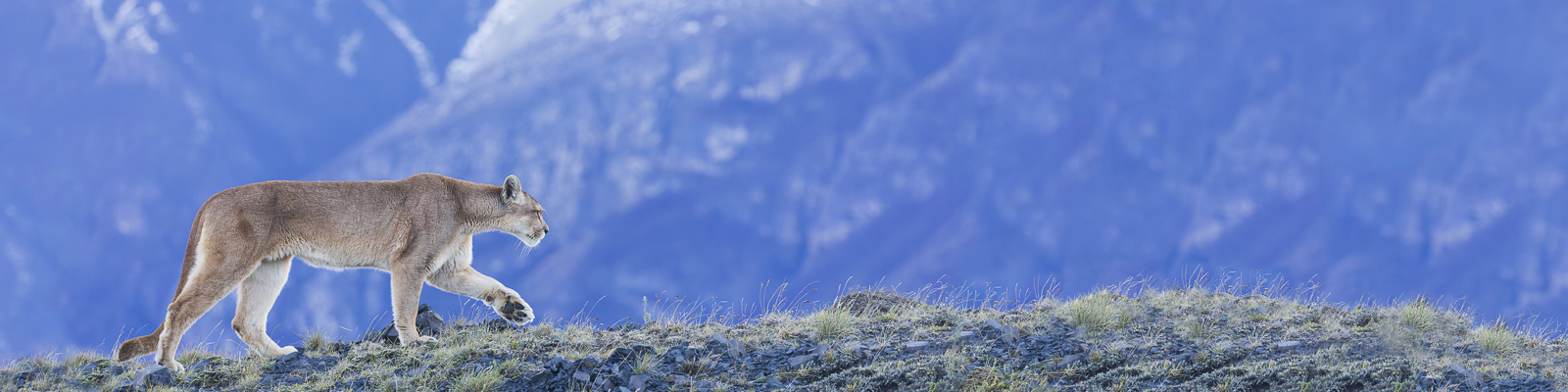
The island of New Guinea is unique in several ways. When it comes to its inhabitants, the enormous diversity of ethnic groups is perhaps the most striking feature: the island’s roughly ten million people speak no fewer than 800 different languages. Those interested in nature will pay attention to other things, such as the fact that 38 of the 43 known species of birds-of-paradise occur on New Guinea, most of which are found nowhere else. The island is also home to unique groups of mammals, including echidnas, tree-kangaroos, cuscuses and many other remarkable marsupials.
I knew I would eventually visit this place, but the question was always when. After all, there is so much to see! By chance, in the spring of 2026, I came across a request from Anton Cnudde, who was still looking for travel companions for a trip to West Papua that summer. The itinerary fitted nicely with the remaining holiday days I had available. Fairly quickly I decided to join.
The general itinerary included a visit to the Arfak Mountains, a visit to the island of Waigeo and a visit to the village of Klalik. These three locations were expected to offer opportunities to see some very special birds-of-paradise, such as Wilson’s Bird-of-Paradise, as well as a very special mammal: the Western Long-beaked Echidna. I was in the fortunate position of not having to organise much myself (thanks to Anton), which meant I could immediately start looking forward to the trip!
On the 18th of July 2026, we met at the gate at Jakarta Airport, ready to fly to the town of Manokwari, where our journey would begin: Anton (from Belgium), Jannick Scheepstra (also from the Netherlands) and Ashwin Sivakumar (from the United States). Jackson Frost (also from the United States) was waiting for us in Manokwari. Together, we drove in two pick-up trucks to Papua Lorikeet Guest House, run by Hans Mandacan.
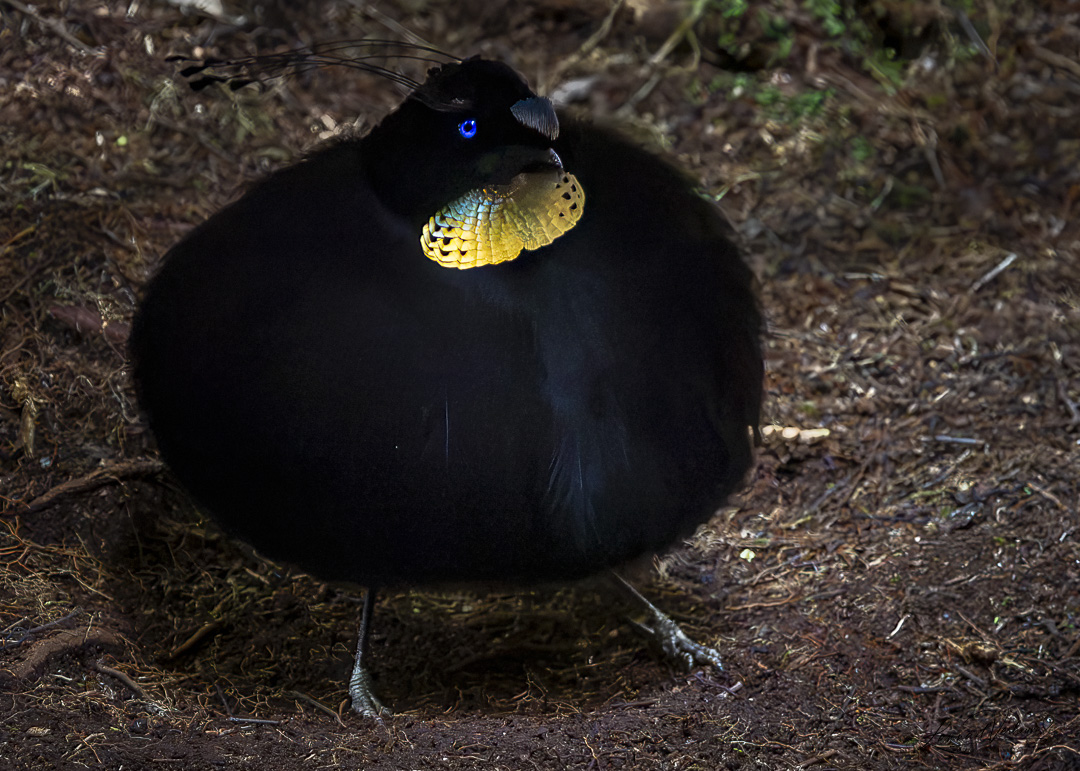
That afternoon, we could immediately tick off a bucket-list item: the dance of Western Parotia! Birding in the middle of the afternoon in a rainforest often seems rather pointless, but for Western Parotia we had arrived at exactly the peak of its courtship activity. We settled into two hides, and it wasn’t long before a male came down to the display area. After a few tentative attempts, we eventually got to witness the entire courtship ritual. It helped that there was another male nearby and that three females were watching with interest from close by!
Western Parotia
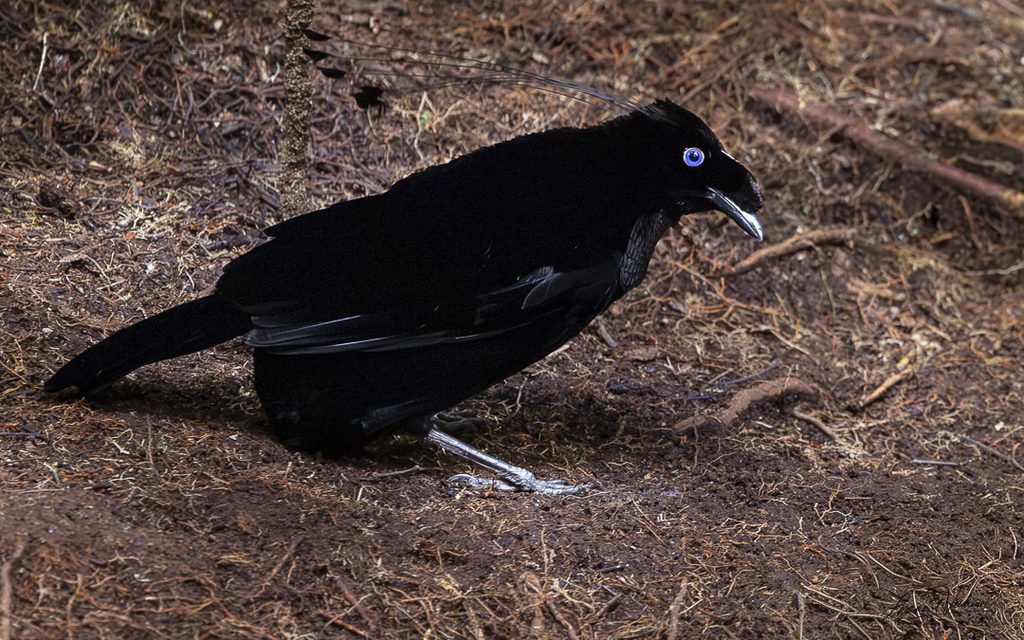
The courtship display of a bird-of-paradise such as Western Parotia is far more elaborate than anything I had ever seen in birds before. At first glance, the bird itself does not look all that impressive (although they were larger than I expected, roughly the size of a Eurasian Jackdaw).
However, during the display, hidden colours and shapes are revealed, giving the bird a completely different appearance. Fortunately, bringing my tripod had not been in vain, and I was able to capture some great video footage.
Taking photographs proved difficult in the dark rainforest, especially with the bird moving around so actively. The obvious solution was to take as many photographs as possible, which fortunately resulted in a few keepers!
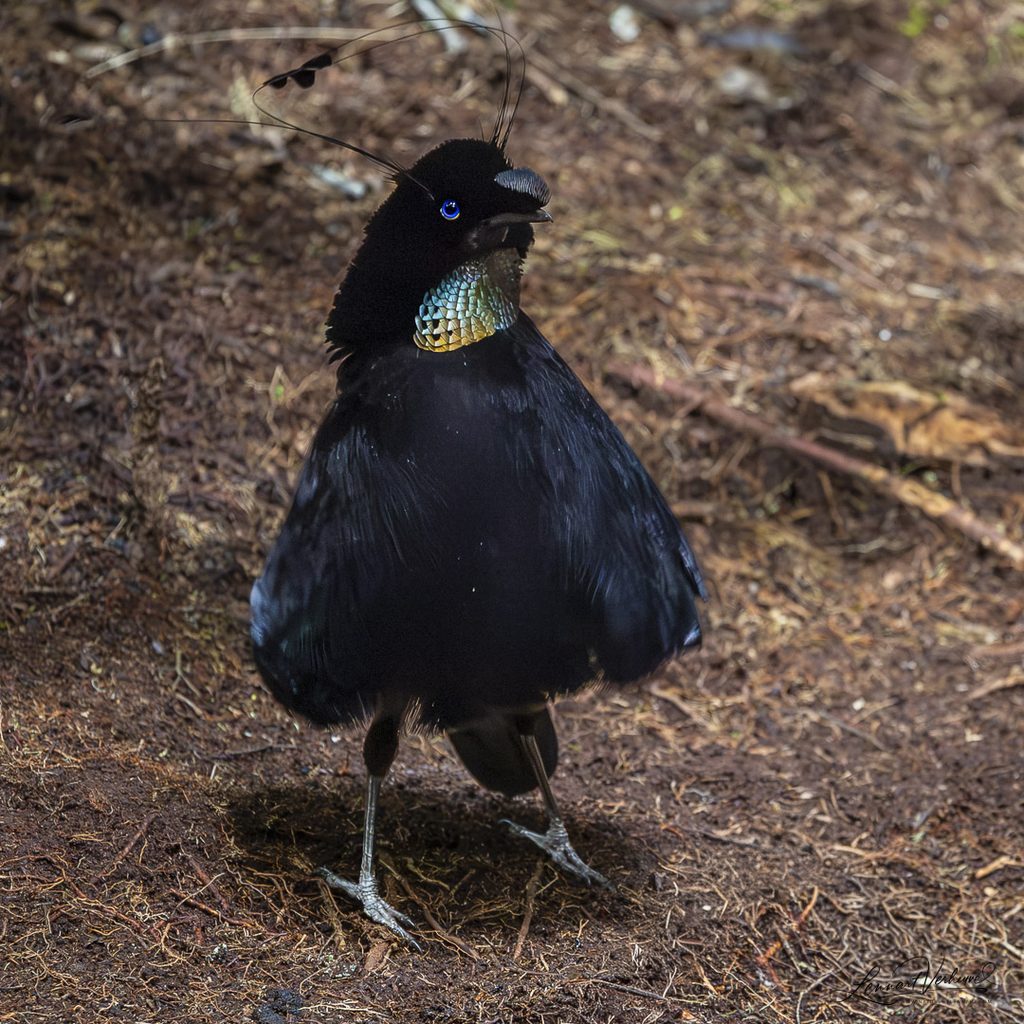
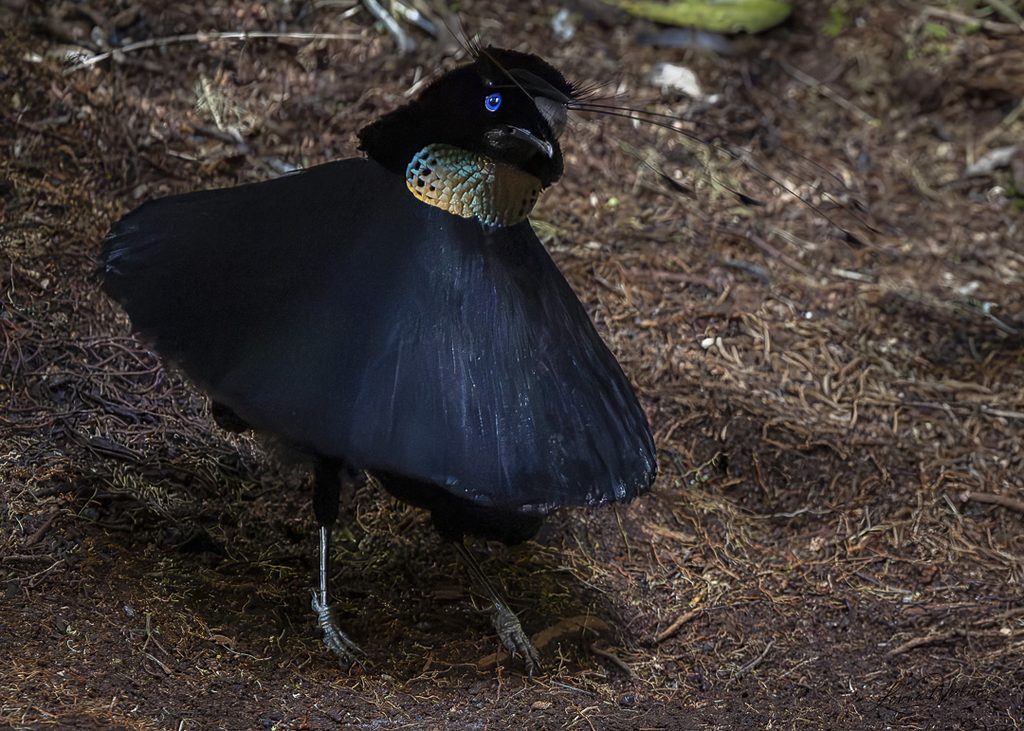
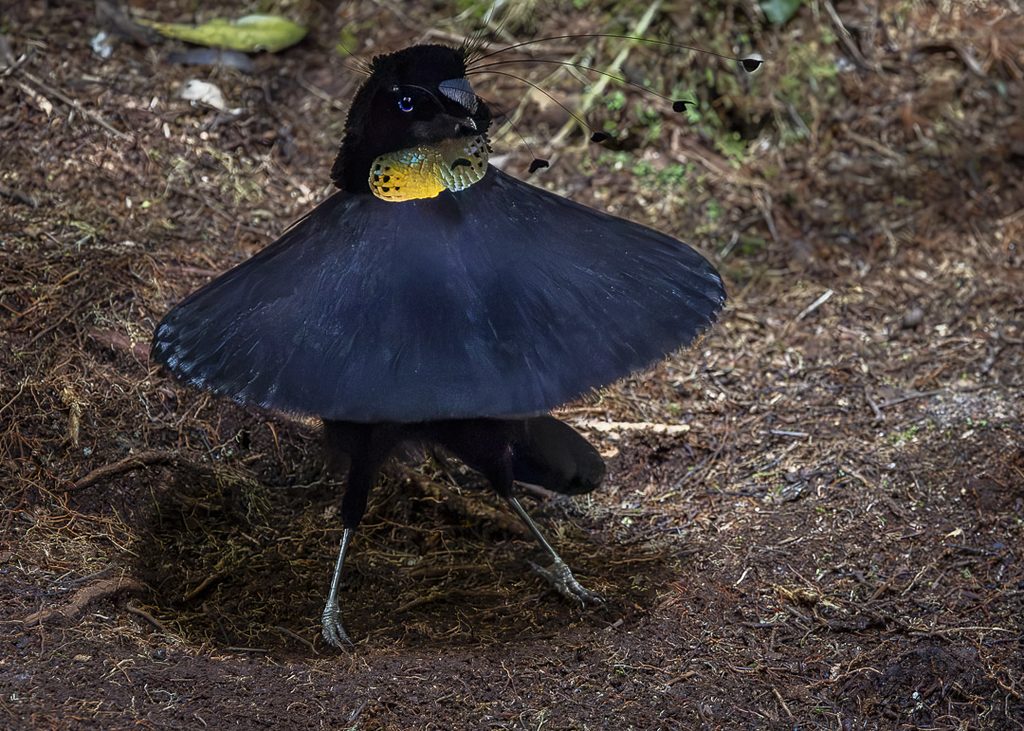
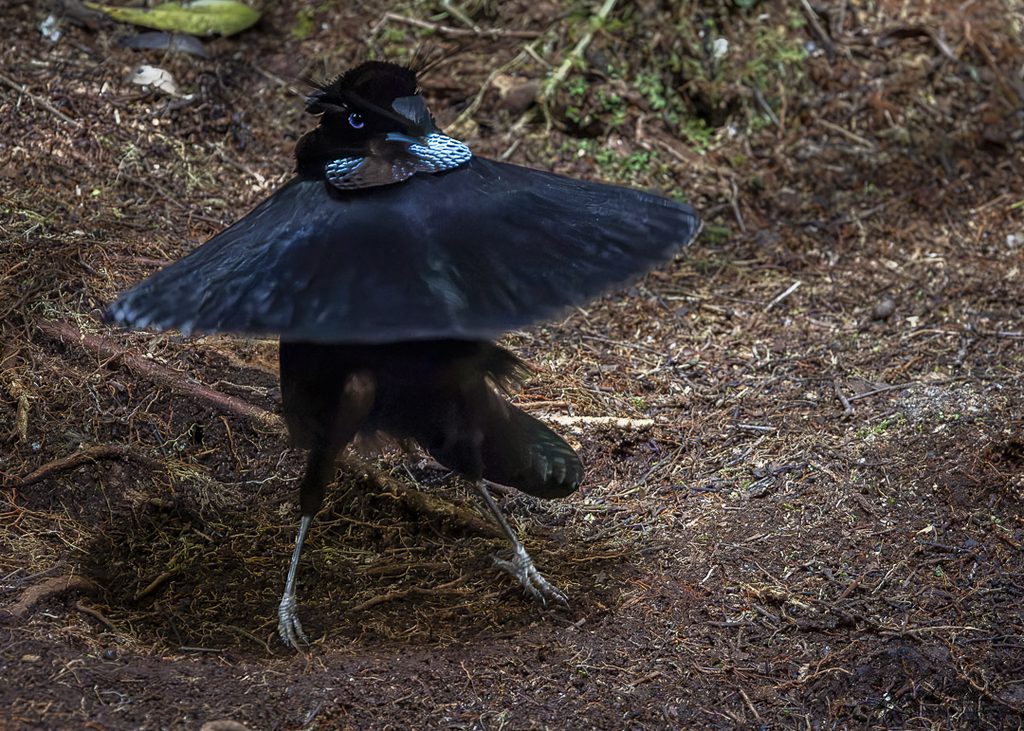
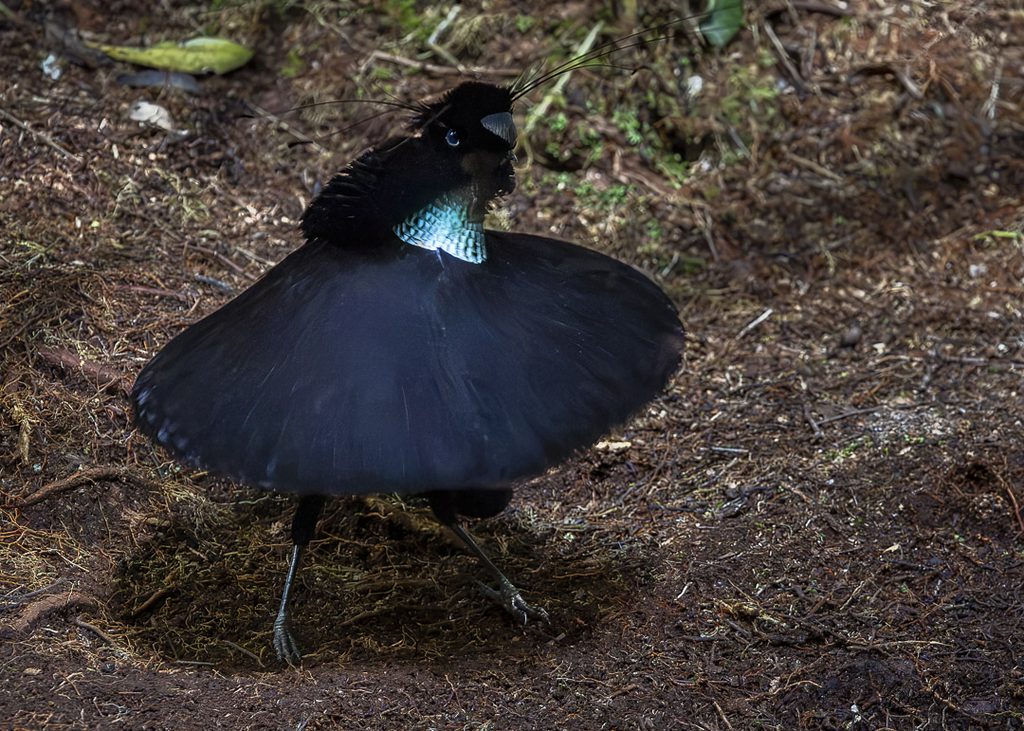
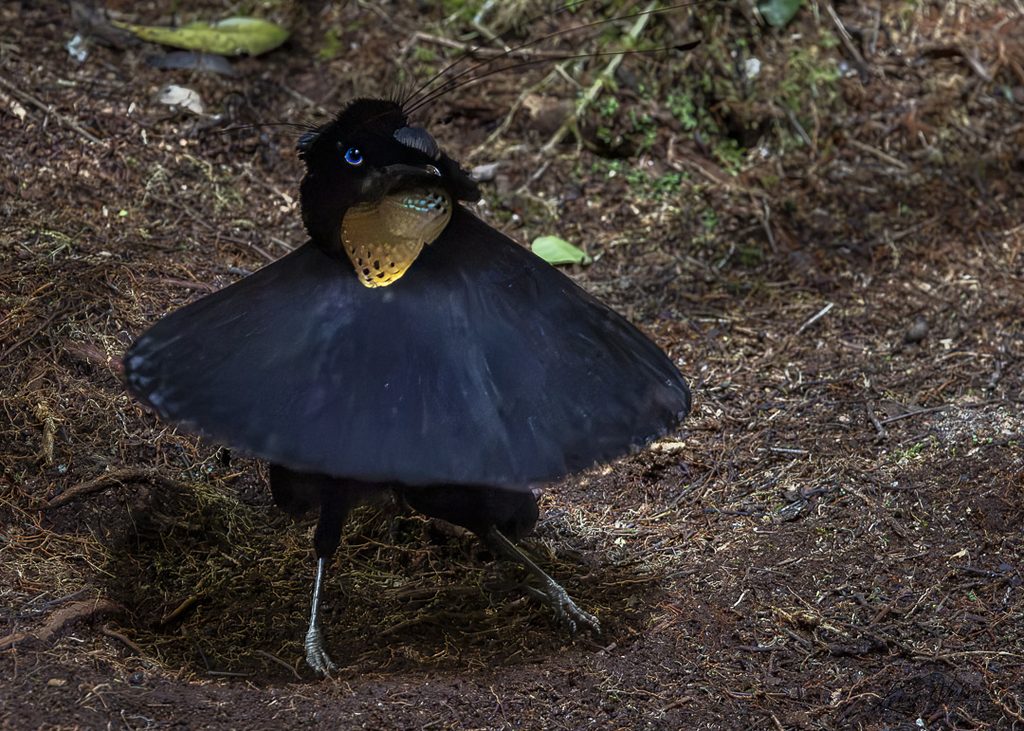
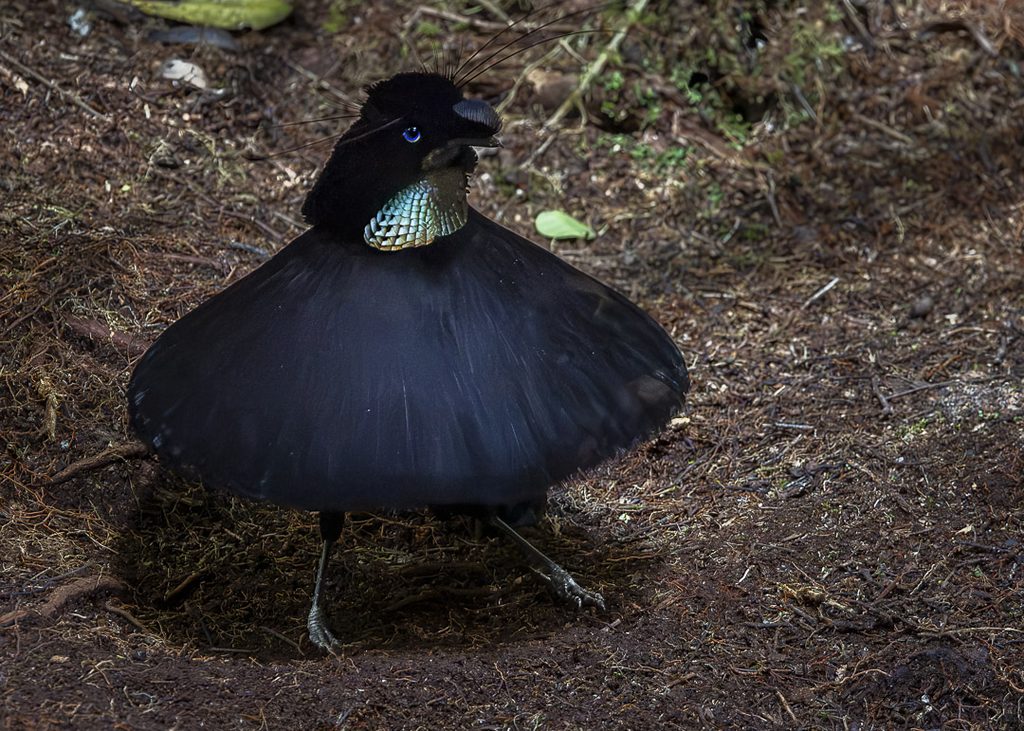
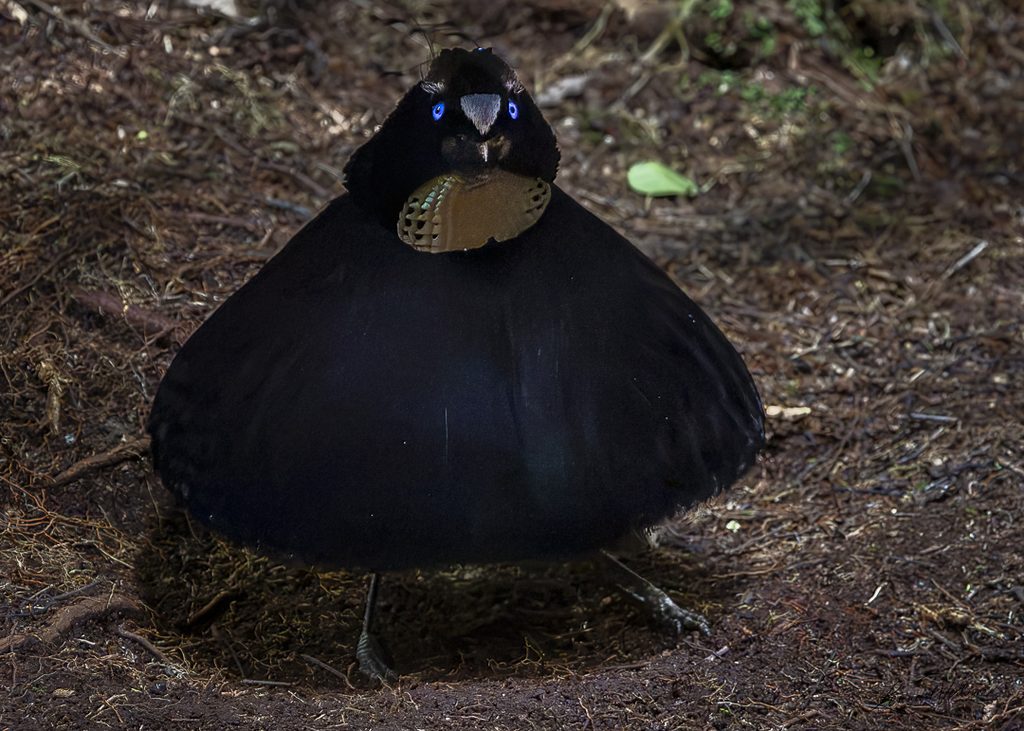
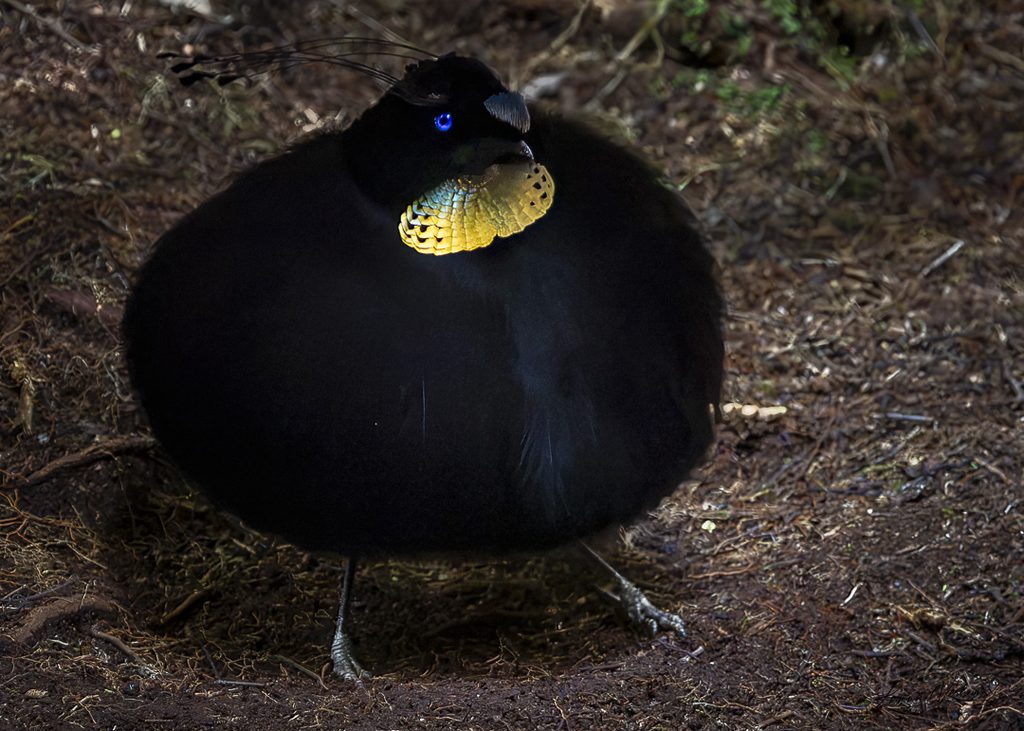
Western Parotia
The following day, we were up in the middle of the night again to see our next bird-of-paradise: Vogelkop Lophorina. I remembered seeing this bird displaying in a documentary as a child, and the image had stayed with me ever since. This is another bird that can look completely different when it feels like putting on a show! At dawn, we were dropped off in a hide overlooking a tree trunk where the Lophorina was expected to display.
Fortunately, it didn’t take long for the bird to appear, although the courtship display was not quite as forthcoming as that of Western Parotia the day before. The bird called frequently and seemed to start displaying several times, but it never quite reached the grand finale. At one point, it flew off again, but after an hour and a half of waiting, it returned to us. This time, we finally got a brief glimpse of the dance, with the bird spreading its wings and breast feathers while moving from side to side with a clicking sound. Unfortunately, we were watching from behind, but at least I was able to capture it on video!
Naturally, I also took plenty of photographs.
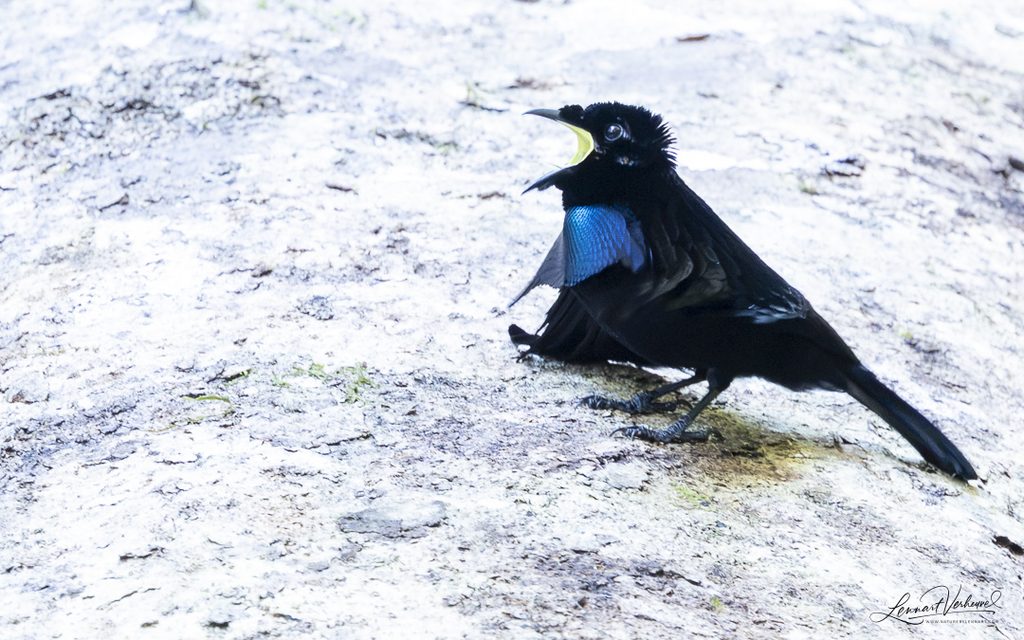
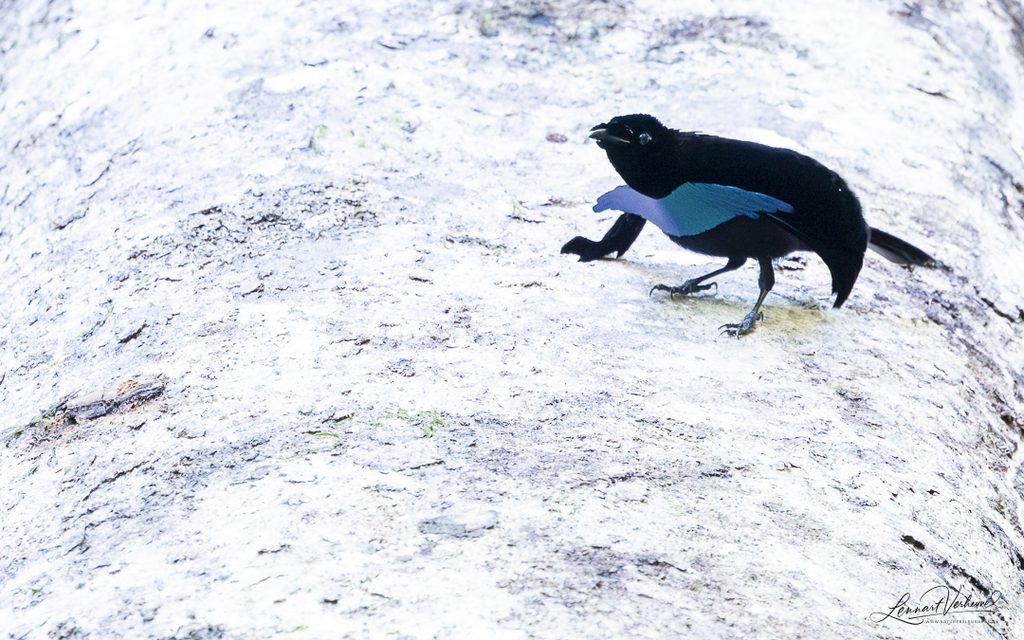
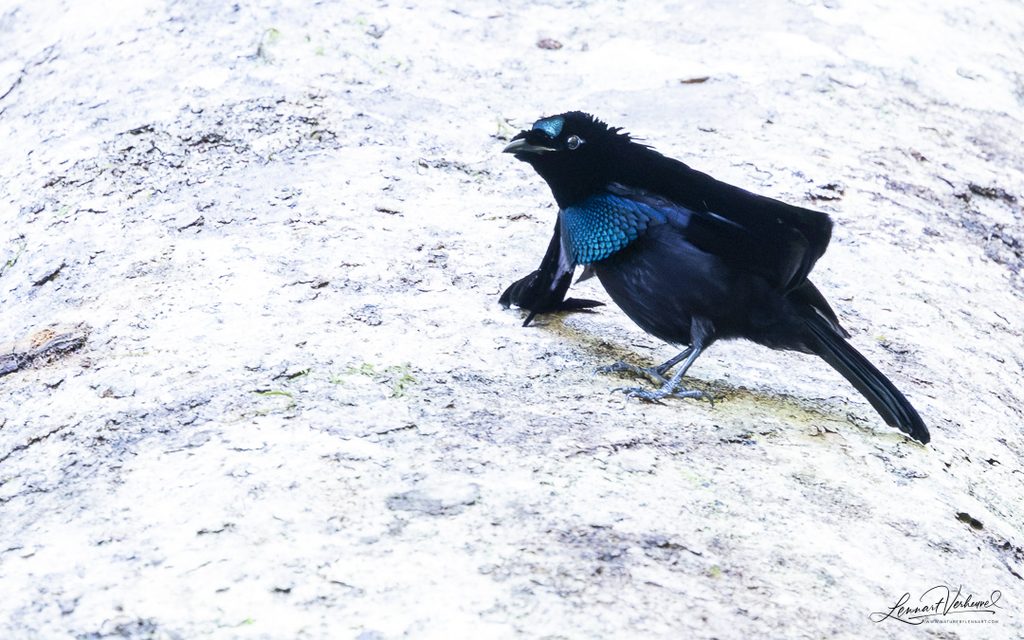
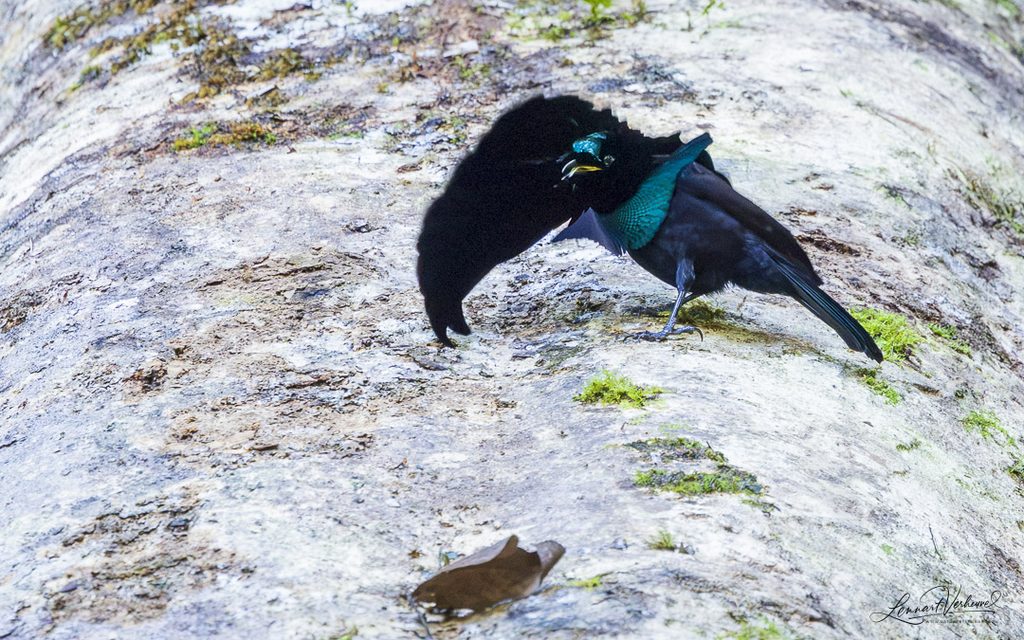
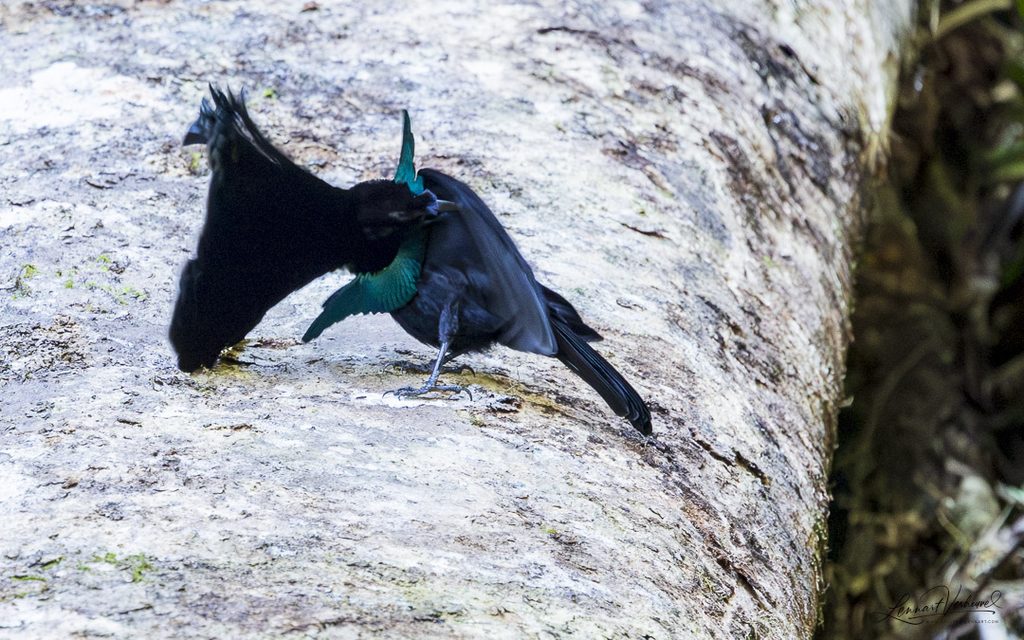
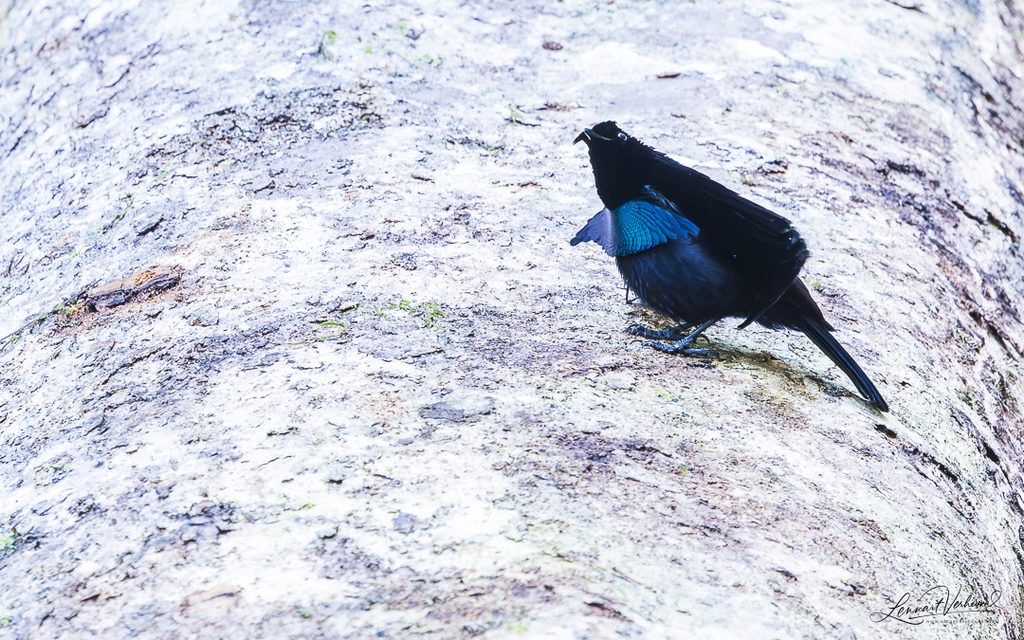
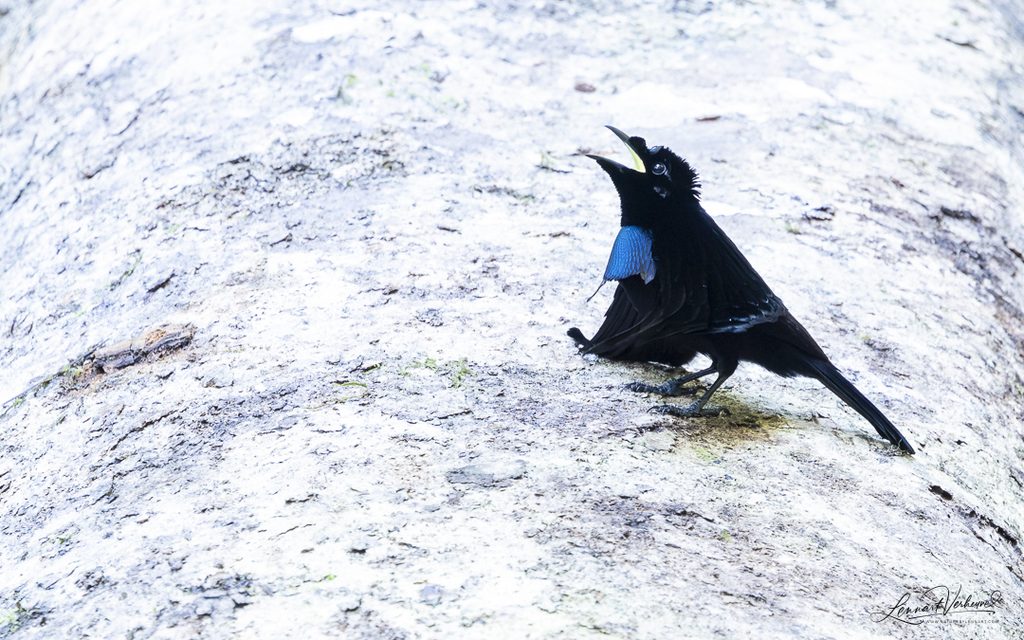
Vogelkop Lophorina
That same afternoon, we had one more hide session, this time with the iconic Vogelkop Bowerbird. This bird itself is not particularly spectacular, but its constructions certainly are. This individual had also managed to secure a large, pyramid-shaped bower in which it had arranged all sorts of objects by colour. I was also familiar with this behaviour from nature documentaries, so this was again very special to witness it with my own eyes.
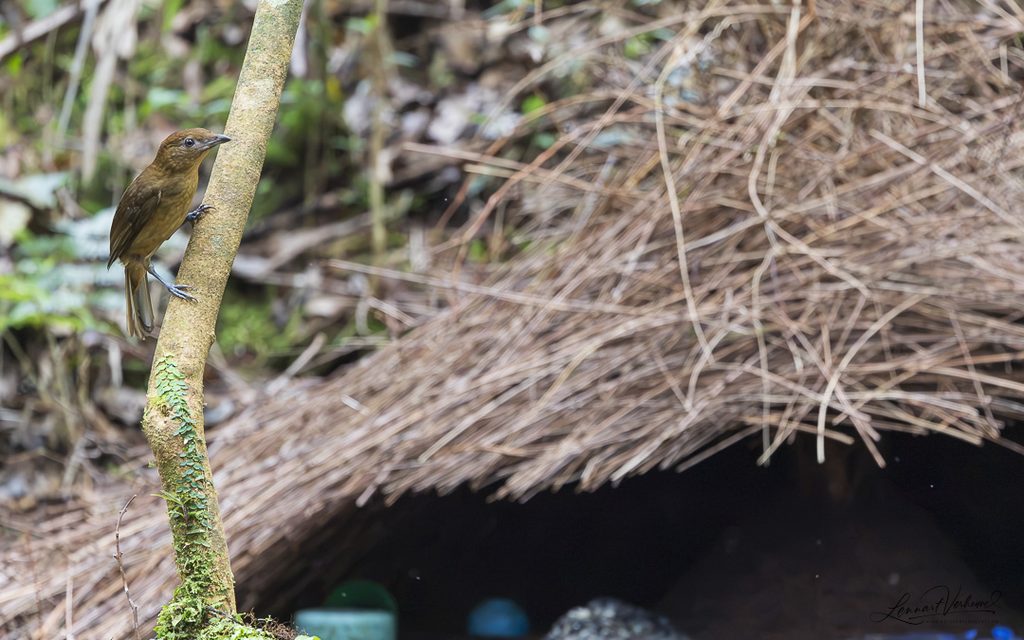
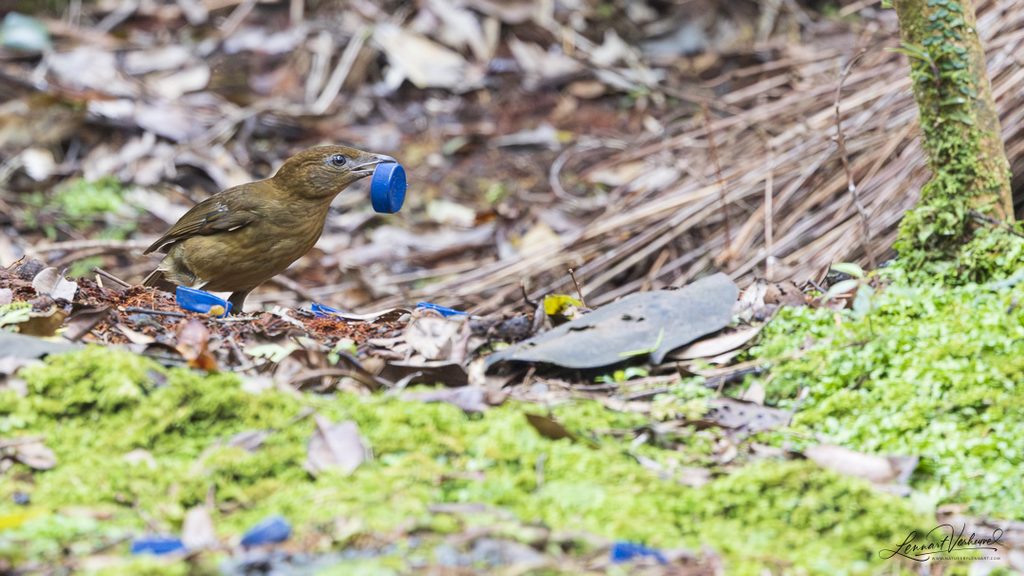
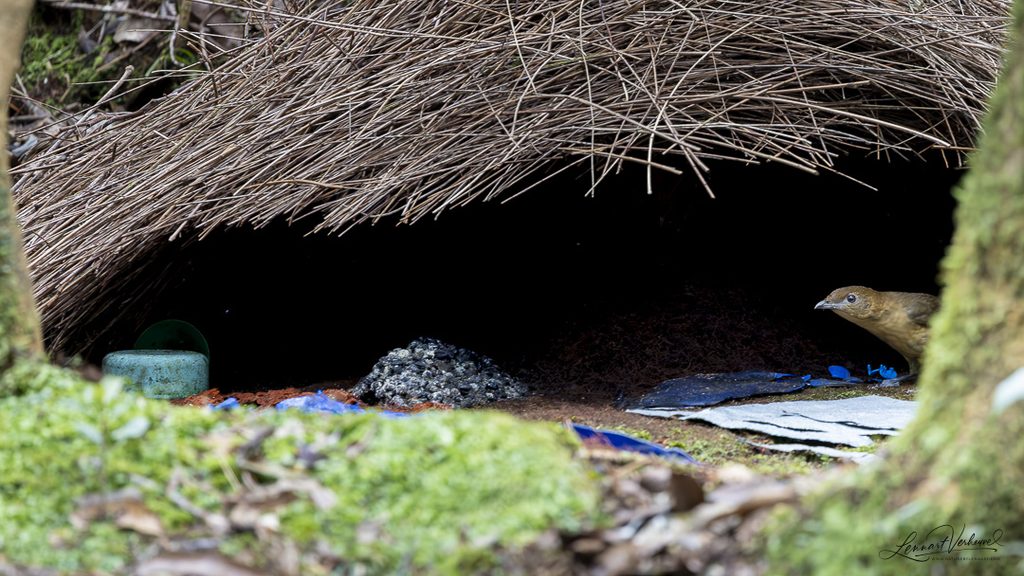
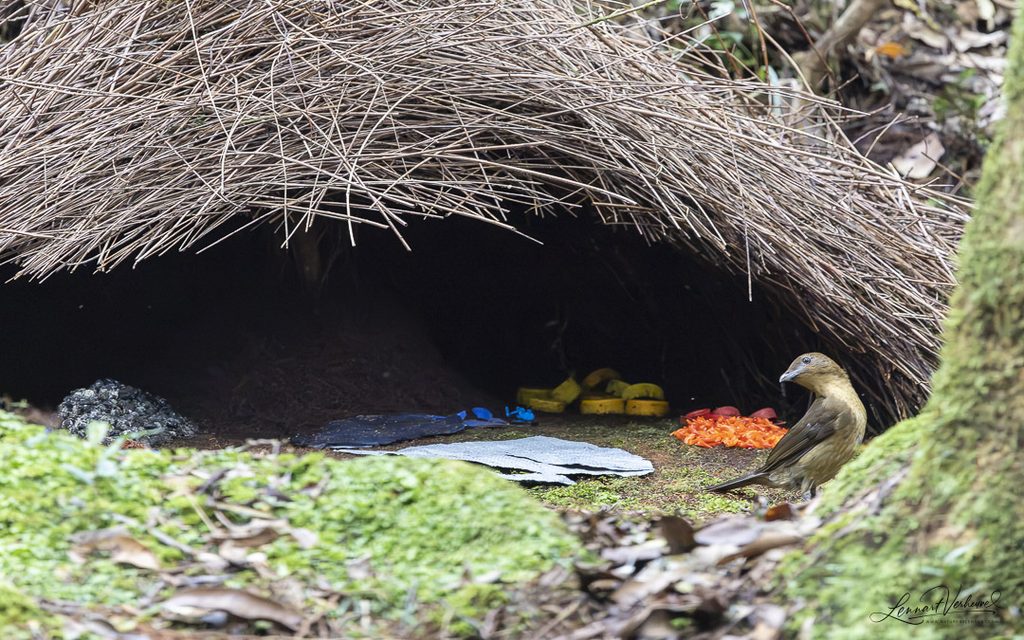
Vogelkop Lophorina
In between our time in the hides, we watched birds and searched for mammals along the roads and trails. A typical day started with a few hours in a hide, after which we continued on foot. It soon became clear that even a hide was no guarantee of getting good views of the species we were expecting to see there. In that respect, our first experience with Western Parotia had really spoiled us.
One bird-of-paradise that really made things difficult for us was the Long-tailed Paradigalla. This black bird-of-paradise is endemic to the Vogelkop region, so we certainly didn’t want to miss it! We dedicated no fewer than three hide sessions to this bird, but it simply refused to cooperate.
The idea behind these hide sessions was to attract the birds-of-paradise with the fruit of the screw palm, which had been collected by the local guides. This worked, and we had particularly frequent sightings of Western Parotia as a result.
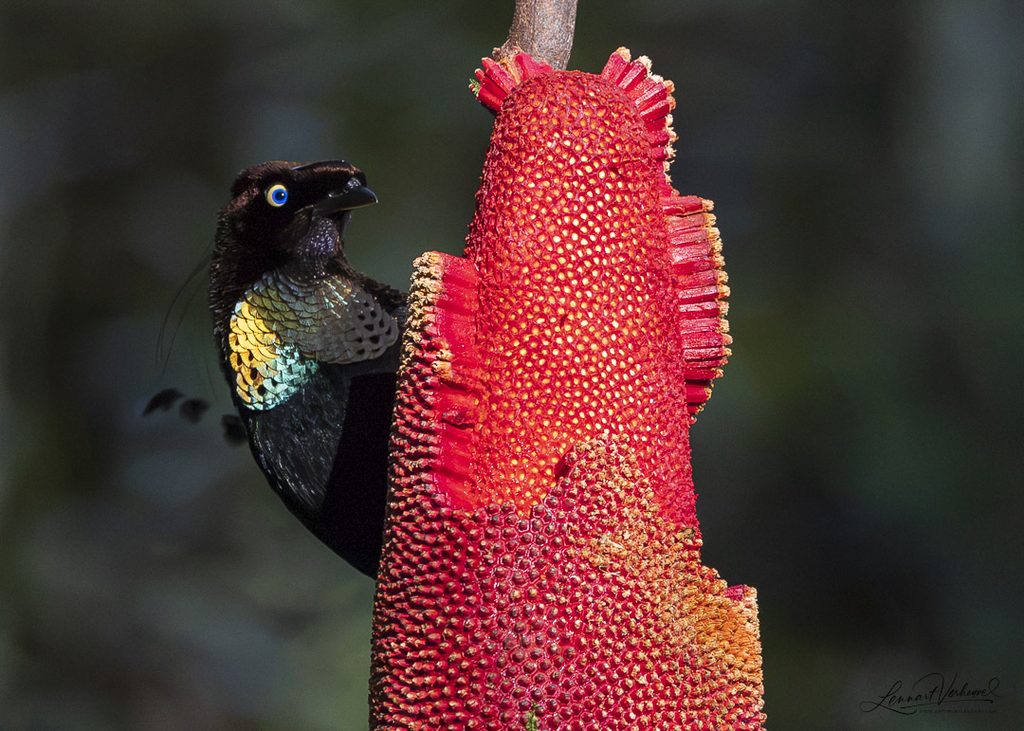
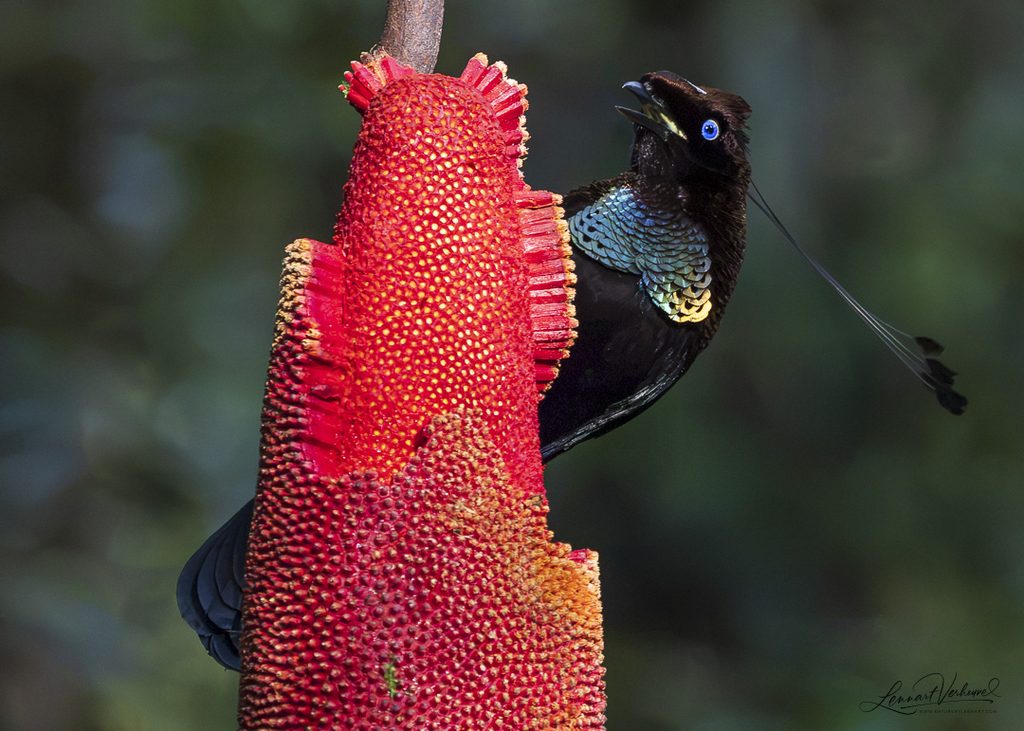
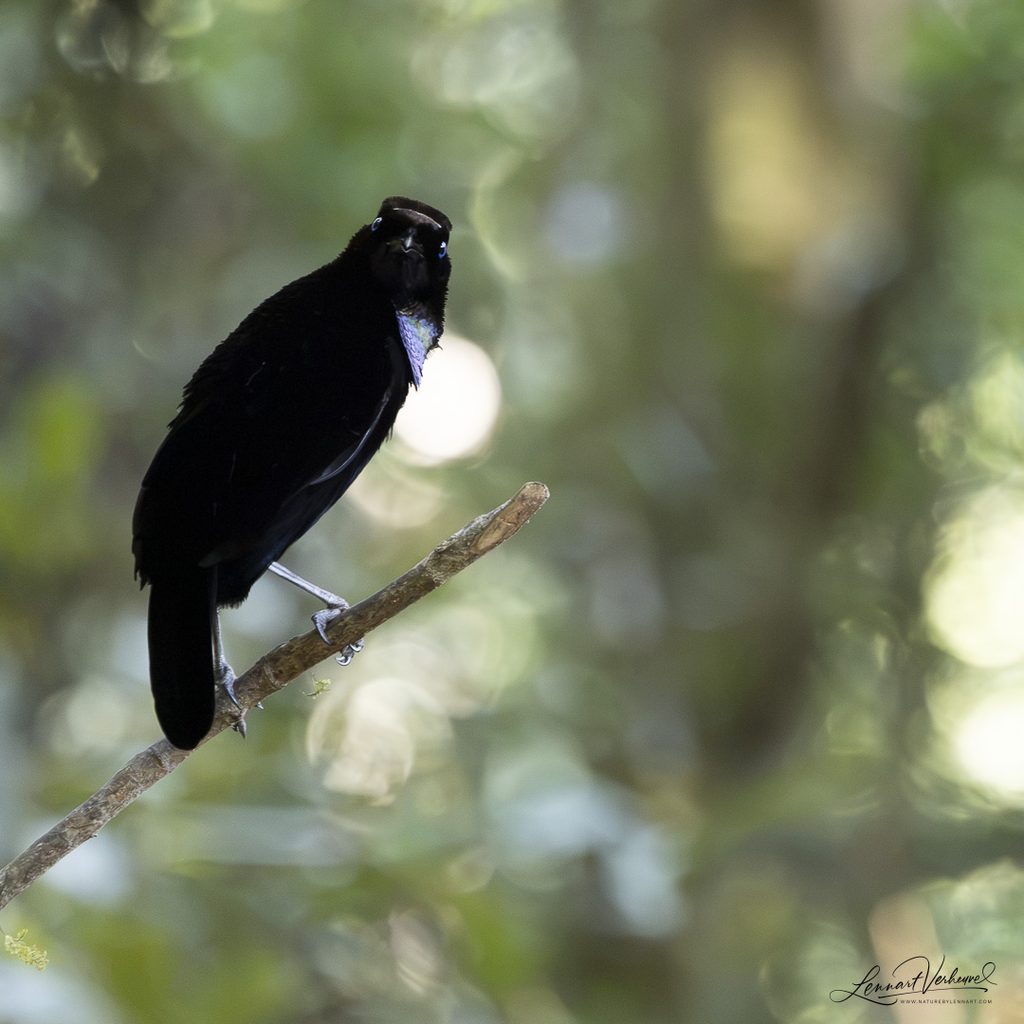
Western Parotia male
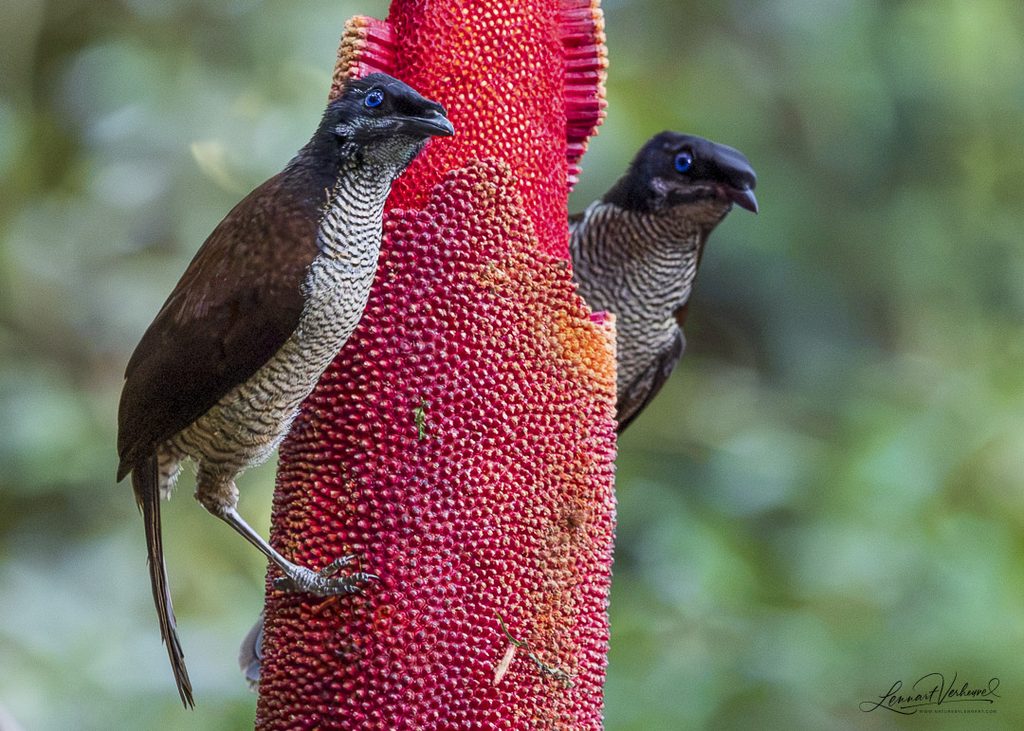
Western Parotia female
Both male and female Vogelkop Lophorina also showed up.
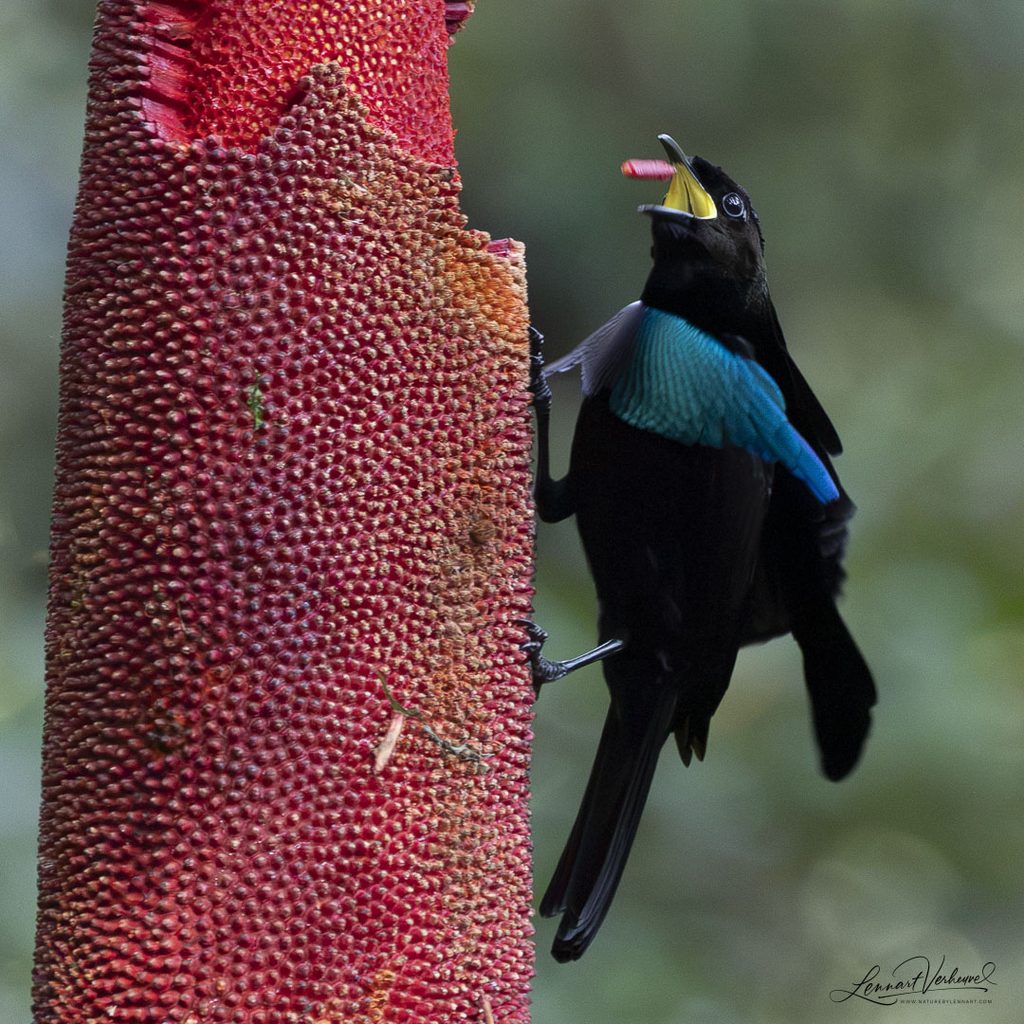
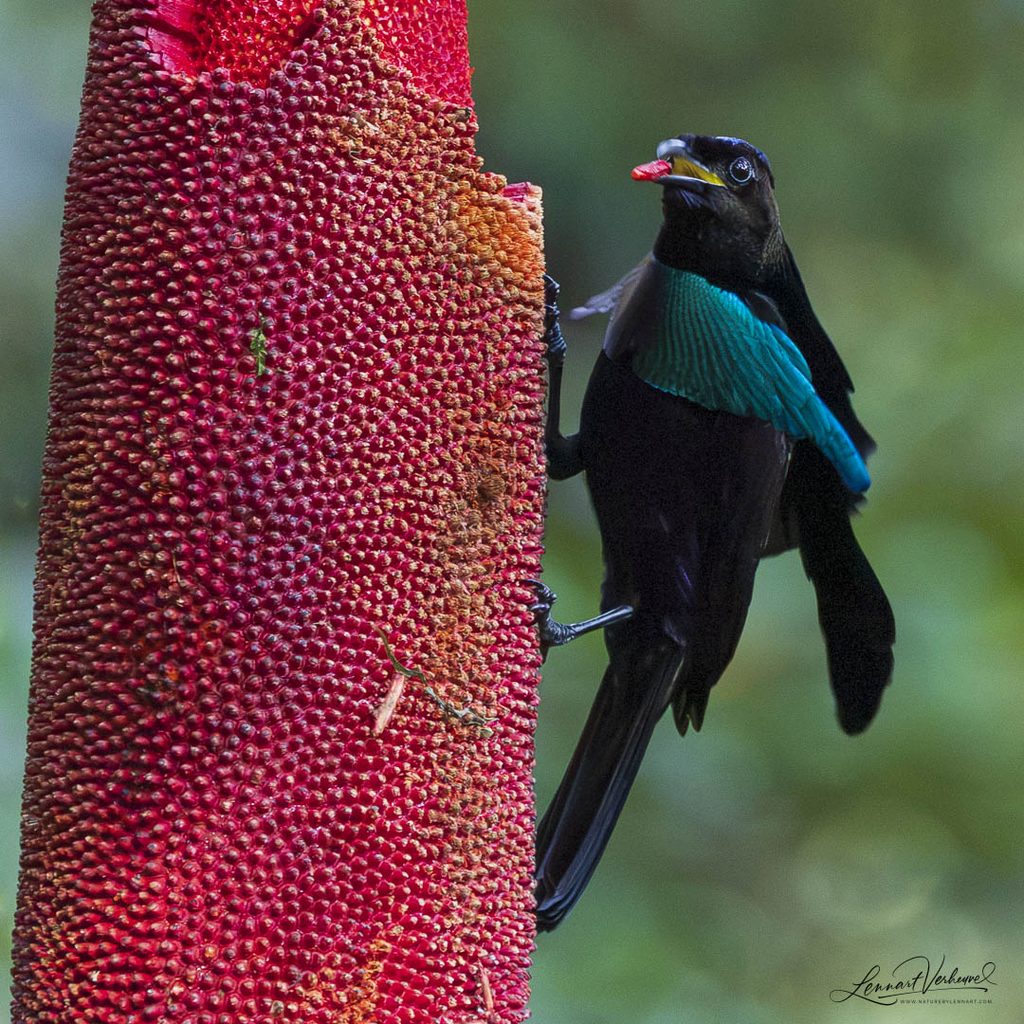
Vogelkop Lophorina male
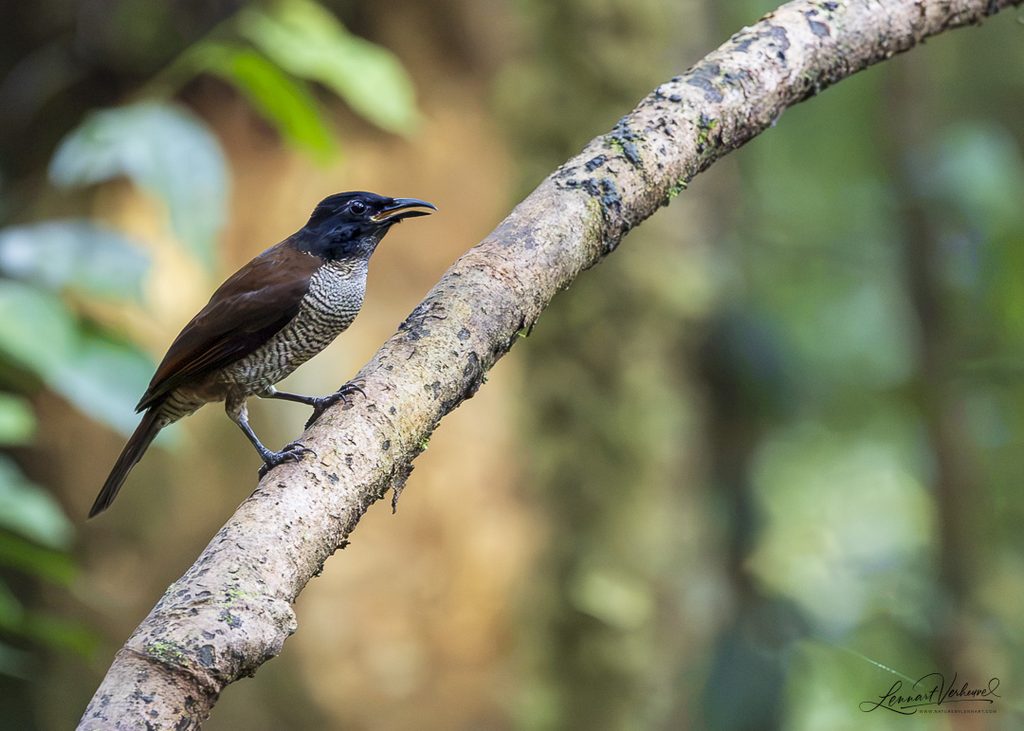
Vogelkop Lophorina female
We were also very pleased to see the spectacular sicklebills: the largest birds-of-paradise in the world. The elusive Black-billed Sicklebill appeared very early in the morning and showed itself only briefly.
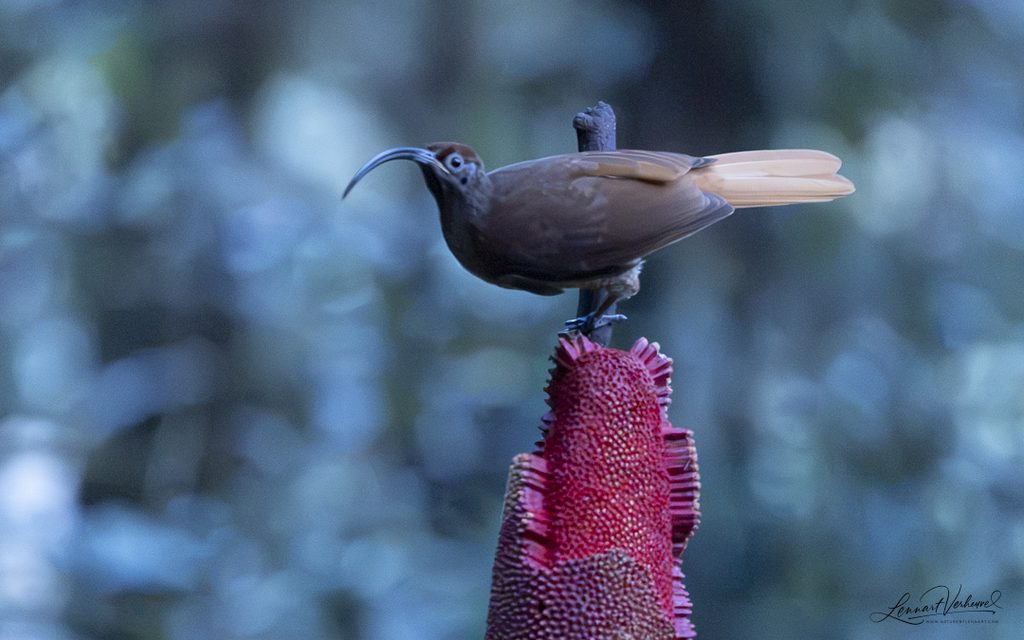
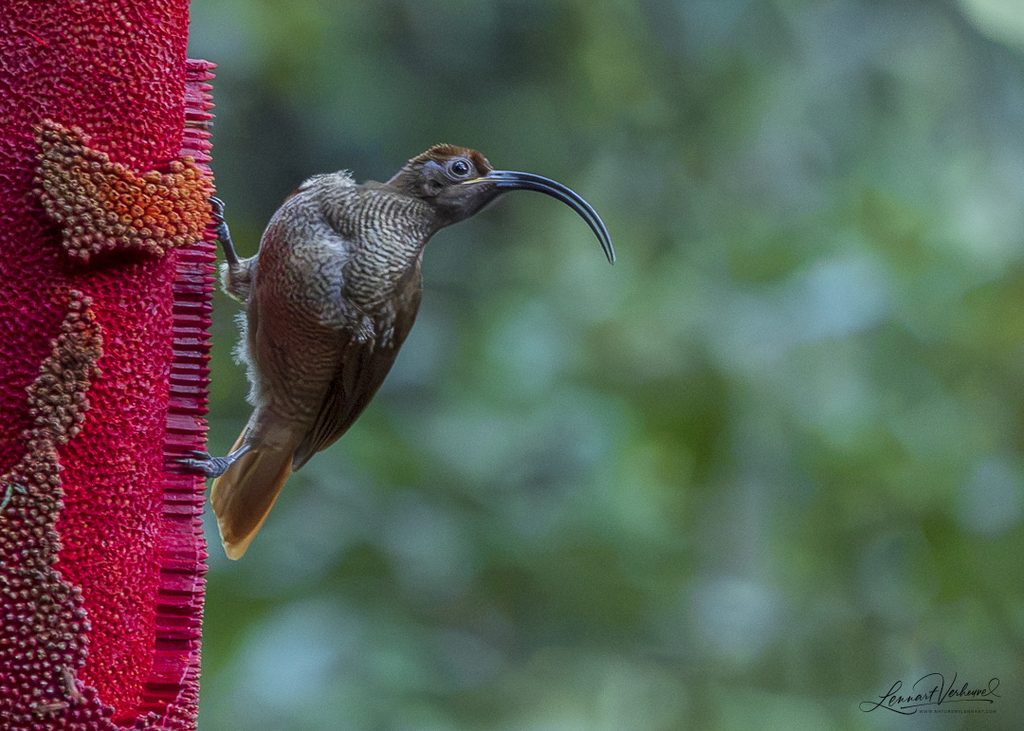
Black-billed Sicklebill
The larger Black Sicklebill allowed us to watch it for longer. We were particularly delighted with the impressive male, which came to visit us only once.
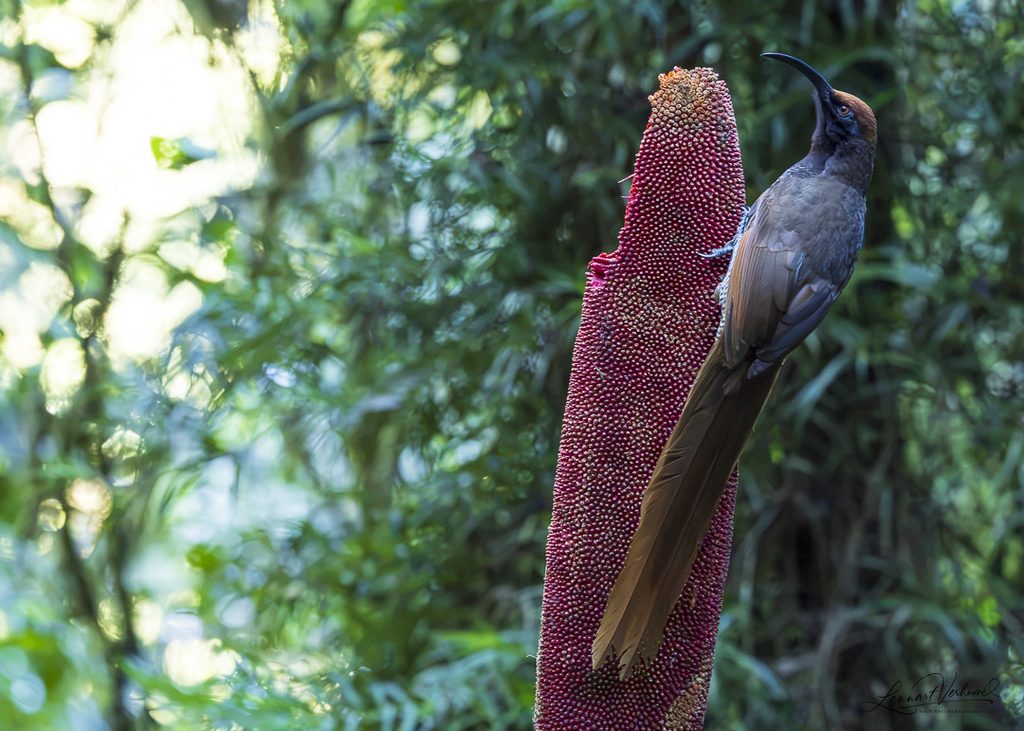
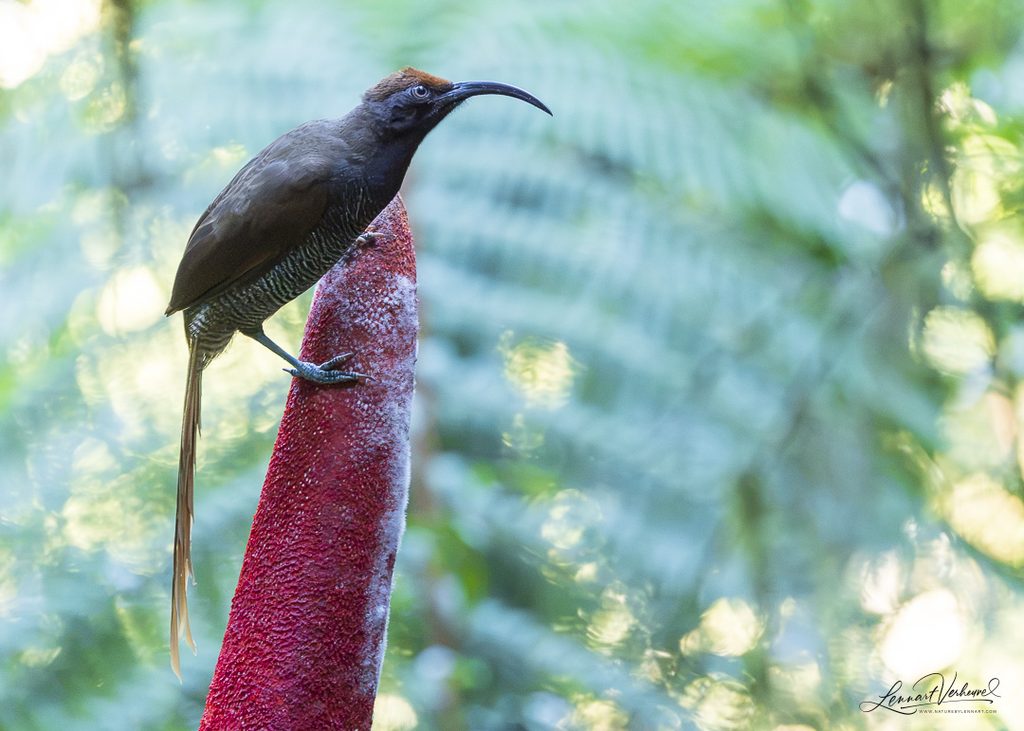
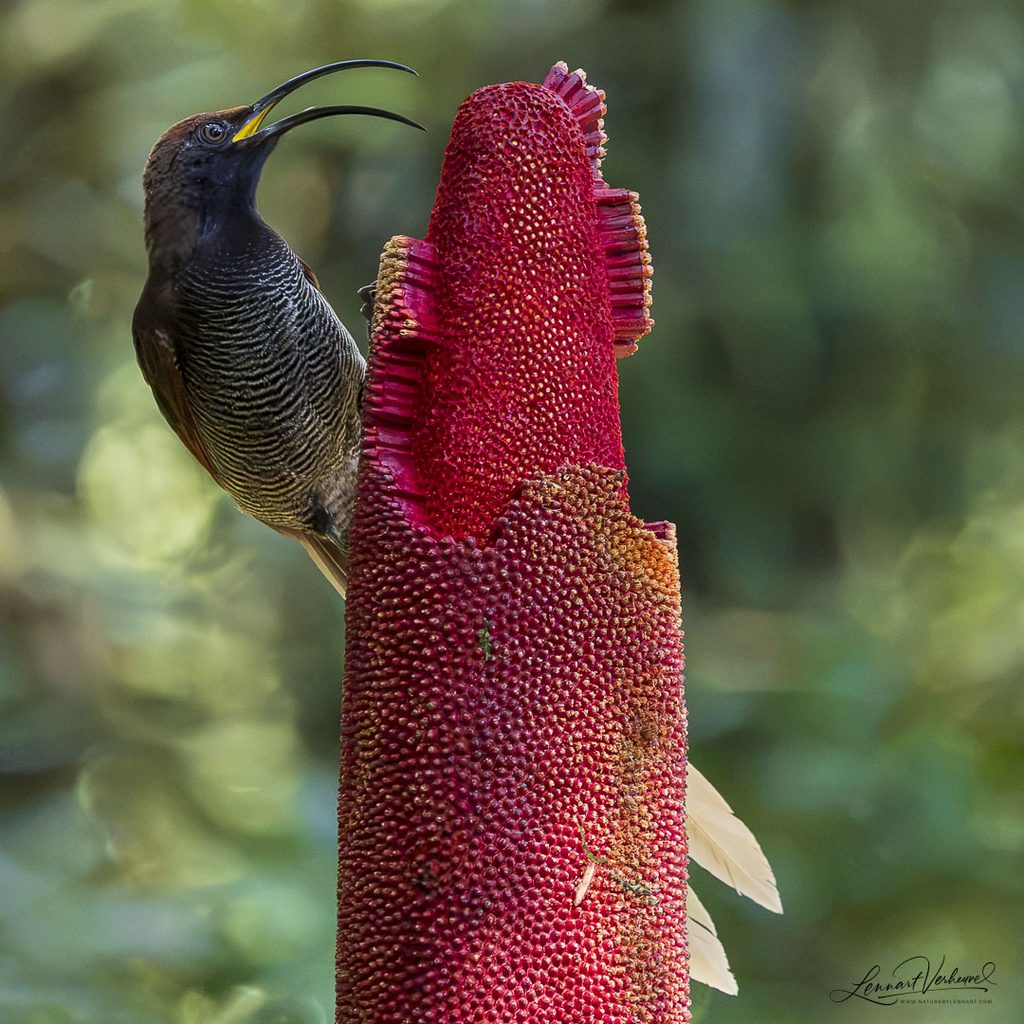
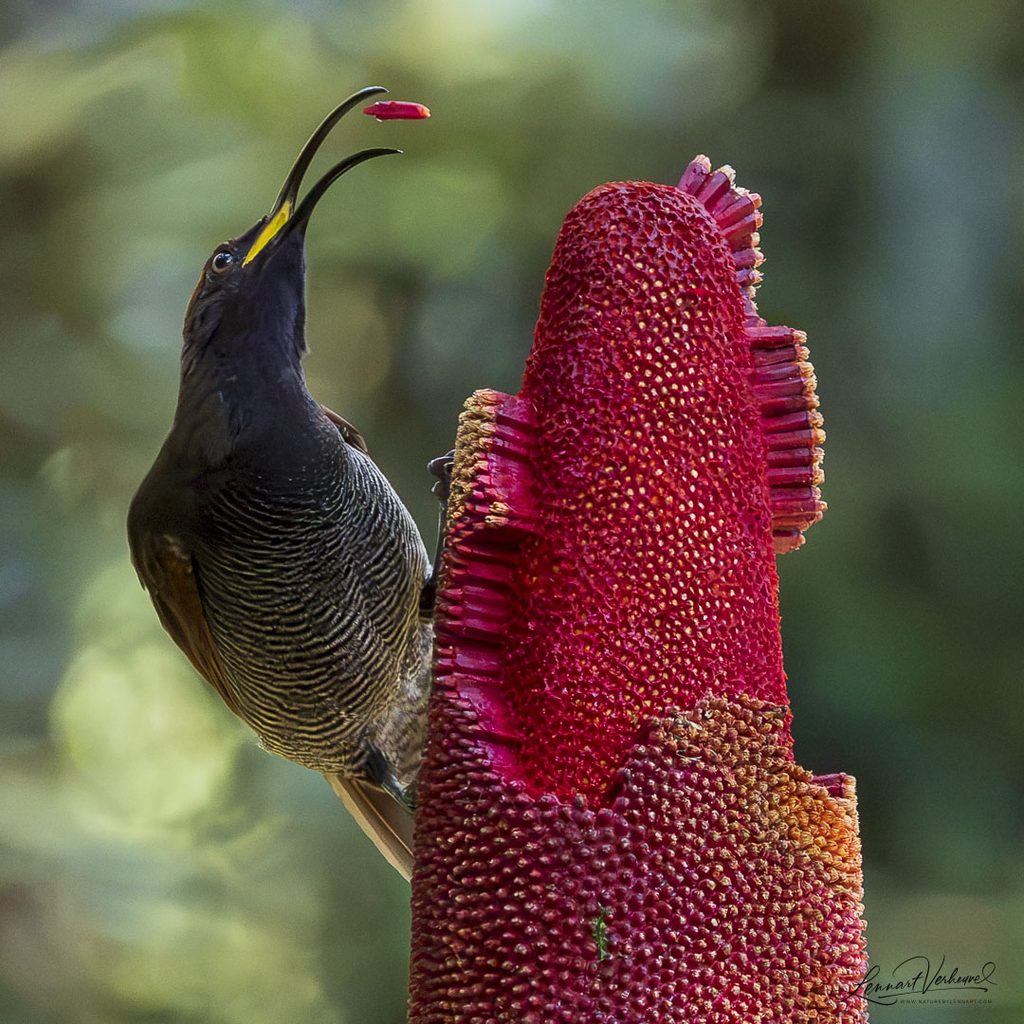
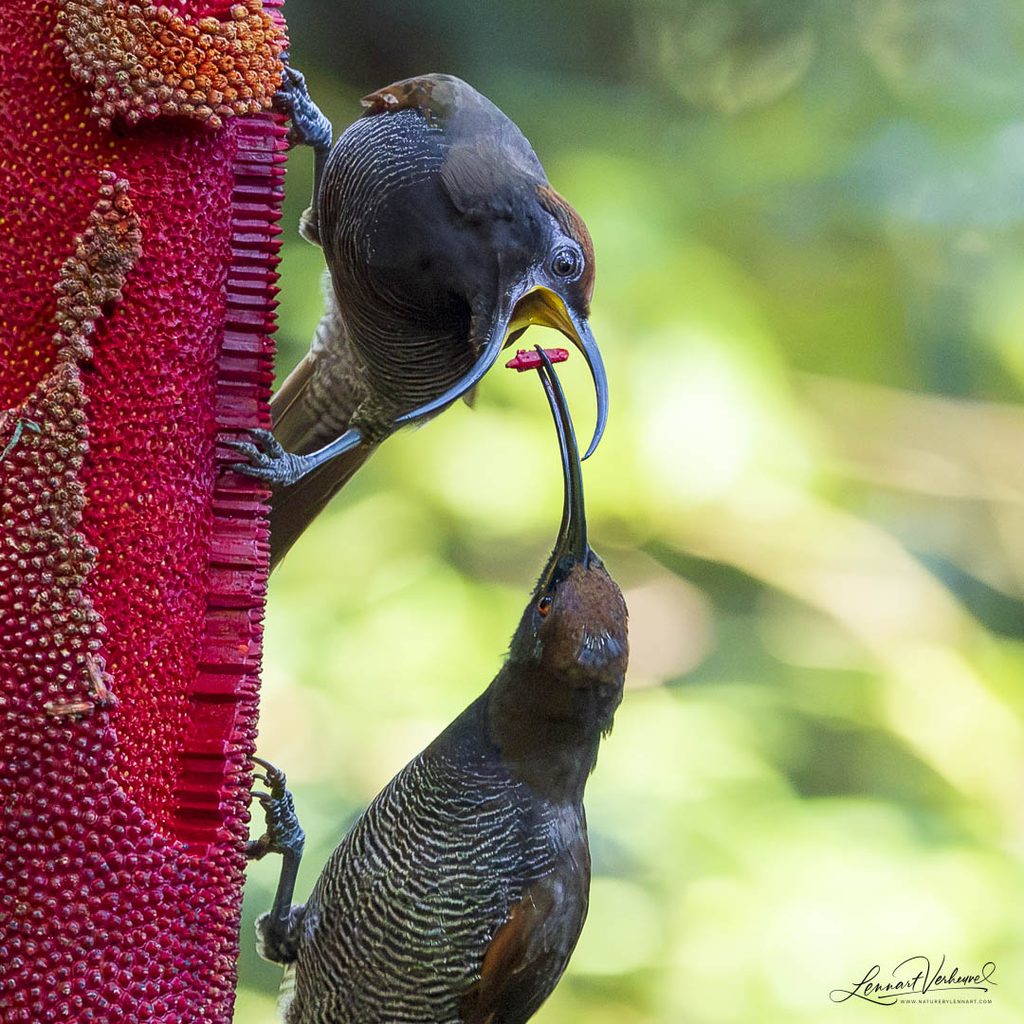
Black Sicklebill female
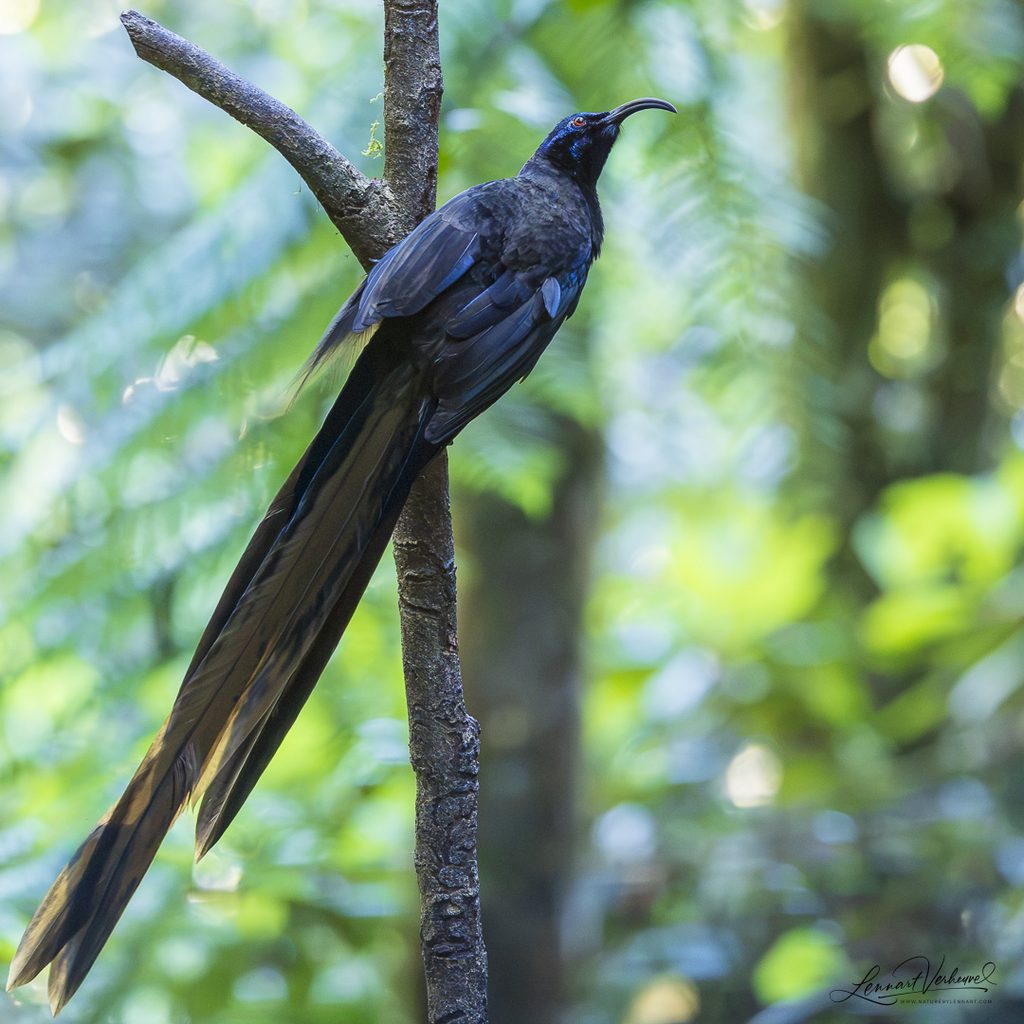
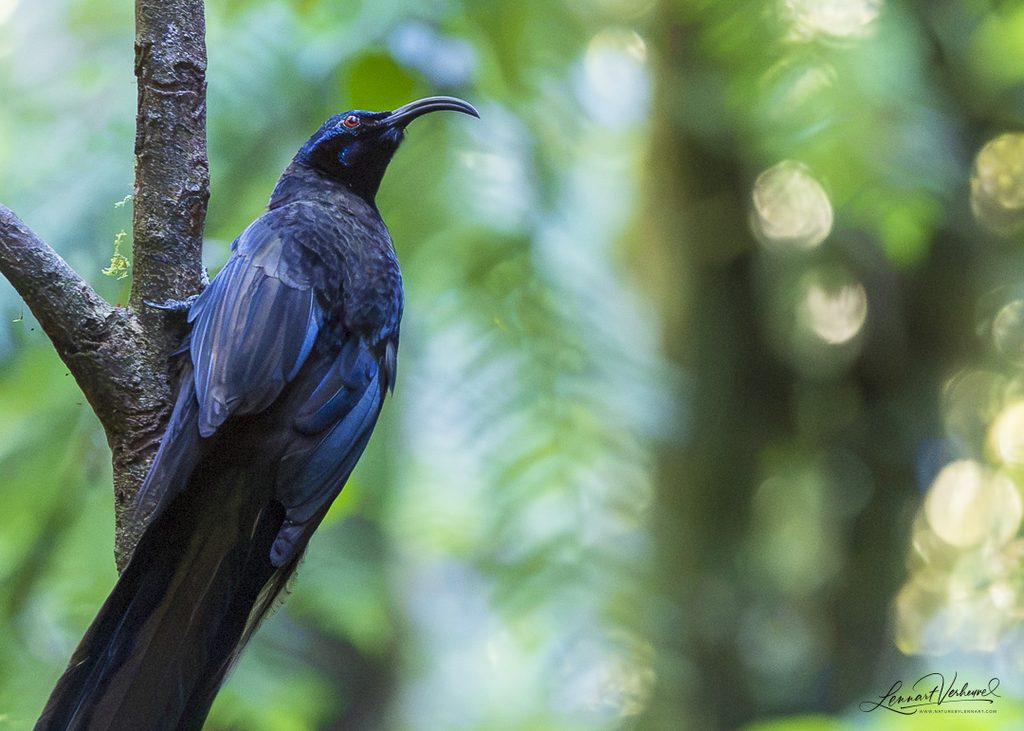
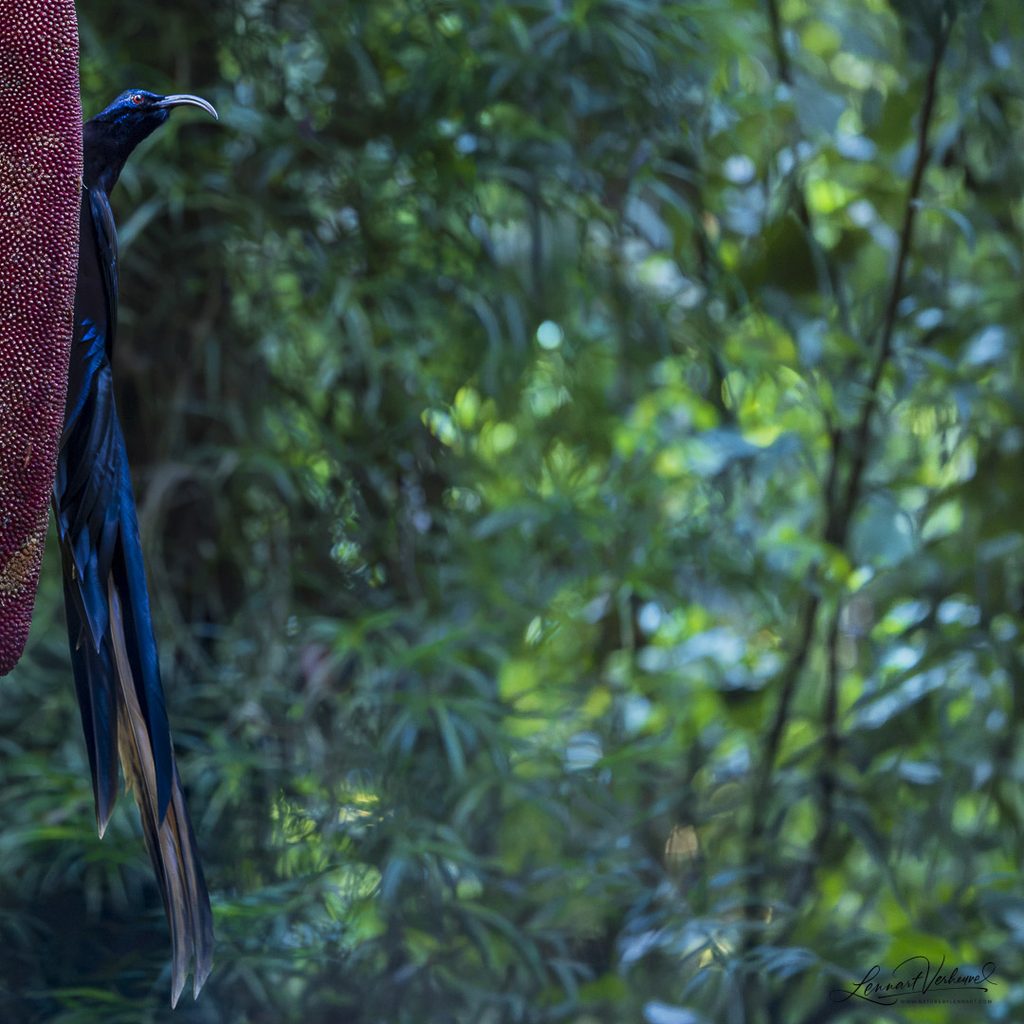
Black Sicklebill male
Birding on foot also gave us some good birds. On our very first afternoon, we spotted the unique Pesquet’s Parrot, with its distinctive vulturine head.
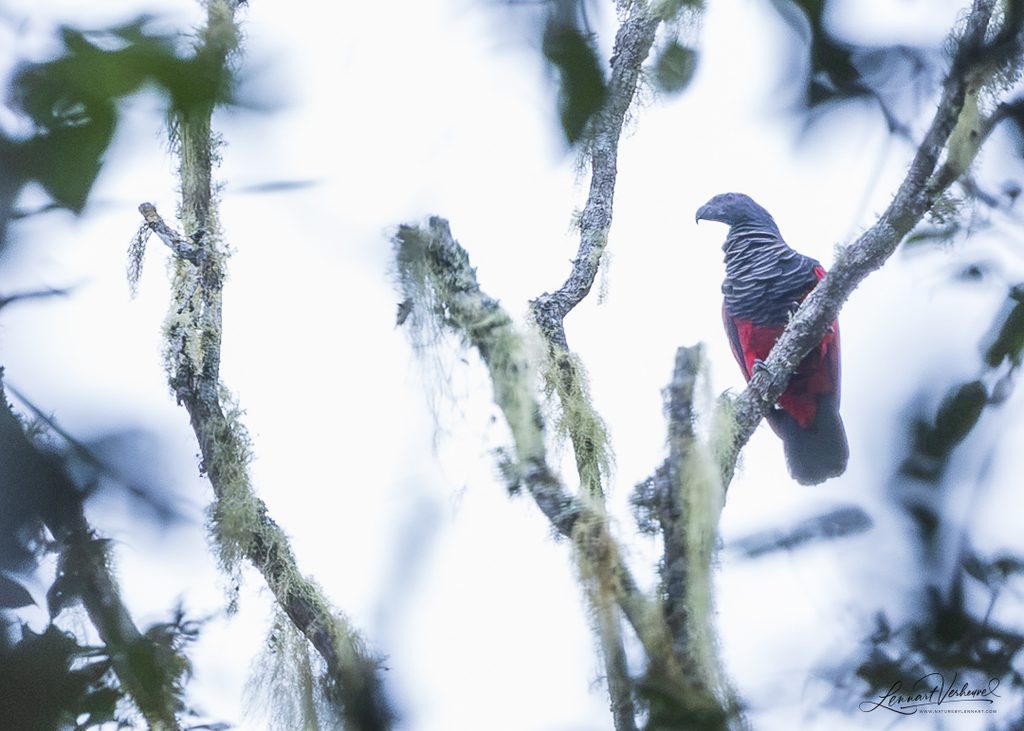
Pesquet’s Parrot
Another noteworthy encounter in this category was the endemic West Papuan Lorikeet. Compared with the parrots and parakeets I had seen in other parts of the world, such as Africa and South America, I was struck by just how much red the Papuan species have in their plumage.
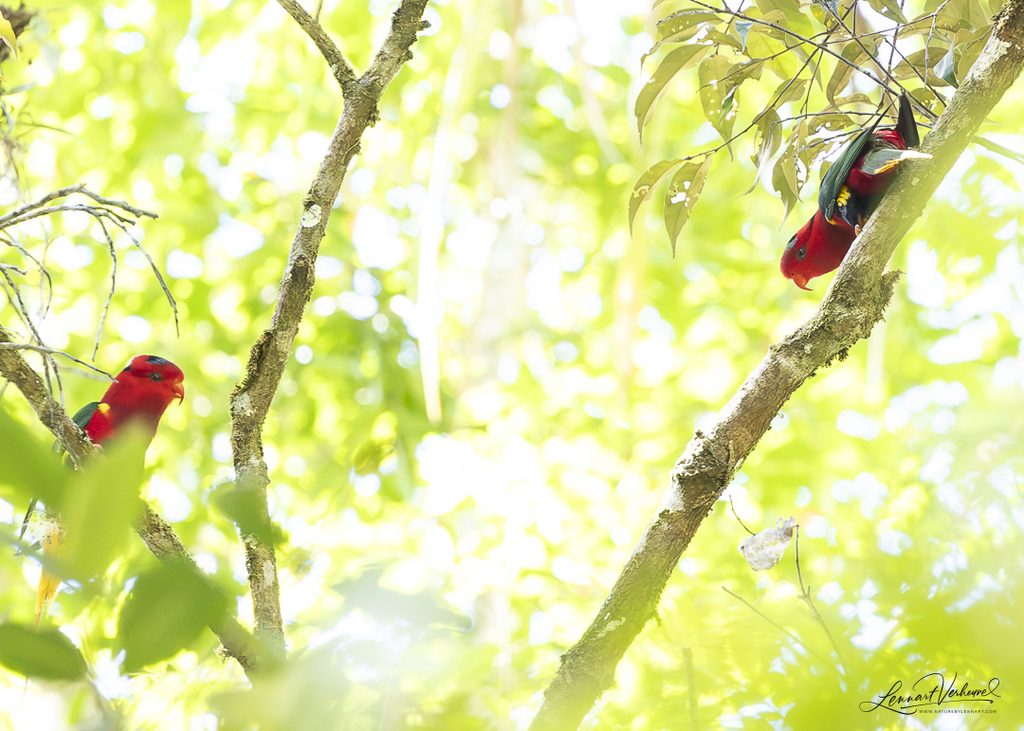
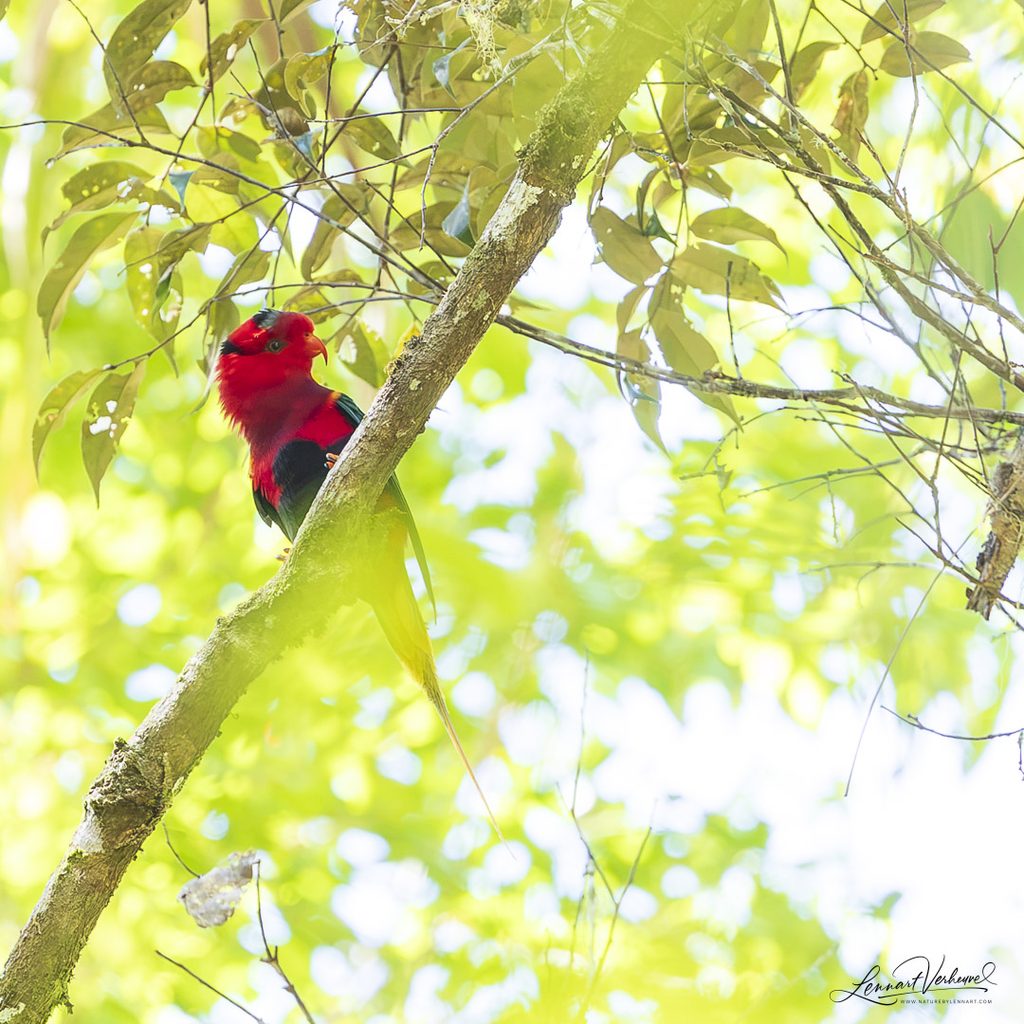
West Papuan Lorikeet
Another bird with a striking appearance was the Tit Berrypecker, whose male looks rather like a Great Tit. The female, on the other hand, resembles a miniature version of a South American fruiteater.
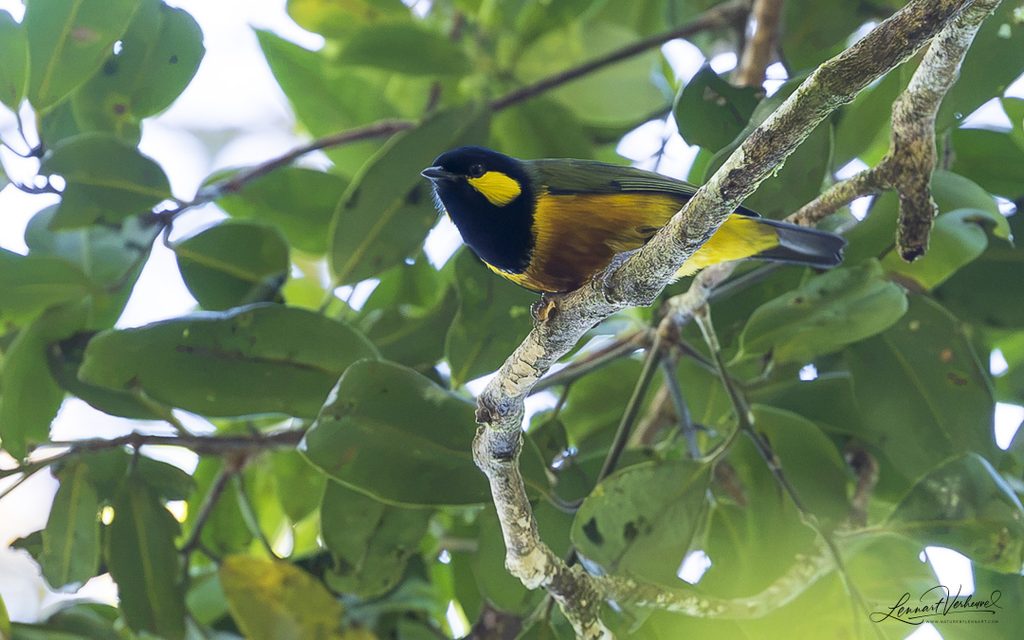
Tit Berrypecker male
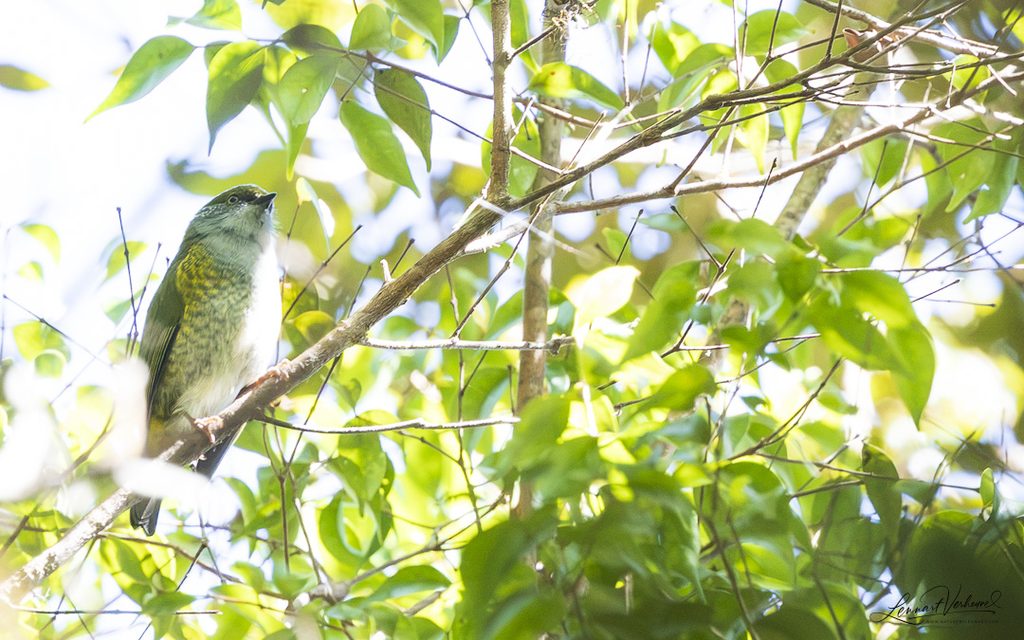
Tit Berrypecker female
Another species we managed to ‘pull out of a flock’ was the beautiful Mountain Peltops. Such a charismatic species!
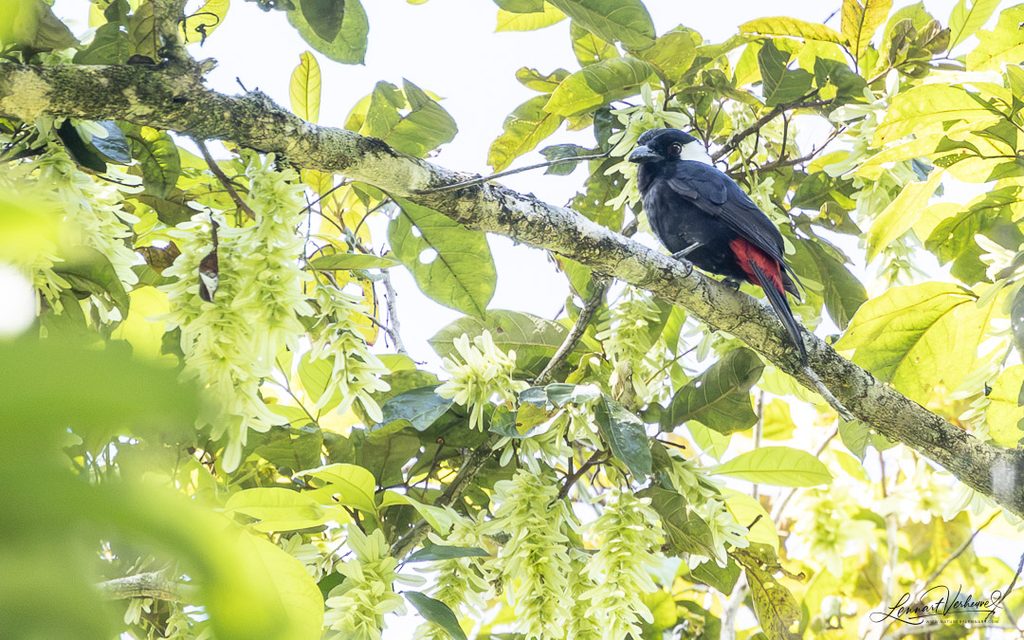
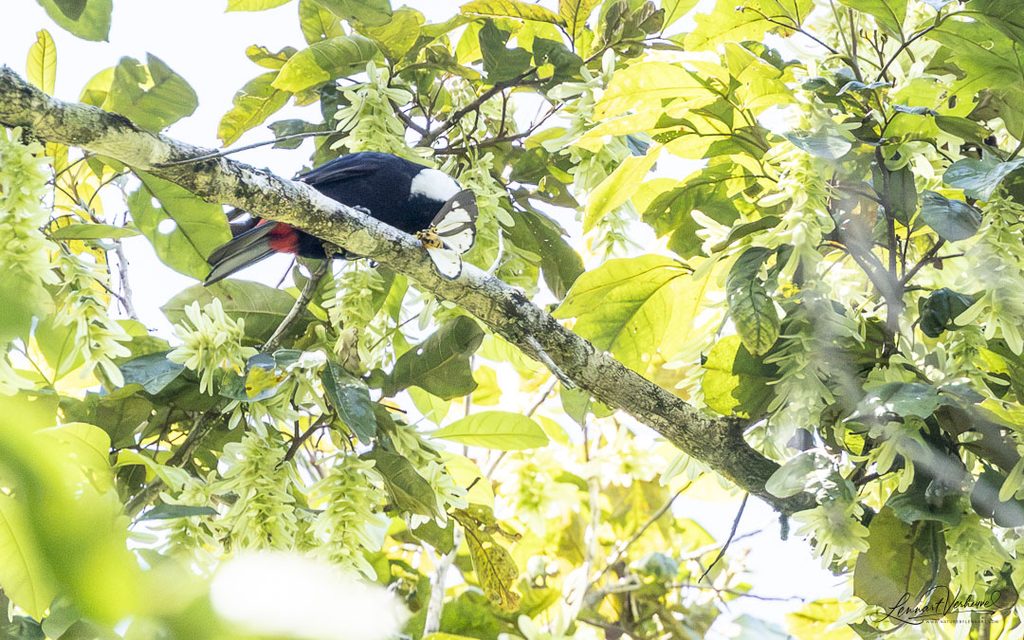
Mountain Peltops
I got some truly terrible photographs of the Spotted Jewel Babbler, but because this bird is so difficult to see and so beautiful when you do get a glimpse of it, it certainly deserves being mentioned. After a great deal of patience, we finally managed to see it!
Spotted Jewel Babbler
As is often the case in rainforests, it is usually easier to hear a bird than to see it, and some species are particularly good at hiding themselves.
One bird that was neither particularly difficult to see nor especially rare was the Hooded Pitohui. I still thought it deserved a mention because it is one of the few poisonous birds in the world! Its feathers contain batrachotoxin. It is not entirely clear how this toxin ends up in their feathers, but the explanation probably lies in their diet. I found it a very interesting fact, which I only learned about during the trip thanks to my travel companions.
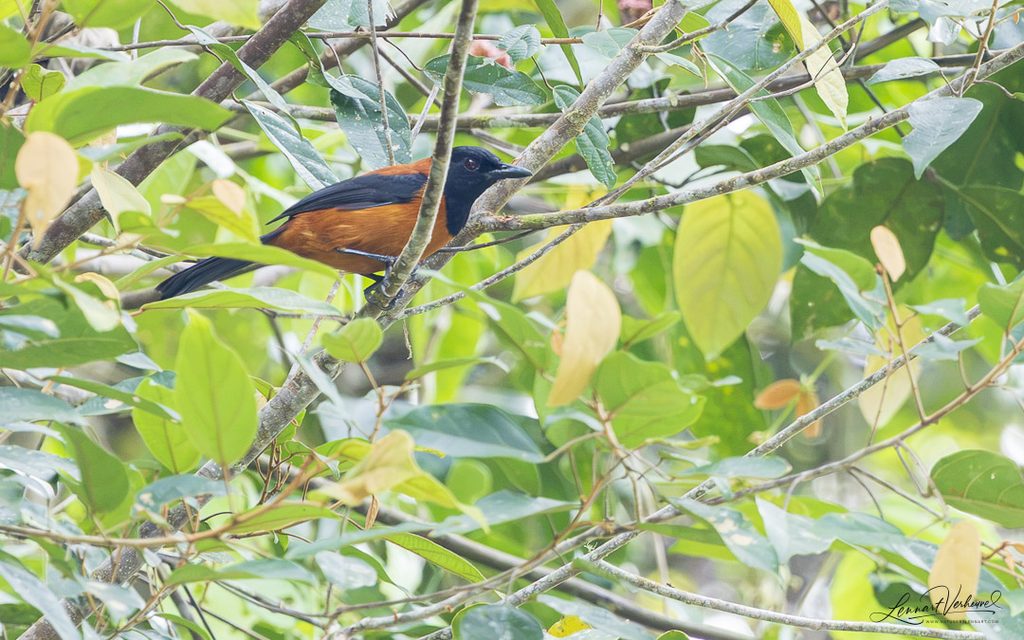
Hooded Pitohui
One species that required a bit of a drive was the Grey-banded Mannikin. This bird is found only in one lake region in West Papua: the Anggi Lakes. It is not often seen by birders, but this is mainly because it takes a bit of driving to get there from the well-known rainforest birding areas. We certainly thought it was worth the effort and saw plenty of birds.
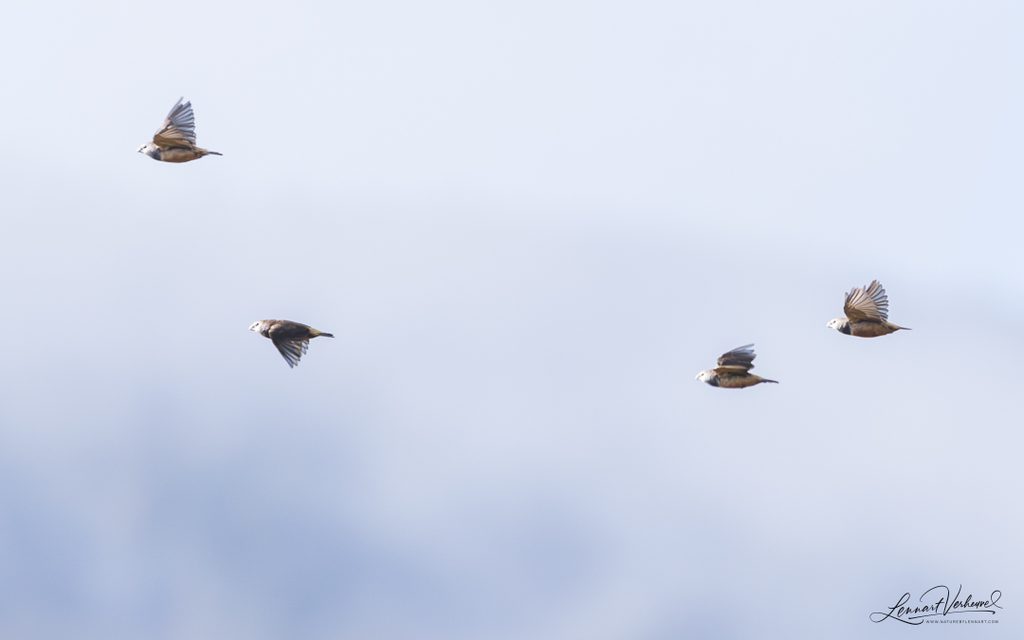
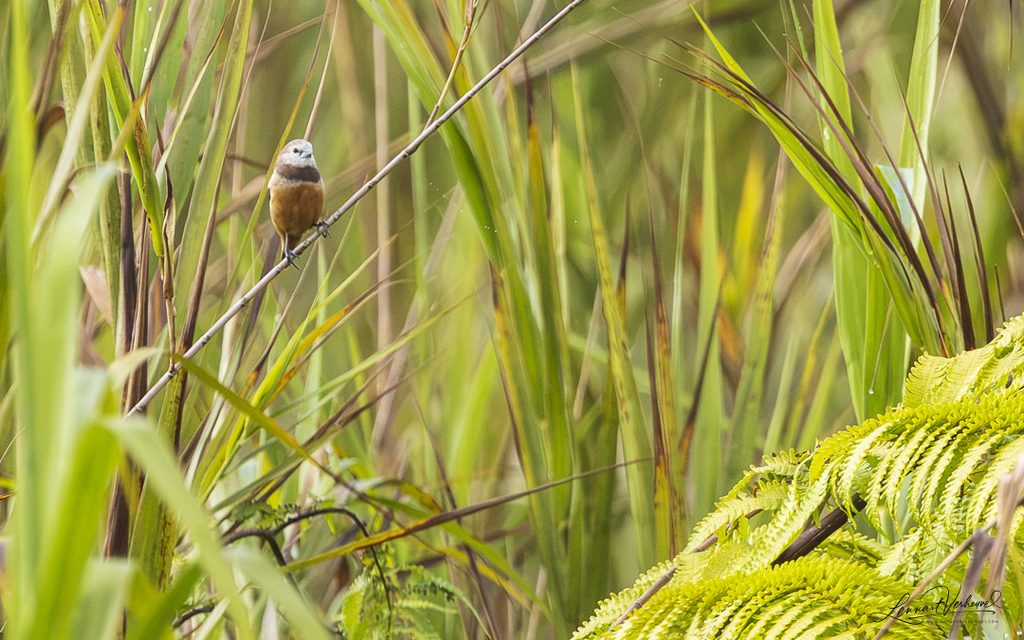
Grey-banded Mannikin
The trip to the lakes became even more valuable when we suddenly spotted three beautiful Torrent Larks along the road on our way there! This species is specialised in mountain streams and rainforest habitats, and its behaviour is somewhat reminiscent of forktails or a species such as Torrent Tyrannulet. It was certainly not an easy species to see in our part of the Arfak Mountains, so we were very pleased with this excellent sighting!
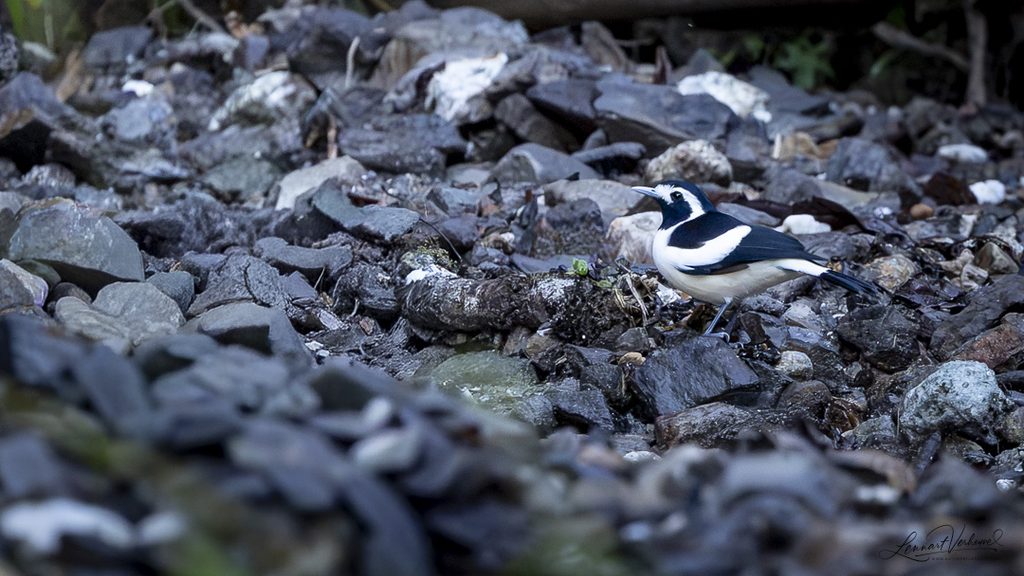
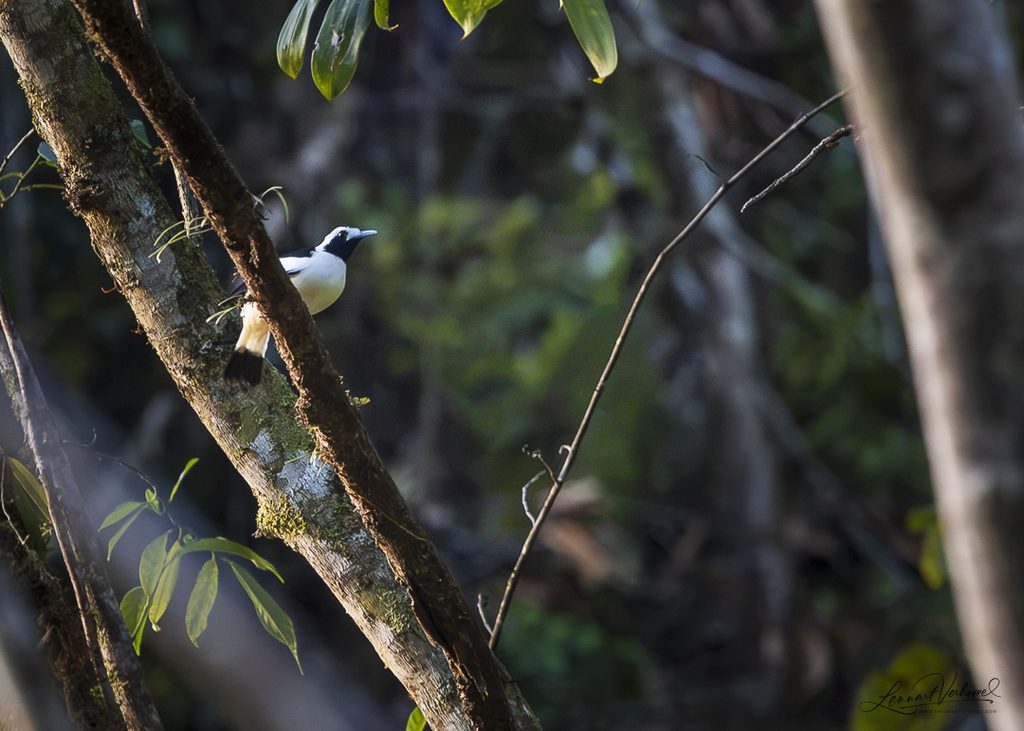
Torrent Lark female
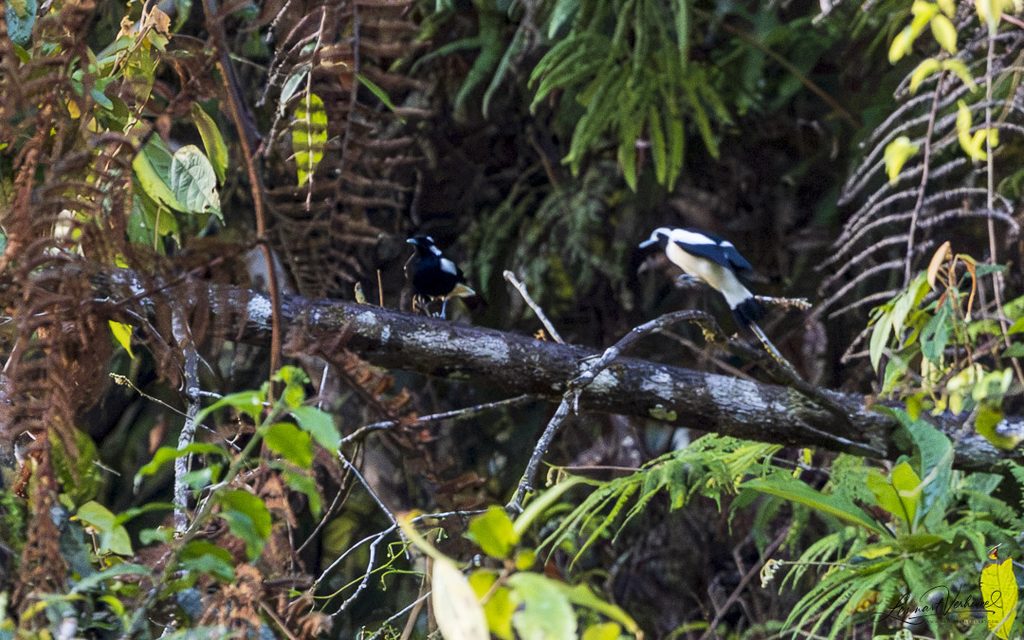
Torrent Lark male and female
Besides birds, we were all interested in mammals as well. West Papua certainly has some remarkable mammals to offer! However, our options were somewhat limited from the location where we were staying, and we had virtually no chance of seeing any of the tree-kangaroos. We did, however, hope to find some other mammals, such as ringtails and cuscuses.
Our very first night in the Arfak Mountains was immediately successful. We had some fantastic sightings of the endemic Arfak Ringtail Possum.
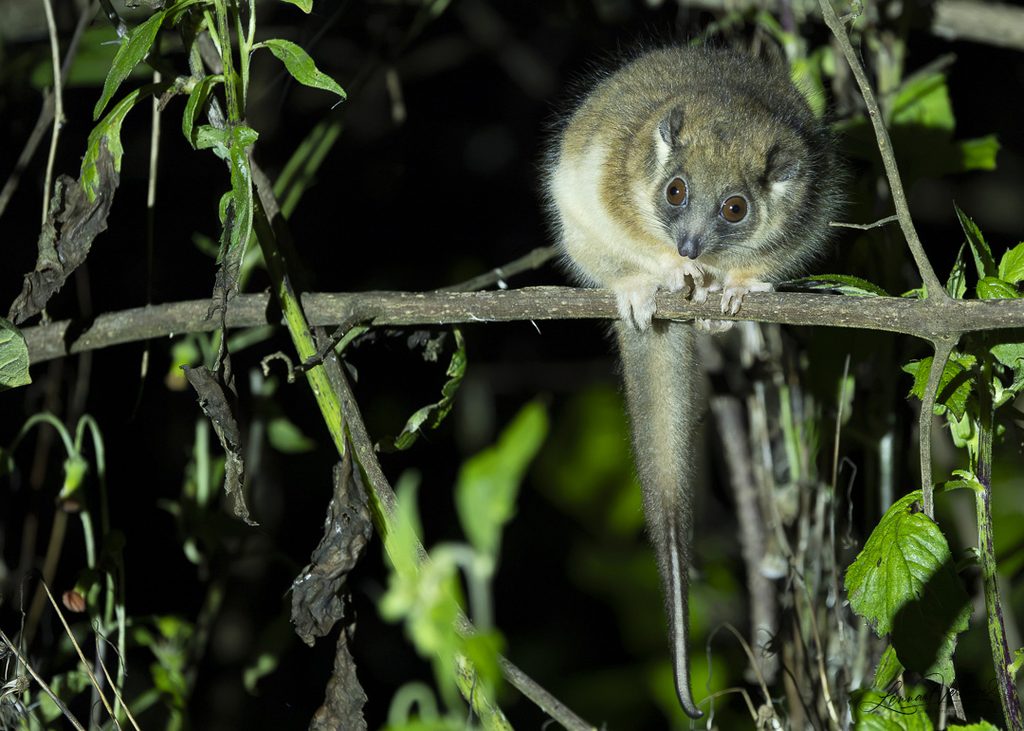
Arfak Ringtail Possum
We also saw the endemic (and elusive) Reclusive Ringtail Possum.
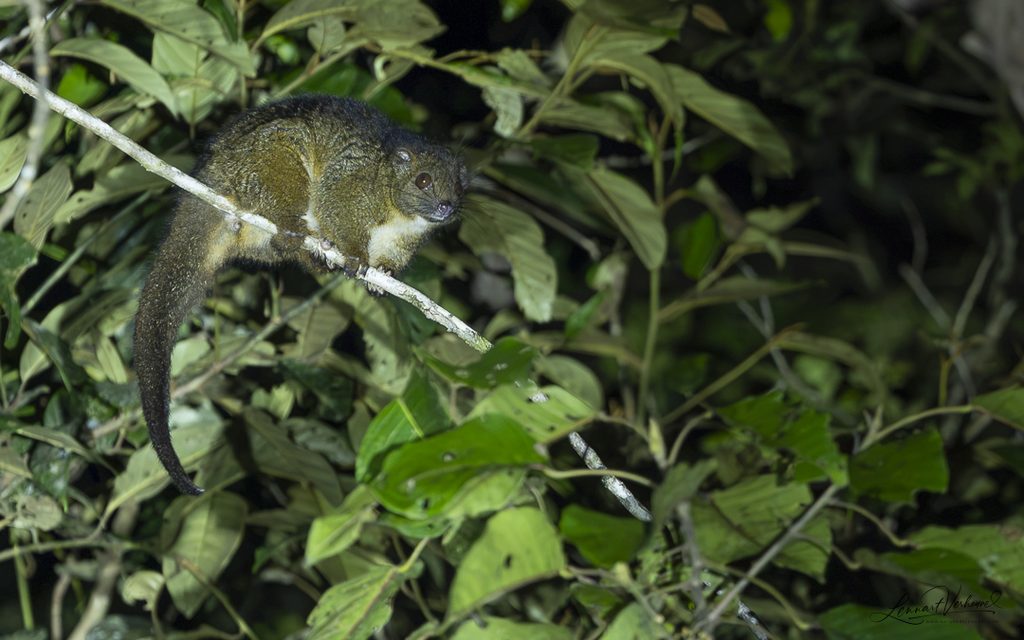
Reclusive Ringtail Possum
And as if that wasn’t enough, we also encountered the extraordinarily cute New Guinea Glider.
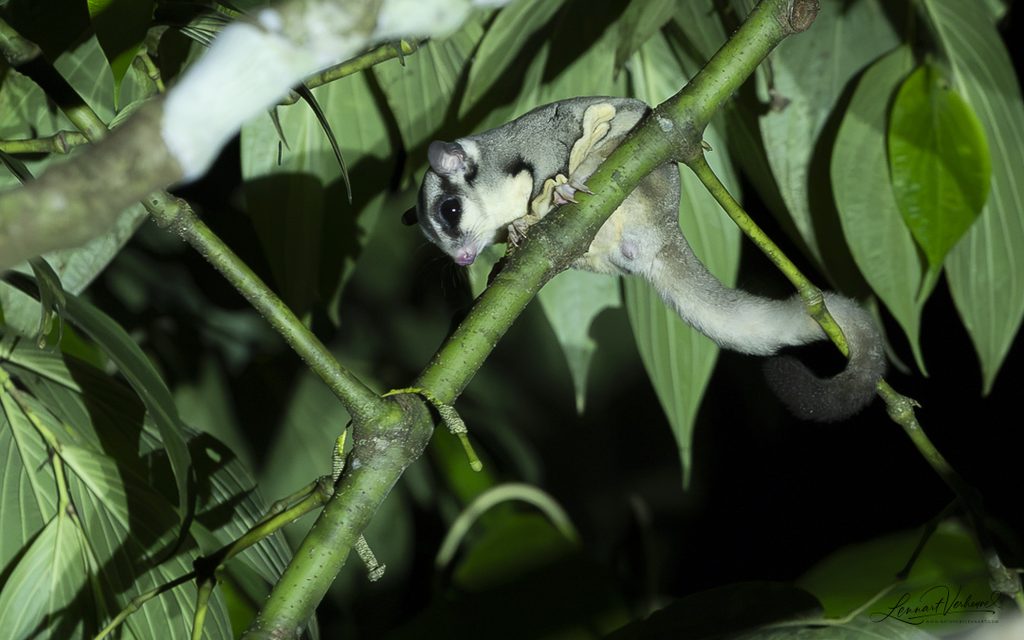
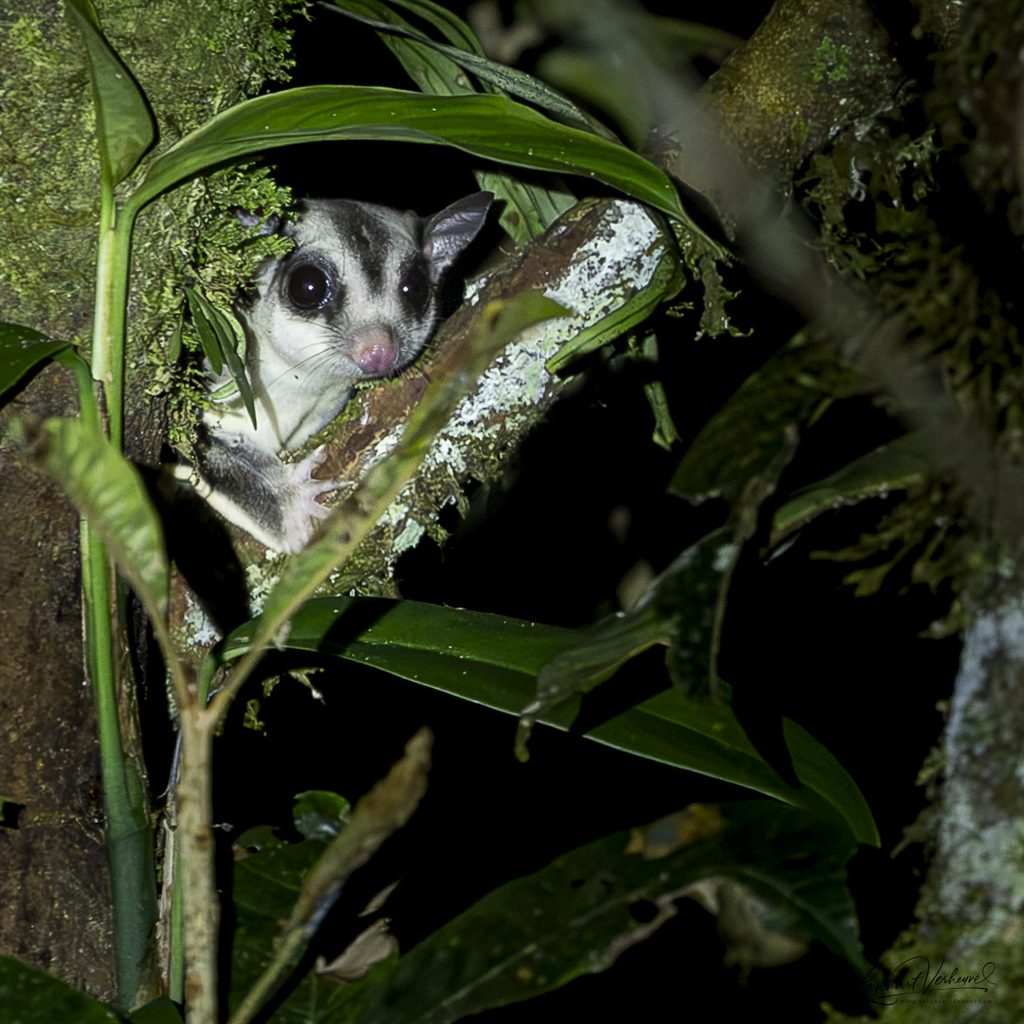
New Guinea Glider
We were pleasantly surprised by this success, especially since we had found all these species within just a kilometre of our guesthouse, simply along the main road.
On other nights, we also saw the beautiful Striped Possum, giving us a very respectable list of nocturnal mammals.
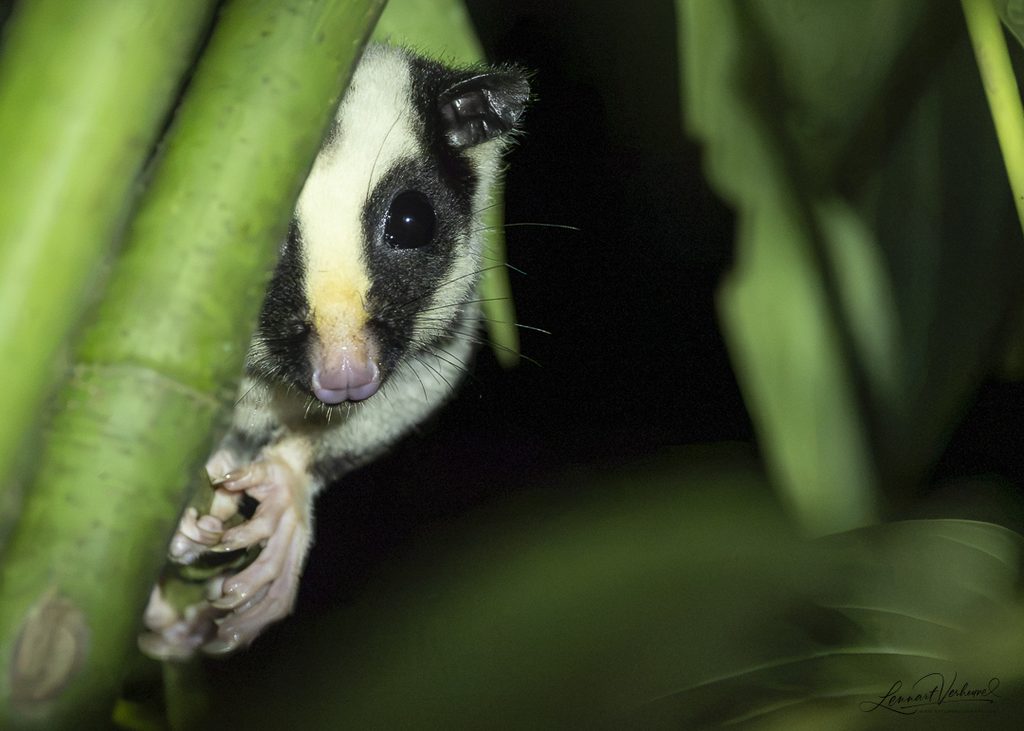
Striped Possum
I also had time to experiment with a type of photography I had never tried before: photographing bats in flight! With the help of my travel companions, who provided light using their torches, I managed to get some reasonably good record shots of Small Melanesian Bent-winged Bat, a species that has not been photographed very often. Ashwin’s bat detector helped us identify this bat.
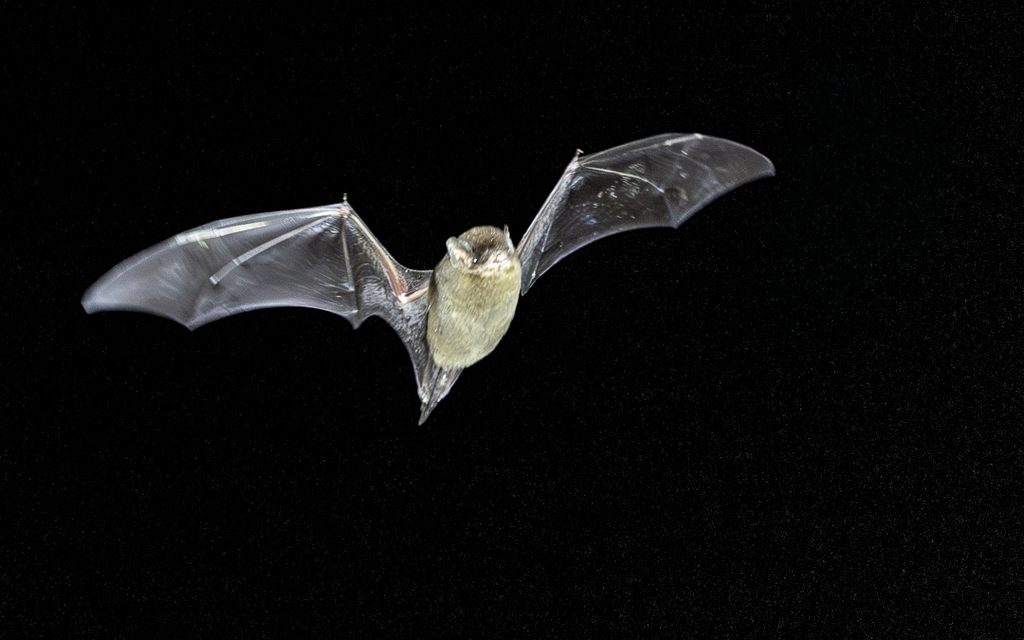
Melanesian Bent-winged Bat
Our final day in the Arfak Mountains was dedicated to spending the night at ‘German Camp’. At the top of one of the mountains, there are several buildings that have been there for years and provide a good base from which to explore the surrounding area at that altitude in the morning. The foundations of this site were laid by German researchers, but nowadays it is mainly used by birders.
Our main target was the Arfak Astrapia, another bird-of-paradise endemic to this region. We also hoped to find some new species along the way, both on our way up and back down. Finally, this location was our only opportunity to see the rarely encountered Stein’s Cuscus. I knew that this cuscus was generally only seen at elevations above 2,000 metres.
That afternoon, we started walking uphill, accompanied by a local guide. Our walk got off to a very good start when he immediately pointed out an opportunity to finally see Long-tailed Paradigalla: the species we had still been missing after several attempts in the hide! Apparently, there was a nest nearby, although we would need some luck with the arrival of the pair of adults bringing food to their young.
The guide told us that we would have a good chance of seeing them early the following morning, but we were already prepared for the possibility of needing to spend quite some time looking for Arfak Astrapia. There was no harm in trying, so halfway through the afternoon we decided to watch for a bit from a slope overlooking the nest. This time, luck was on our side: within ten minutes, a black bird came flying in: Long-tailed Paradigalla! We were able to enjoy watching the bird for quite some time and were absolutely delighted that we had finally managed to see it.
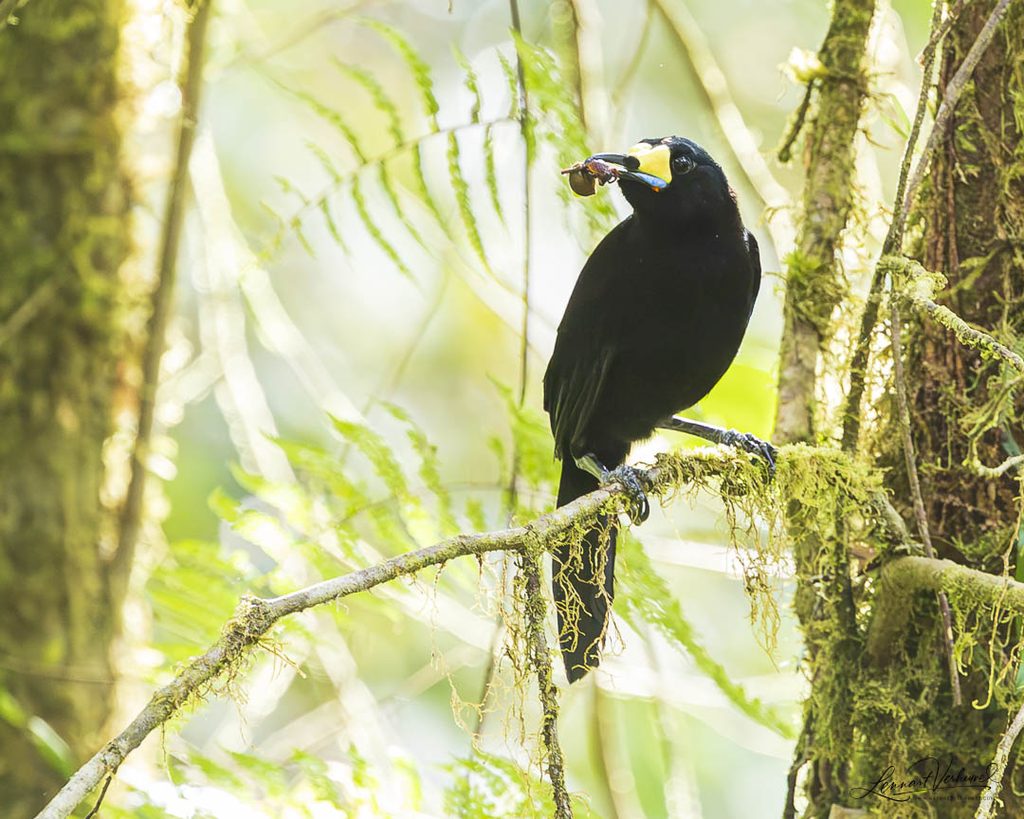
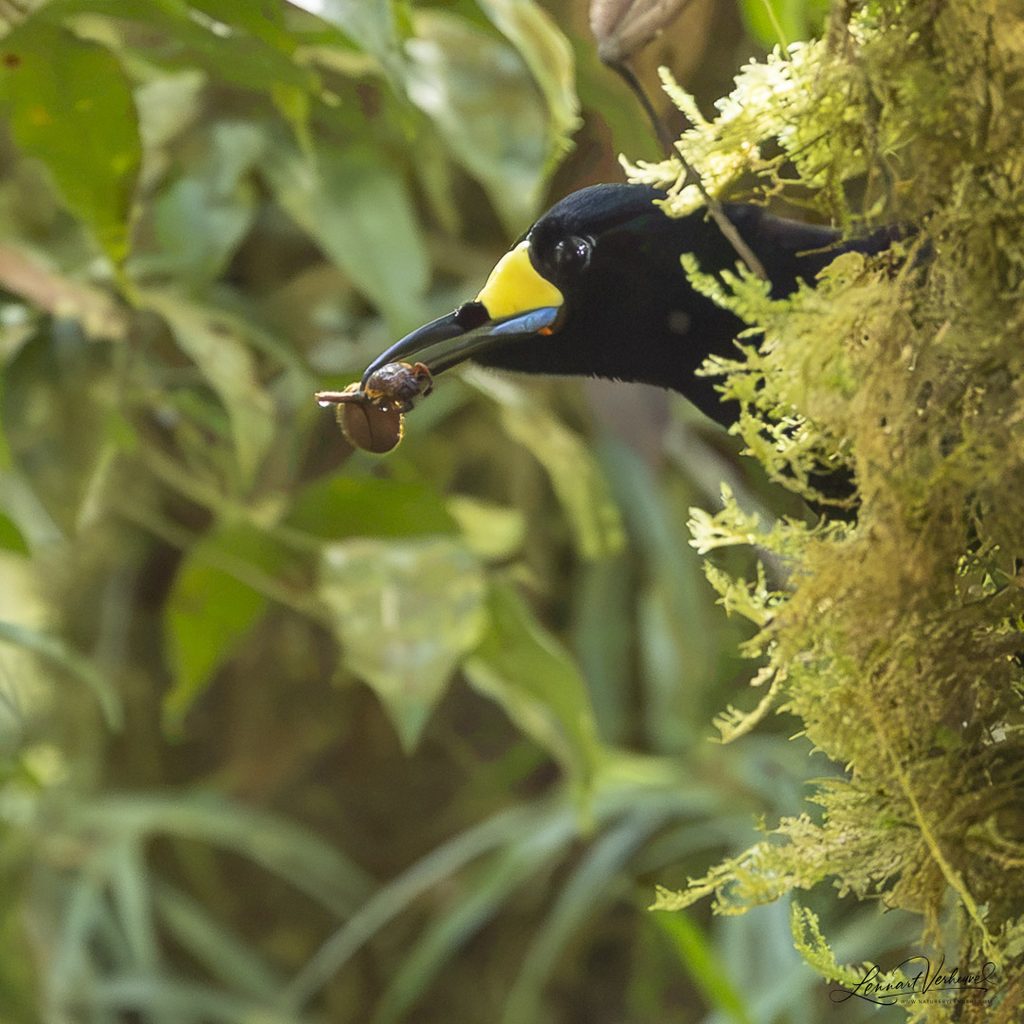
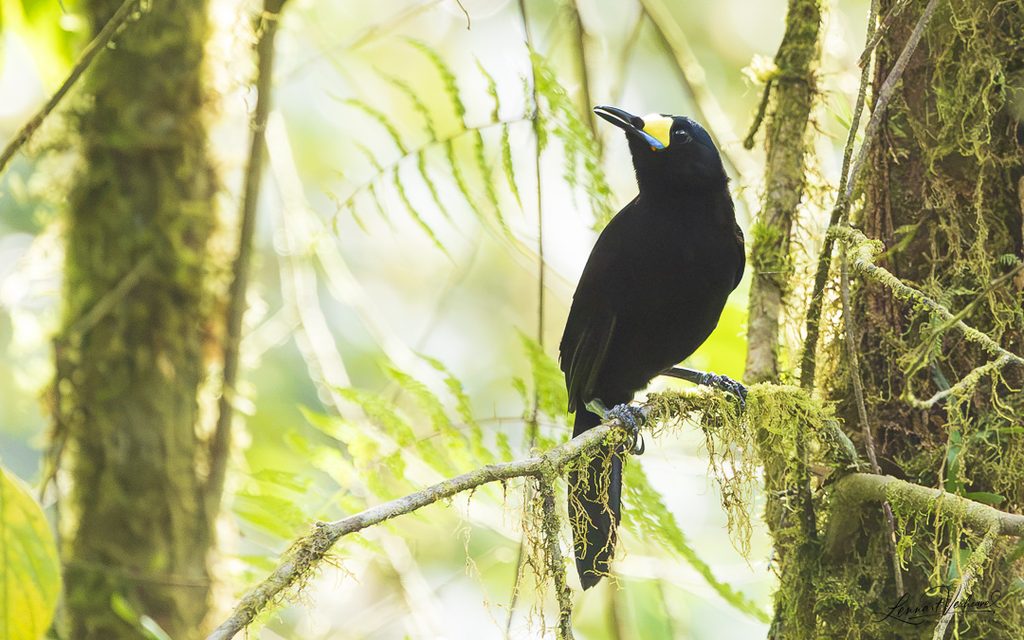
Long-tailed Paradigalla
On our way up, we also encountered some other remarkable birds, such as the small Papuan Sittella.
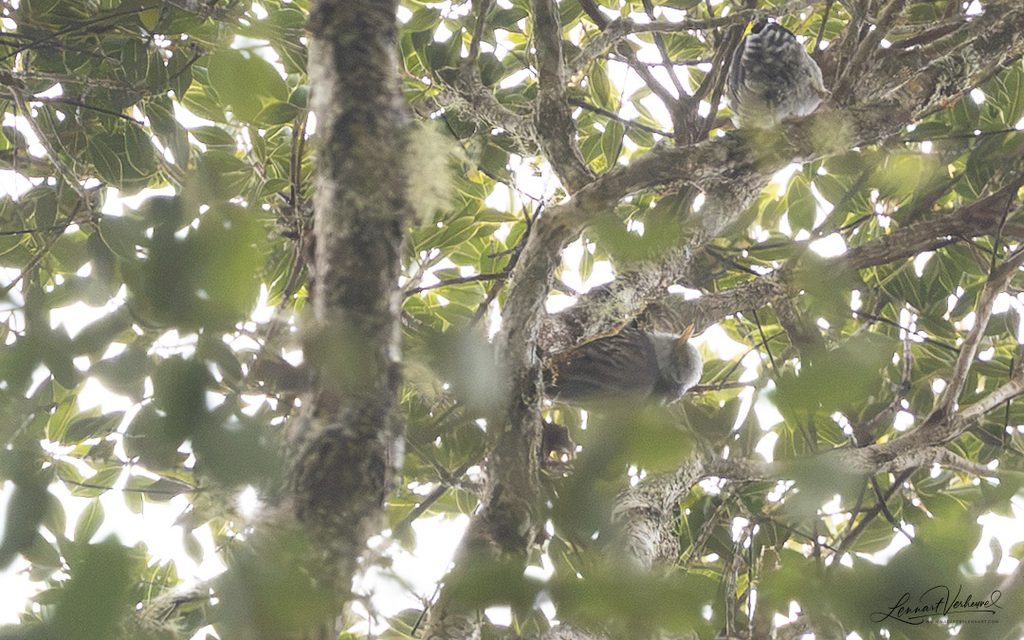
Papuan Sittella
We arrived at German Camp at dusk, feeling quite exhausted. After dinner, we headed out again with our thermal scopes: we still had to find that cuscus!
Fortunately, we didn’t have to wait very long, as we soon found a beautiful Stein’s Cuscus. We were very happy with this sighting, as we didn’t find any other individuals during the rest of the night, despite still hearing the species calling. It is quite remarkable to hear a mammal making such a sound!
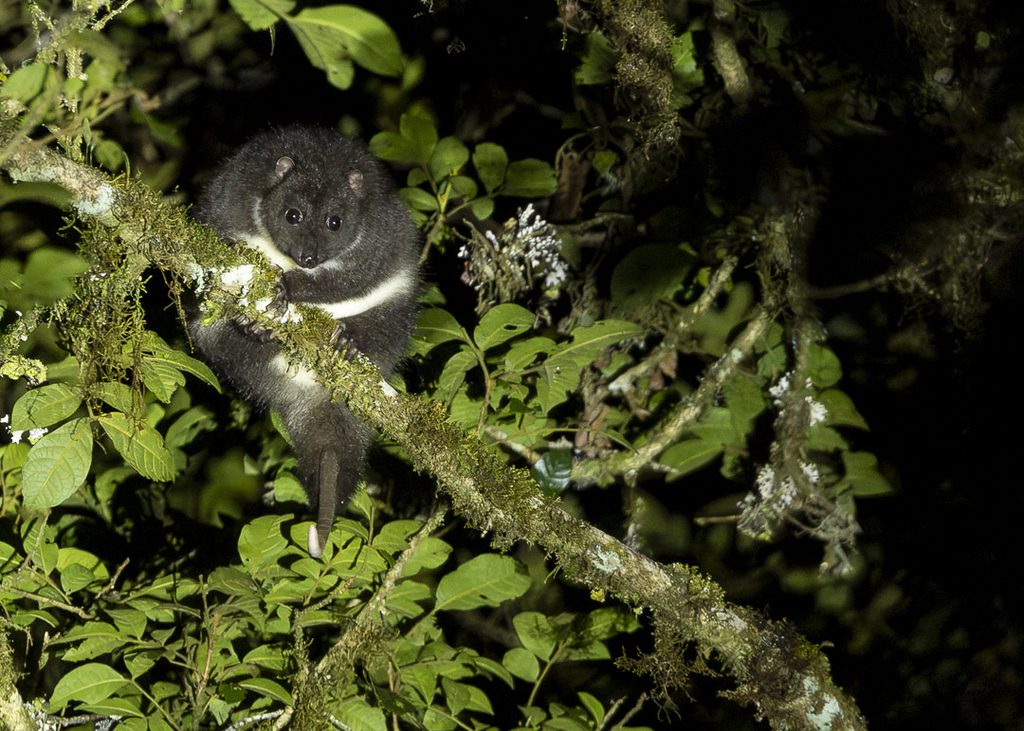
Stein’s Cuscus
Another remarkable sighting was a Feline Owlet-Nightjar perched on a branch. Owlet-nightjars are very unique birds that, in terms of their behaviour and appearance, somewhat resemble nightjars, but actually belong in their own distinct order of birds. Earlier that week, a local guide had already pointed one out to us, allowing us to get a good look at it.
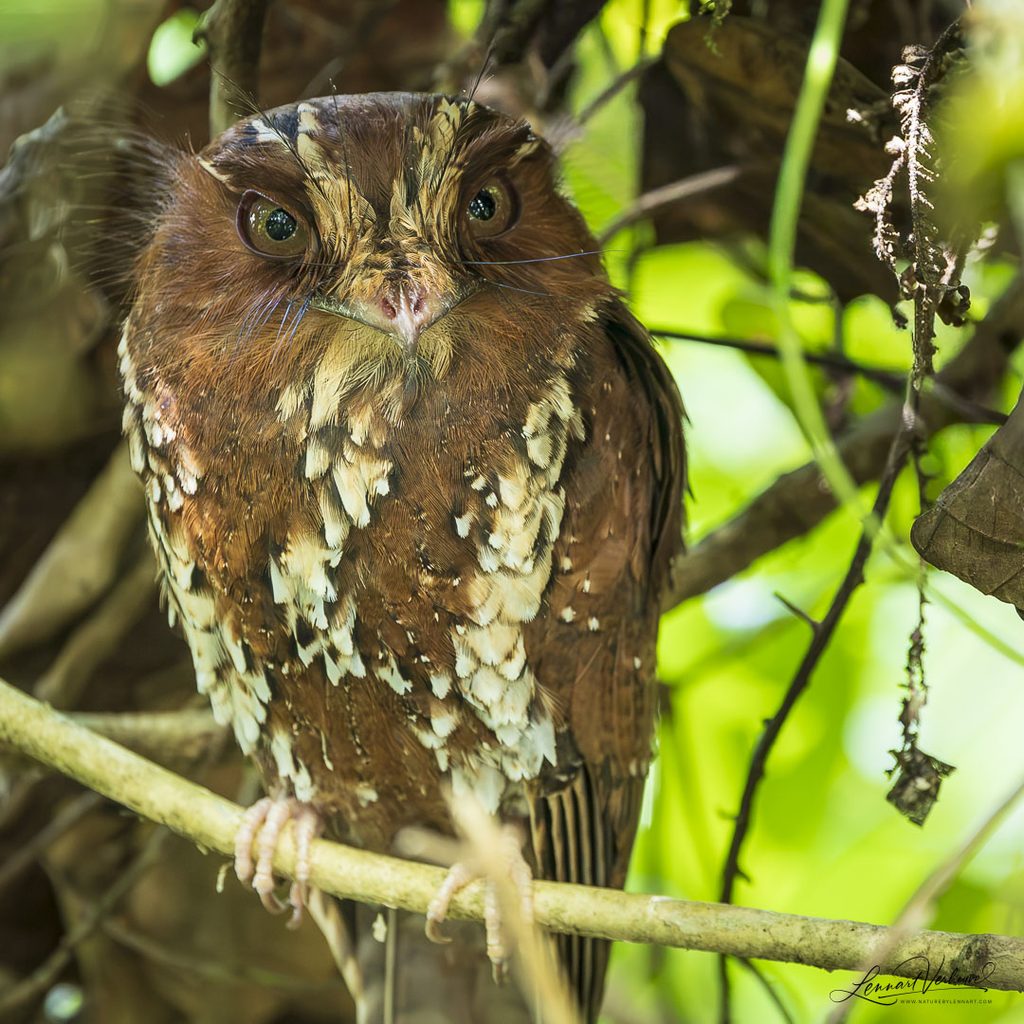
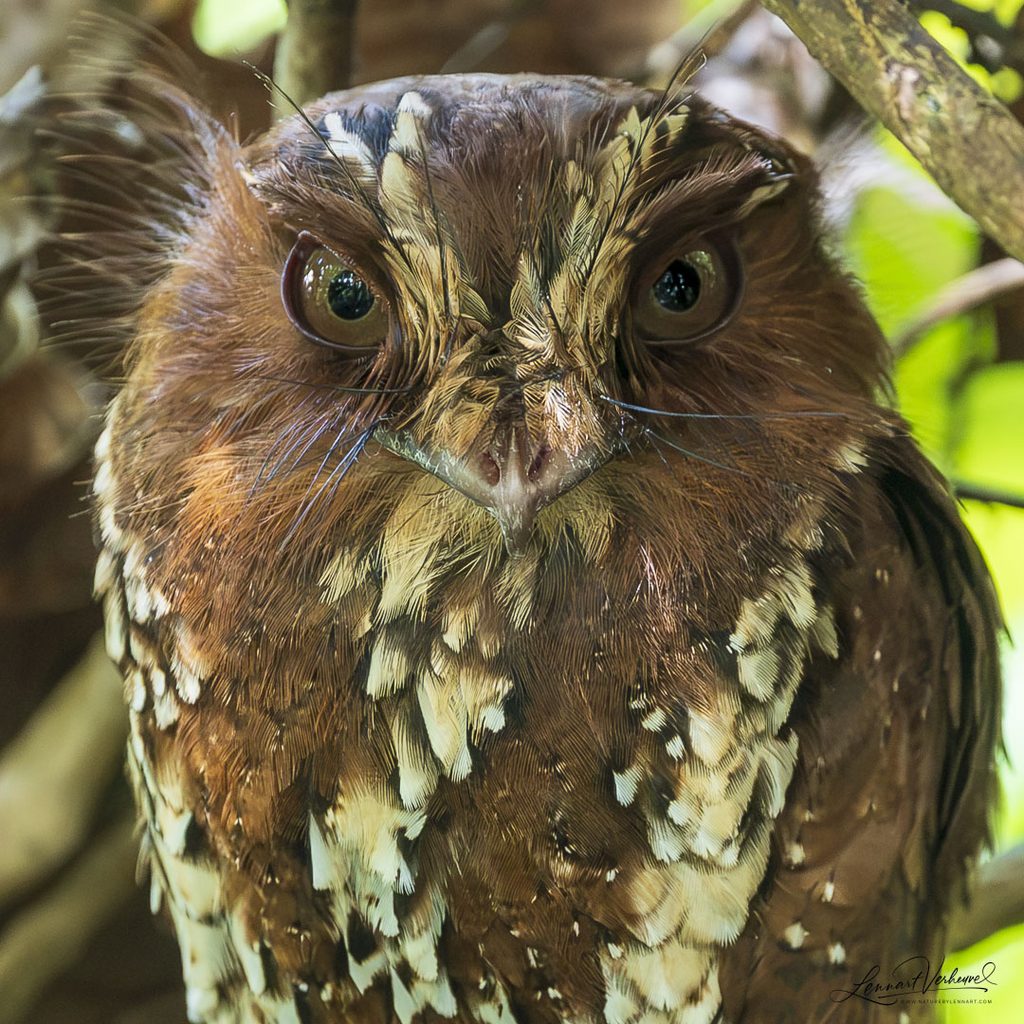
Feline Owlet-Nightjar
We had also been able to observe a young Wallace’s Owlet-Nightjar in its nest tree.
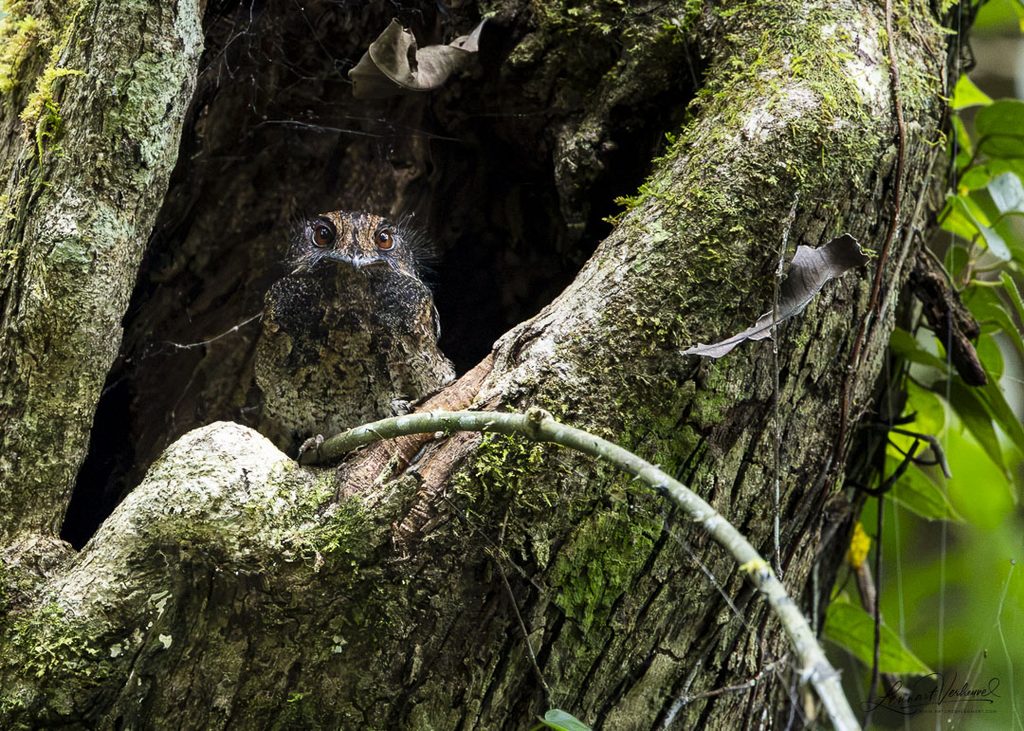
Wallace’s Owlet-Nightjar
This bird looked quite different sitting there in the darkness of the night. For a moment, we thought we had found a Mountain Owlet-Nightjar, which would have been a new species for us, but unfortunately it turned out to be one we had already seen. Still, a great sighting!
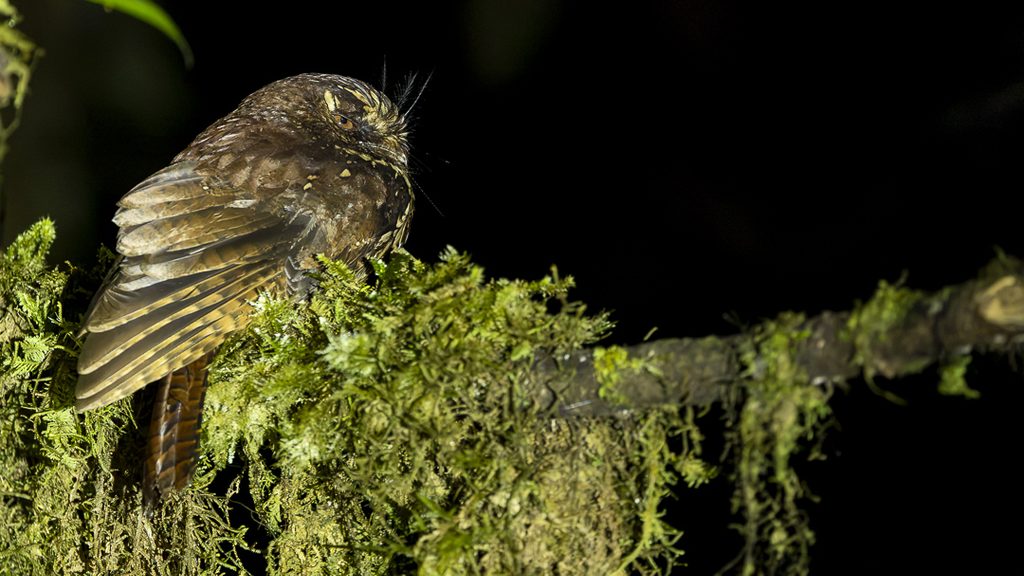
Feline Owlet-Nightjar
The following morning, we got up early and put all our energy into finding Arfak Astrapia. Unfortunately, all our efforts were in vain. Apart from hearing a few calls, we failed to get a glimpse of the bird. For a moment, we thought we had hit the jackpot, but unfortunately it turned out to be ‘just’ a male Black Sicklebill. Needless to say, that is still a magnificent bird in its own right.
On our way back down, we spotted Lesser Melampitta, a species that is rarely seen, but the bird was too quick for me to get any photographs.
Nevertheless, after this week we were in a very good mood to continue our journey to the island of Waigeo. We had made a great start, seen our first birds-of-paradise, and on Waigeo we were looking forward to seeing a bird that some consider to be the most beautiful in the world!


