- info@naturebylennart.com
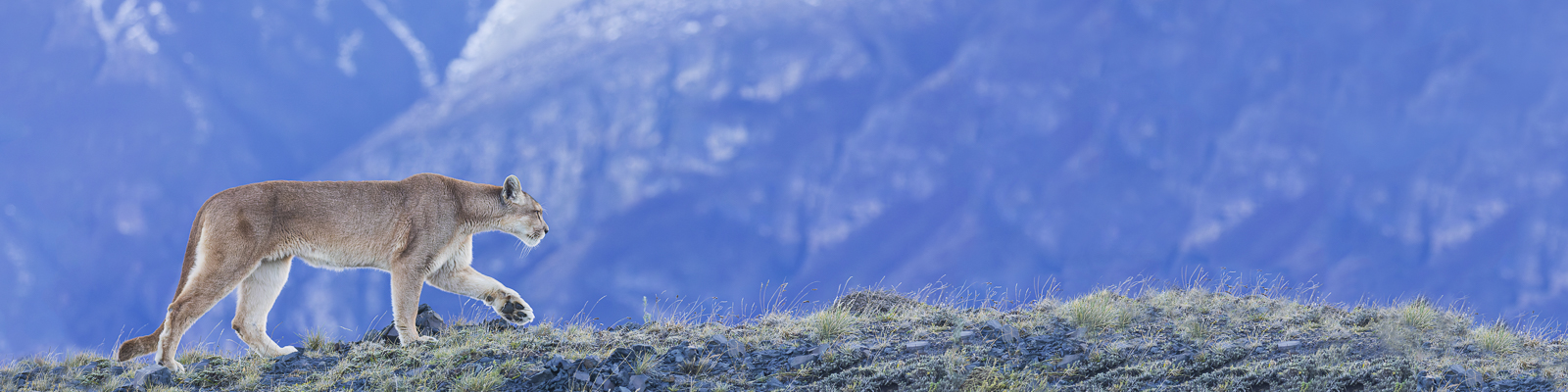
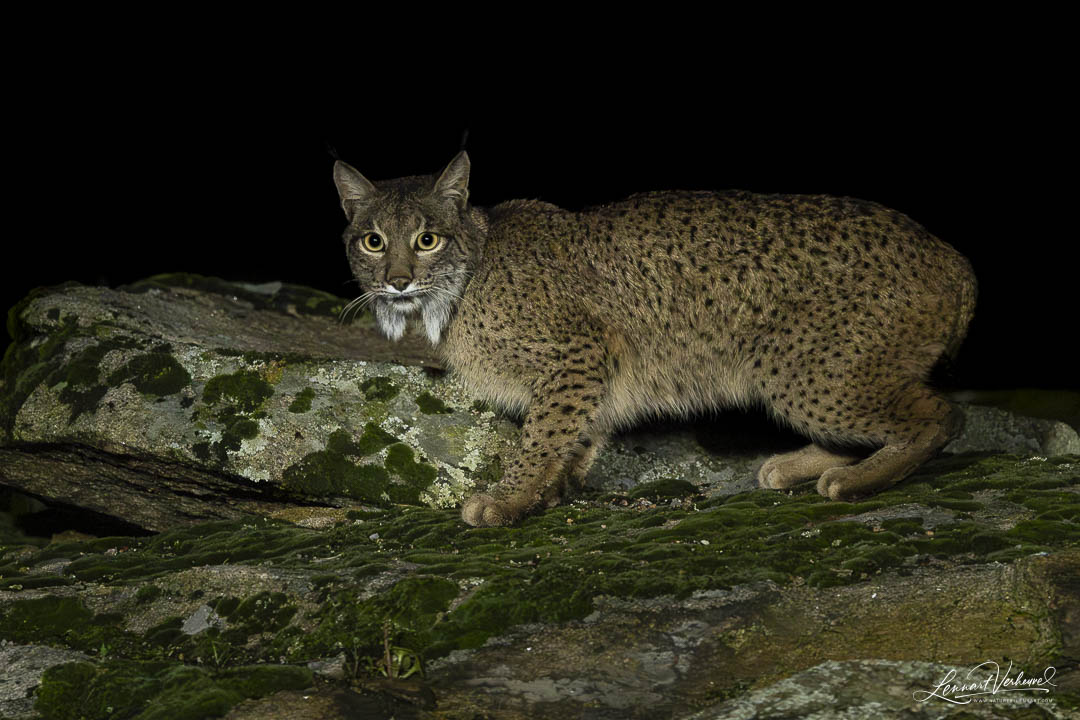
In February 2024, I travelled to Estonia with Arie-Willem van der Wal and Jacob Molenaar in search of Eurasian Lynx. Afterwards, we talked about how it would also be great to see Europe’s other lynx species: the Iberian Lynx! This beautiful cat lives in Spain and is still one of the most endangered feline species in the world. For a long time, the Iberian Lynx was on the brink of extinction, but thanks to intensive conservation efforts the species has fortunately recovered remarkably well in recent years.
Even so, the Iberian Lynx has never really been considered one of the hardest wild cats to see. Unlike the Eurasian Lynx, it is not strictly tied to forests and can often be found more easily in open landscapes. For many years, the area around Andújar has therefore been the classic destination for people hoping to see this stunning cat with its characteristic ear tufts. I had already visited the area myself in 2018, when the Iberian Lynx became the very first wild cat I had ever seen.
Since then, I have seen more than twenty additional cat species, but Iberian Lynx still remains special to me. After eight years, it felt like the right time for another visit. For Arie-Willem and Jacob it would be a completely new species, and Albert Molenaar joined us on the trip as well.
Booking flights and accommodation all went smoothly, and we rented a cottage right in the area where lynxes are regularly seen. The only thing we could not plan for was the weather — and that turned out to be a serious problem. Spain was being hit by severe storms and extraordinary amounts of rain, causing flooding in several places. Unfortunately, we would soon notice the consequences ourselves.
Still, we were excited. On Monday 2 February 2026, we landed in Madrid and picked up our rental car. The drive to Andújar would take more than three hours, but along the way we had planned a stop in an agricultural area that looked promising for several iconic birds of the Spanish plains, including Great Bustard, Calandra Lark, Spanish Sparrow and Pin-tailed Sandgrouse.
The recent rain had turned the dirt tracks into slippery mud, but fortunately we managed to navigate them without getting stuck. Almost immediately after entering the area we encountered our first excellent species: Rock Sparrow. One bird was perched on a wire before quickly flying off again, but we were very happy to see it.

Rock Sparrow
The area itself was wonderful. Corn Buntings, Calandra Larks and Spanish Sparrows were everywhere, and we also found a Stone-curlew.
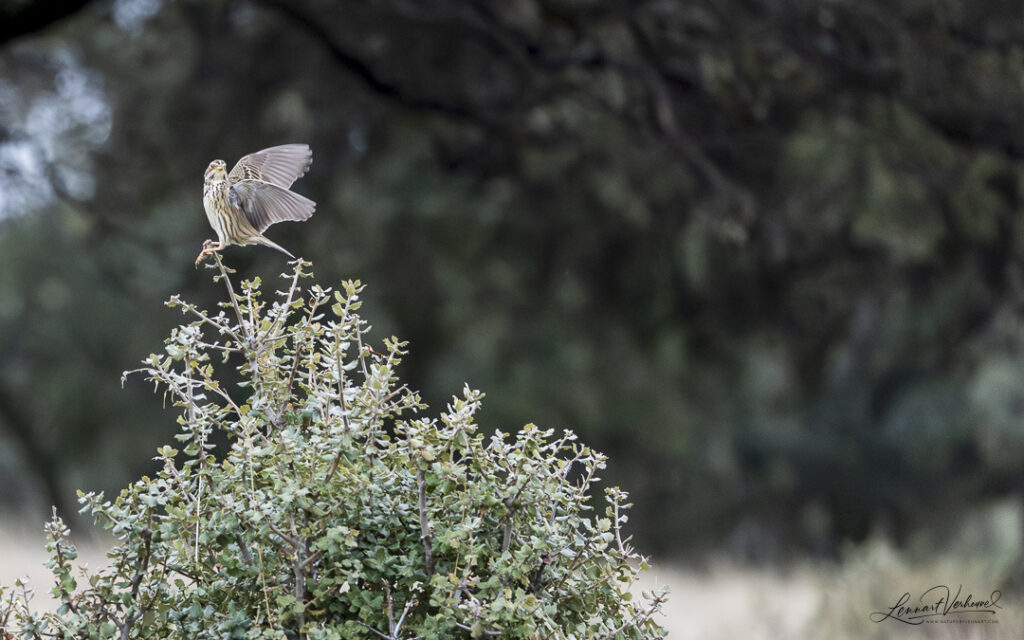
Corn Bunting
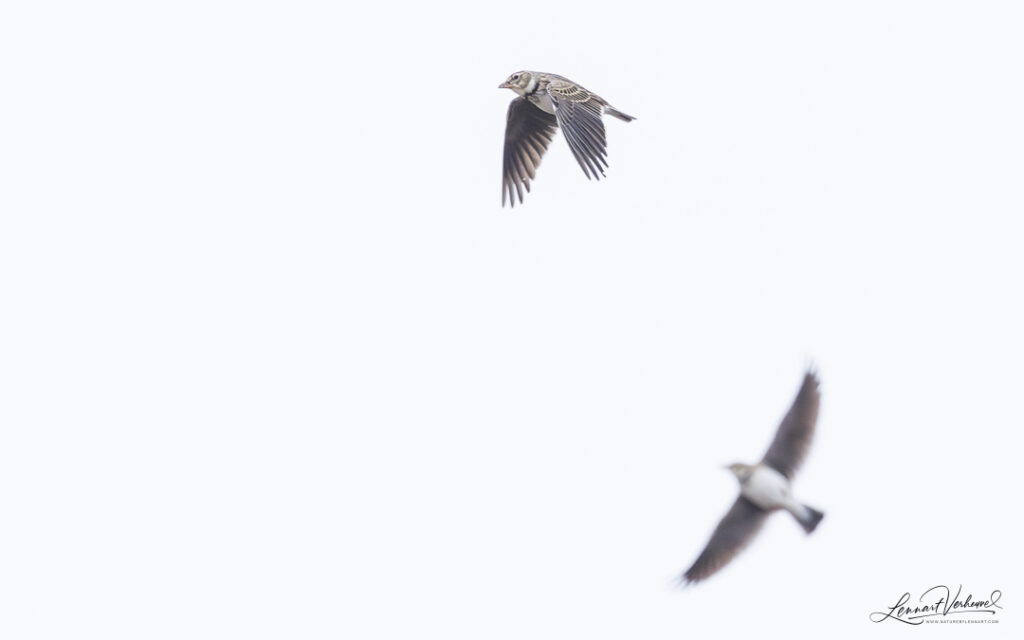
Calandra Lark
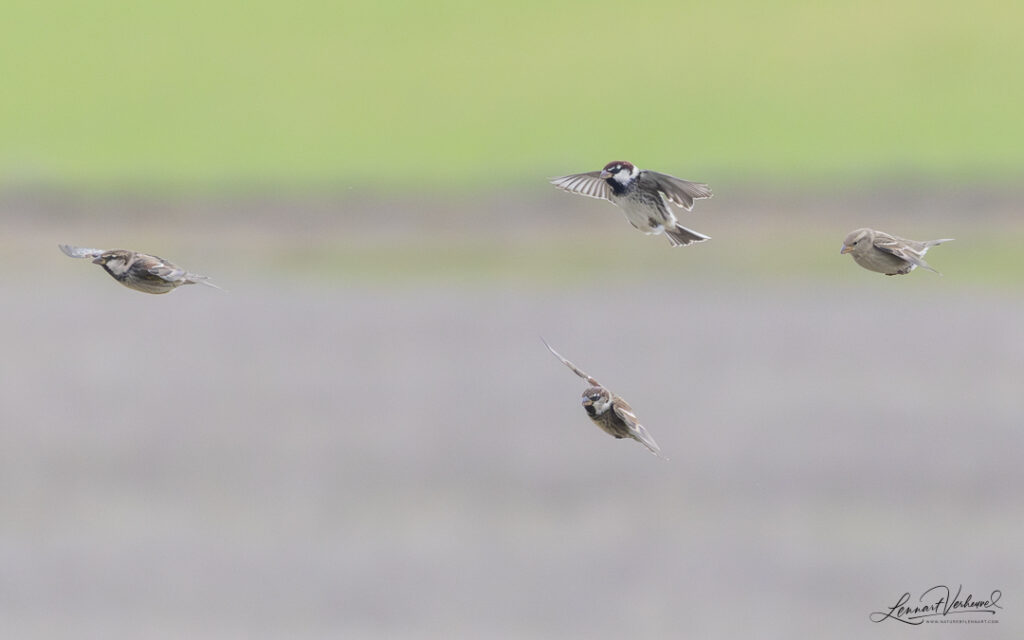
Spanish Sparrow
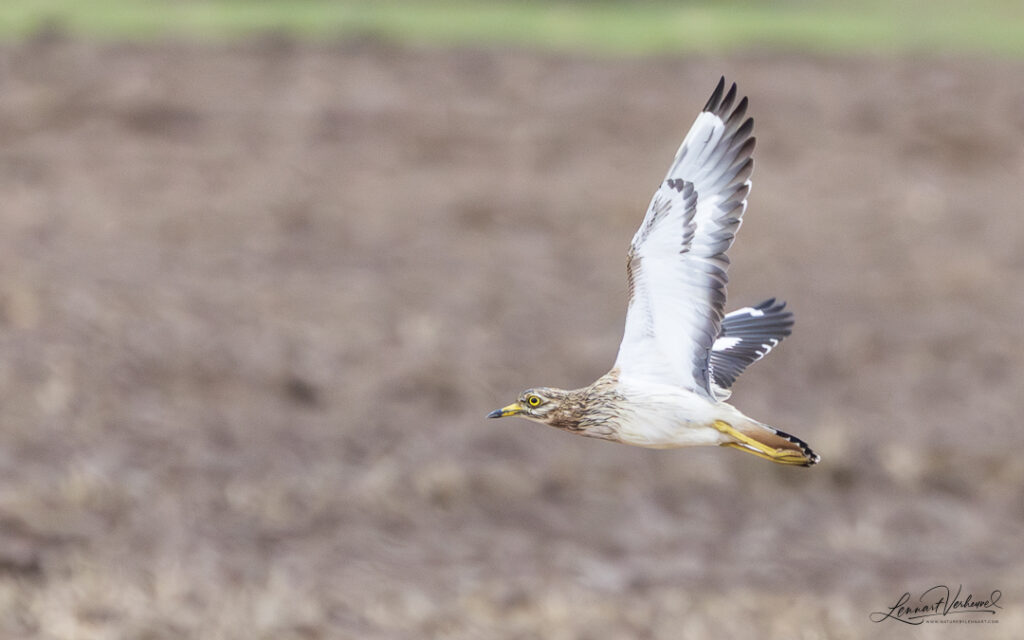
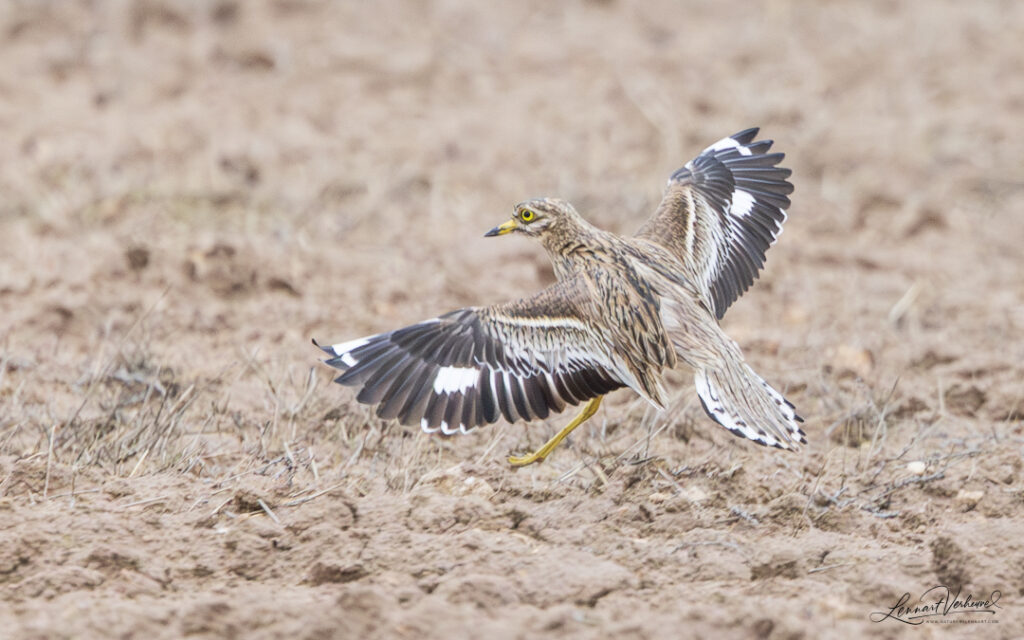
Eurasian Stone-curlew
In the distance, a Golden Eagle was perched before eventually taking flight.
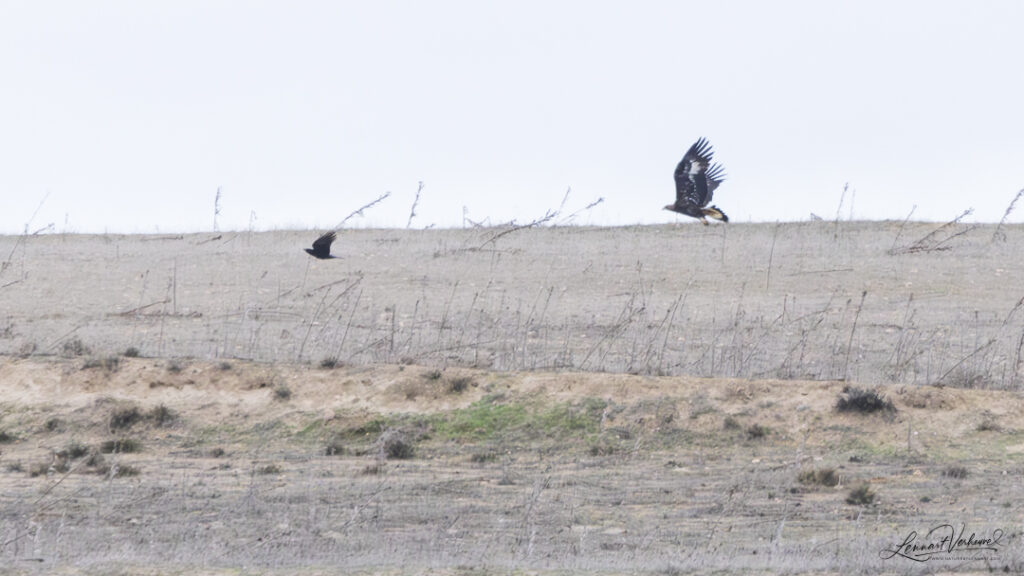
Golden Eagle
Further away we discovered several groups of Pin-tailed Sandgrouse. Little Bustards were also reported, although unfortunately I missed them because I had to deal with something work-related. Fortunately, I had already seen the species very well in Azerbaijan.
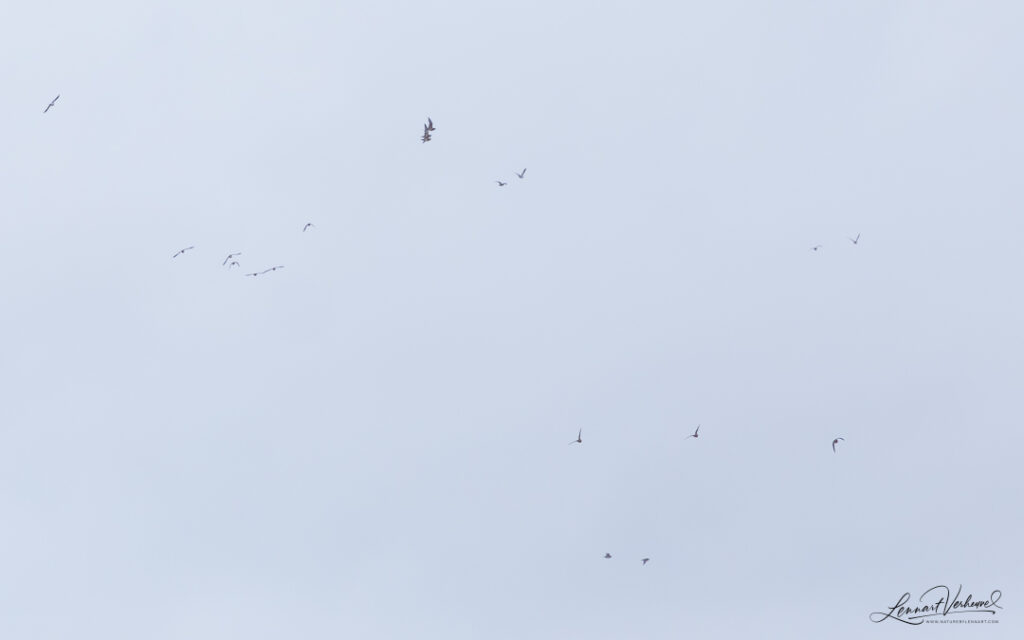
Pin-tailed Sandgrouse
Then came one of the highlights of the afternoon. While driving, a huge bird with striking white wings suddenly appeared from the left side of the road. At first I briefly thought it might be a heron, but as soon as it came fully into view it was obvious: Great Bustard! Watching such an enormous bird fly past at close range was spectacular, and later we also enjoyed good views of the bird standing in the fields.
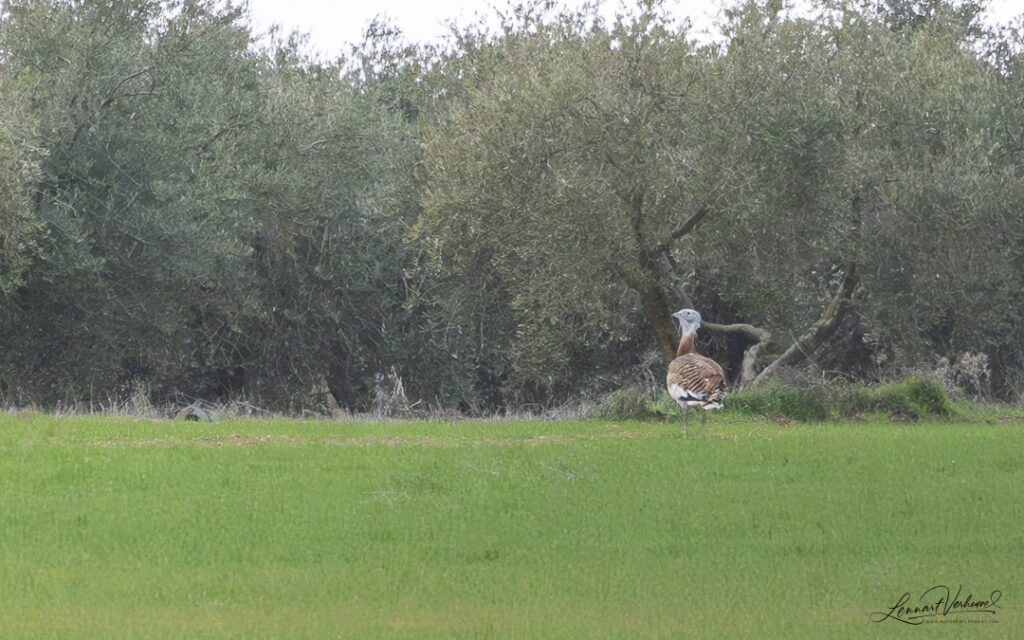
Great Bustard
As if that was not enough, we later found another impressive group at a site where Great Bustards had recently been reported.
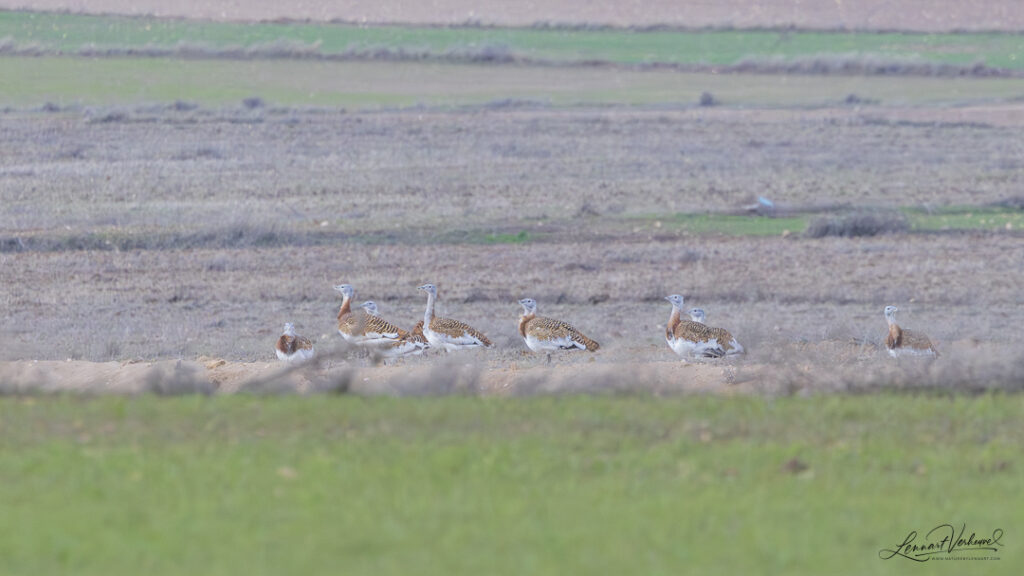
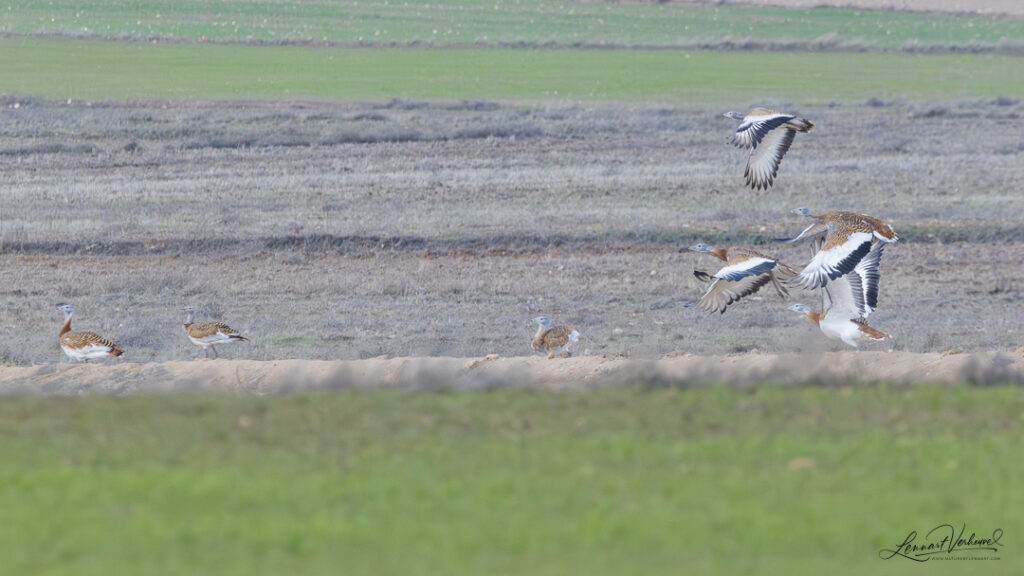
Great Bustard
Another species I particularly enjoyed was Iberian Hare. It looks very different from the hares we are used to seeing in the Netherlands and most of Europe, especially because of its striking black-and-white ears and differently coloured fur.
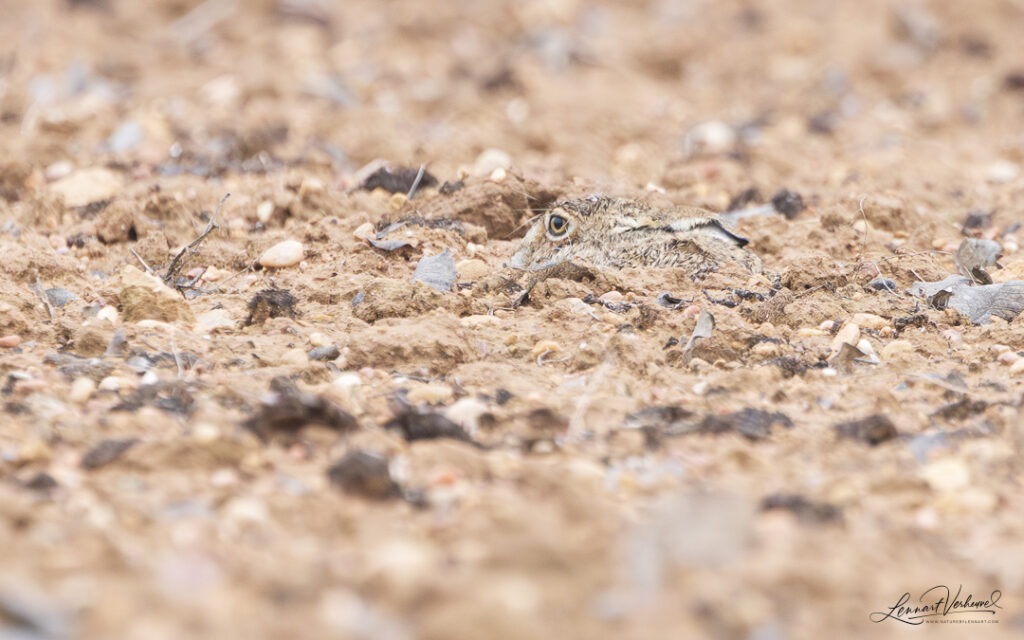
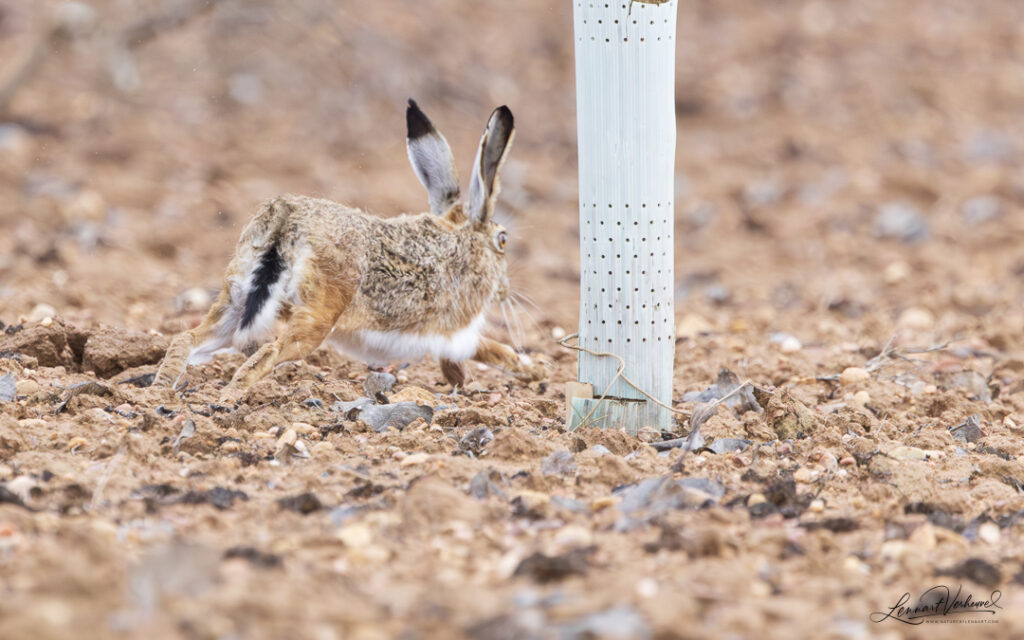
Iberian Hare
Just before leaving the area, we noticed a thermal with Griffon Vultures circling overhead.
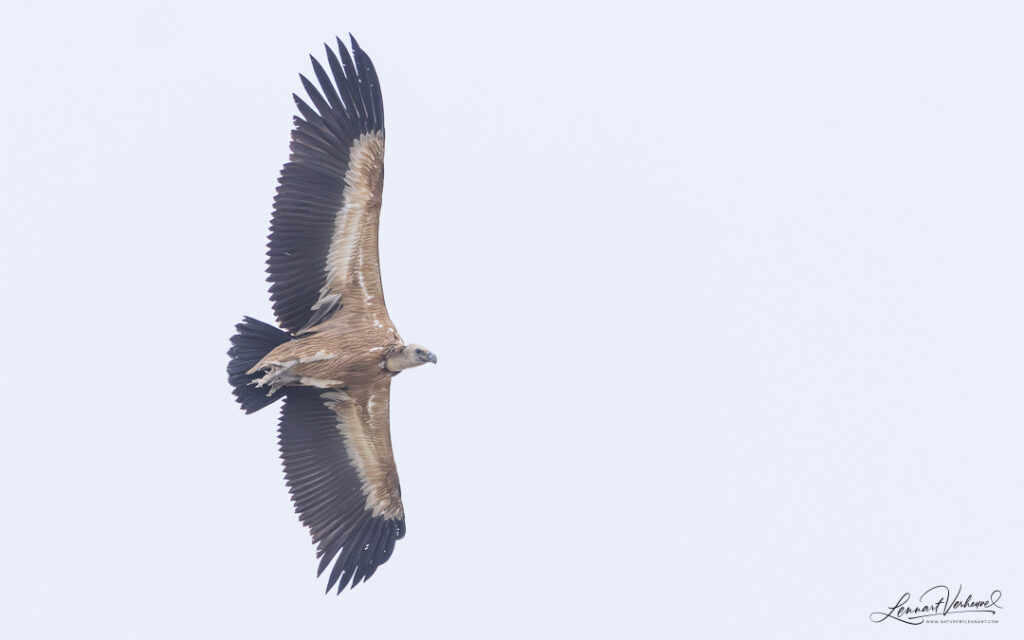
Eurasian Griffon Vulture
Among them we quickly picked out both an immature and an adult Spanish Imperial Eagle. I was especially happy with this species because I had missed it during my 2018 trip, when I spent most of my time sitting in a hide. Interestingly, the Spanish Imperial Eagle looked much smaller than I remembered Eastern Imperial Eagle to be, and in terms of size it actually reminded me more of a Lesser Spotted Eagle.
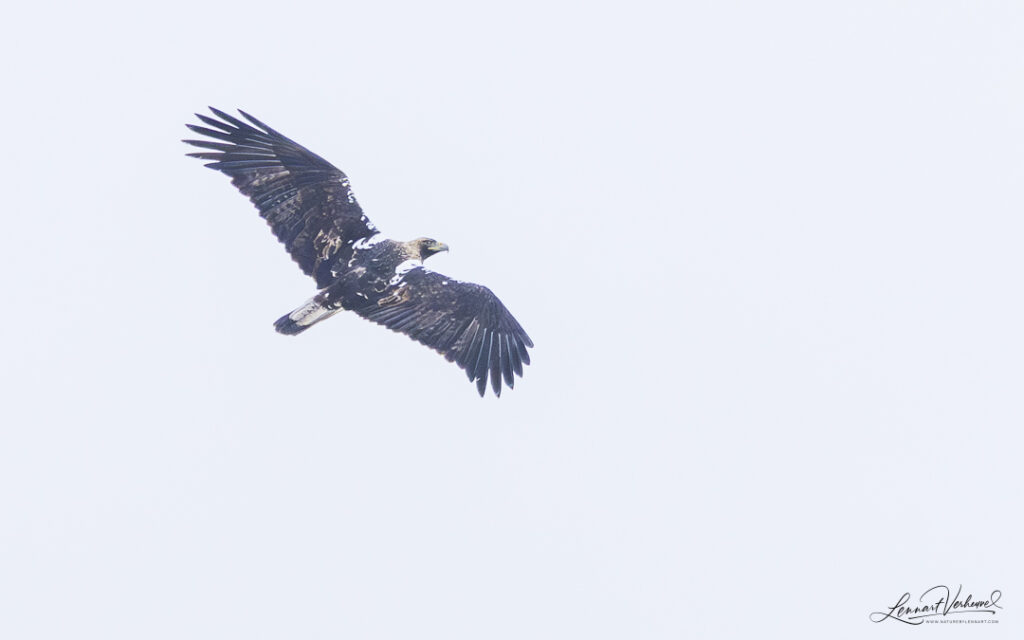
Spanish Imperial Eagle (adult)
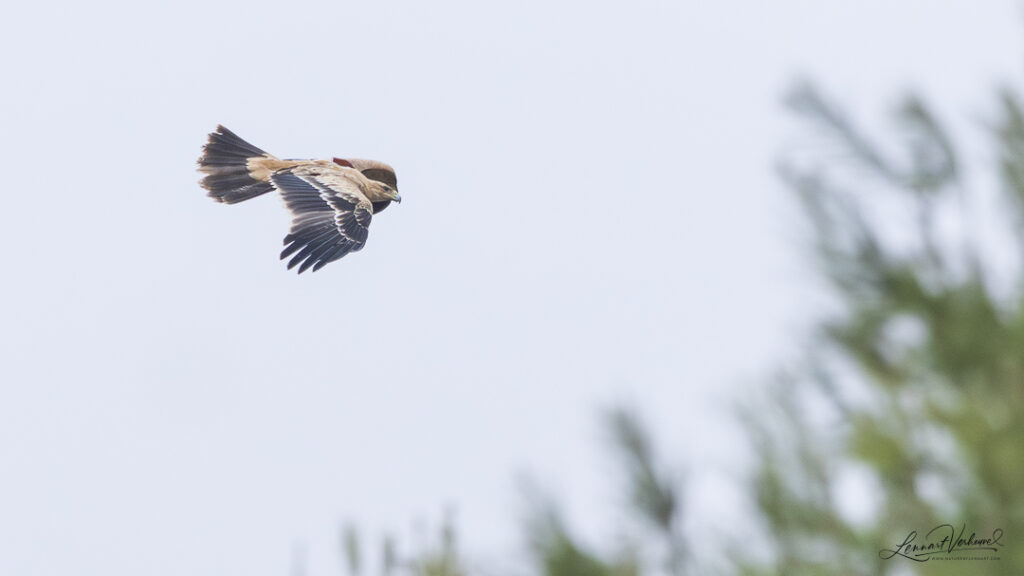
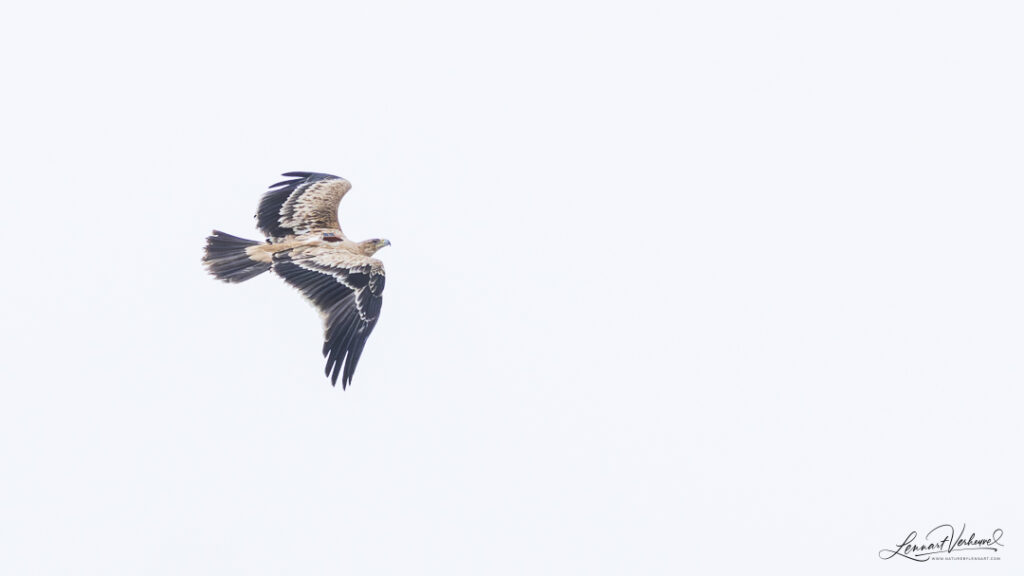
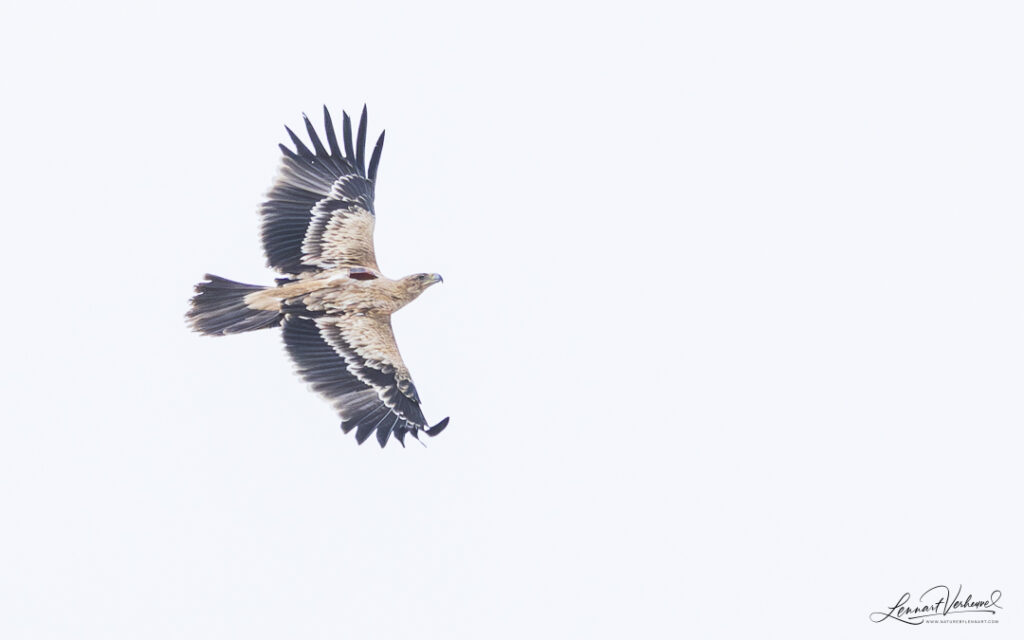
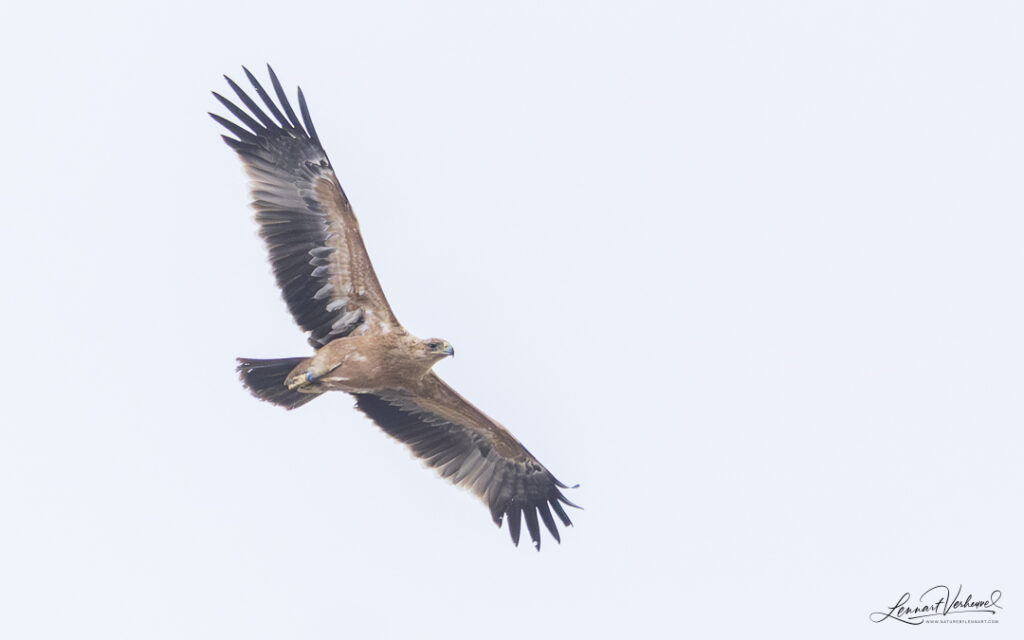
Spanish Imperial Eagle (immature, I assume 2nd calenderyear)
After this excellent start to the trip, we completed the drive to our cabin. The owner immediately pointed out several places where lynxes were often seen, and naturally we made our first attempt that same evening. Unfortunately, the only mammals we found were a few Red Deer.
The next morning started beautifully, with scenic views over the mountains of the Sierra de Andújar. Before long we found a small group of Iberian Ibex, which was a new species for me. We also enjoyed seeing Iberian Green Woodpecker.
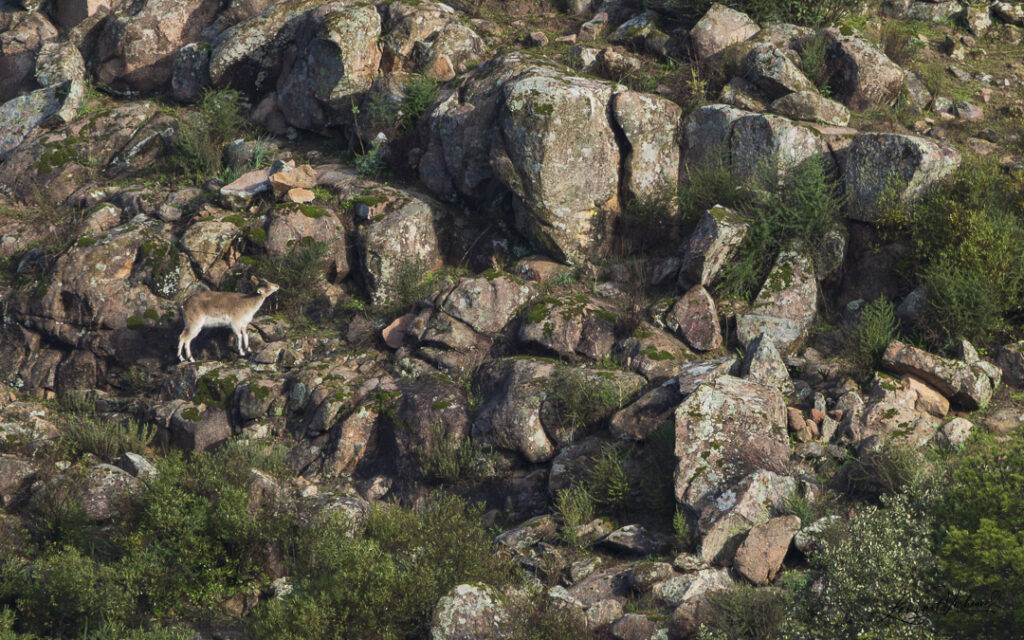
Iberian Ibex
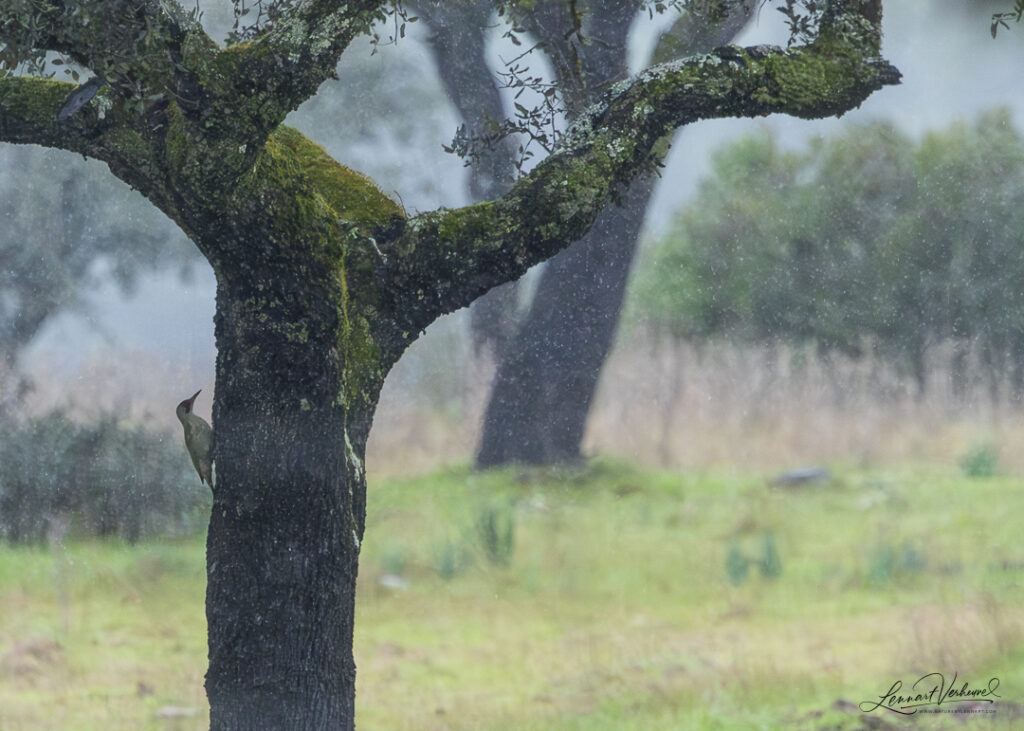
Iberian Green Woodpecker
Although the day had started sunny, the rain soon returned. We drove to Encinarejo, where European Otters are regularly seen, but unfortunately we had no luck with them. We did however find a lovely pair of Cirl Buntings, and I managed to photograph Crag Martins flying through the rain.
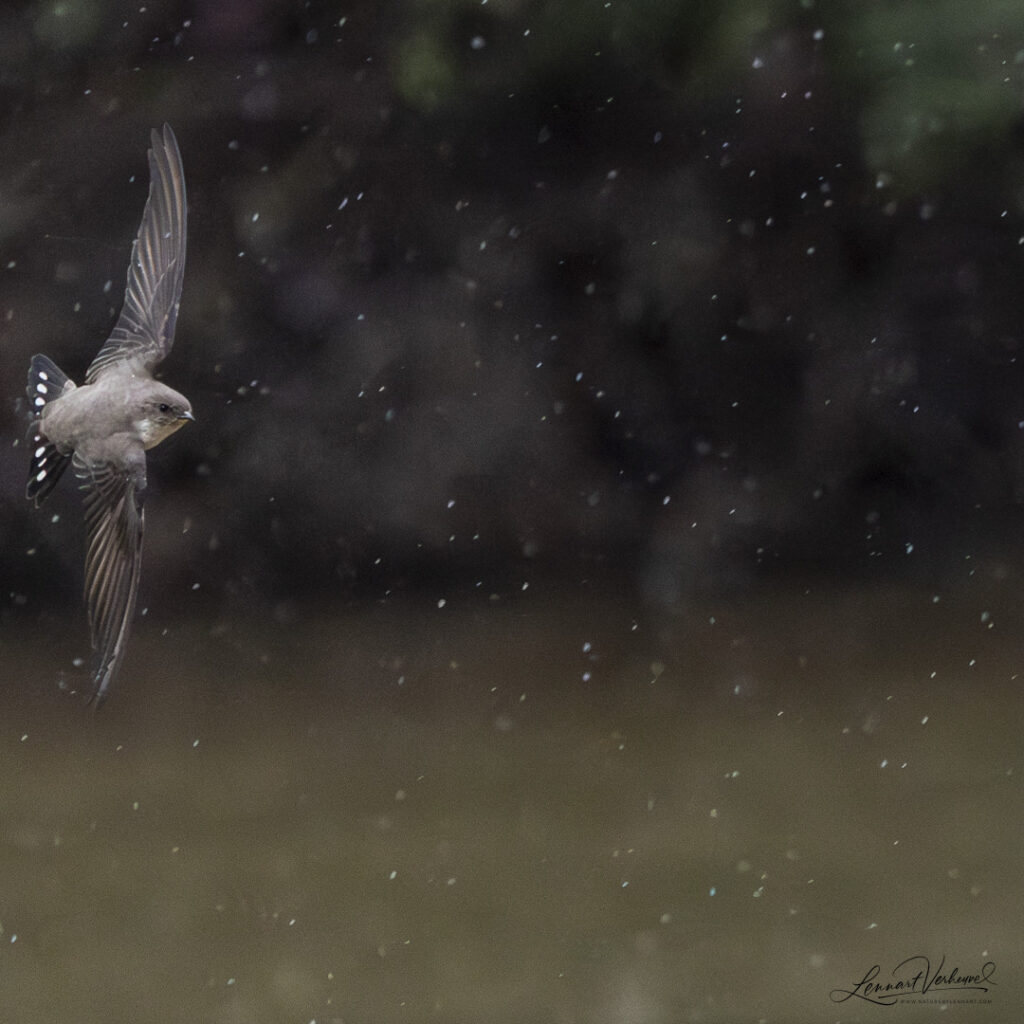
Crag Martin
Later in the afternoon the weather briefly improved, and we began searching for lynxes along the well-known road where several viewpoints have now been built specifically for lynx watching. In the end, we did not even need the viewpoints. From the roadside I located our first lynx of the trip using the thermal scope. The animal was still fairly distant, but simply seeing one on the first day immediately relieved some pressure. Interestingly, we had also found Eurasian Lynx on our very first day in Estonia — after which we never saw one again. Hopefully things would work out better this time!
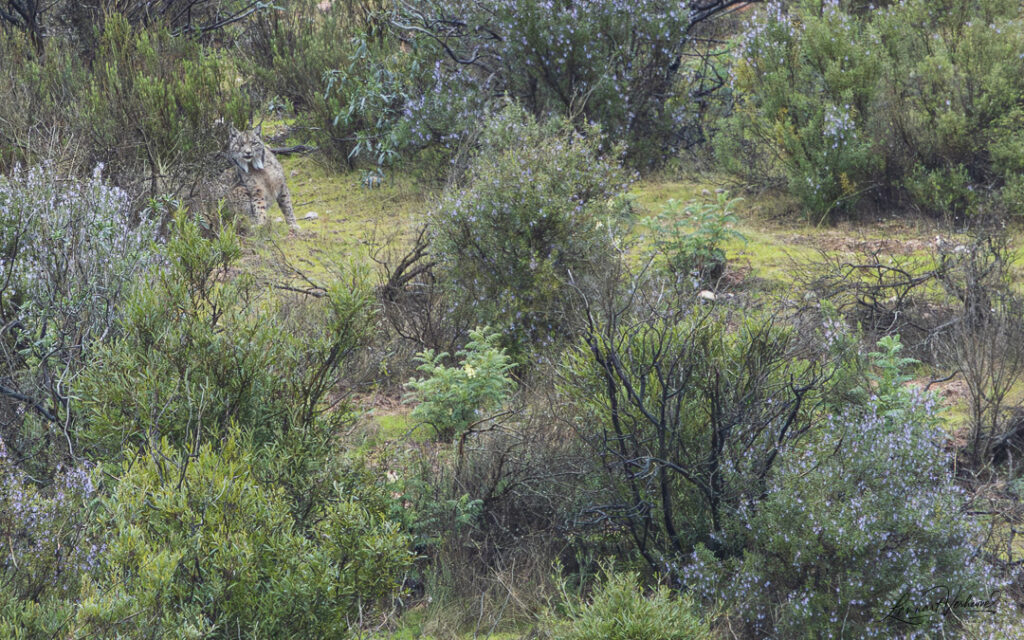
Iberian Lynx
We spent the rest of the afternoon at the viewpoints without finding another lynx, but the raptors more than compensated. Griffon Vultures, Cinereous Vultures and Spanish Imperial Eagles gave us excellent views throughout the afternoon.
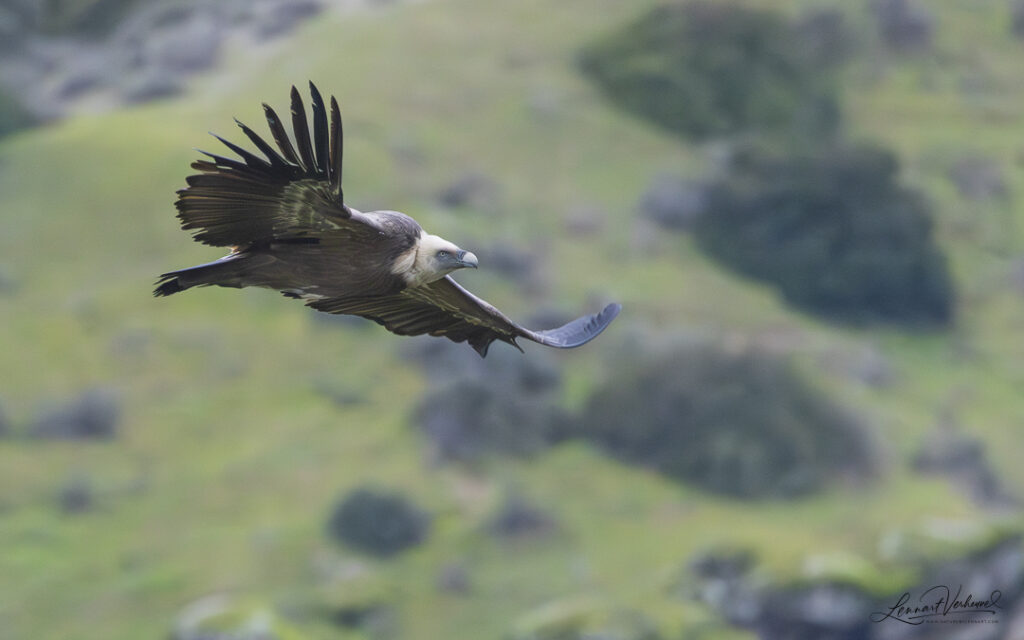
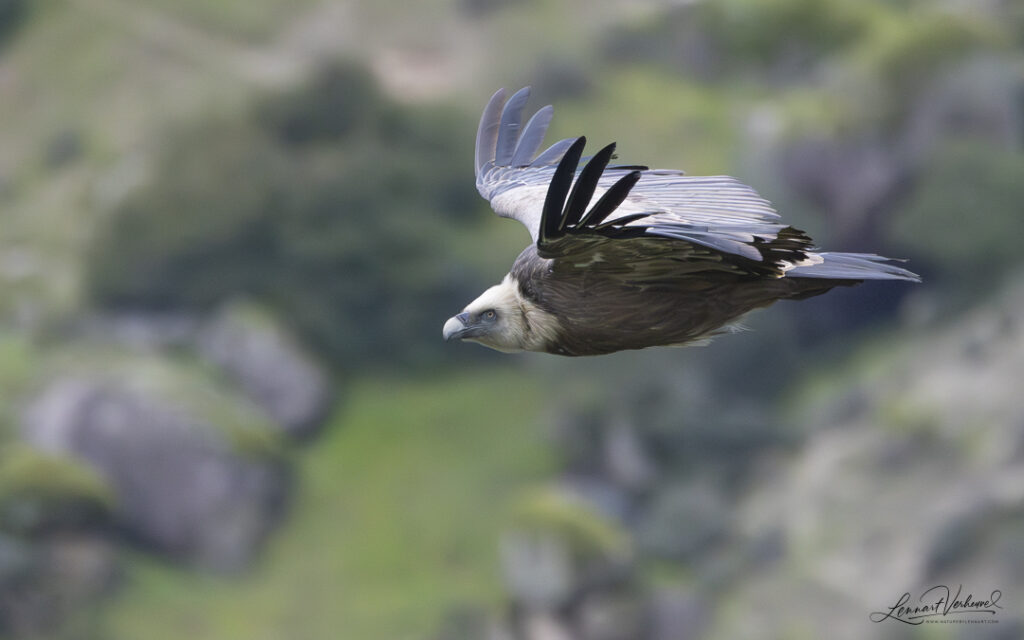
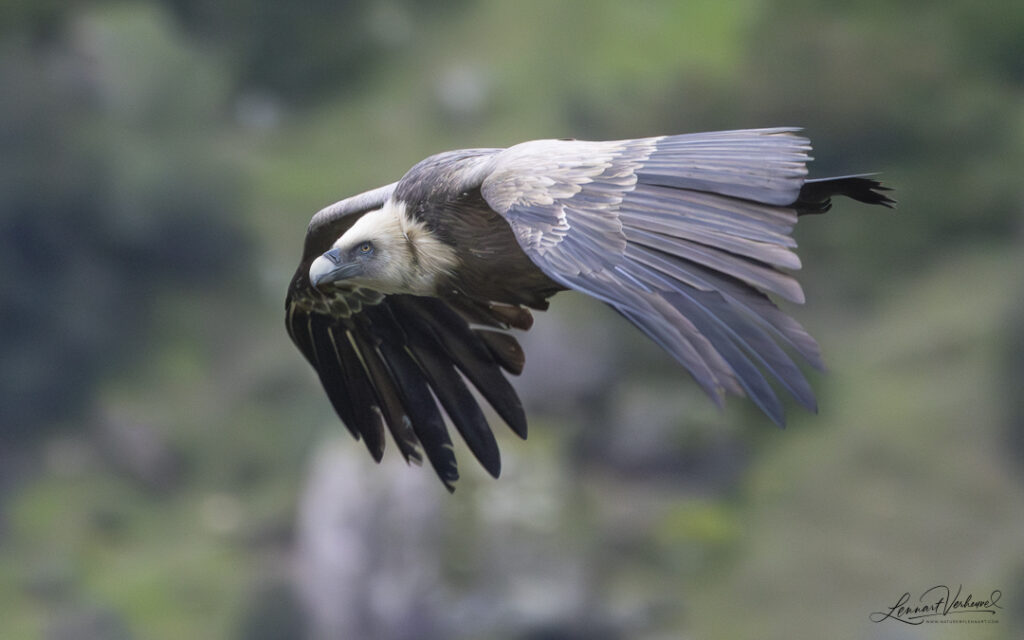
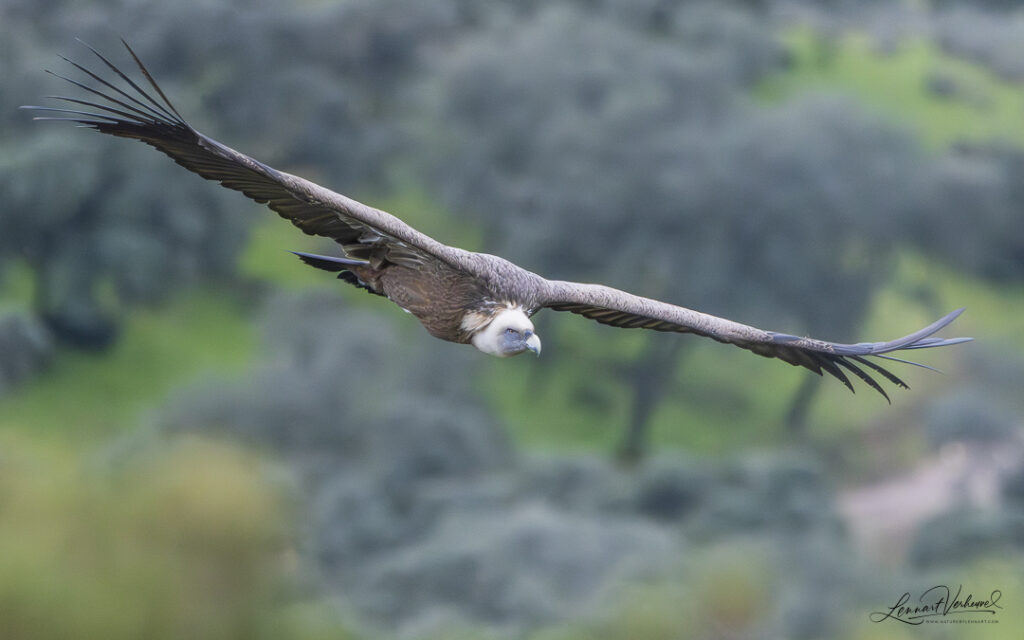
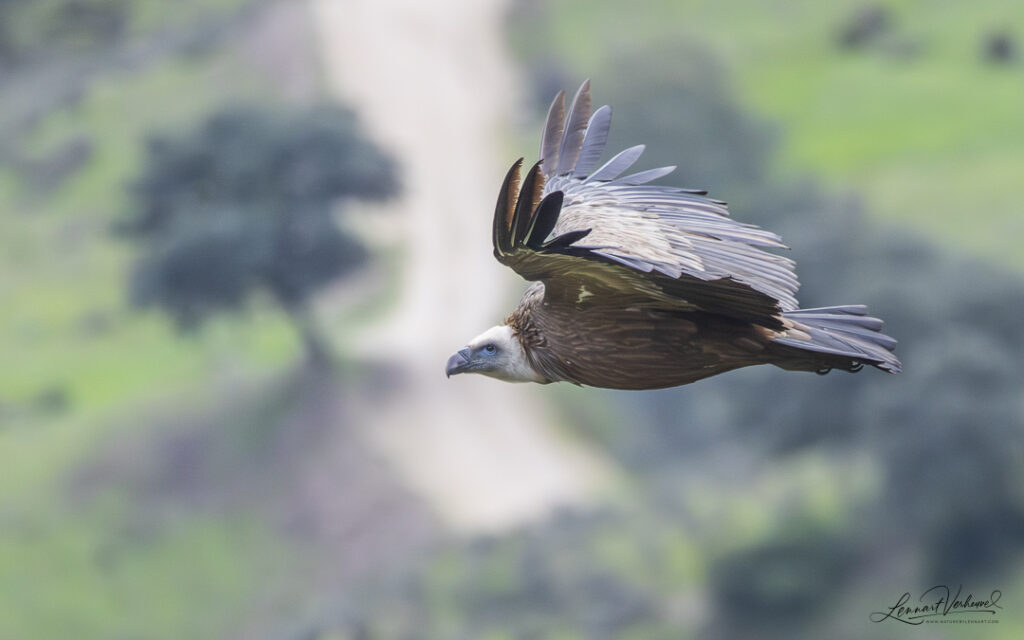
Eurasian Griffon Vulture
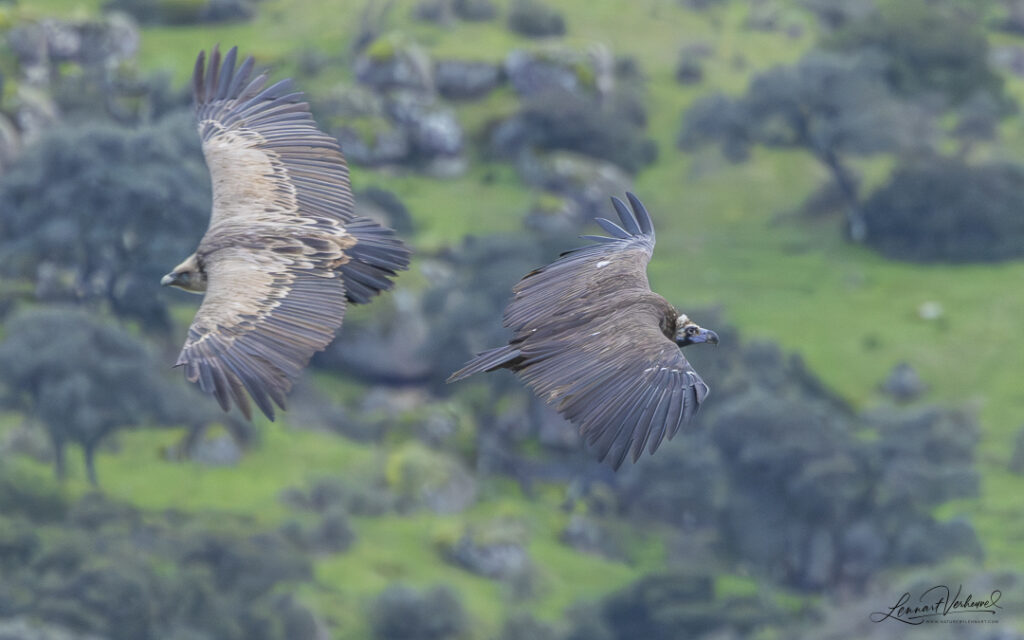
Eurasian Griffon Vulture and Cinereous Vulture
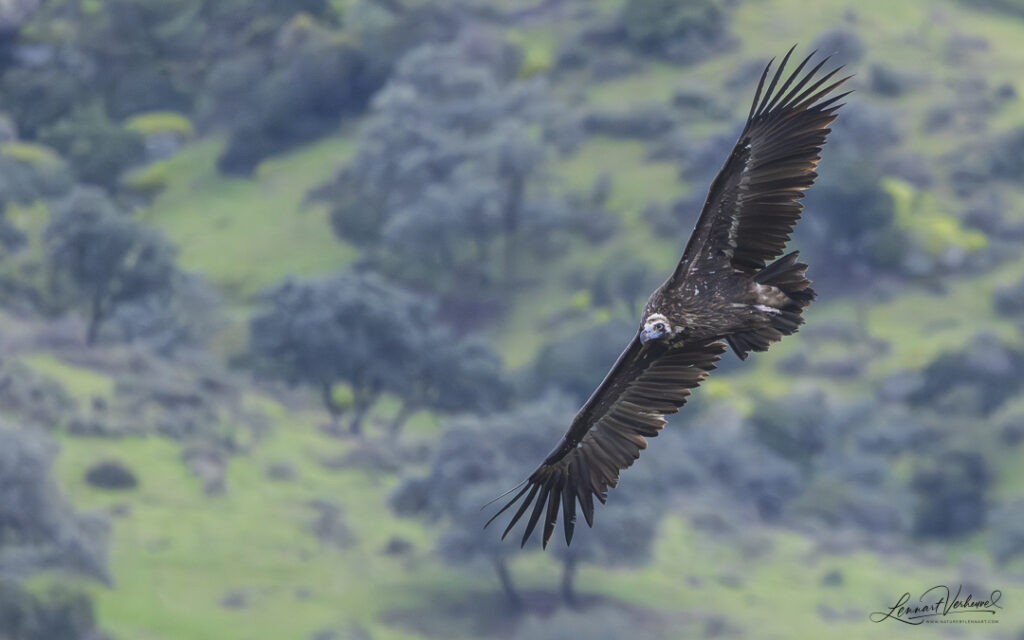
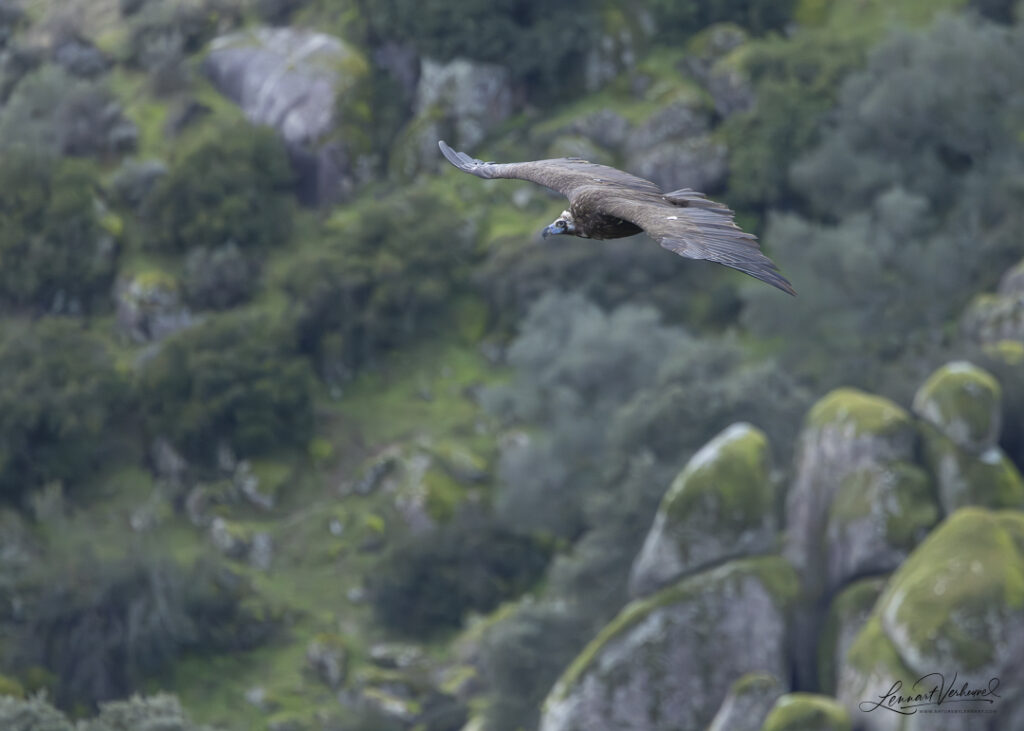
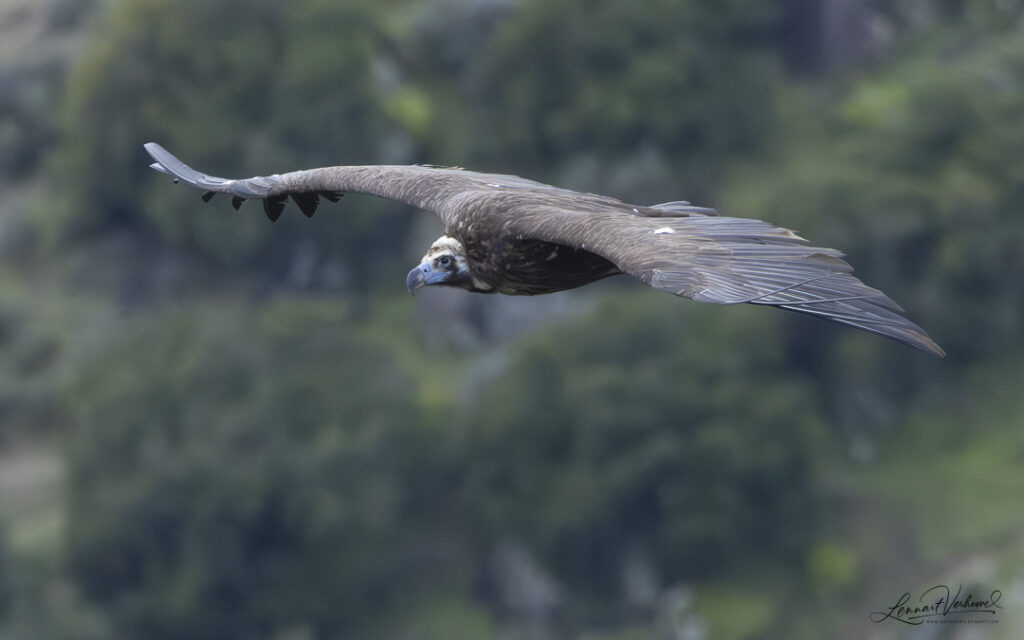
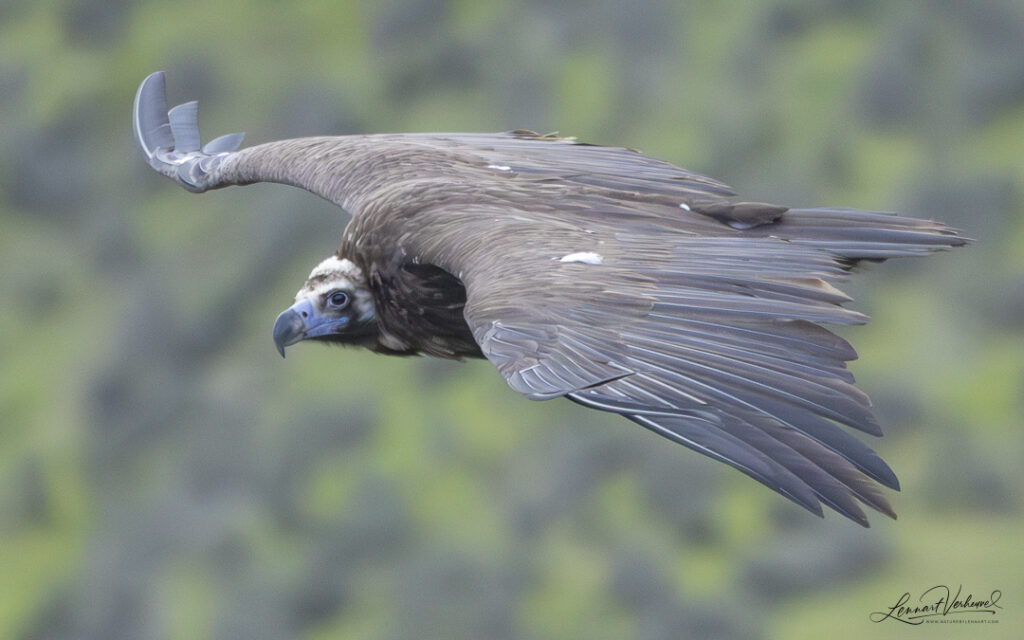
Cinereous Vulture
A Dartford Warbler was also moving through the bushes nearby.
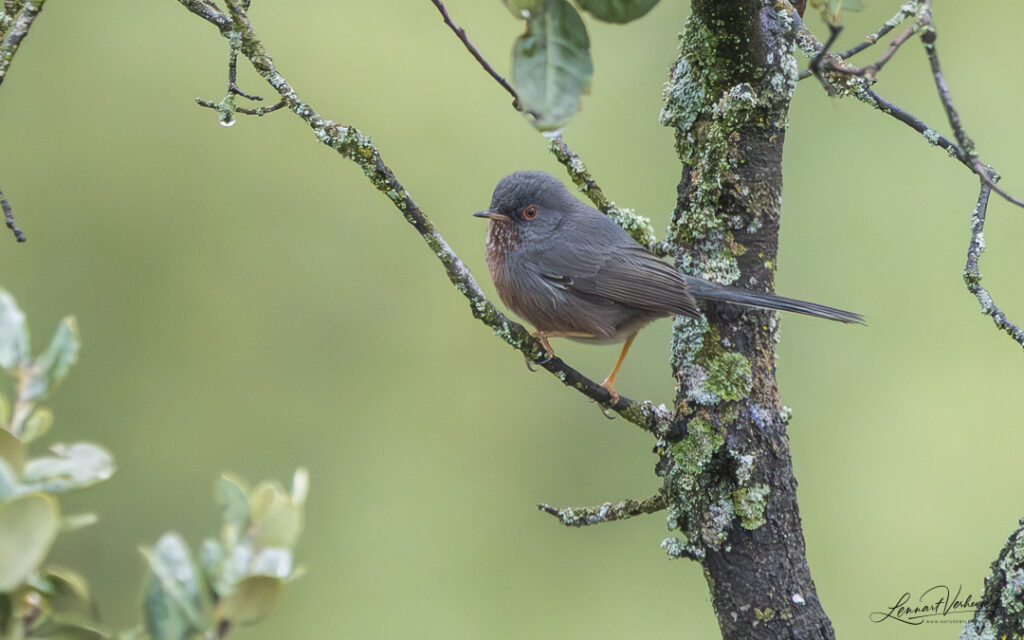
Dartford Warbler
At the end of the day we again encountered Iberian Ibex, this time at much closer range.
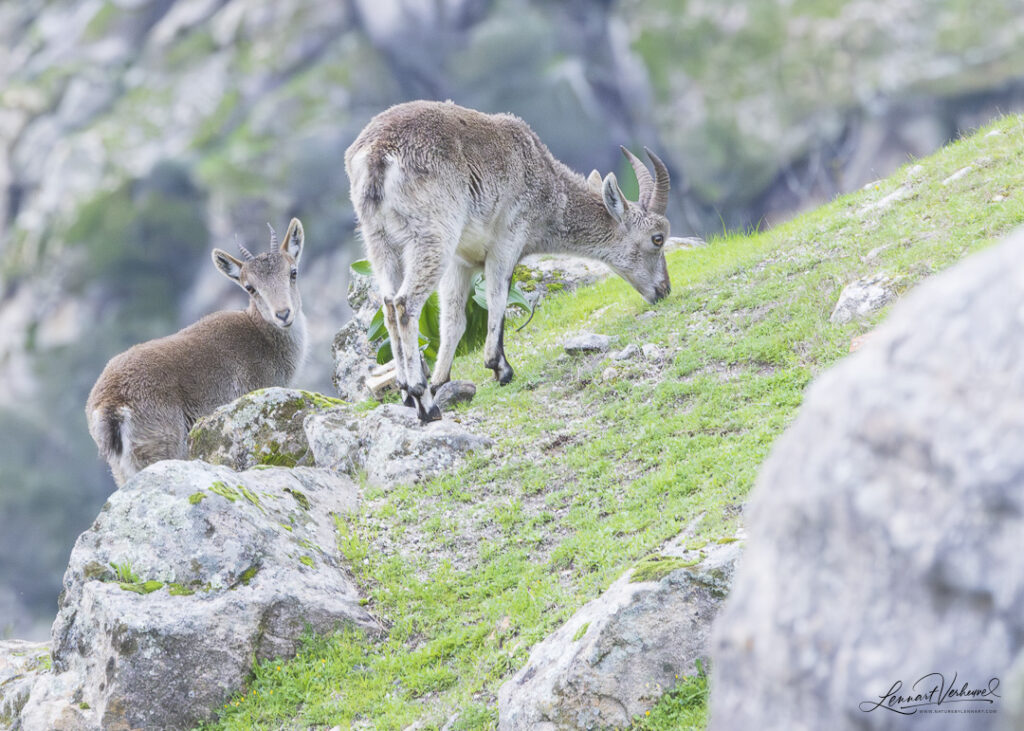
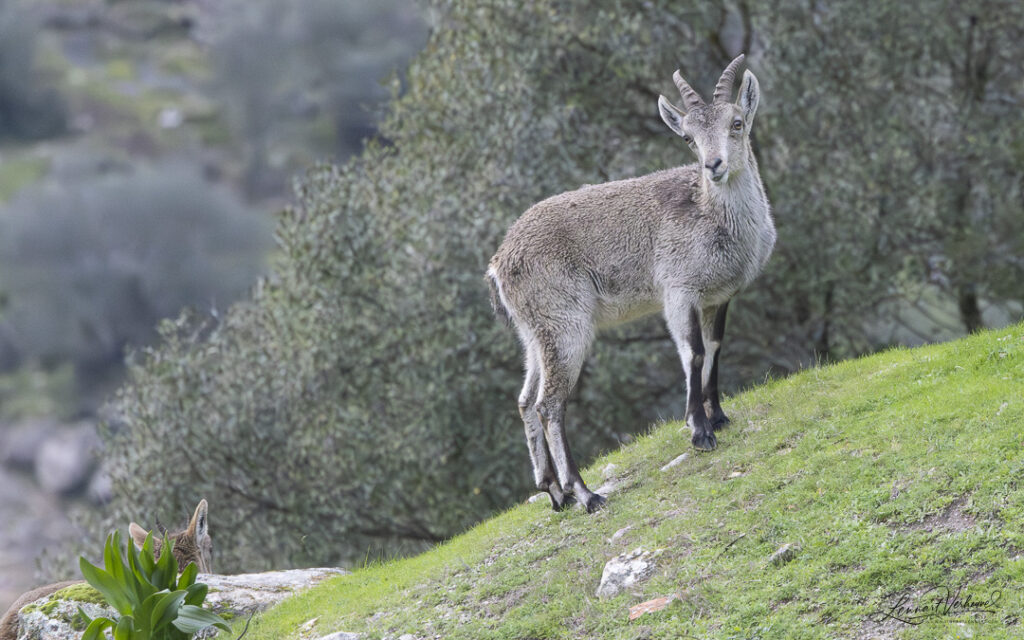
Iberian Ibex
Around Jándula Dam we also found Alpine Accentor, Blue Rock Thrush and a pair of Alpine Choughs, the latter showing fascinating courtship behaviour.
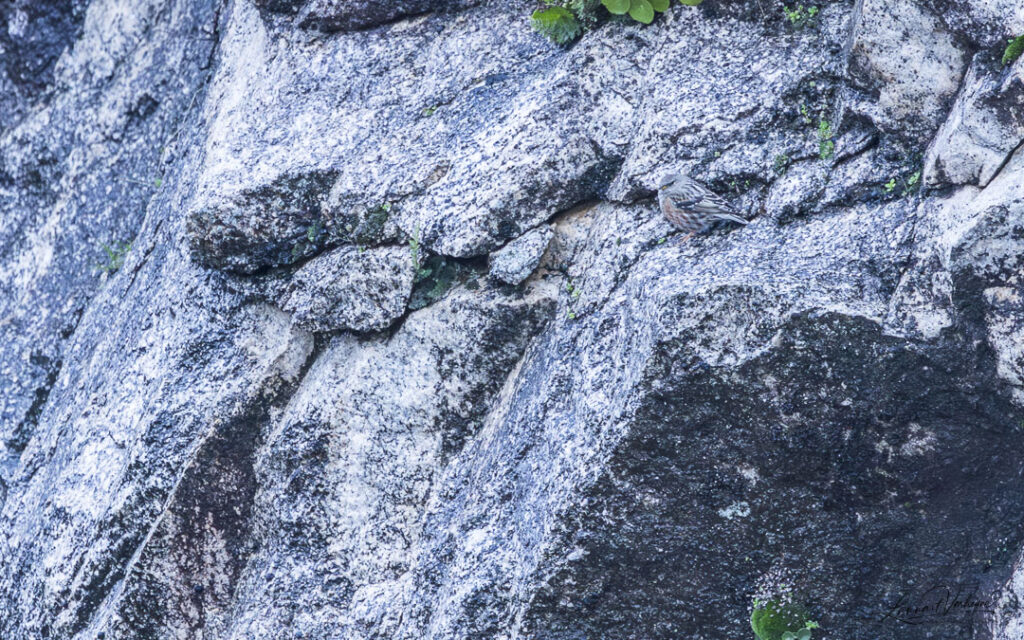
Alpine Accentor
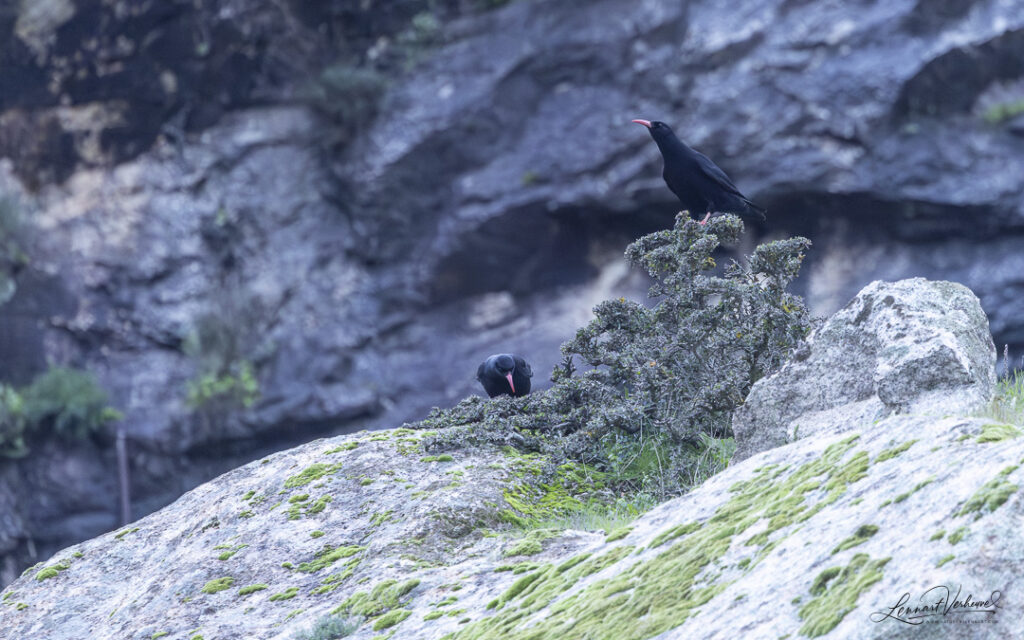
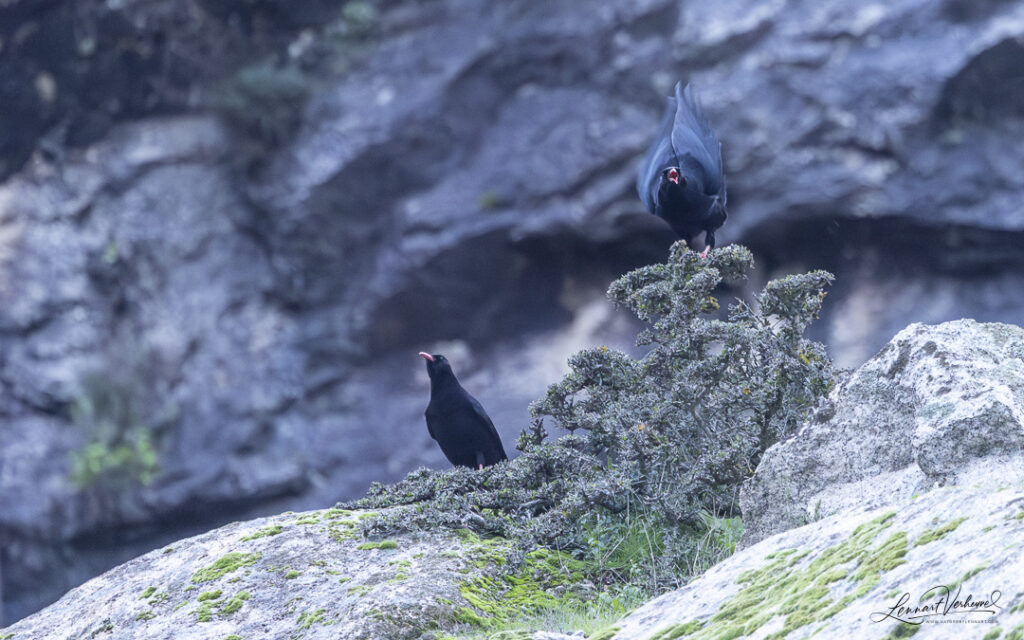
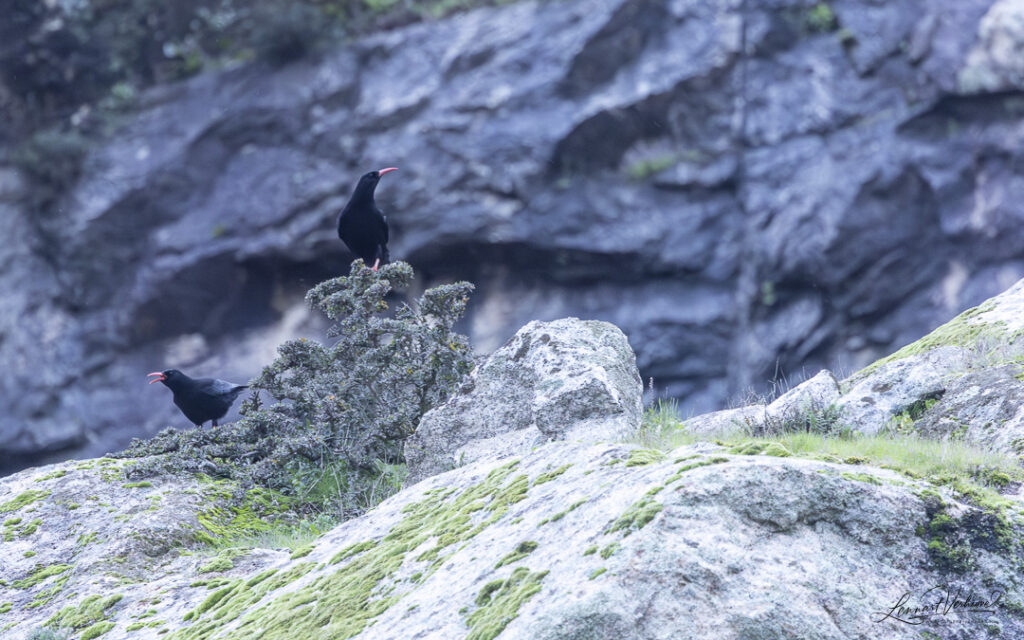
Red-billed Choughs
The following day was even better for lynxes. We enjoyed excellent views of two young Iberian Lynxes together, as well as two additional solitary animals. We were obviously delighted with that result.
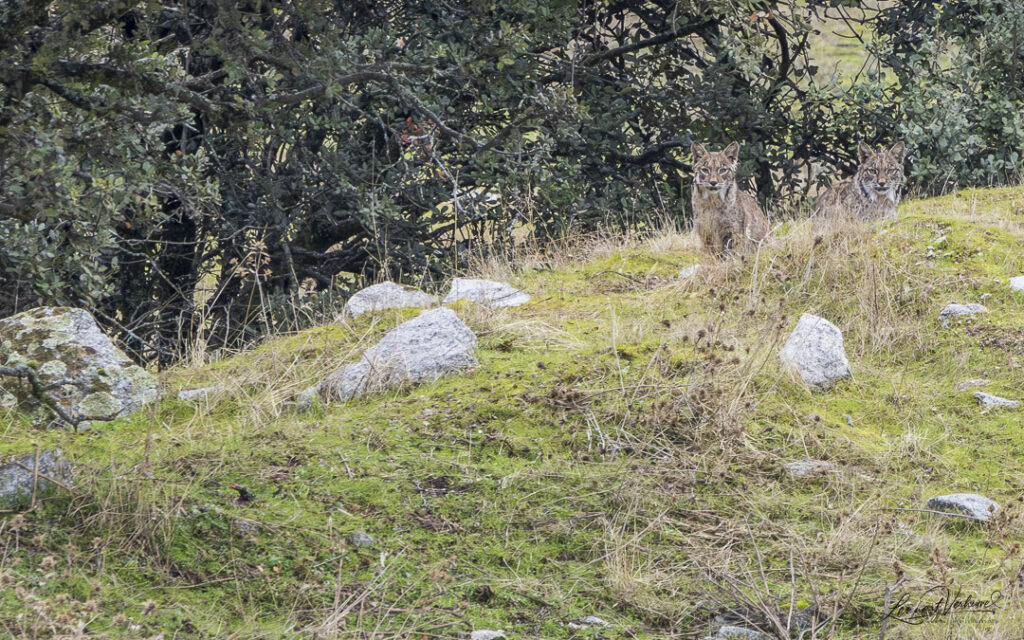
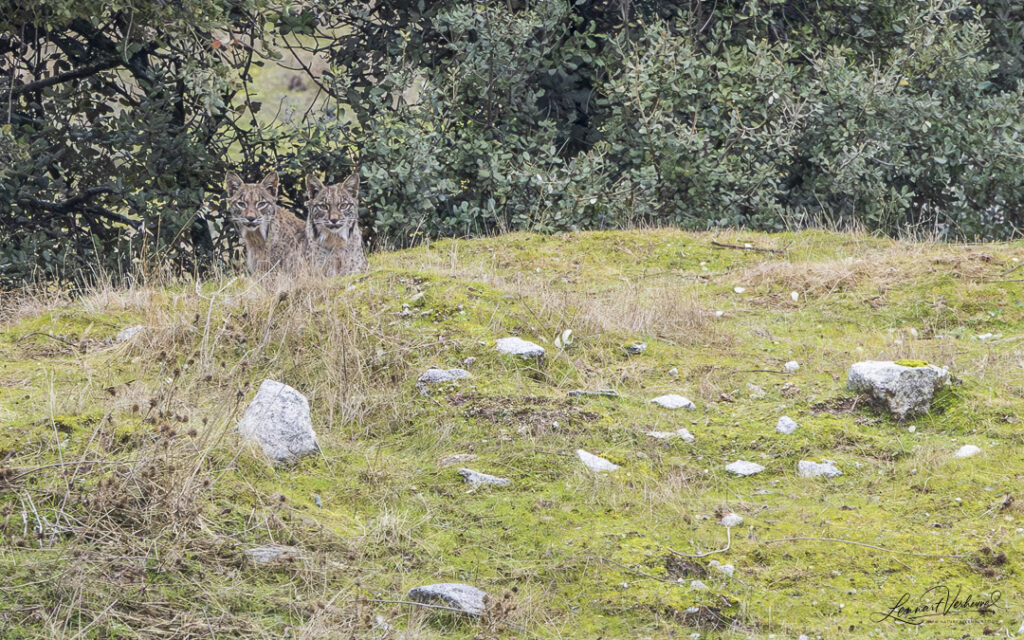
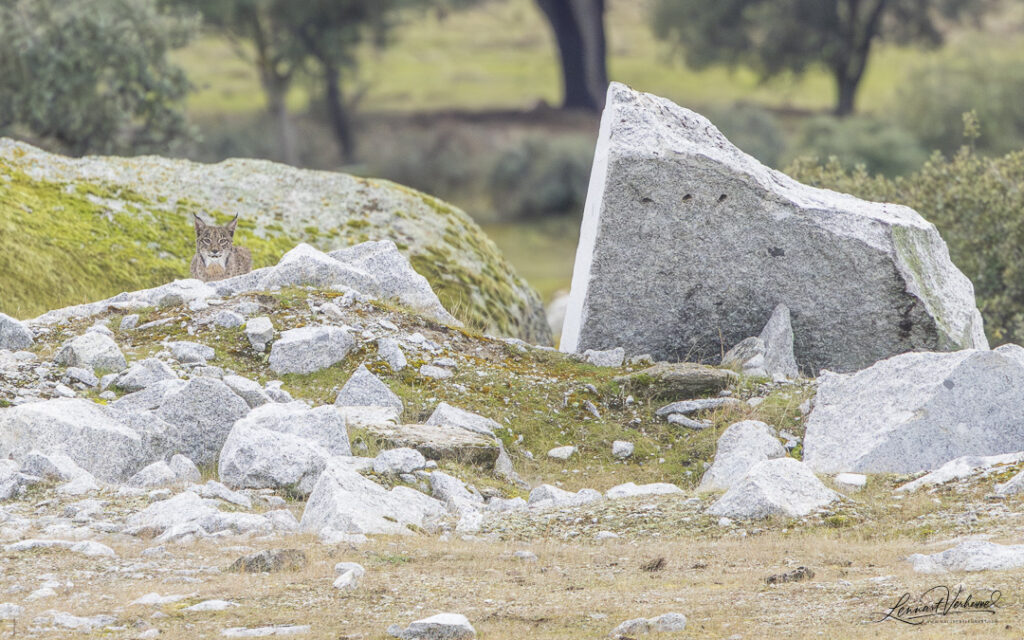
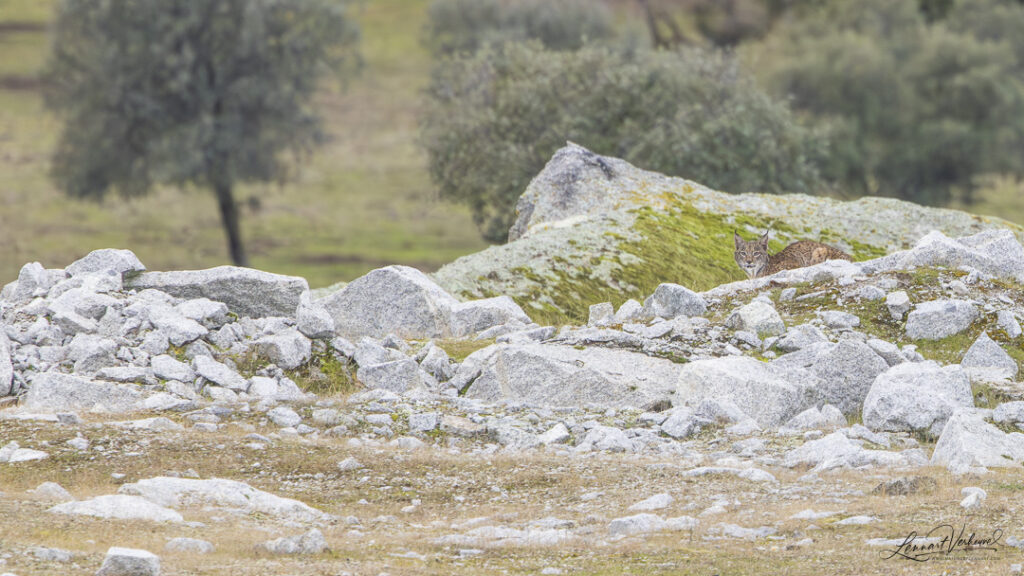
Iberian Lynx
Still, we hoped for closer views. Initially we had arranged to use a private lynx hide owned by the man renting us the cottage, but the terrible weather drastically reduced the chances of success there. On top of that, some confusion in communication meant the hide was suddenly unavailable on certain days.
At the last minute I contacted Gato Clavo, a well-known lynx hide where the cats are often seen at close range. Their setup is much larger, with space for around 15–20 people. Fortunately they were flexible and able to accommodate us the very next day.
We entered the hide early in the morning, still in darkness because the power had failed due to the severe weather. Normally Gato Clavo uses lights during the early morning and evening to improve the chances of seeing lynxes.
For a long time, however, nothing happened. We watched Blue Rock Thrush and Eurasian Hoopoe in the rain, but of course our main focus remained the lynx.
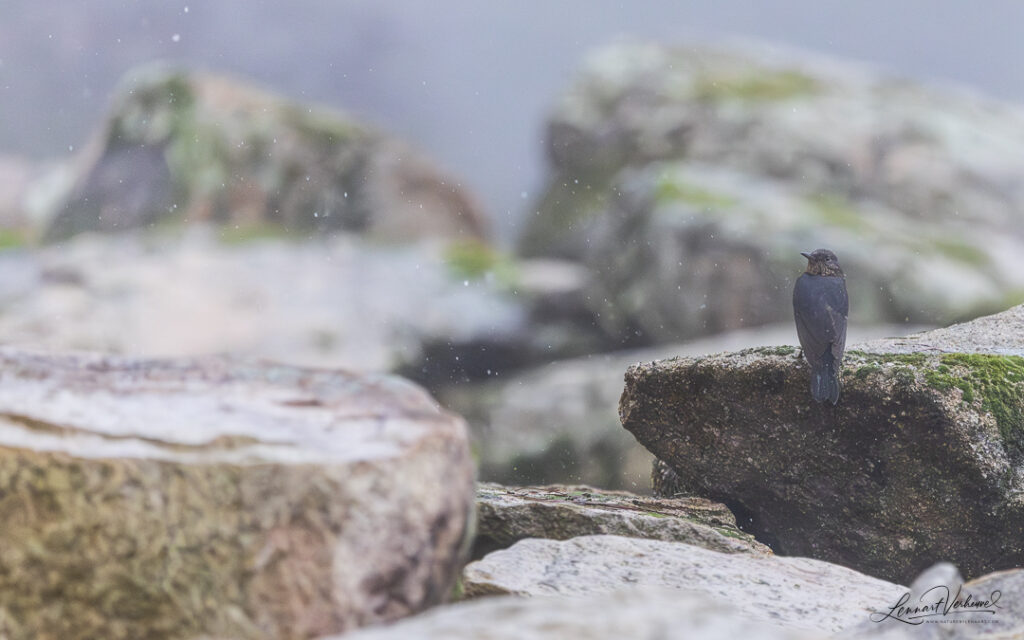
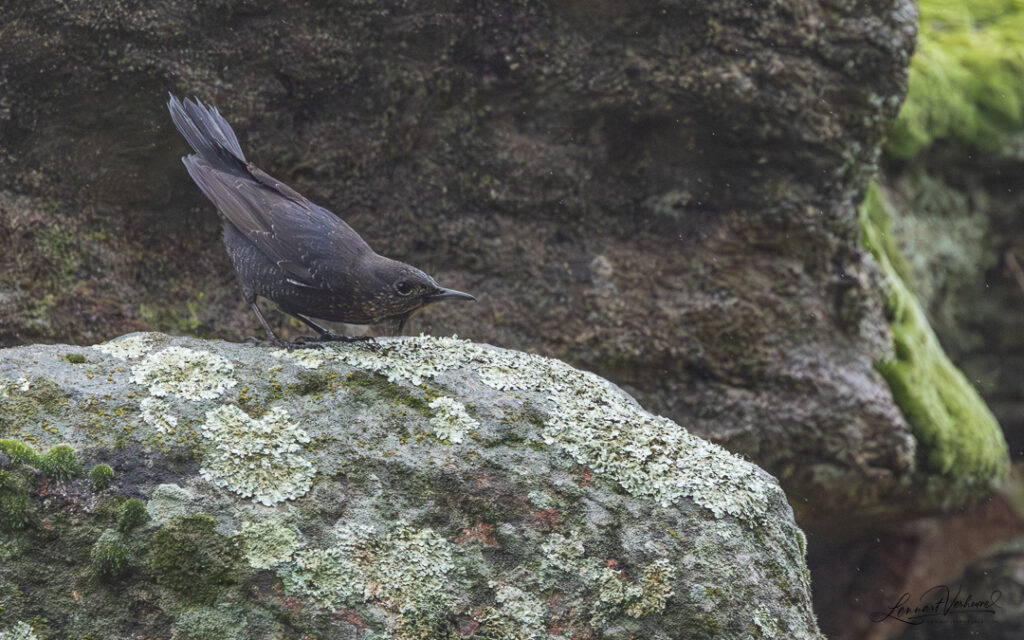
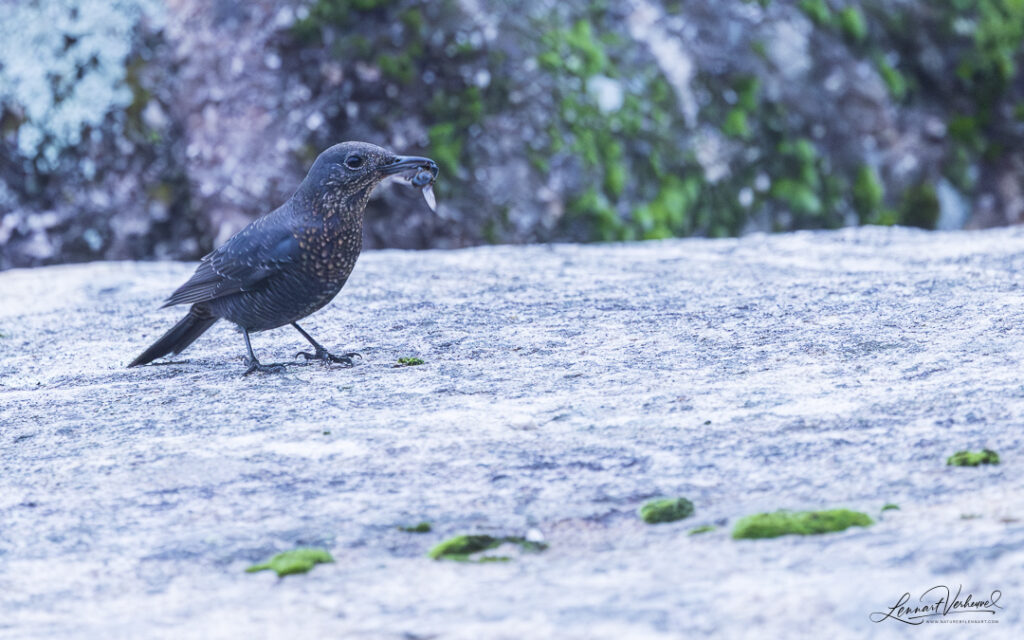
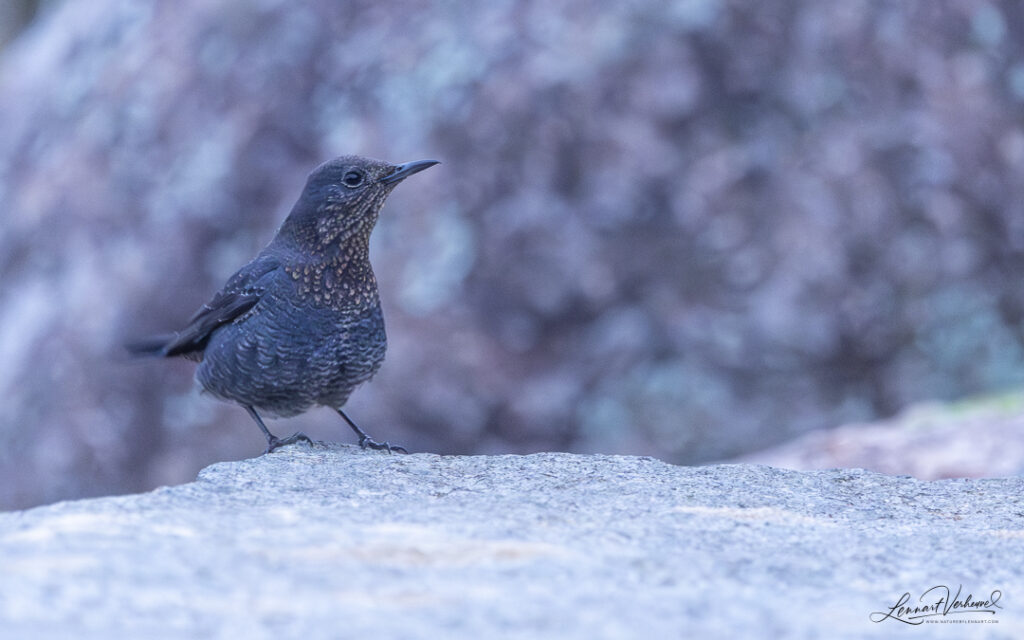
Blue Rock Thrush
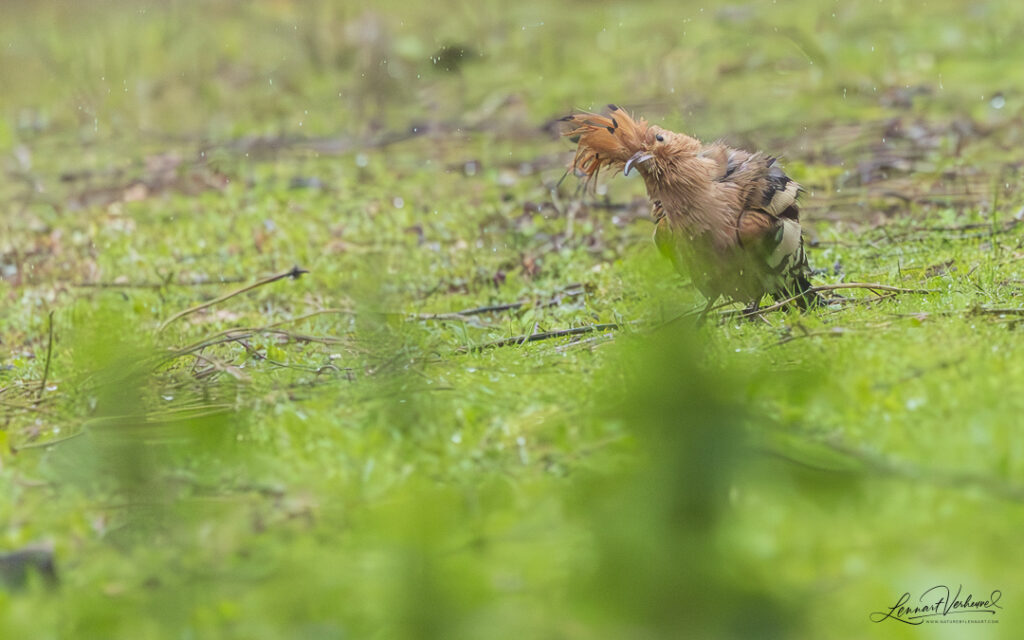
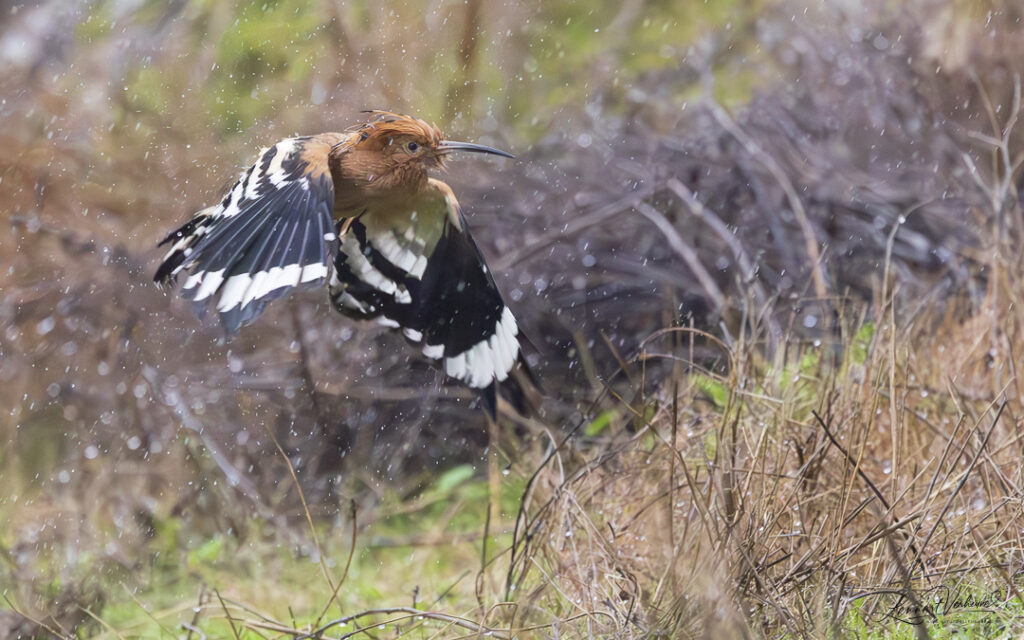
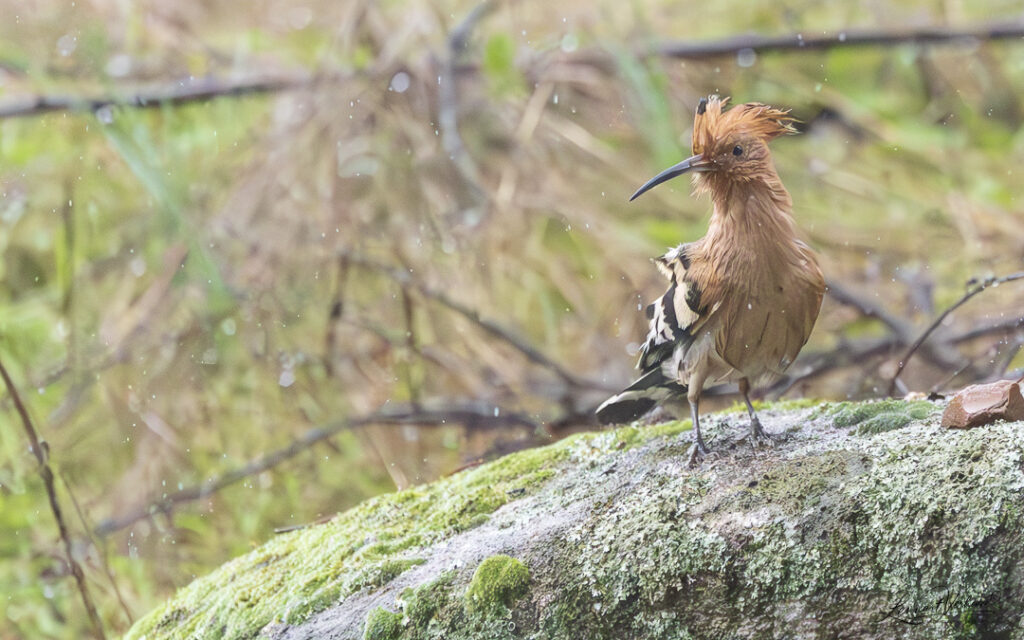
Eurasian Hoopoe
Unfortunately, our patience was not rewarded that day. Rain and wind continued to dominate the weather, and in the evening the lights also failed because the power outage had not yet been fixed. We returned rather disappointed. Losing both time and money was frustrating, but that is simply part of wildlife watching sometimes.
The next day was already our final full day in the Sierra de Andújar. We decided to spend it simply searching the area for lynxes ourselves. At last we succeeded in finding a European Otter, although only at some distance.
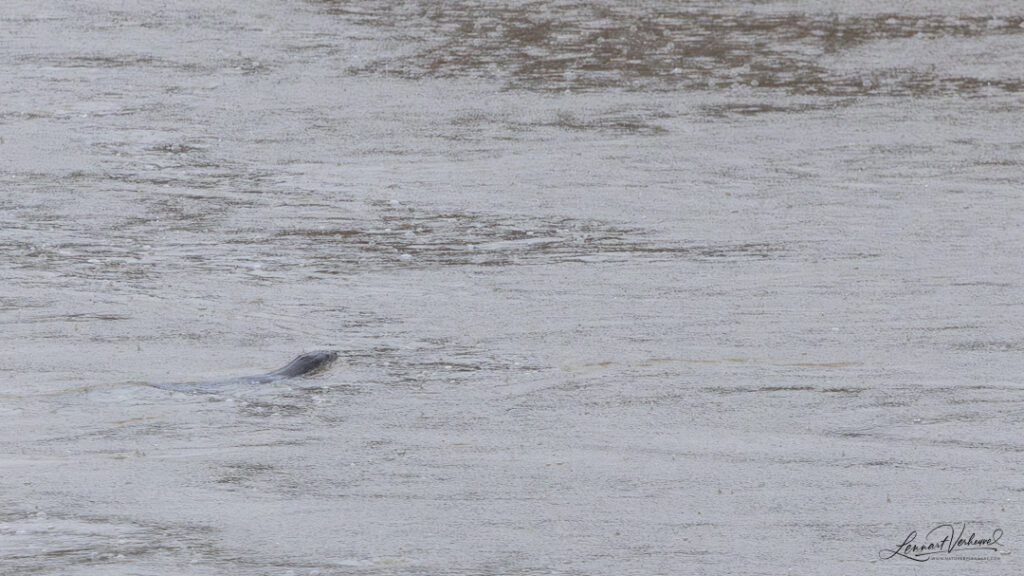
Eurasian Otter
I was also pleased with my photographs of Iberian Magpie. The species is common enough here, but getting good flight shots turned out to be surprisingly difficult.
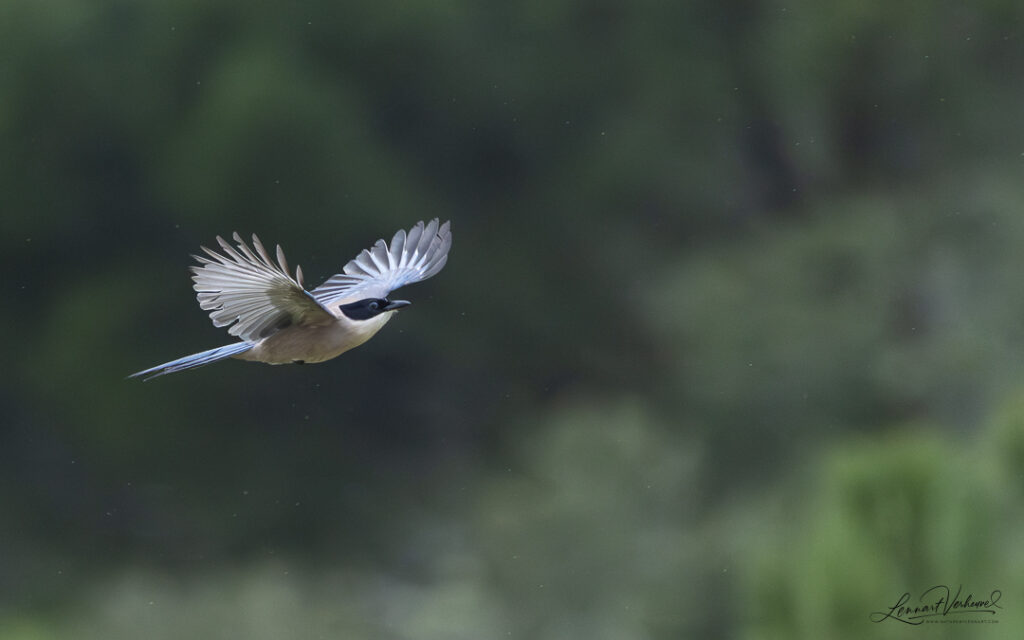
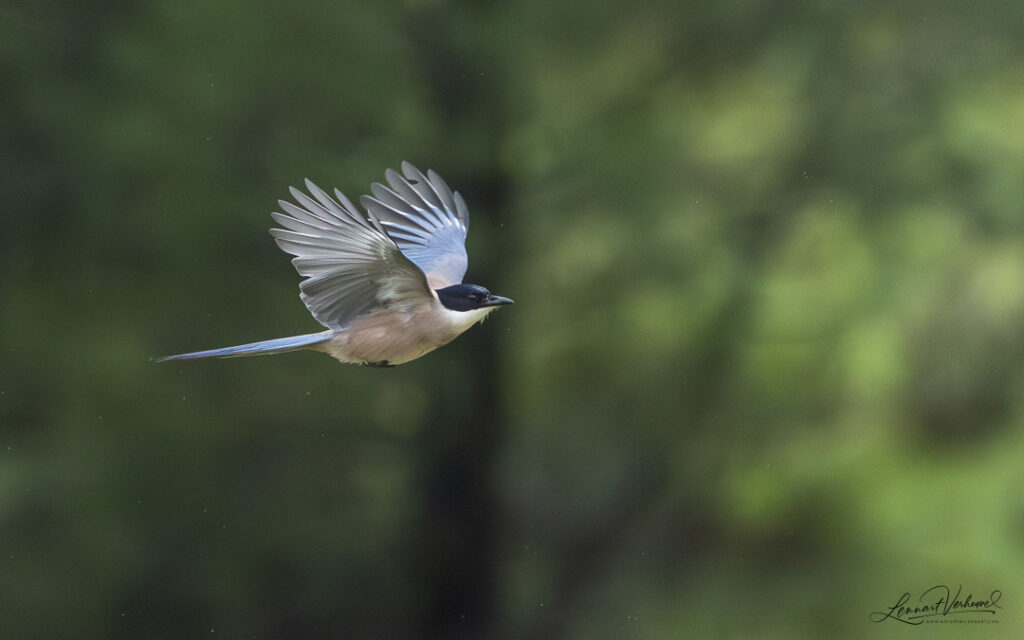
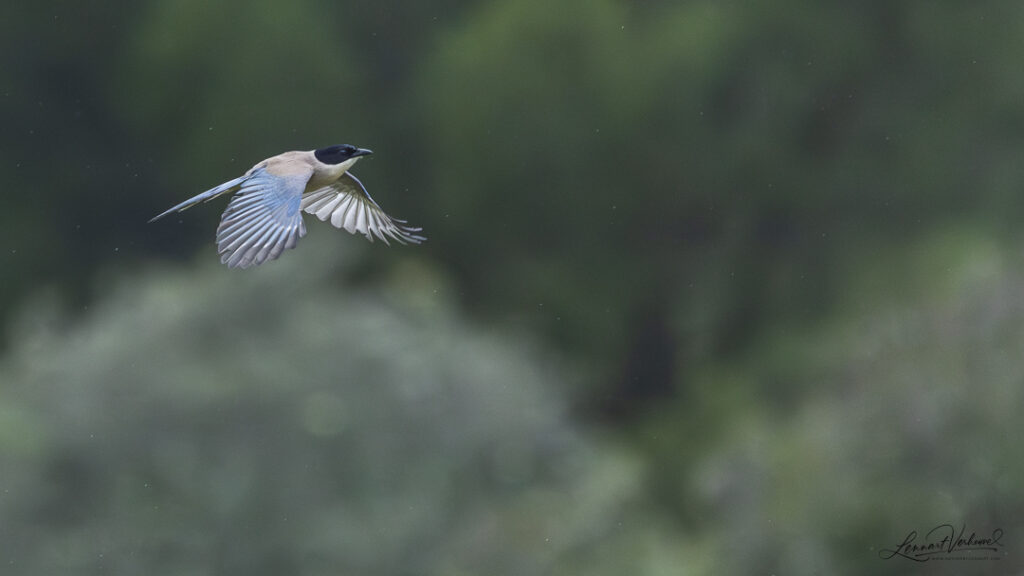
Iberian Magpie
Meanwhile we were constantly checking the weather forecast. When it seemed likely that the afternoon might finally become dry, we contacted Gato Clavo once more to see if another session could perhaps be arranged. Amazingly, they offered us a reduced rate for that very afternoon. The opportunity was impossible to refuse, and so we found ourselves back in the hide yet again.
Before heading there, however, we spent some time looking for Thekla’s Lark. We had seen reports of the species in the area but had not really focused on it yet. Fortunately it proved easier than expected. After carefully scanning several suitable open areas, we eventually found a few close to the car.
Although they resemble Crested Lark quite closely, I still found them noticeably different. I had previously seen the species in Western Sahara, but never had the chance to study them so carefully. Here I particularly noticed the facial pattern with its pale eye-ring and pale spot below the eye, the relatively short and sturdy bill, and the darker, sharper breast streaking.
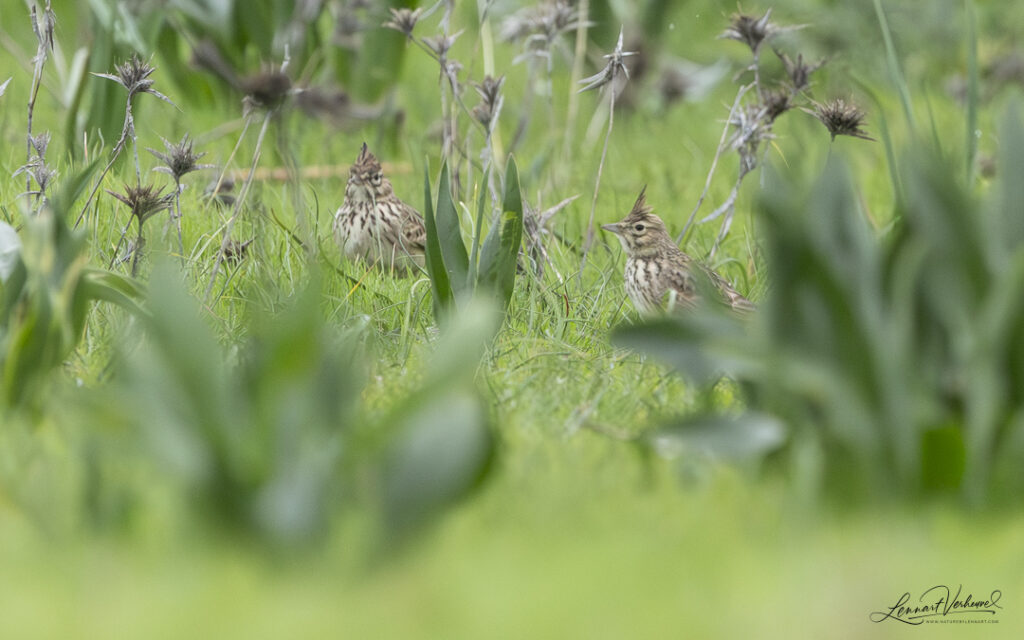
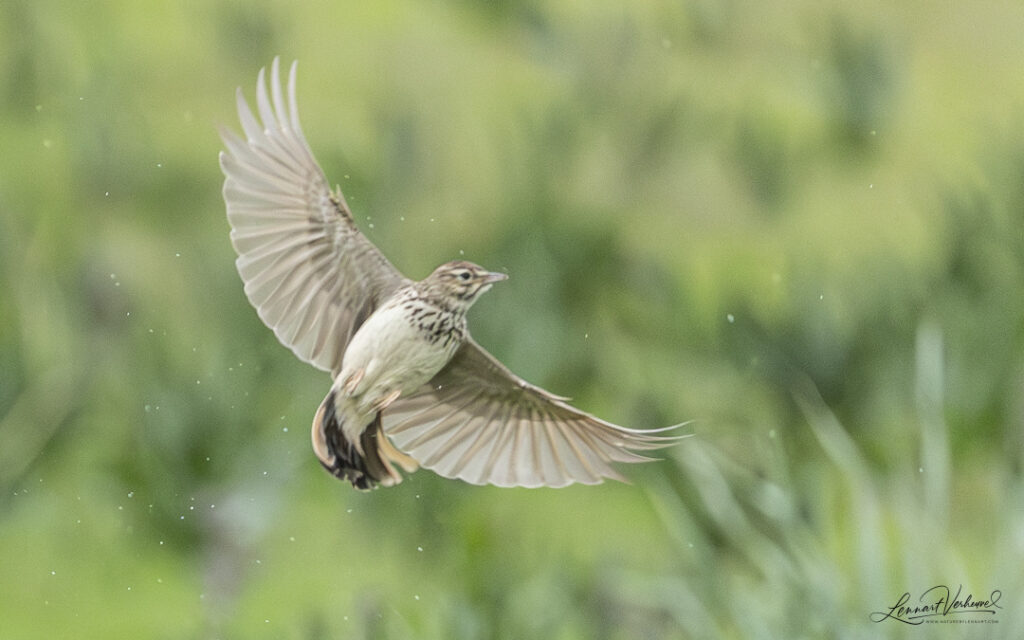
Thekla’s Lark
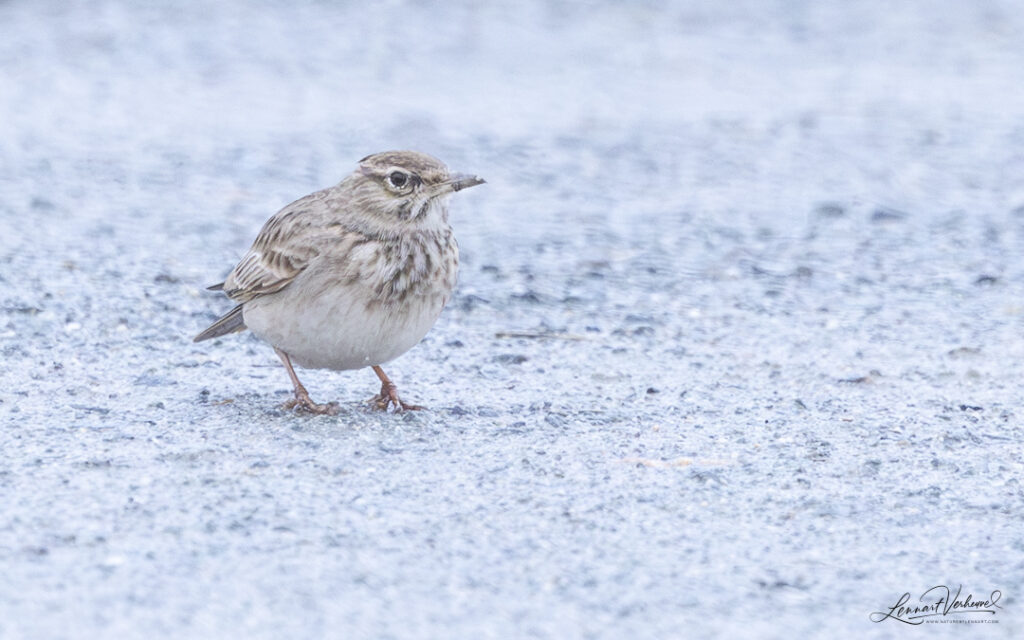
Crested Lark
Back at the hide we once again watched our familiar Blue Rock Thrush while the rain continued on and off.
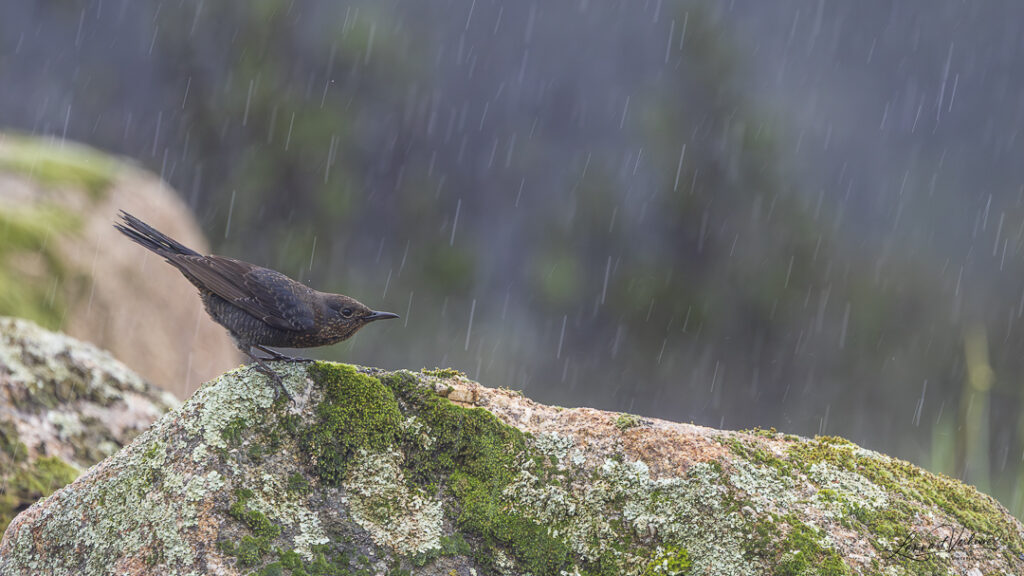
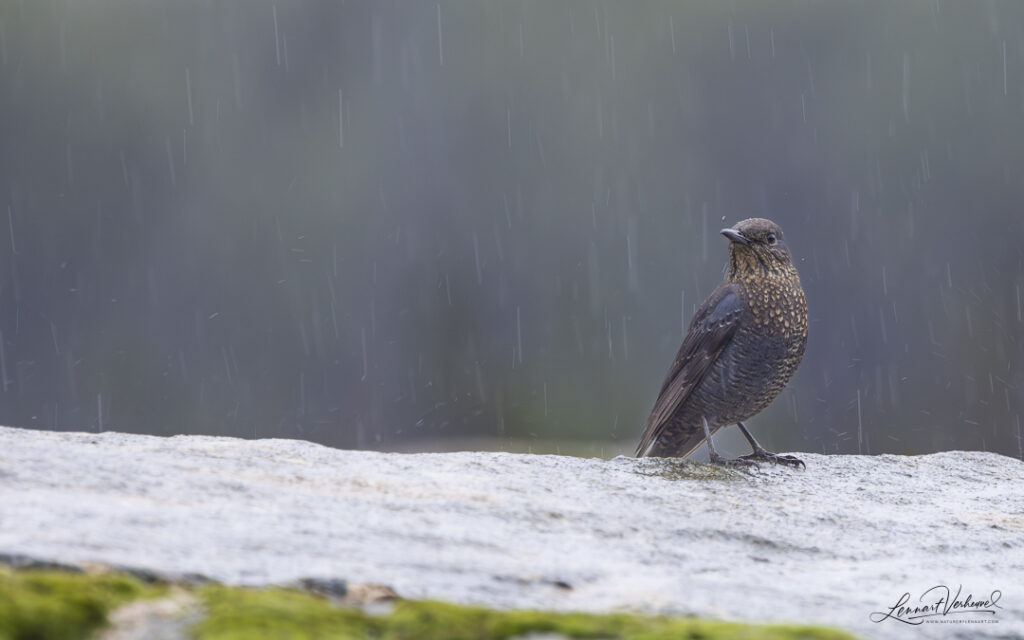
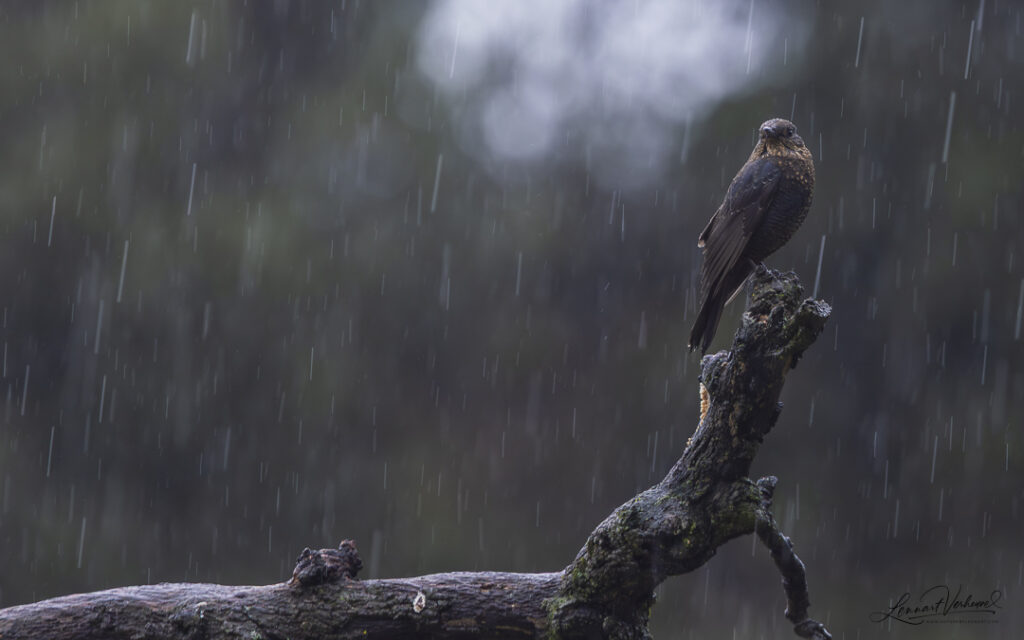
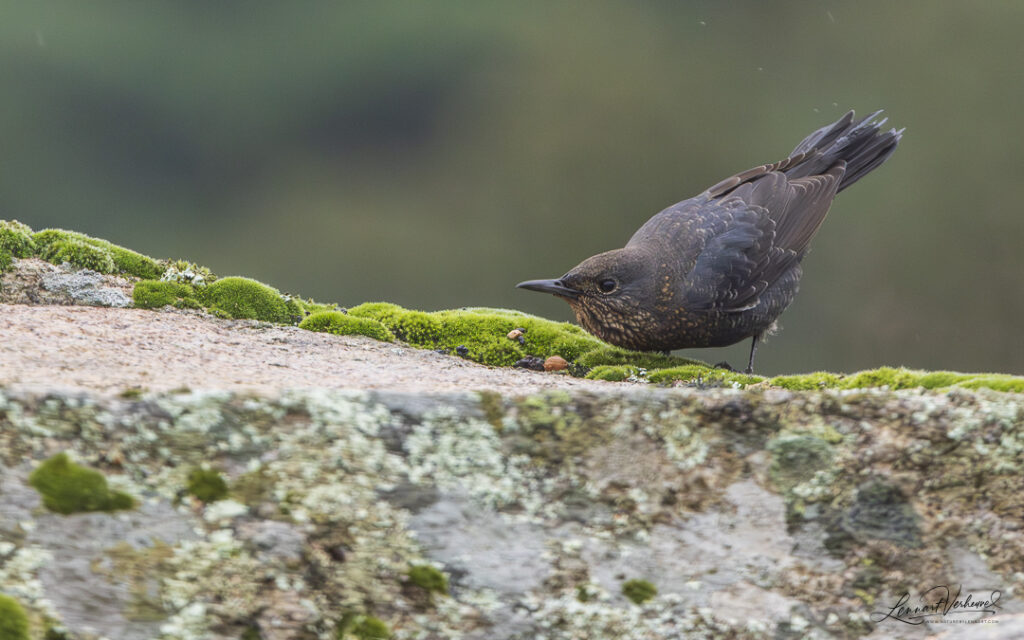
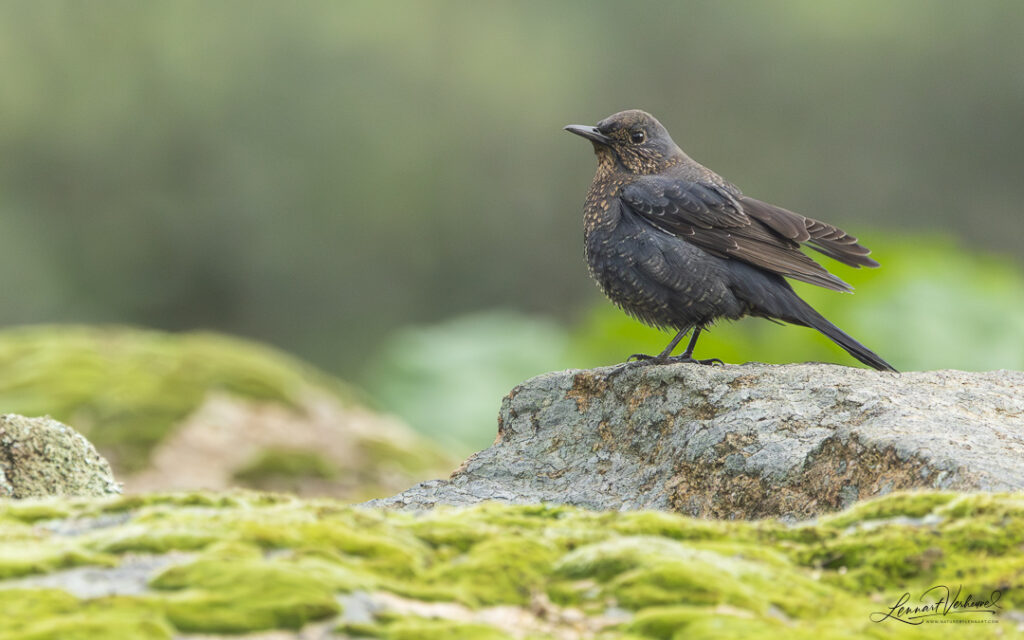
Blue Rock Thrush
I also photographed a European Stonechat in the rain.
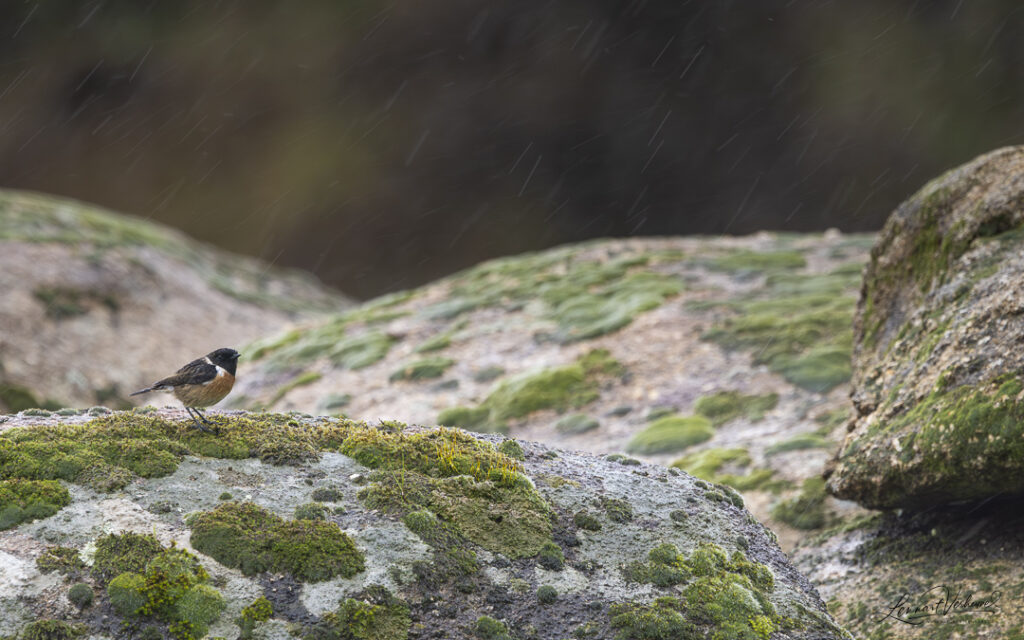
European Stonechat
Otherwise, things remained quiet. At one point I amused myself by photographing rabbits chasing each other around — and even harassing a Common Wood Pigeon that seemed to have wandered too close.
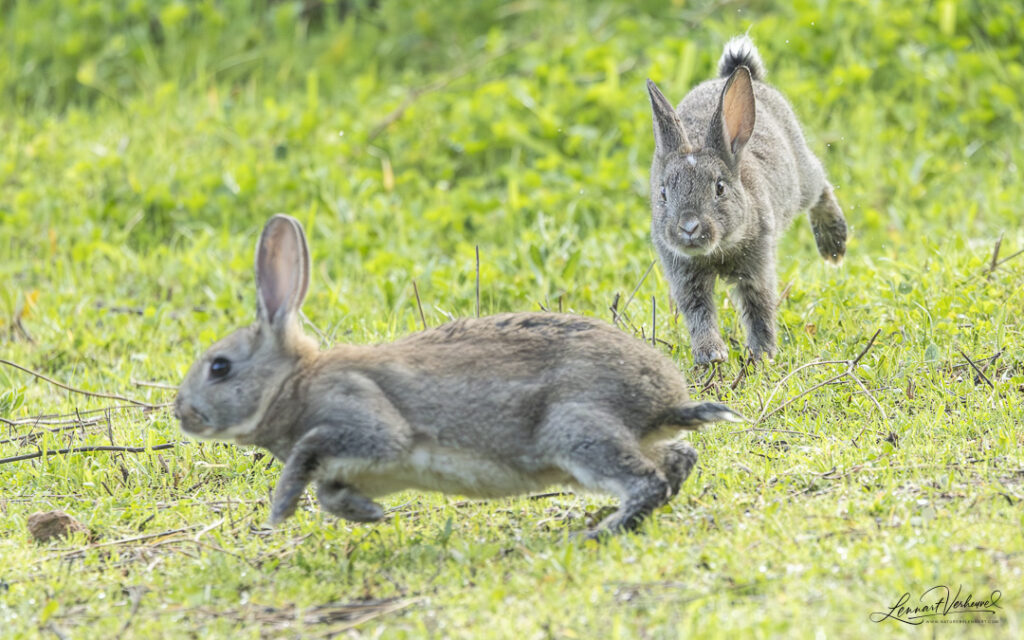
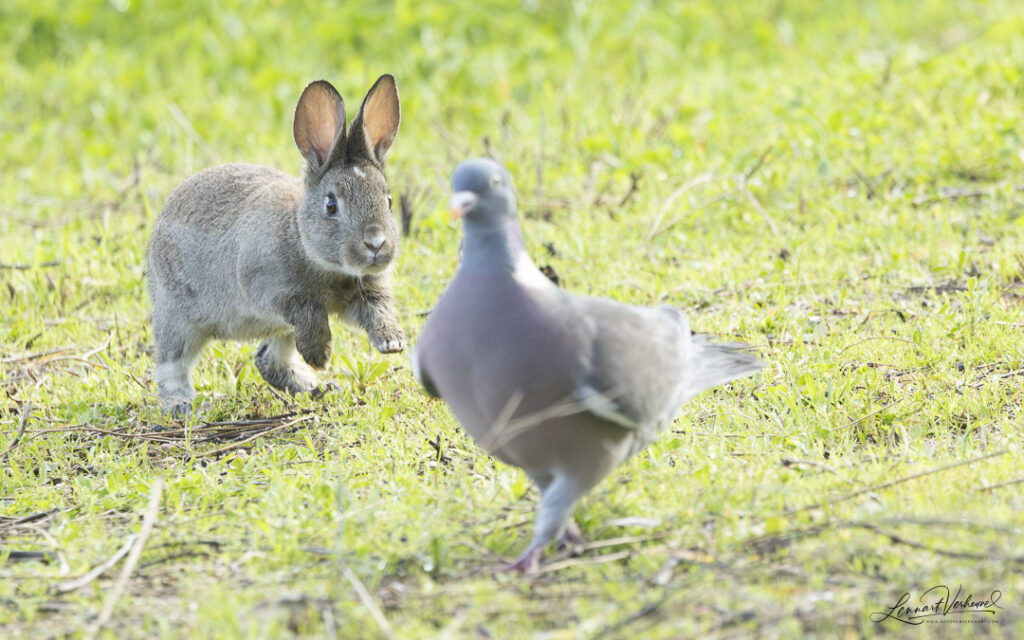
European Rabbit and Common Wood Pigeon
As the afternoon slowly faded into evening, the lights finally came on. We were allowed to stay an extra hour, until 8:30 pm. Even then, however, nothing seemed to be happening. Some of the other visitors eventually gave up and left. We decided to stay until the very end.
After 8 pm I began scanning outside the illuminated area with the thermal scope, determined not to miss anything. If a lynx appeared at the very last moment, I was more than willing to stay beyond closing time.
And that is exactly what happened. Almost precisely at 8:30 pm, I picked up a clear lynx shape walking into the valley. Earlier I had already mistaken several rabbits for lynxes, but this time there was no doubt at all. This was a big cat!
We waited a little longer, and suddenly the lynx climbed onto the rocks directly in front of the hide.
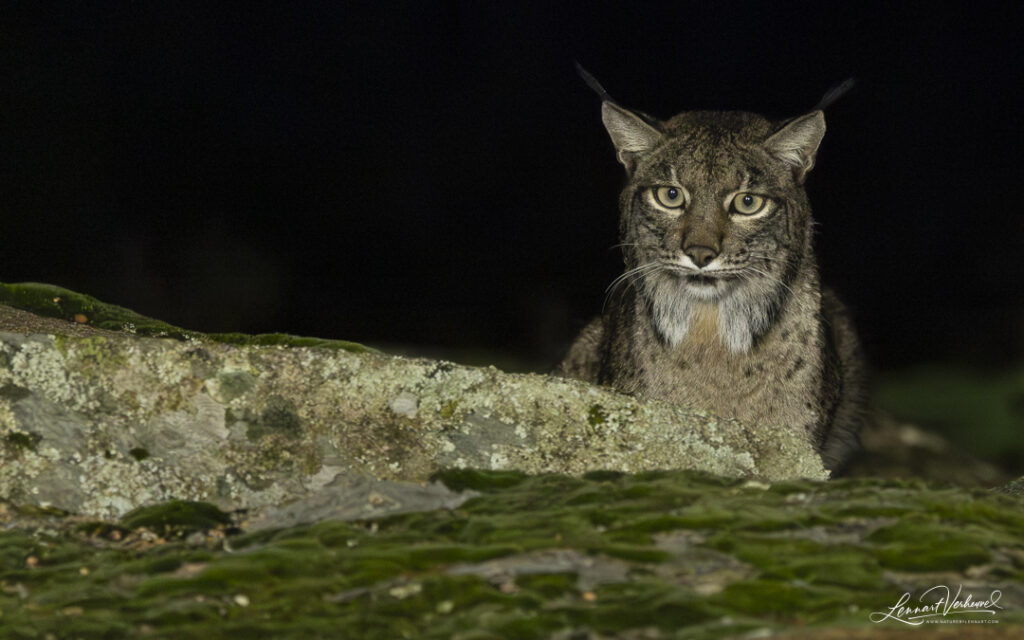
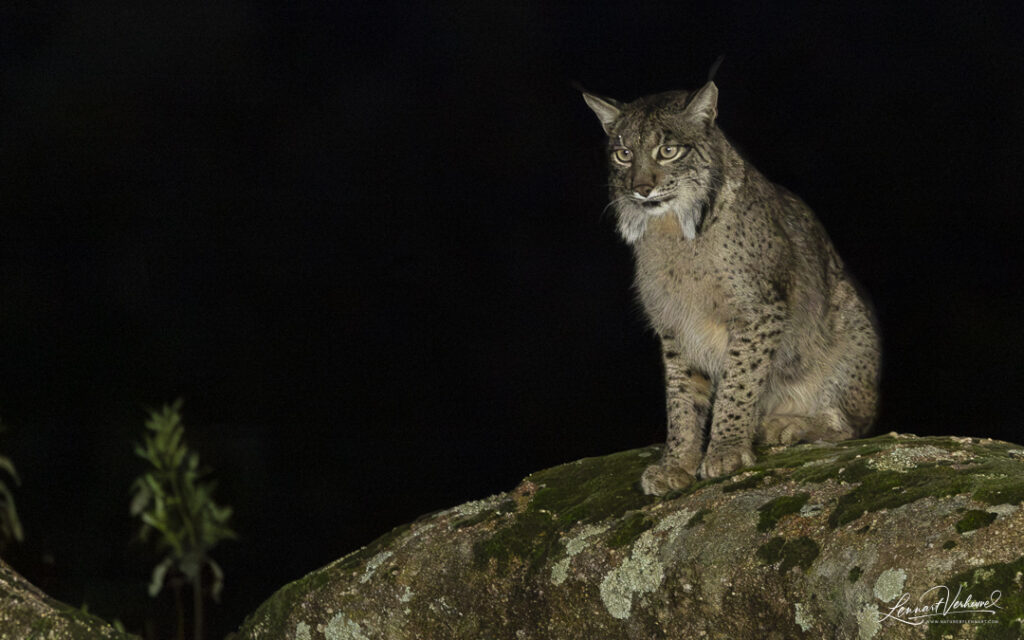
Iberian Lynx
For several minutes the Iberian Lynx simply sat there staring ahead before beginning to stalk the rabbits around the hide. Hunting clearly proved difficult, which allowed us to admire the animal for an extended period.
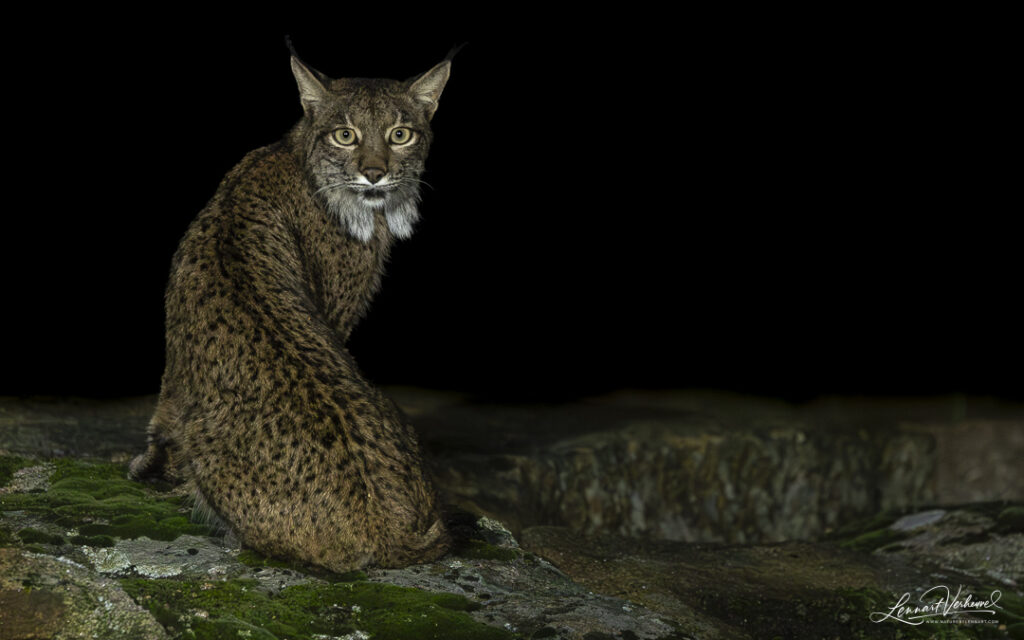
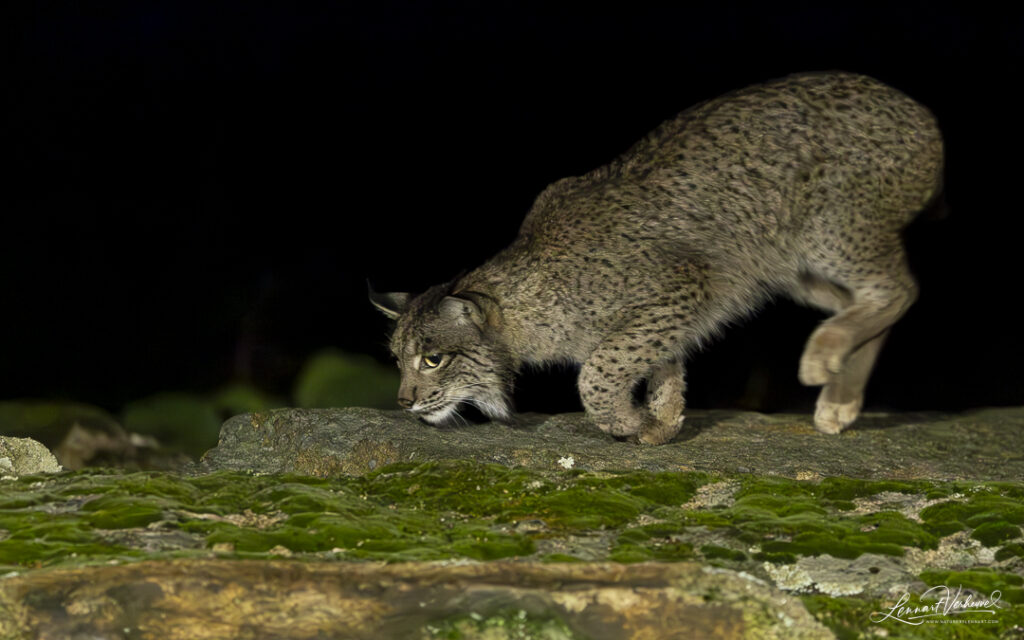
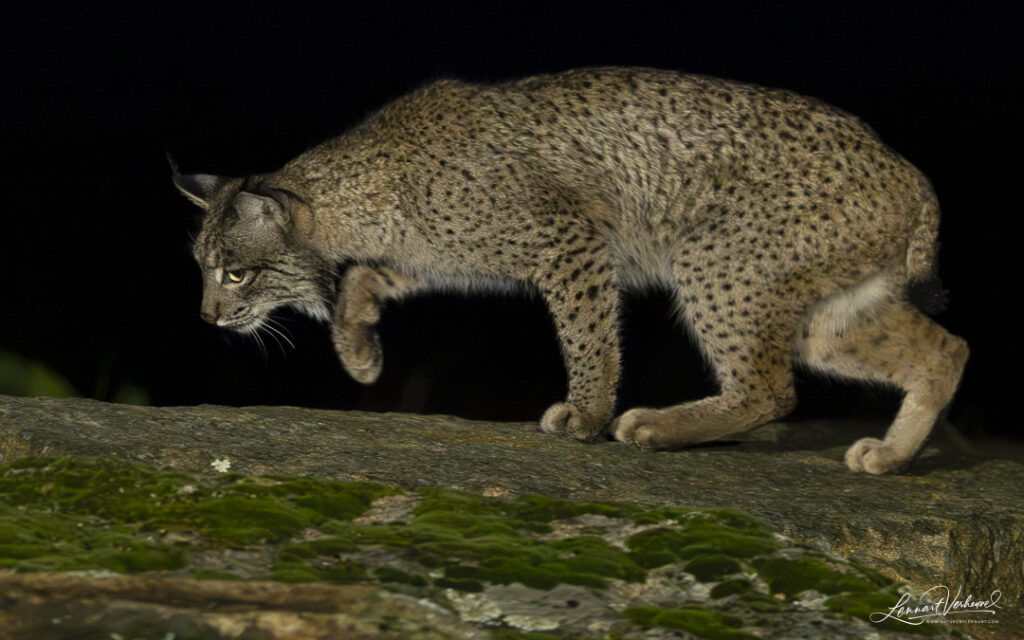
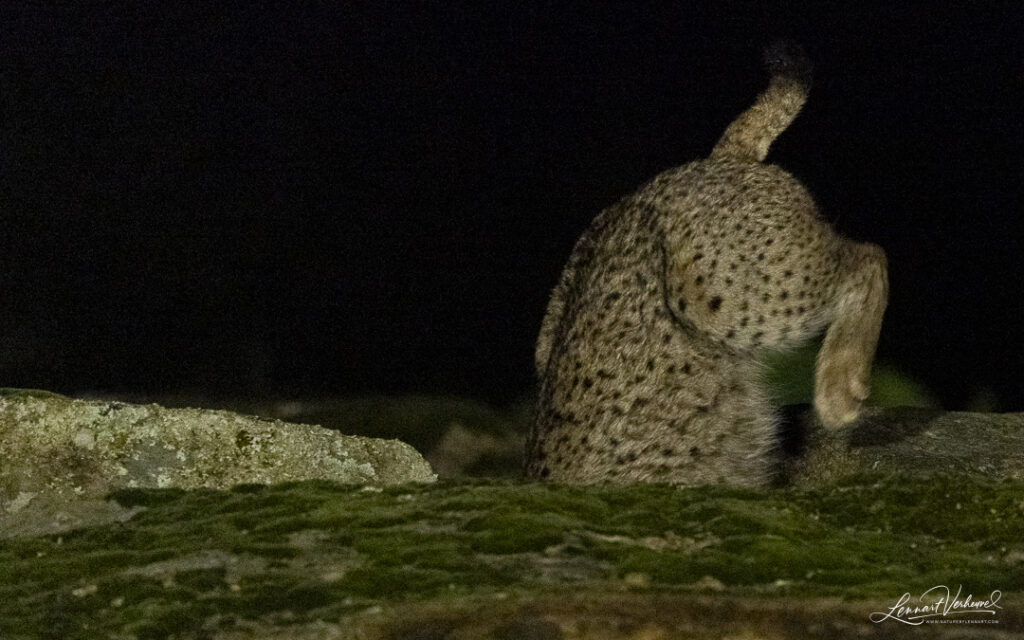
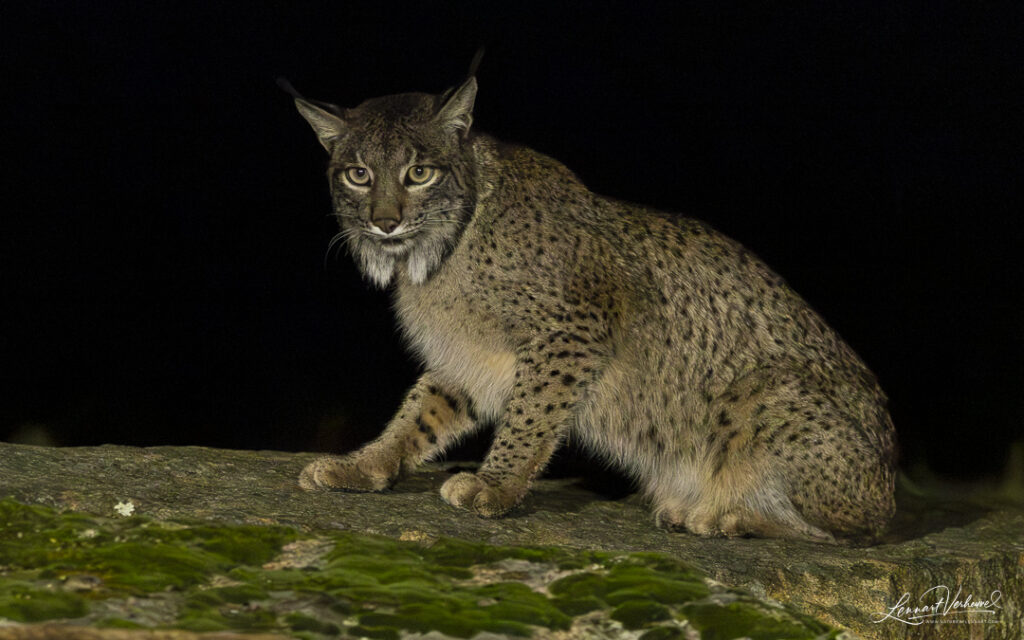
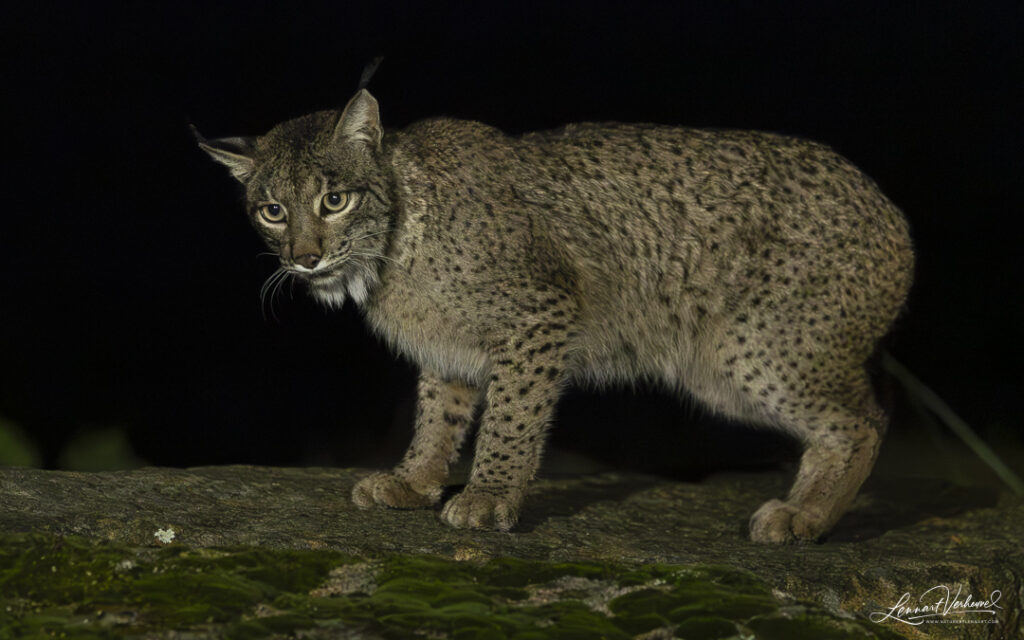
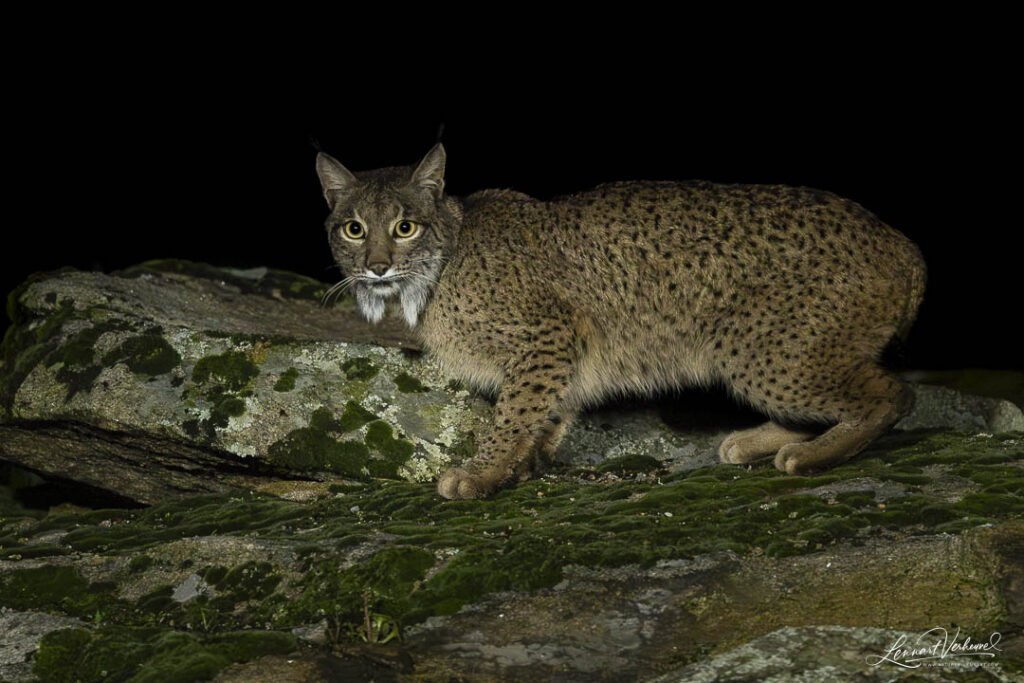
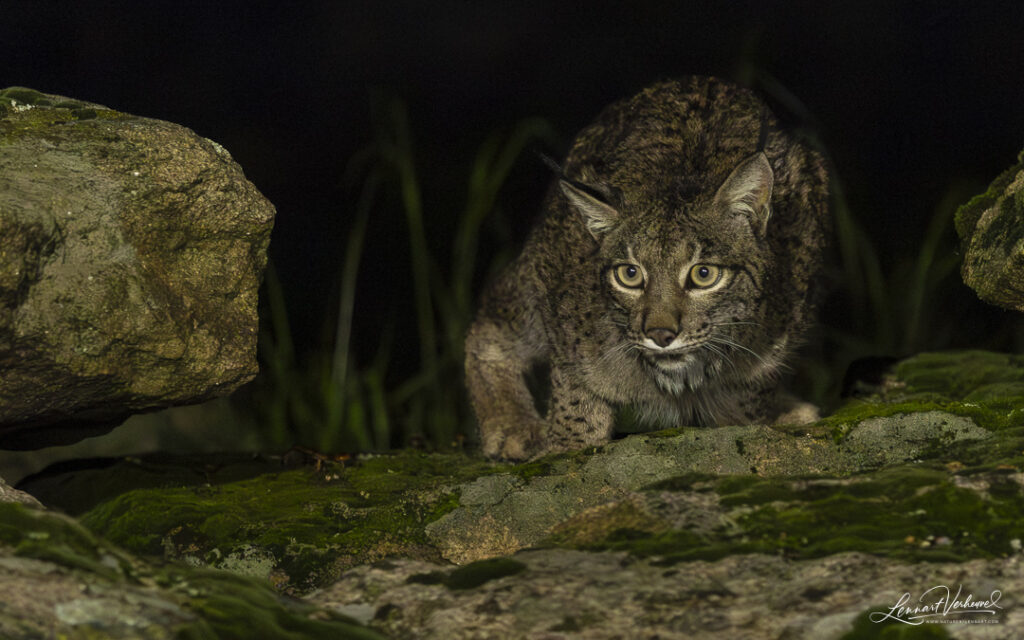
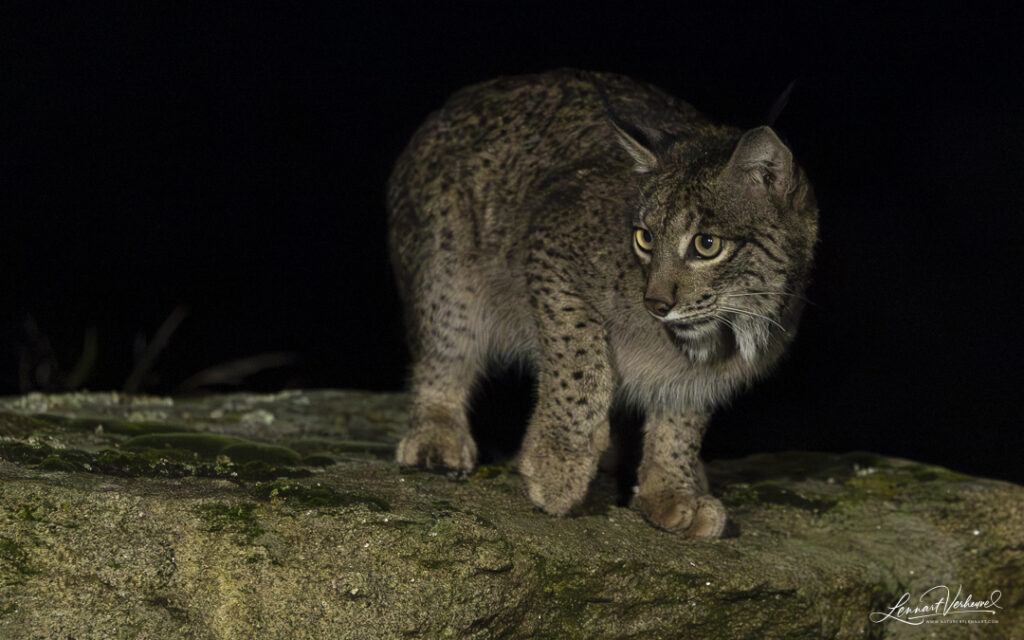
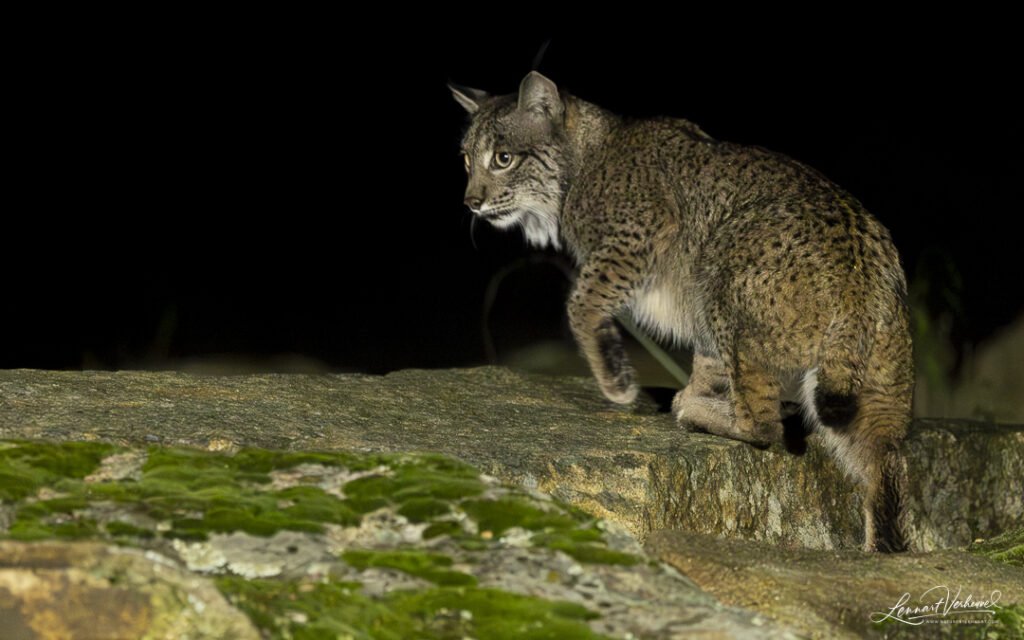
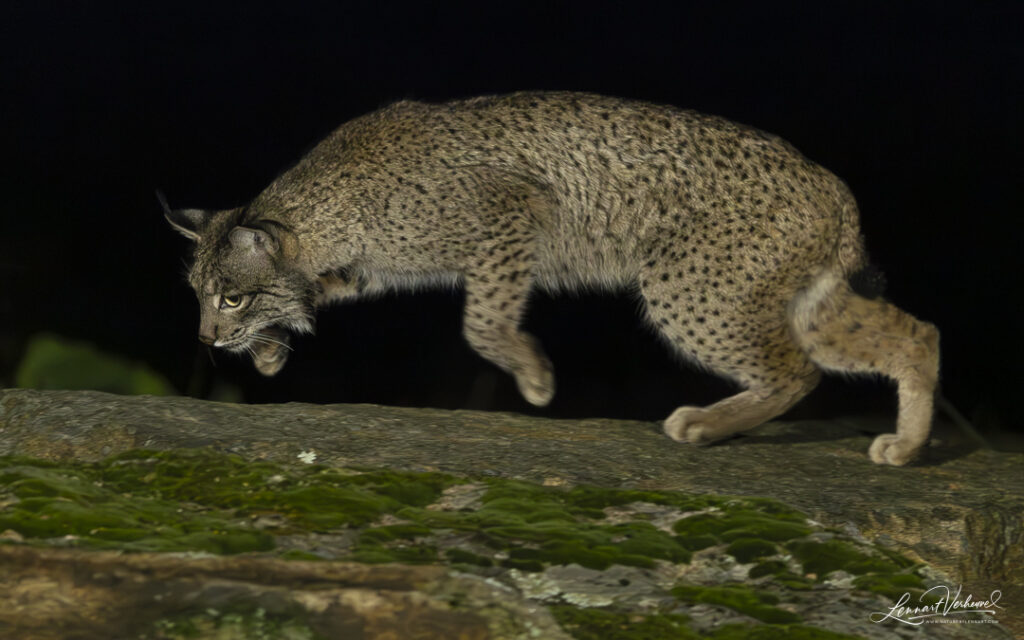
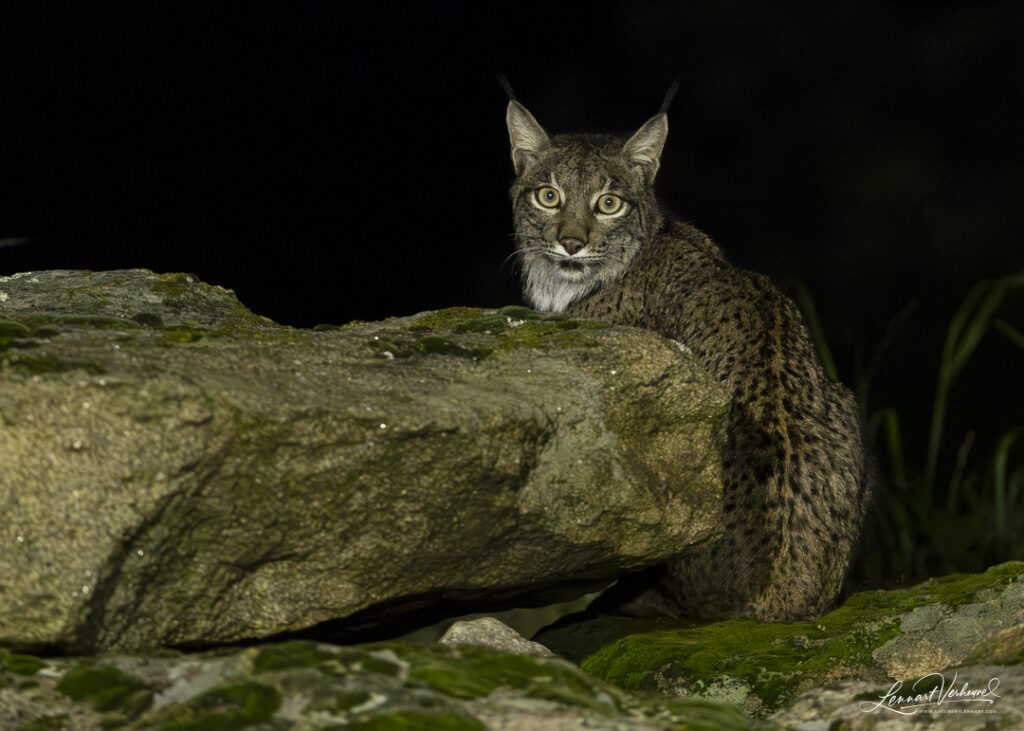
Iberian Lynx
Eventually the lynx succeeded. The moment it caught a rabbit, it immediately disappeared back into the darkness beyond the lights, ending our observation. But by then we had spent at least fifteen unforgettable minutes watching an Iberian Lynx hunting at close range — an incredible experience and a perfect ending to the trip.
Although watching wildlife from a hide can sometimes feel slightly less natural, especially when the surroundings are designed to attract animals, this experience once again showed us that these are still completely wild creatures with minds of their own. The long wait only made the final success more rewarding. The Iberian Lynx certainly kept us in suspense until the very last moment.
The next morning we left early for Madrid. On the way we narrowly avoided being hit by a lorry emerging from a badly designed side road near a petrol station — a road I had completely missed — but fortunately I managed to swerve away just in time. That turned out to be the most exciting moment of the day.
We stopped briefly for a few photographs of Spotless Starlings before continuing to the airport and flying back to Amsterdam as planned.
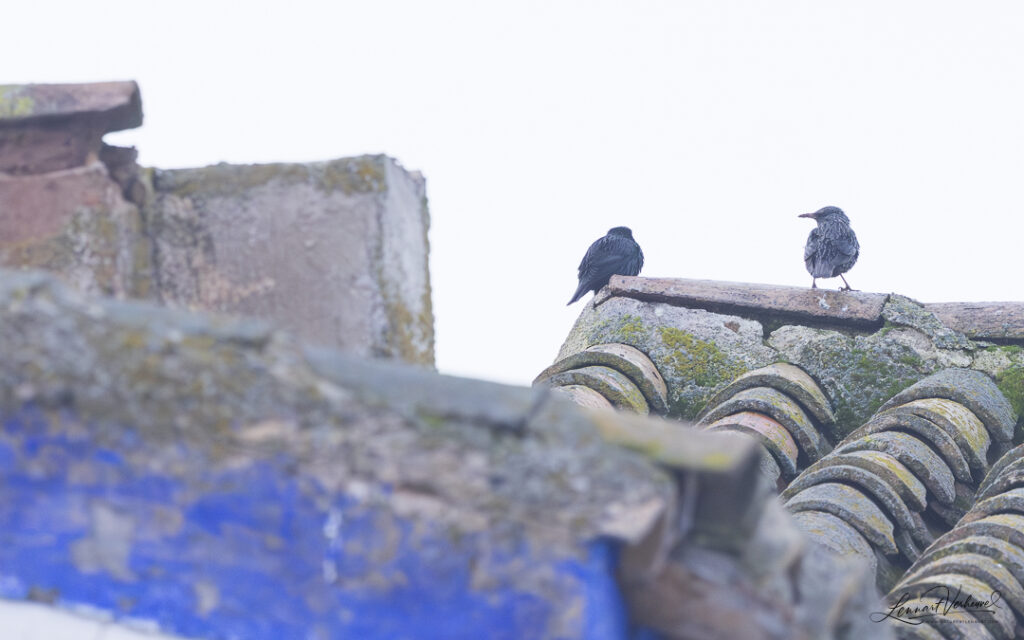
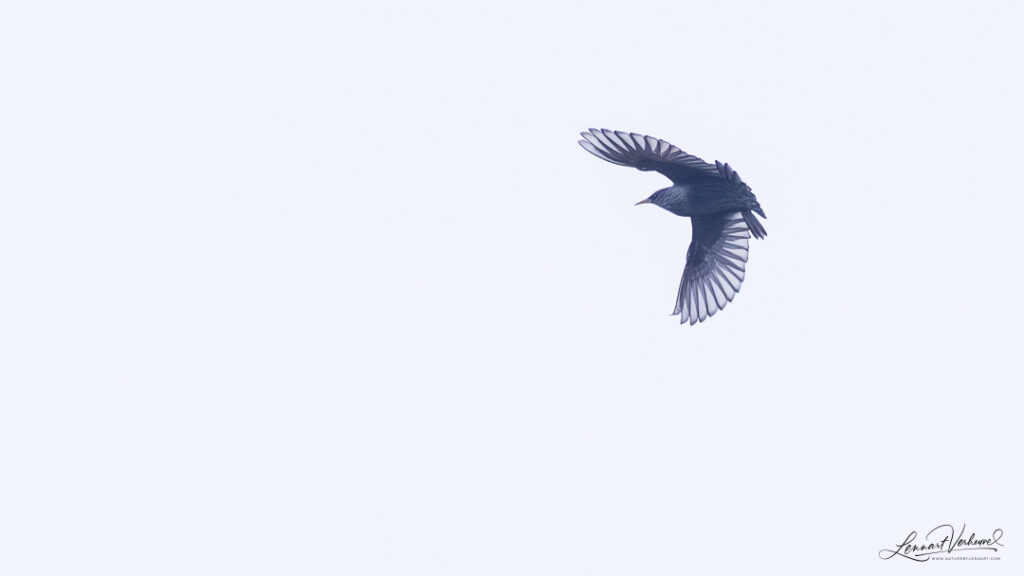
Spotless Starling
It had been a fantastic week!
Want to see what I saw on my first trip to Spain? Click here!
Click here for our trip to Estonia for the Eurasian Lynx!
And I’m just going to add another one of my favourite cats: Sand Cat!


