- info@naturebylennart.com
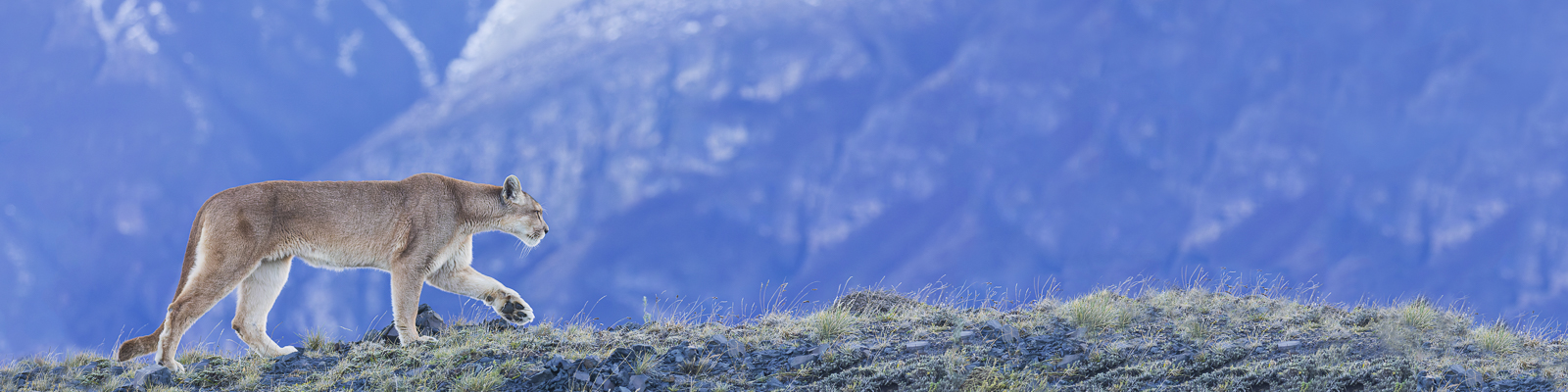
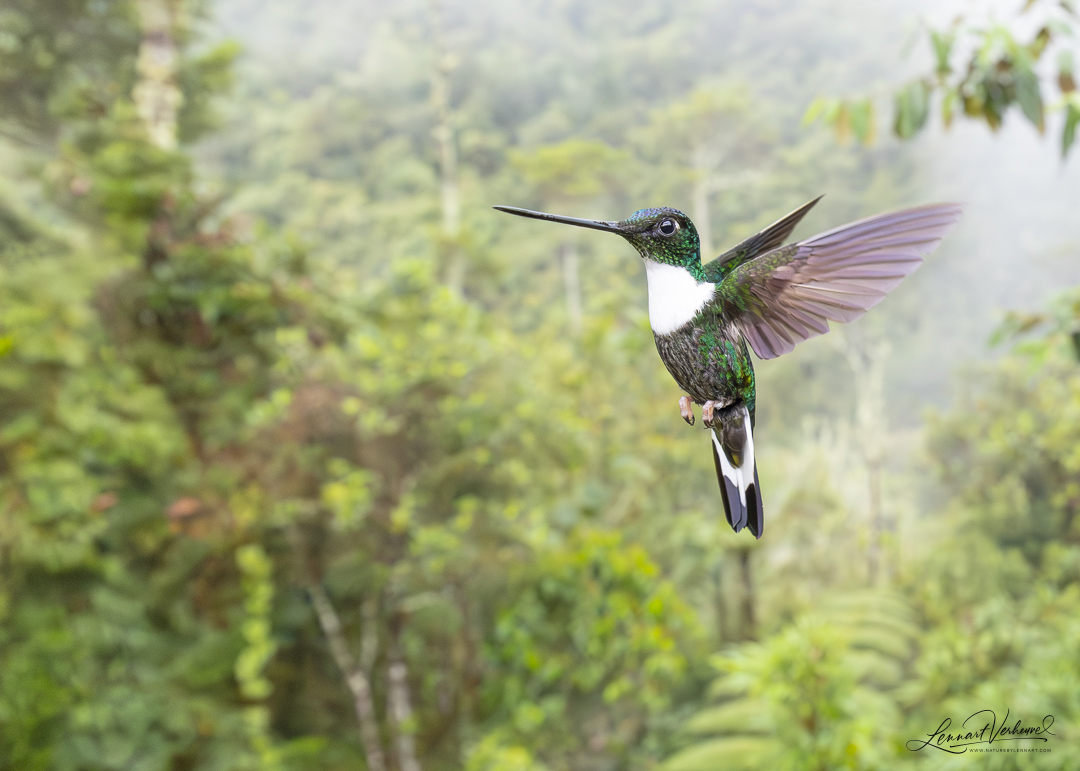
At the end of March 2026, I suddenly found myself in the Colombian Andes. For more than two years, a Northern Oncilla had been visiting a lodge in the Andes—Mirador El Roble—with some regularity. Because the cat could also disappear for days or even weeks at a time, planning a trip around it was difficult. But when I learned that the cat had been showing up almost every day during the early months of 2026, I started looking for an opening in my schedule in the near future. In three weeks I happened to have a week without any appointments yet. And before I knew it, I was on a plane to Colombia!
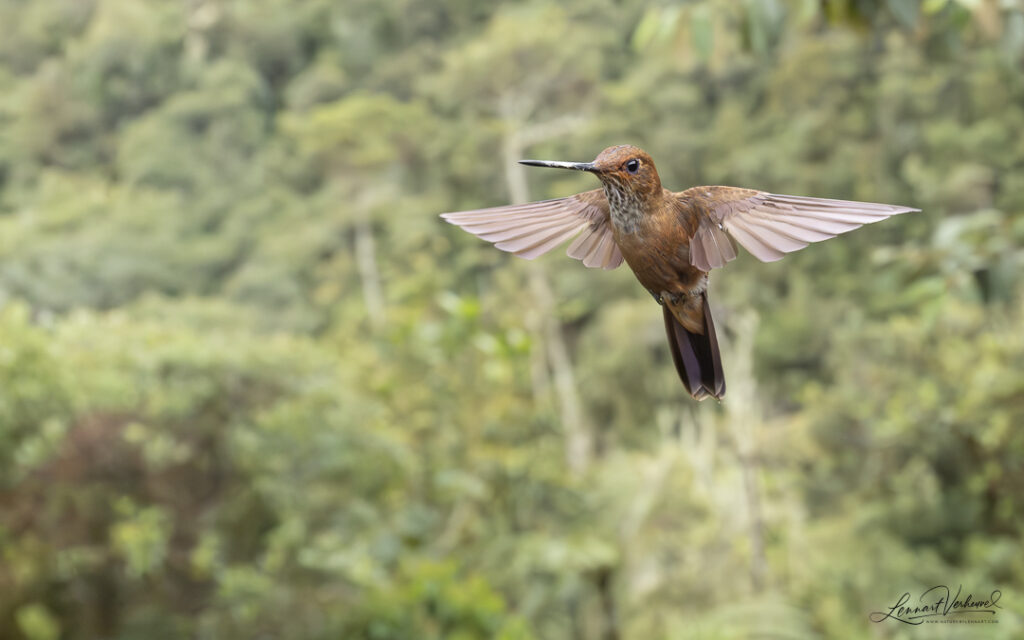
Of course, I knew the trip would feel like a disappointment if I failed to see the Northern Oncilla. At the same time, as the departure date approached, I found myself increasingly excited about seeing some of the birds I had enjoyed so much in Ecuador back in 2021. One species in particular stood out: the Sword-billed Hummingbird. Although it is not especially difficult to find in the right places, I have always considered it a truly remarkable bird. In Ecuador, I had never managed to capture flight shots that I was completely happy with, so this seemed like the perfect opportunity to put that right. Hummingbirds are wonderful photographic subjects in general, and I can easily spend hours watching and photographing them.
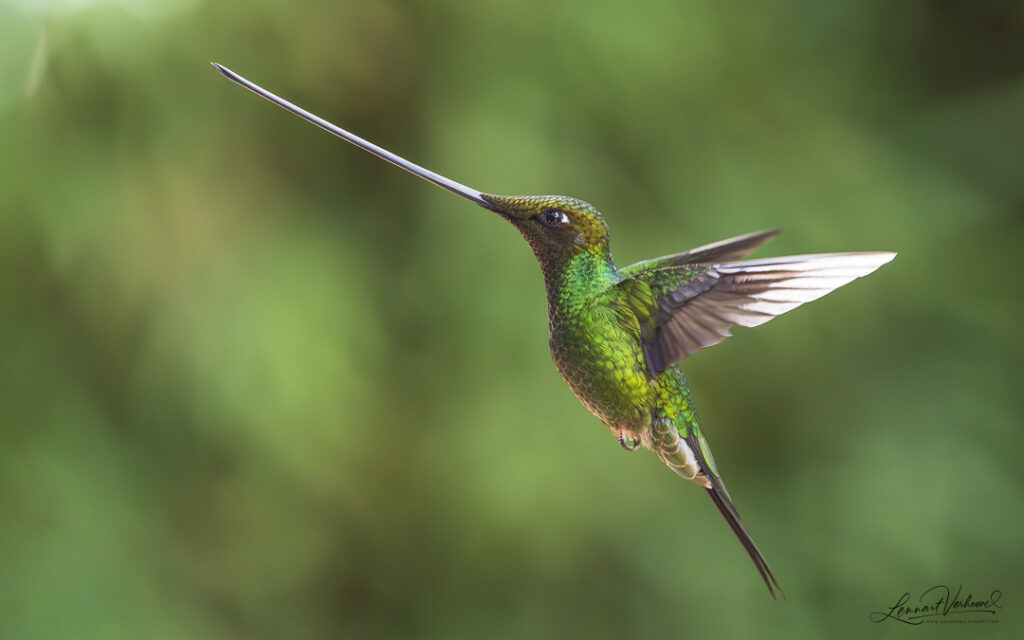
Sword-billed Hummingbird
On my first full day in Ecuador, I immediately encountered several Sword-billed Hummingbirds at Hacienda El Bosque. Before long, I was once again spending hours beside a feeder, waiting for flight photography opportunities. Incidentally, every hummingbird species I photographed there was one I had already seen in Ecuador, but the challenge remains addictive. There is always another photograph you have not taken yet!
I certainly could not complain about my Sword-billed Hummingbird flight shots. In my experience, this species does not linger continuously around feeders. Instead, it tends to make brief visits only a few times an hour before disappearing again. The key moment comes when the bird hovers motionless for a second in front of the feeder before often settling down to feed. That is when you want to press the shutter. Of course, that moment does not always happen, and then you may find yourself waiting another half hour for the next opportunity. Patience is essential, but in the end I came away with some images I was very pleased with.
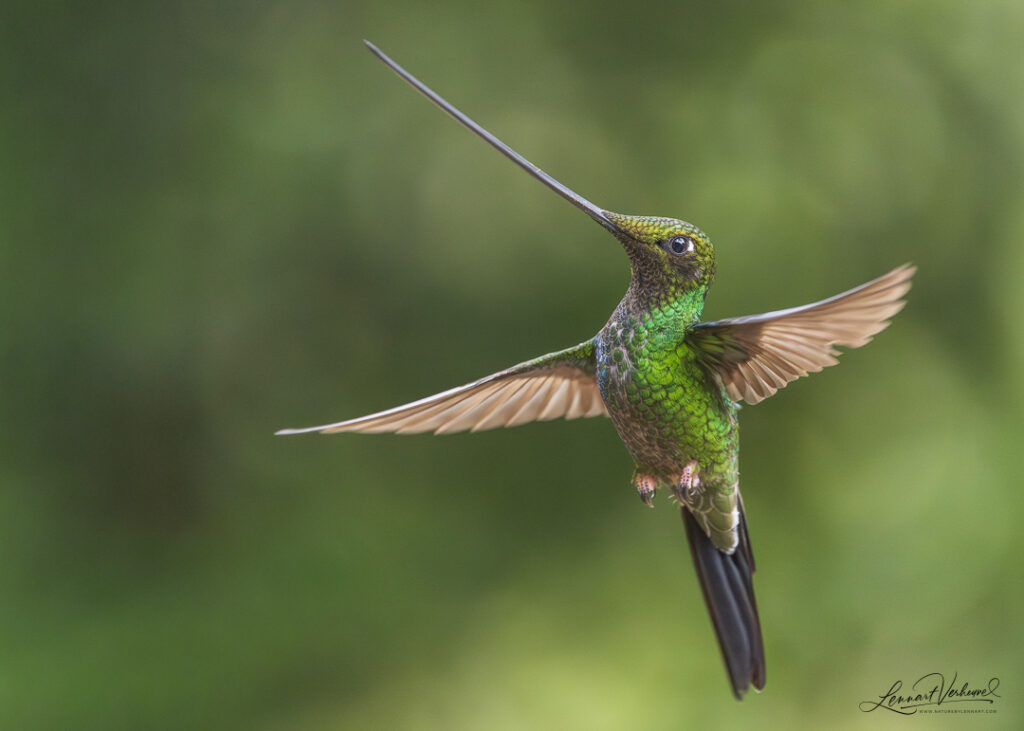
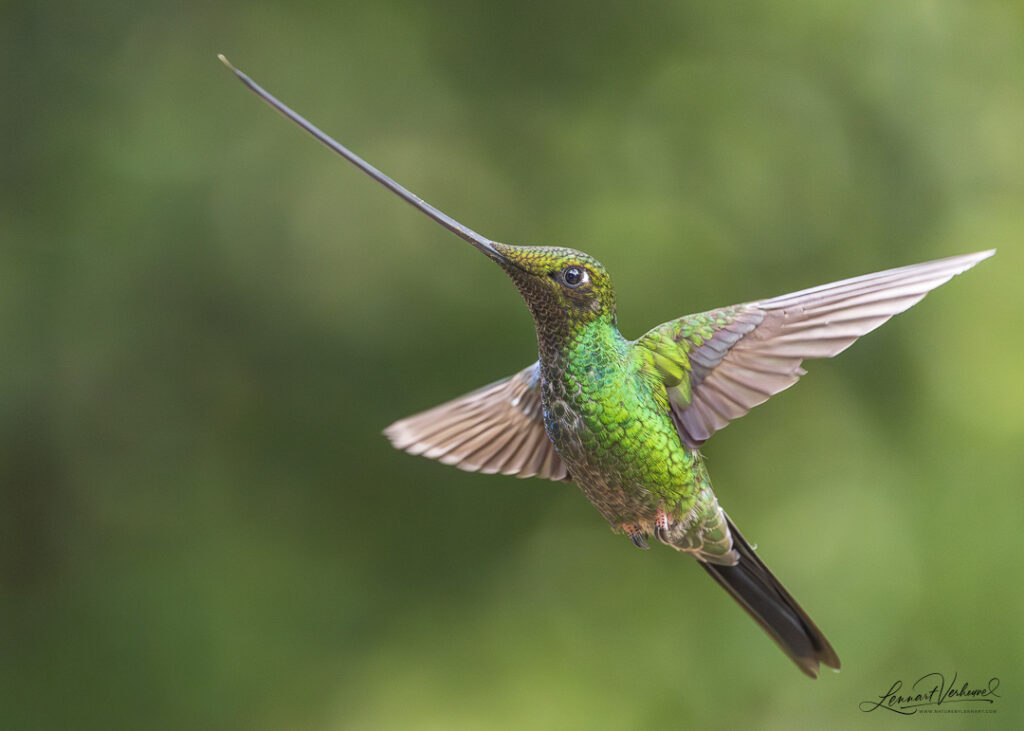
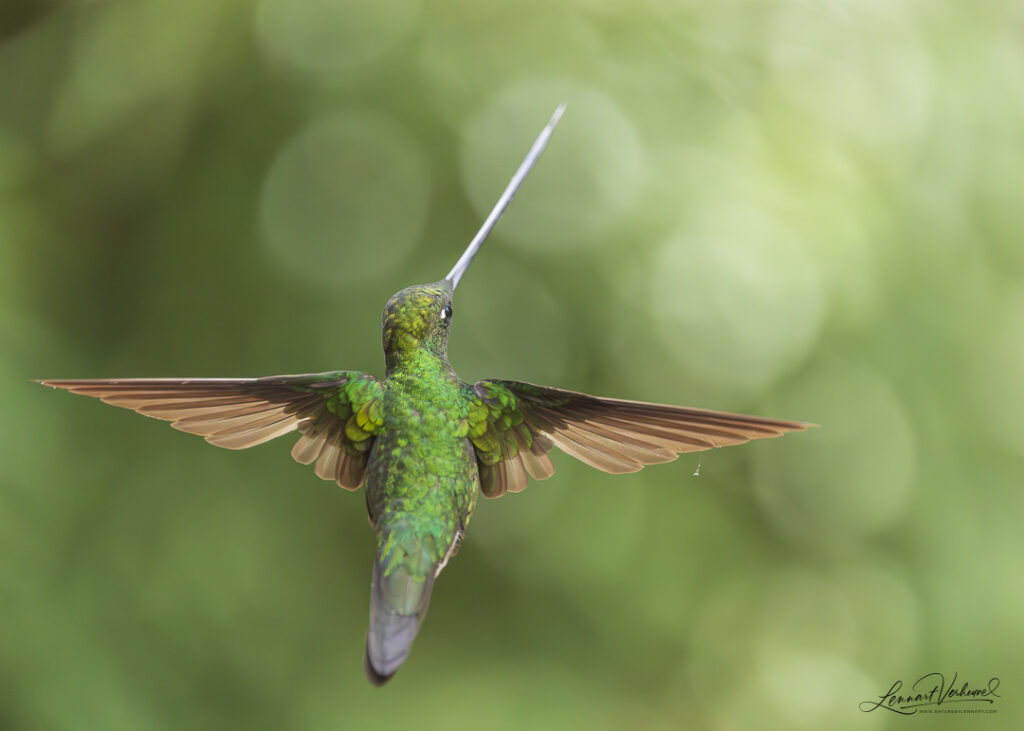
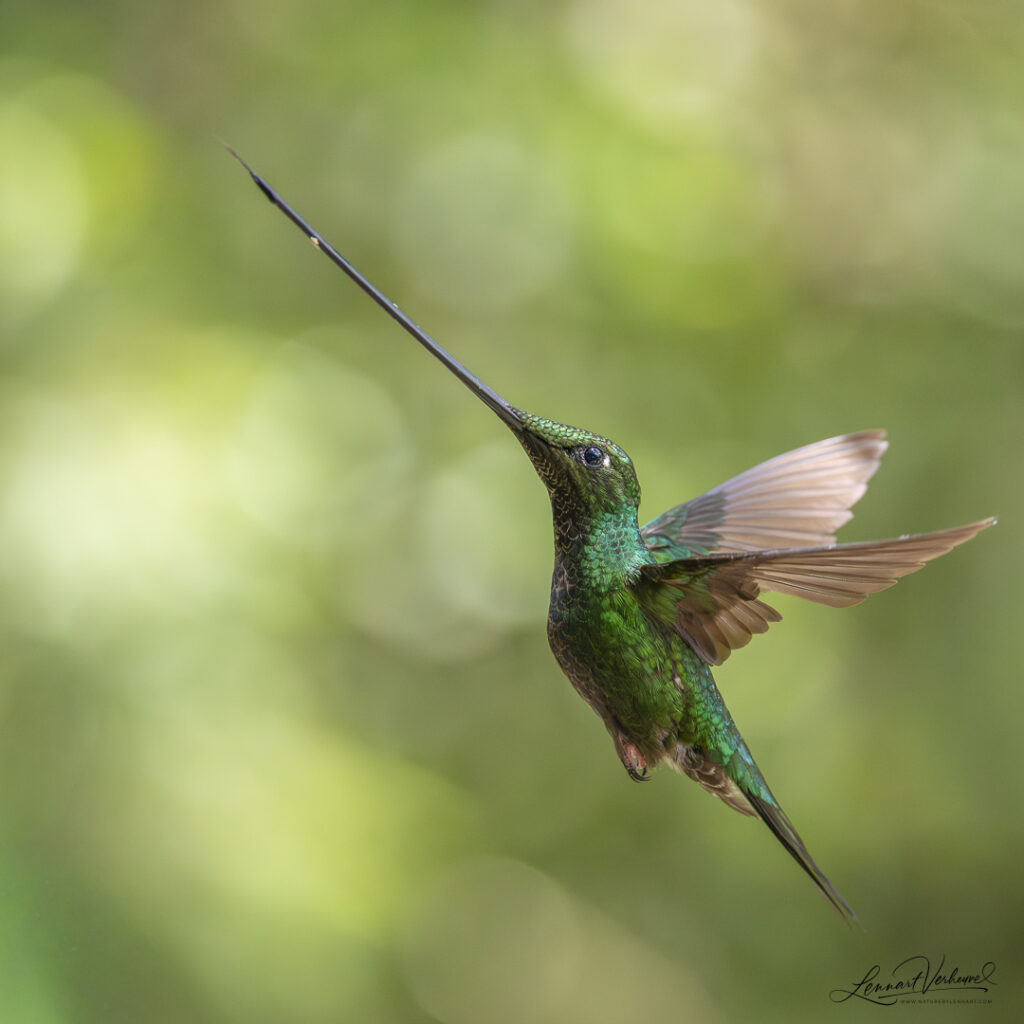
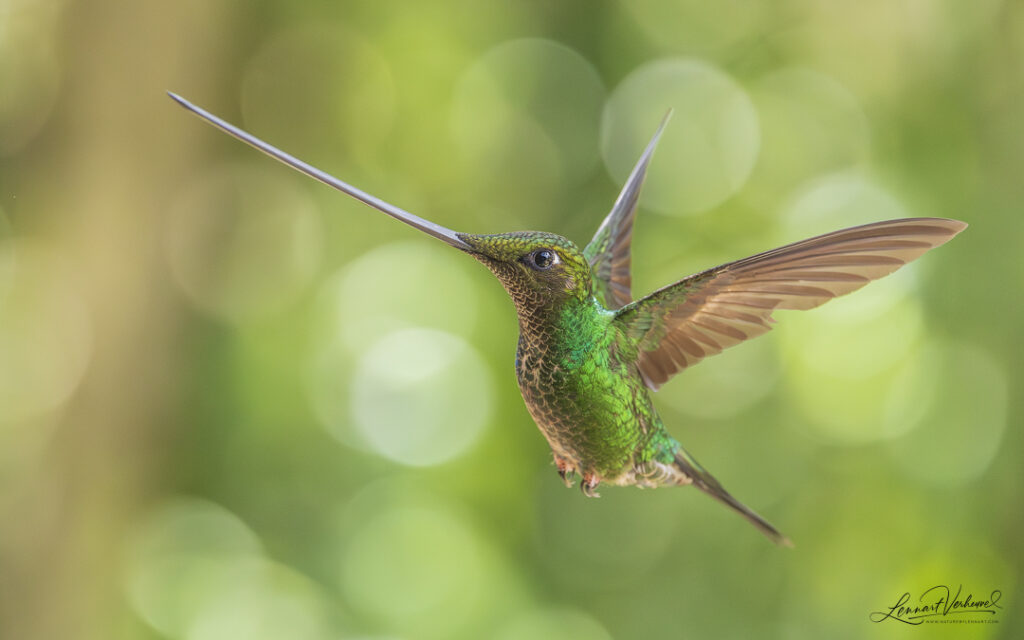
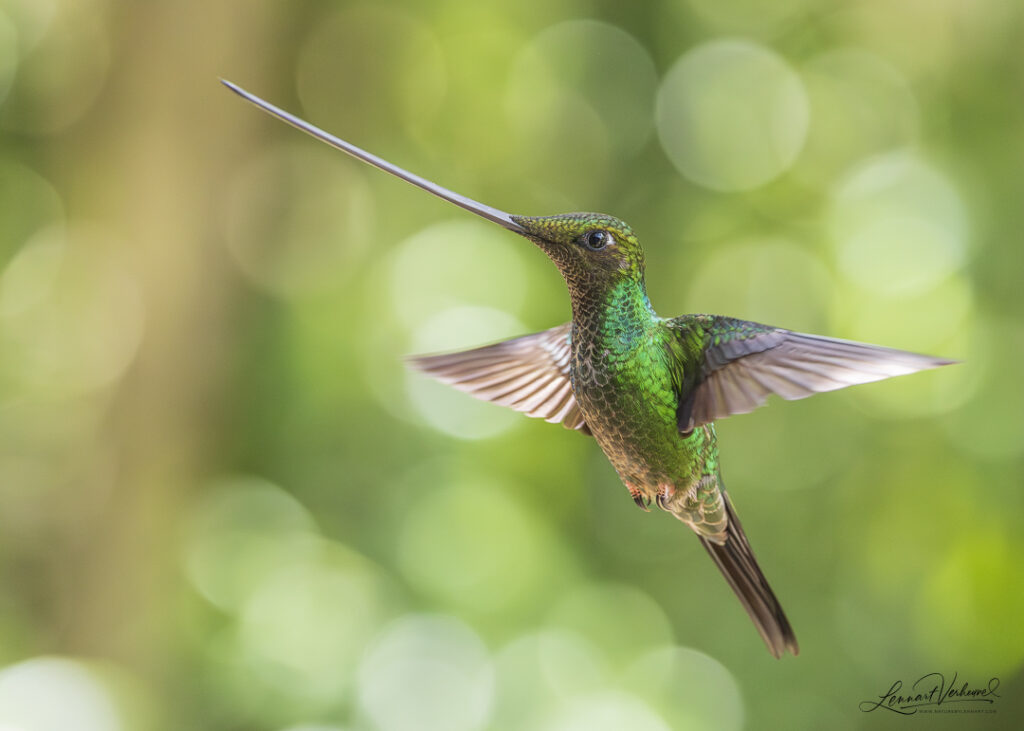
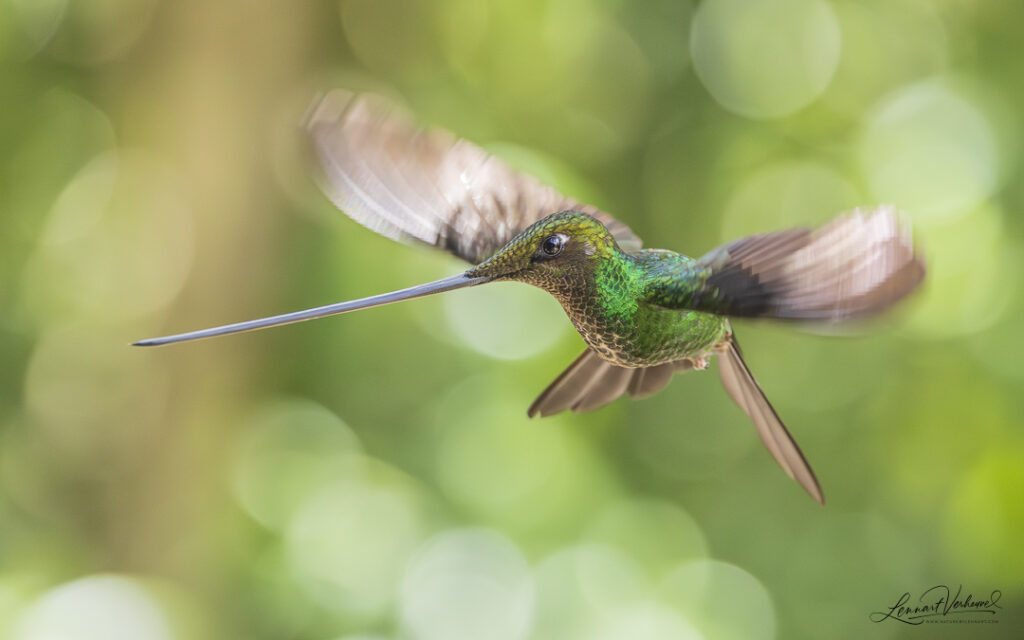
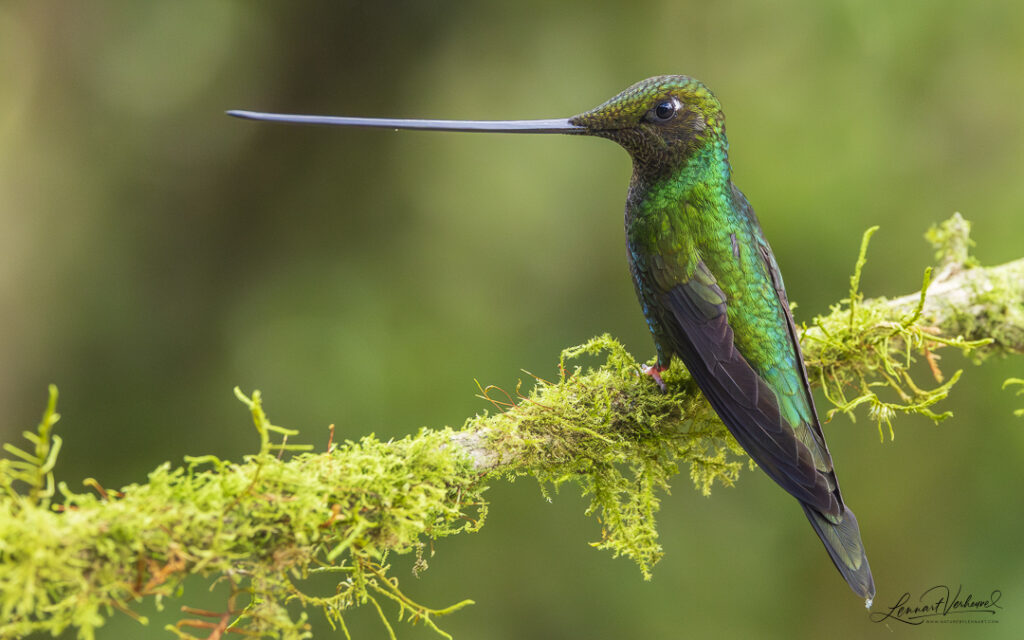
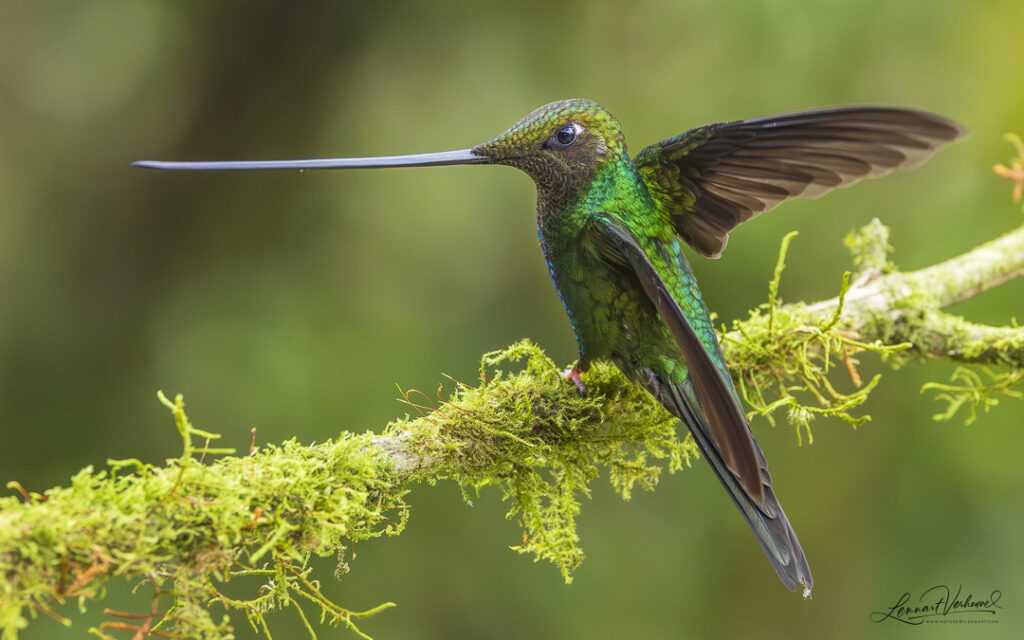
Sword-billed Hummingbird
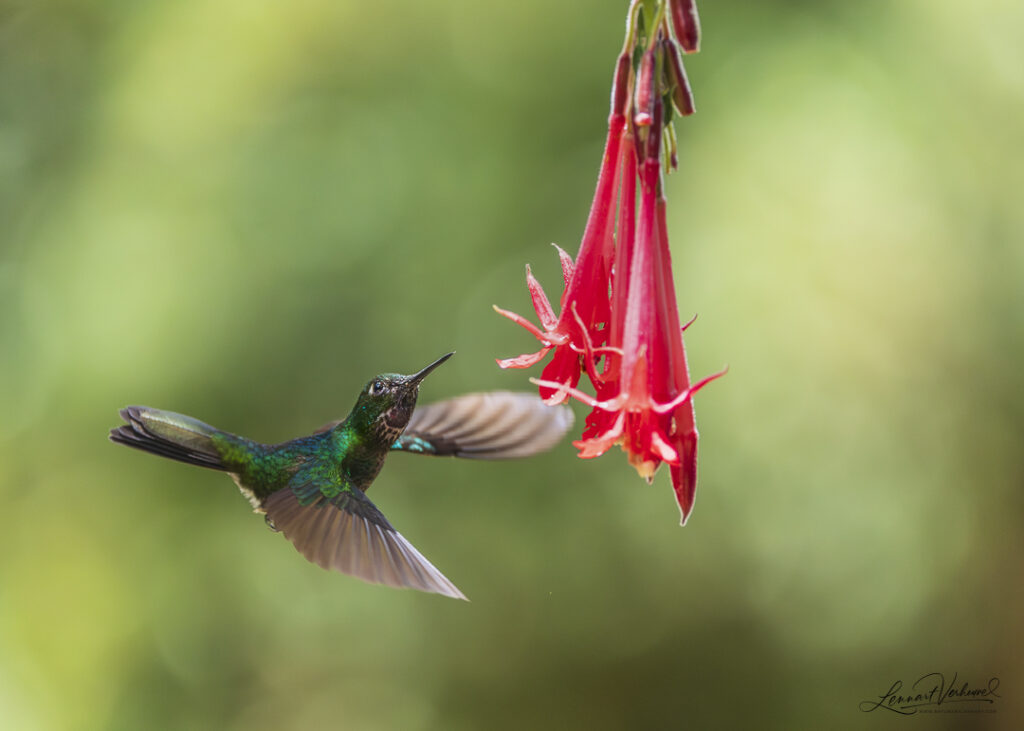
One of the guides then suggested a solution for birds that kept landing on the feeder: hang a freshly picked flower next to it. The result was immediate, producing several images unlike any I had taken before. The flower certainly added something special.
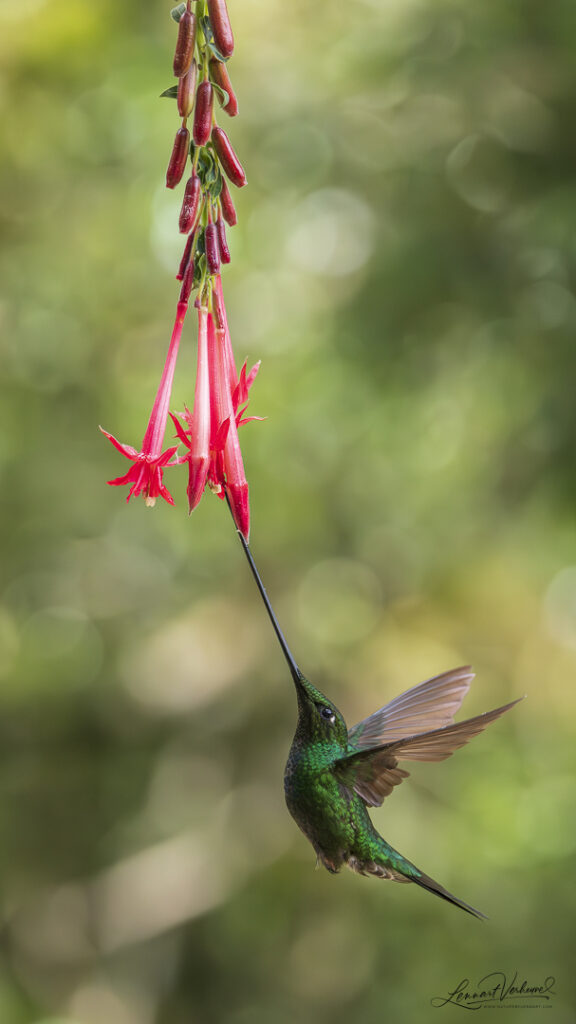
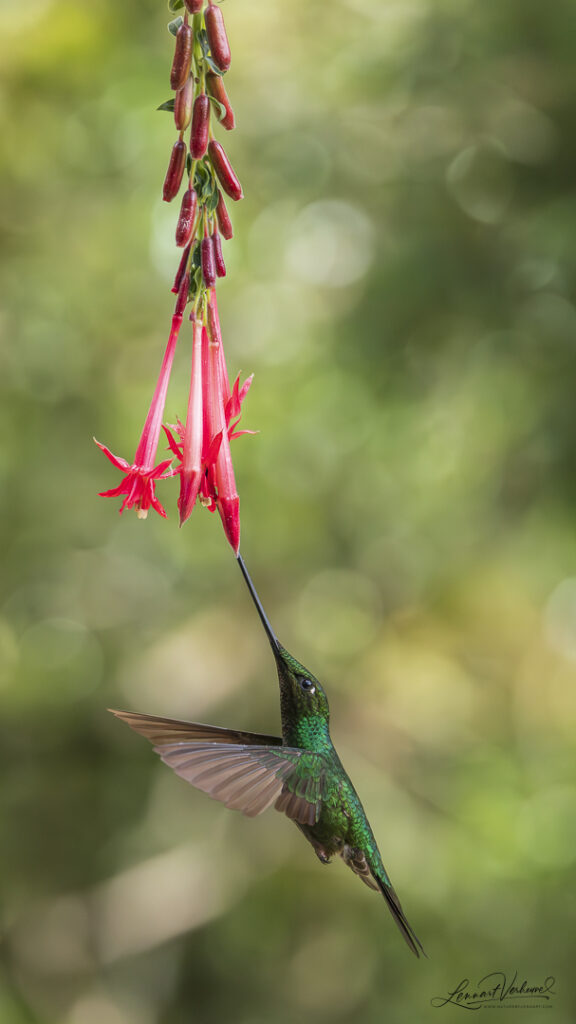
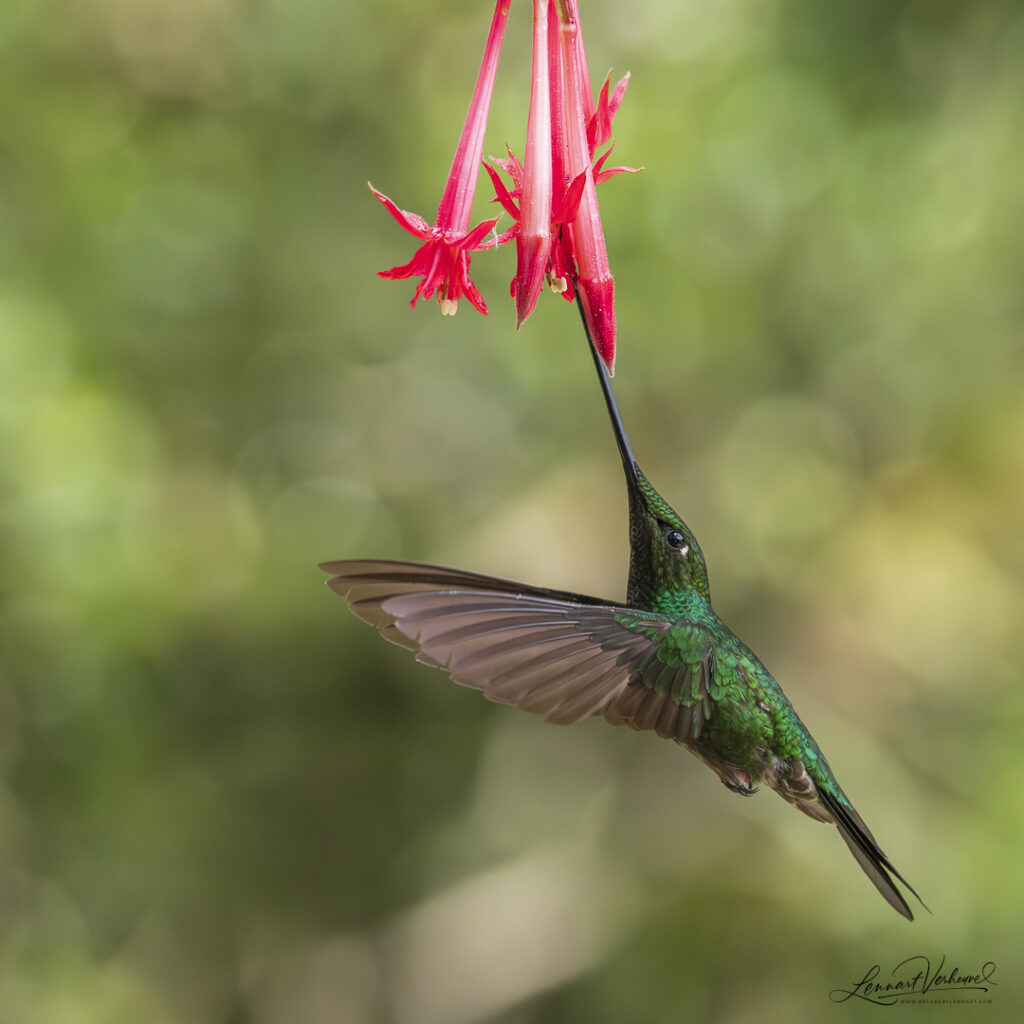
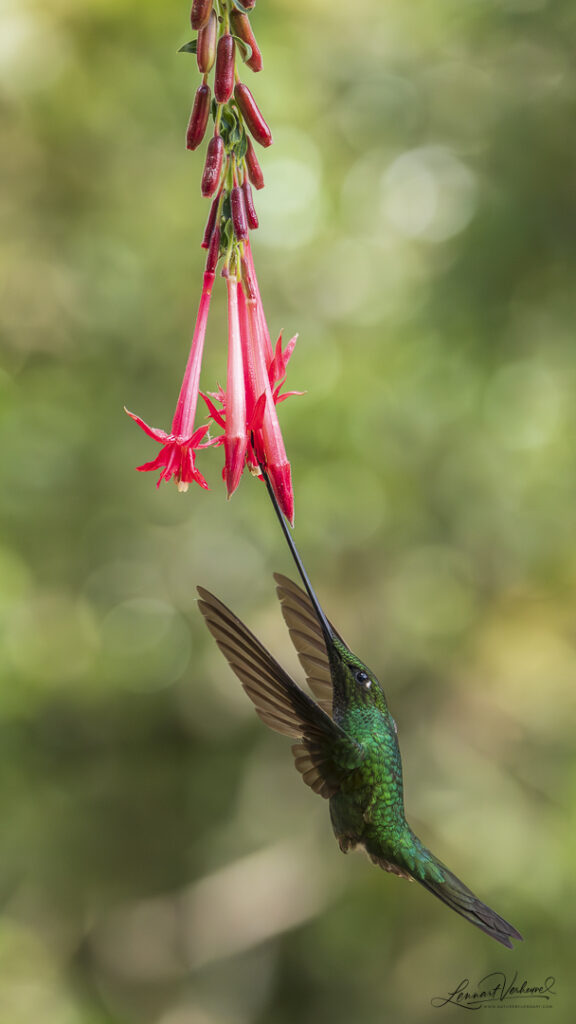
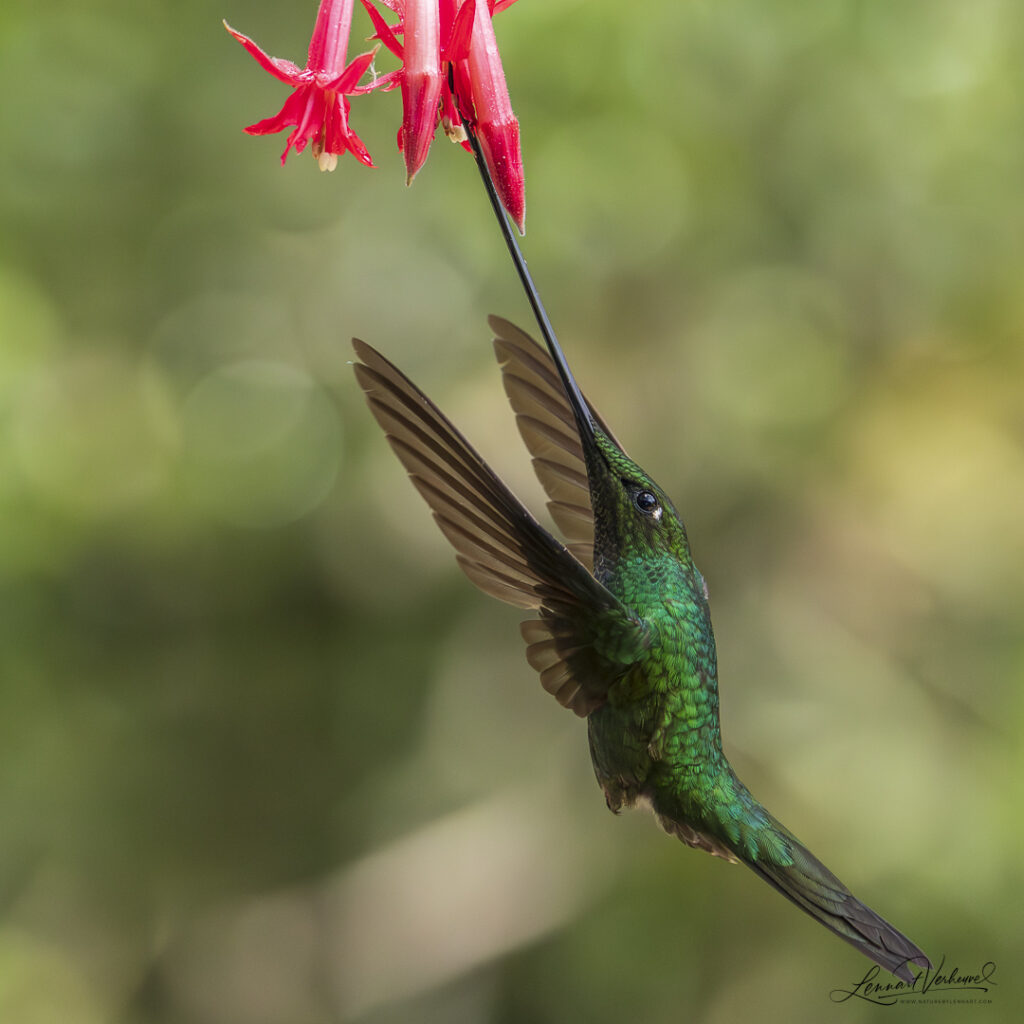
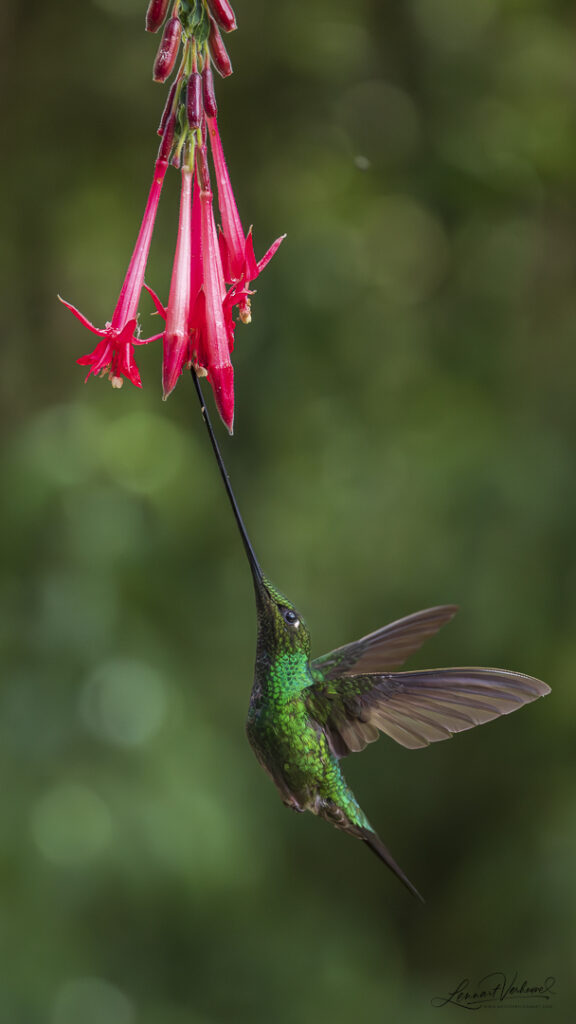
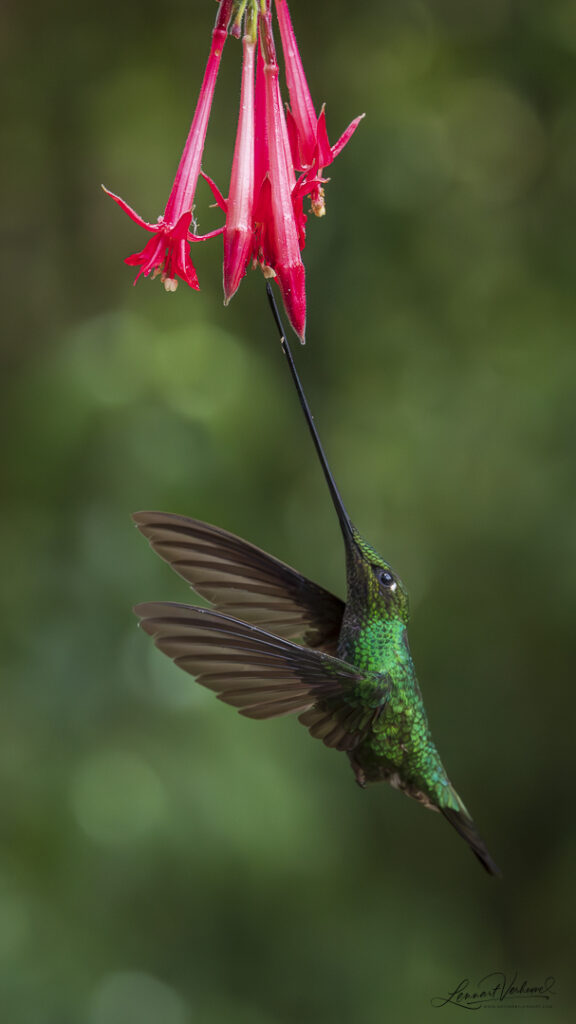
Sword-billed Hummingbird
Admittedly, placing a flower beside a feeder is somewhat artificial, but I was still delighted with the results. In reality, this trick is probably used far more often than many people realize to create photographs of hummingbirds with flowers. Sometimes you don’t want to know how the sausage is made!
I also spent some time experimenting with slower shutter speeds. This made the movement of the Sword-billed Hummingbird’s wings much more visible in the image.
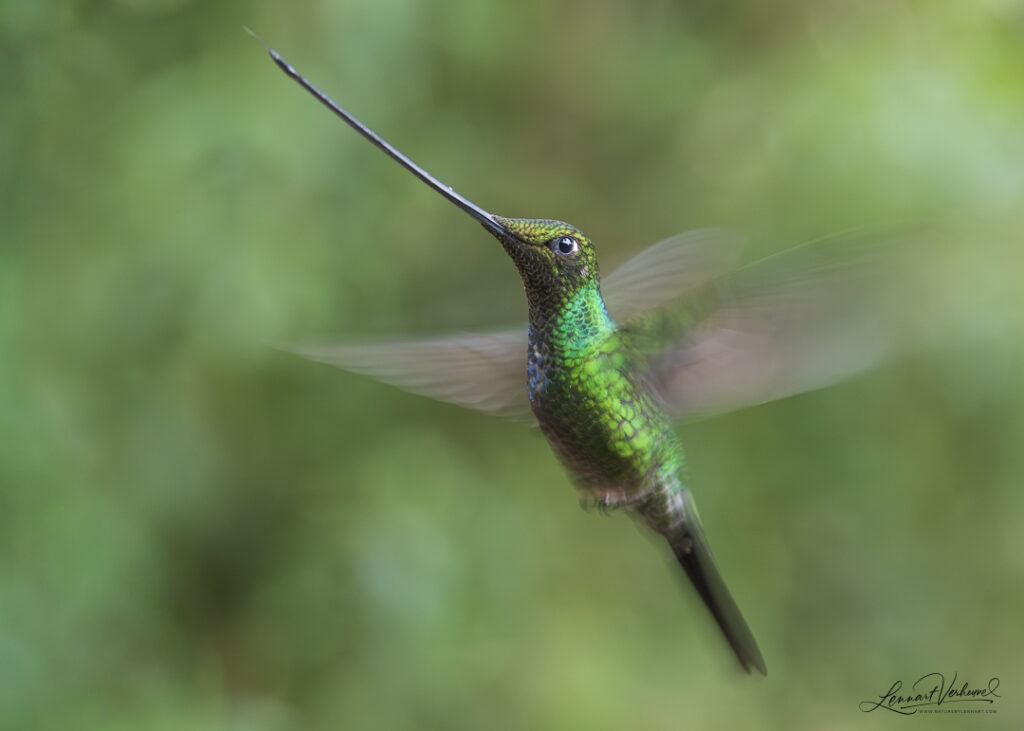
Sword-billed Hummingbird
Shining Sunbeam
While waiting, I naturally saw many other species as well. One of them was the Shining Sunbeam. In Ecuador, I had never managed to obtain particularly strong flight shots of this species either, so this trip gave me a chance to improve on that. I also captured a few images that show off the bird’s beautifully coloured rump. With hummingbirds, changing light conditions often reveal colours you had not even noticed before.
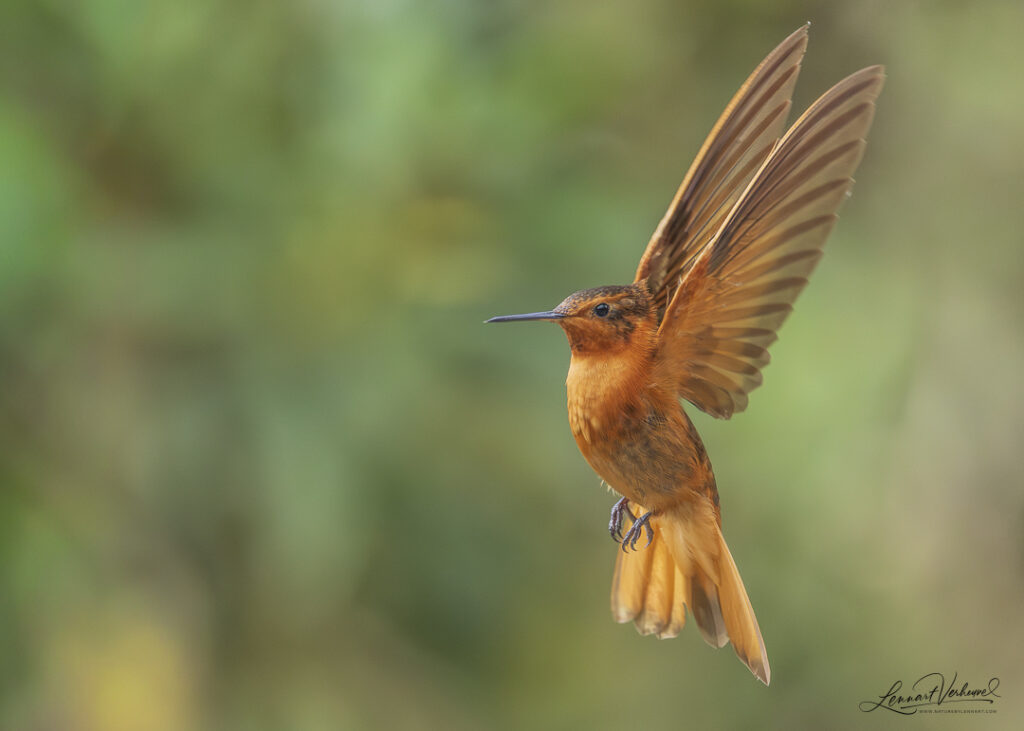
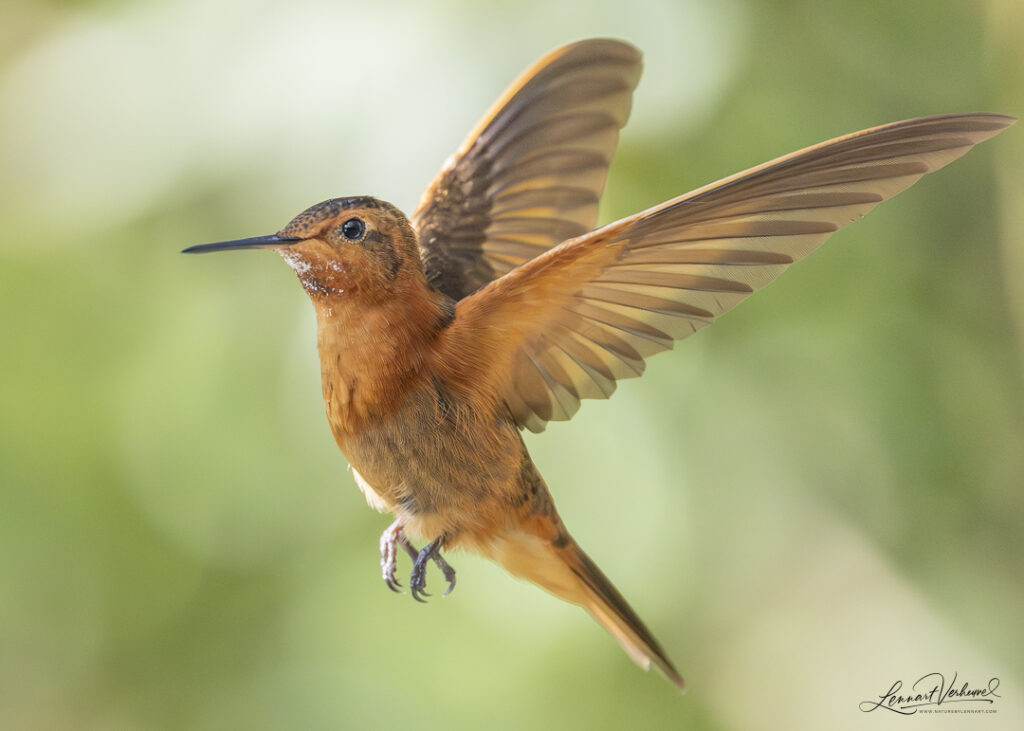
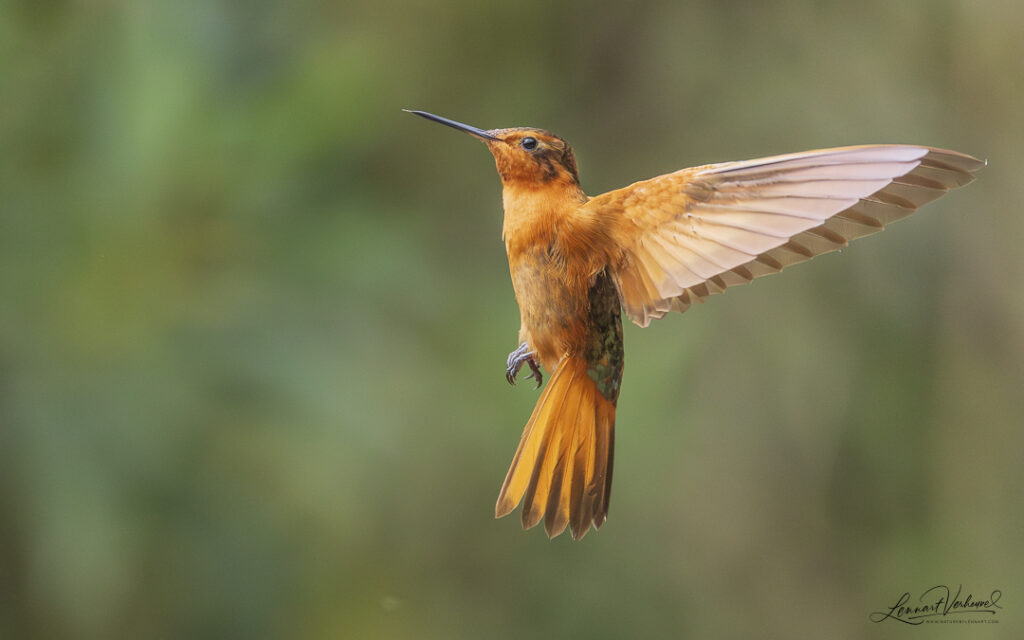
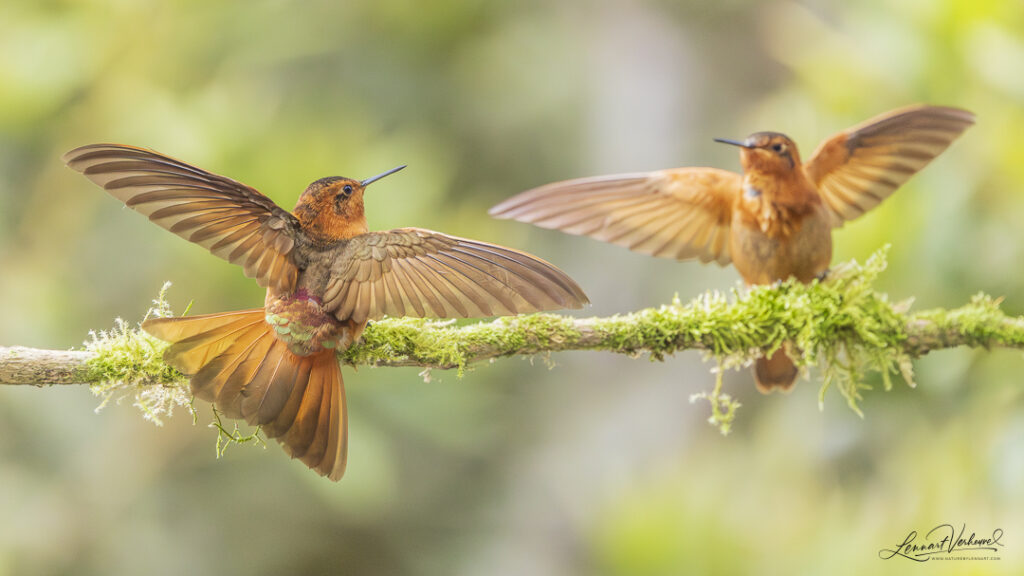
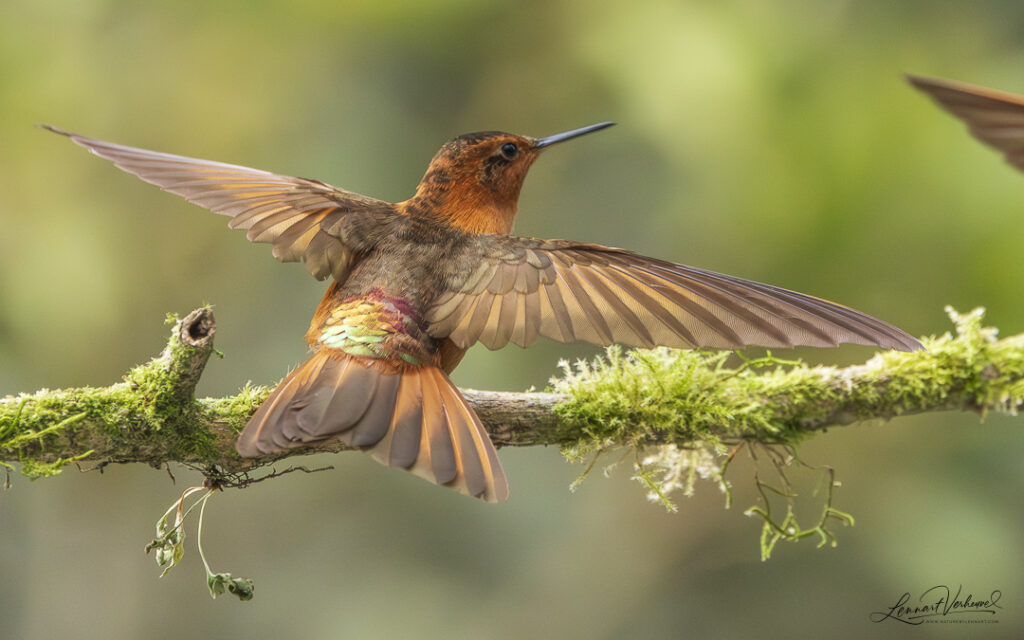
Shining Sunbeam
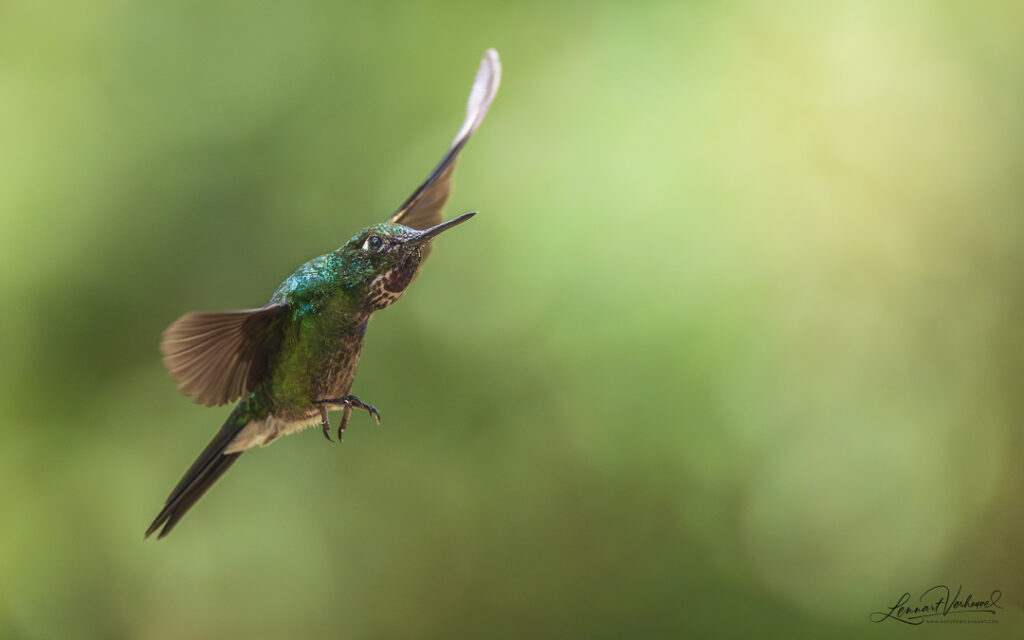
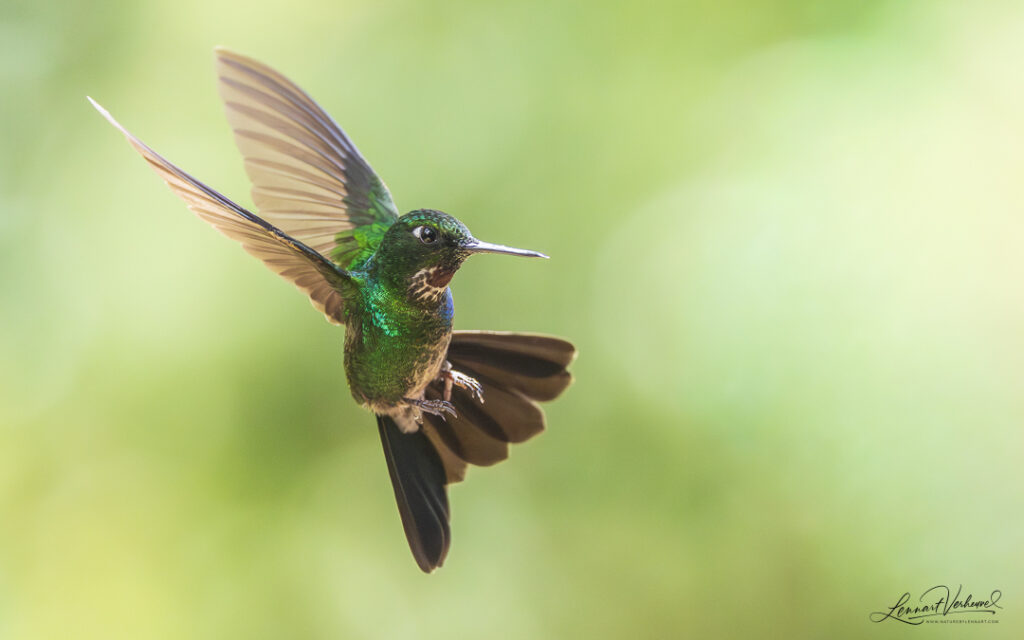
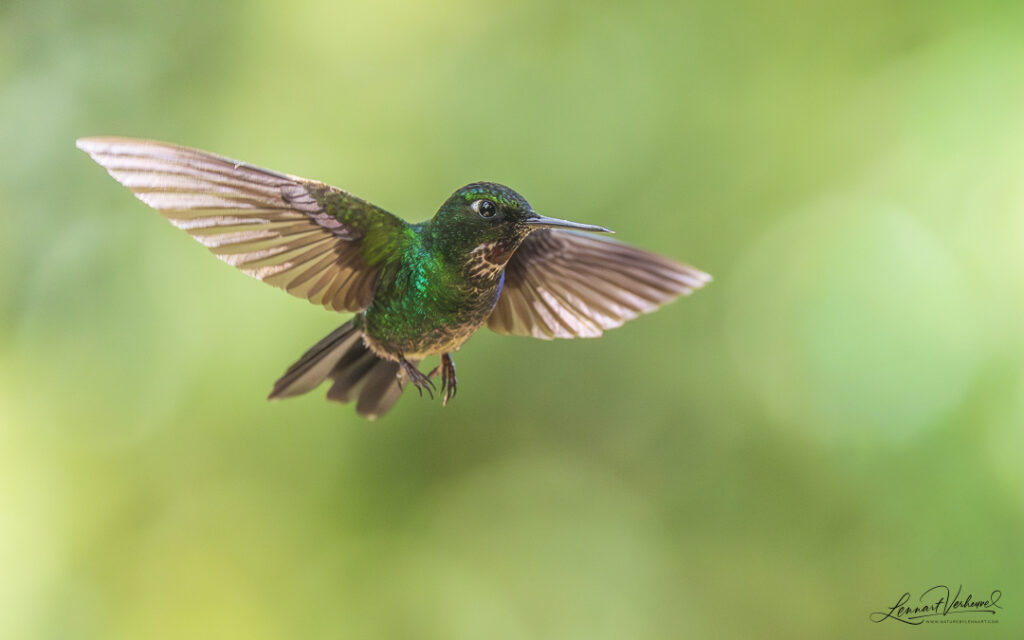
Tourmaline Sunangel
Another species that had proven difficult for me to photograph in Ecuador was the Tourmaline Sunangel. Here, it visited the feeders somewhat more frequently, but photographing it in flight was still far from easy. It did not appear very often, and when it did, it usually landed on the feeder almost immediately. No chance for flight shots! Fortunately, the flower trick worked here as well, and I ended up with several photographs I was very happy with.
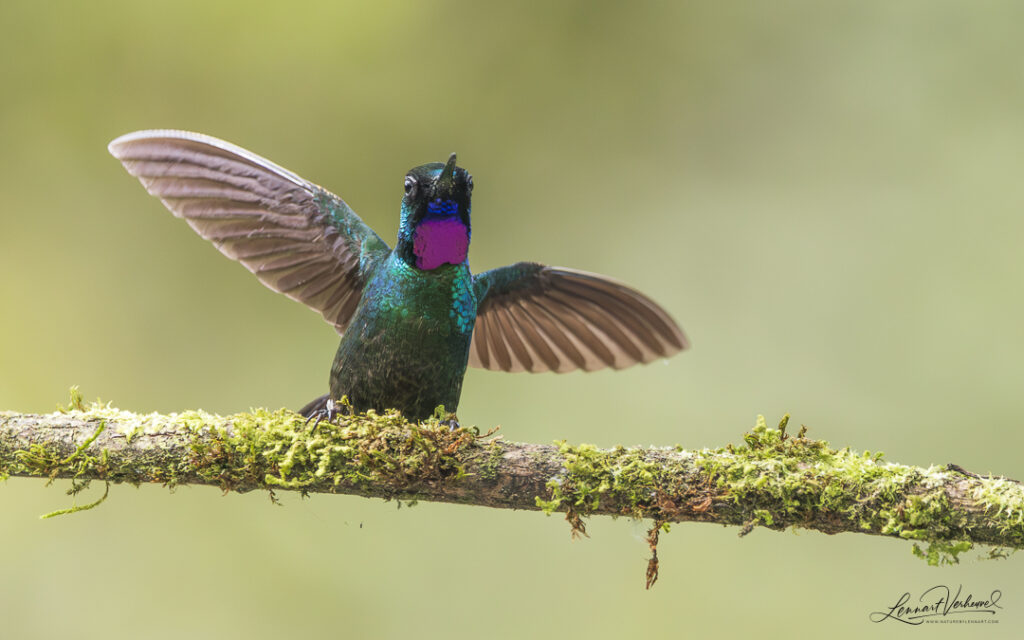
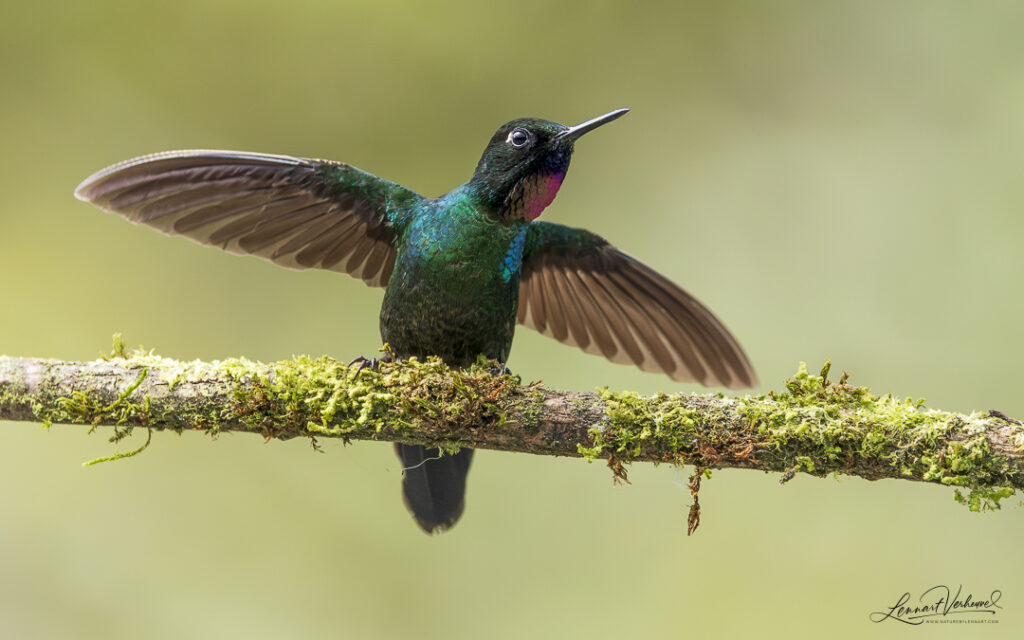
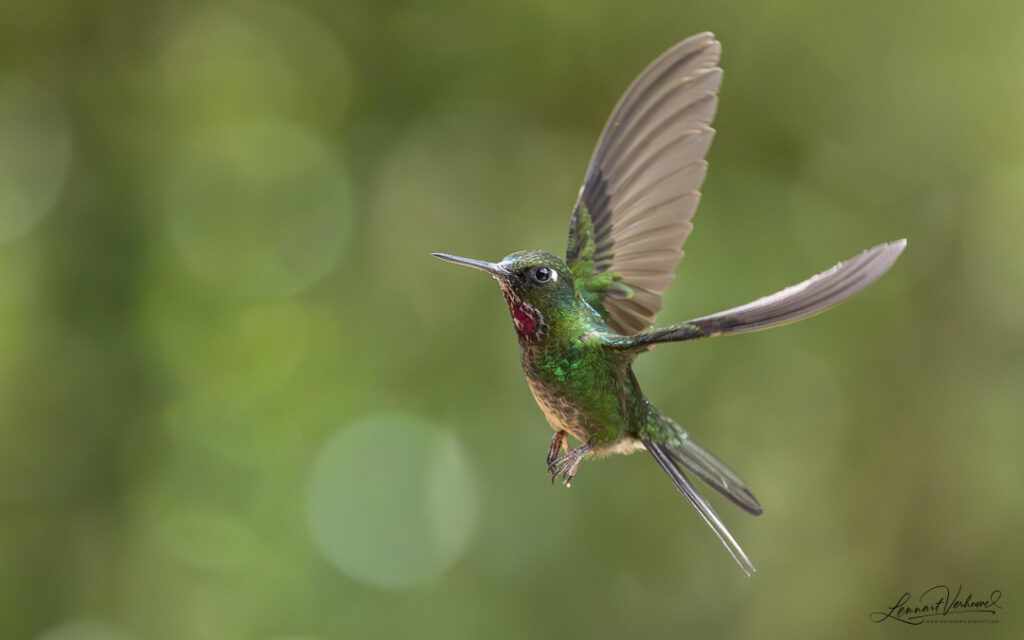
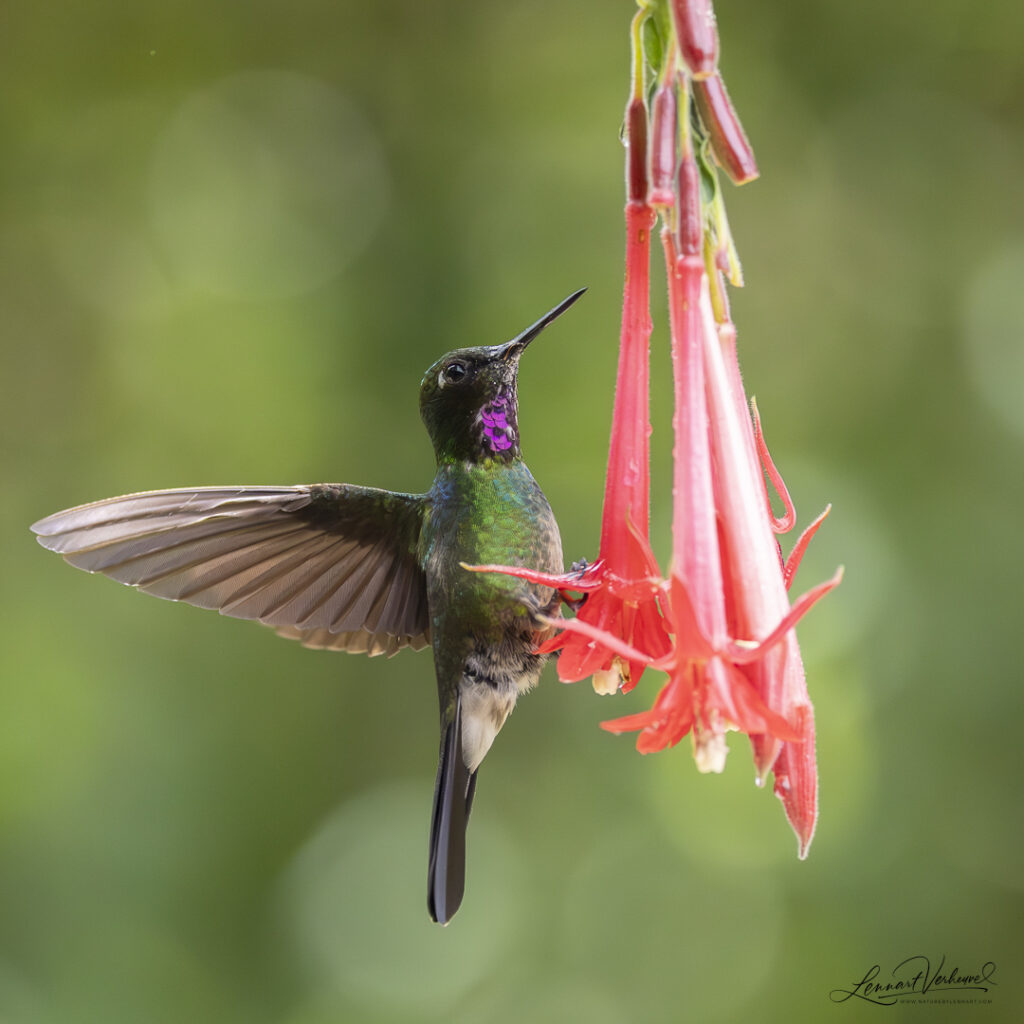
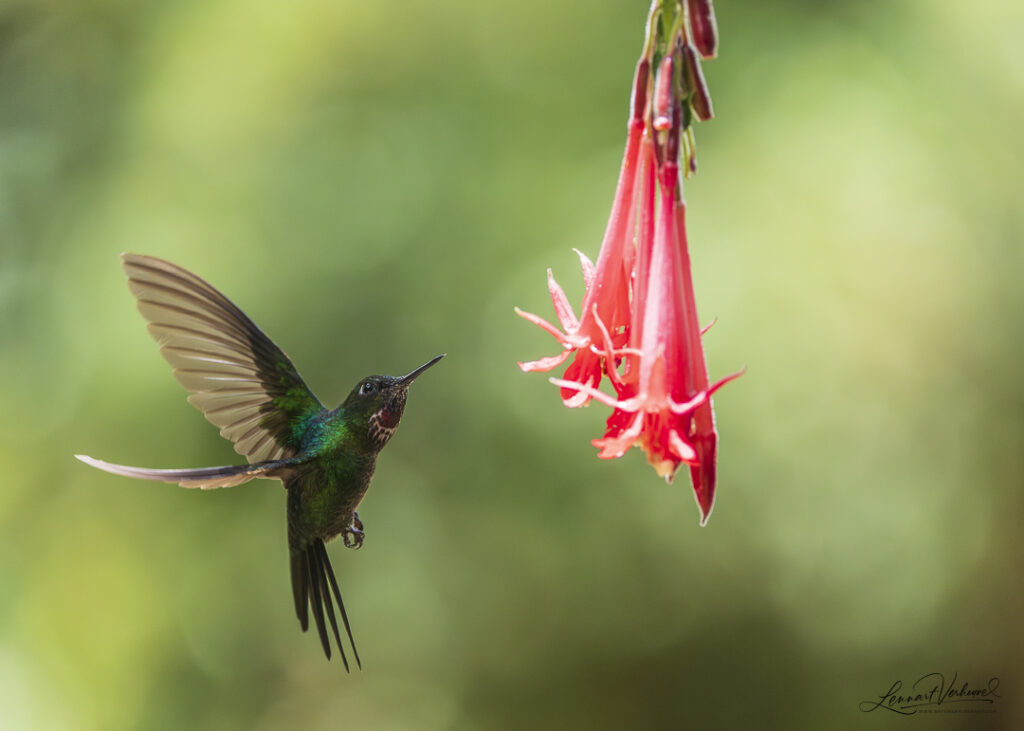
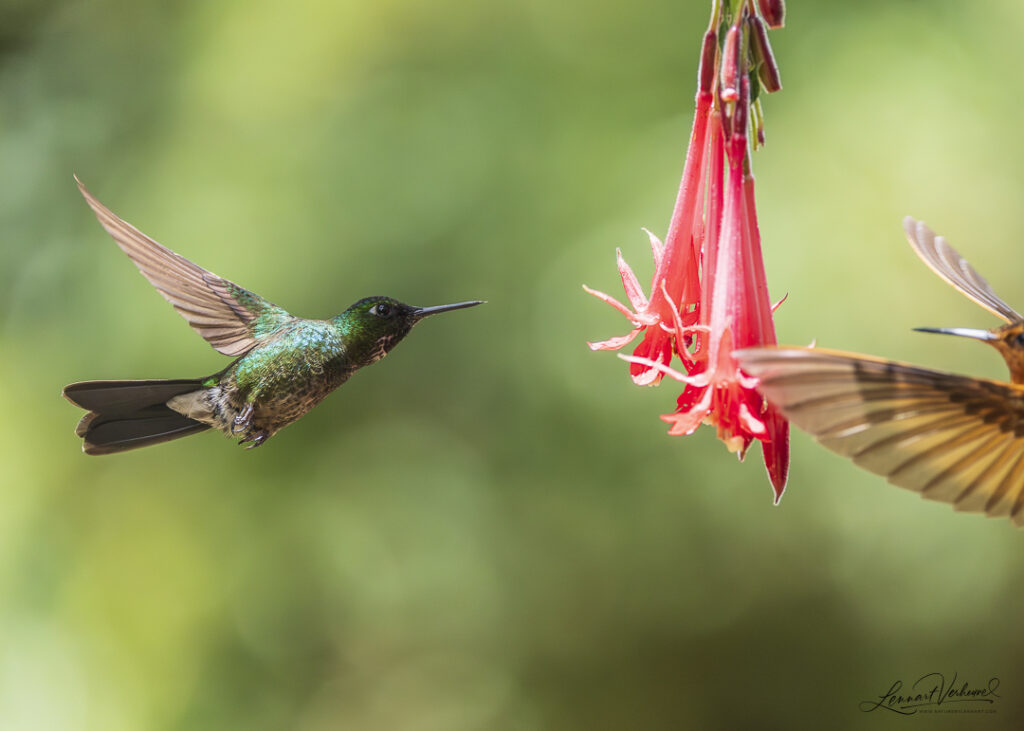
Tourmaline Sunangel
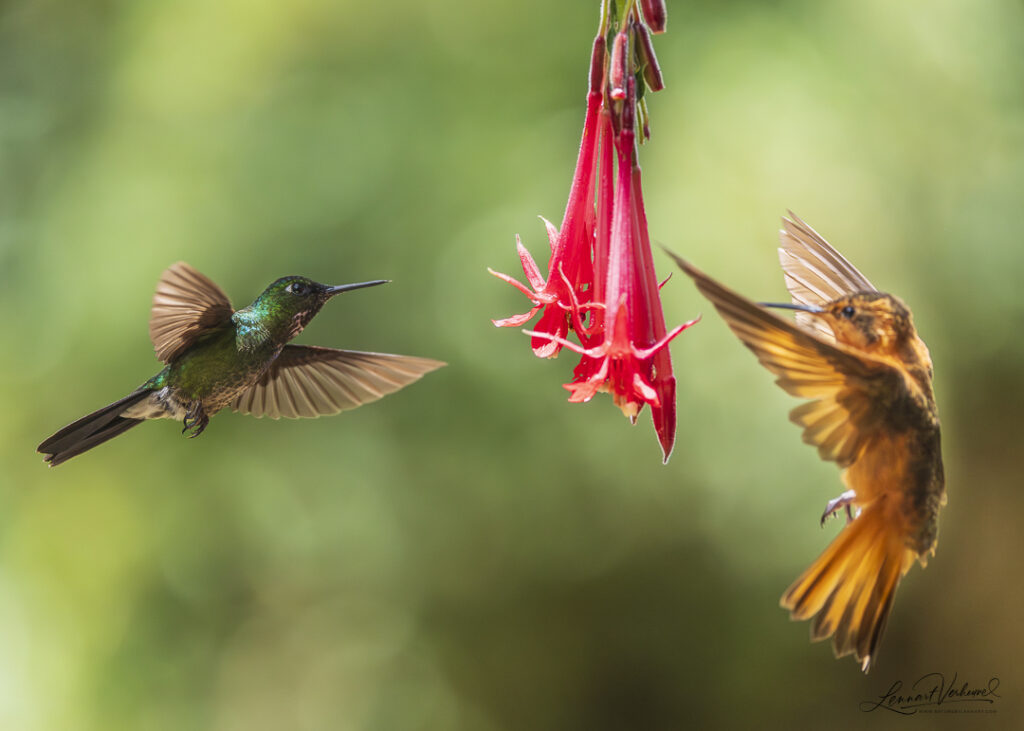
Tourmaline Sunangel and Shining Sunbeam
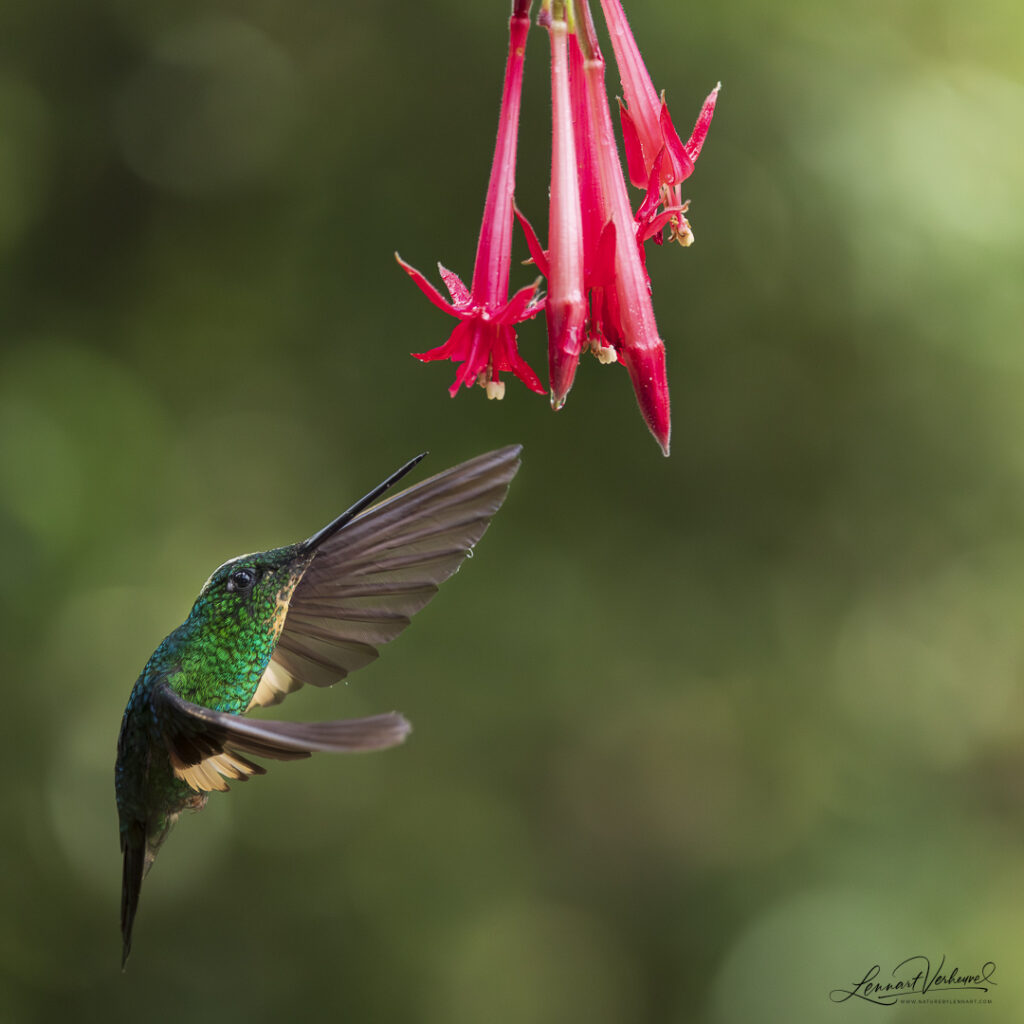
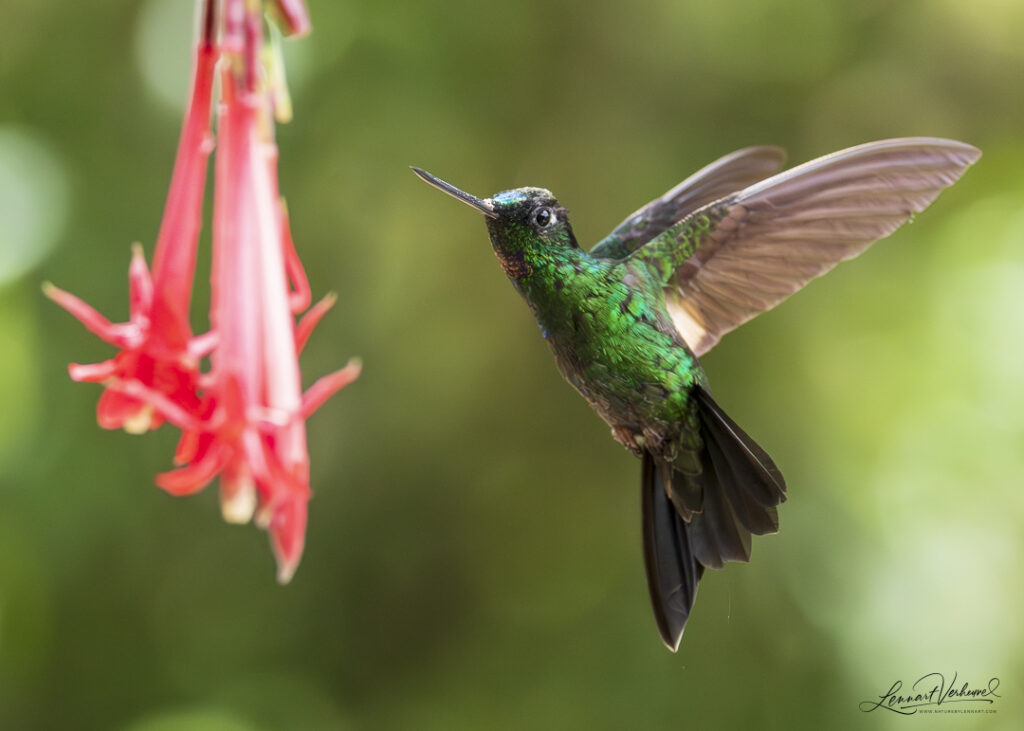
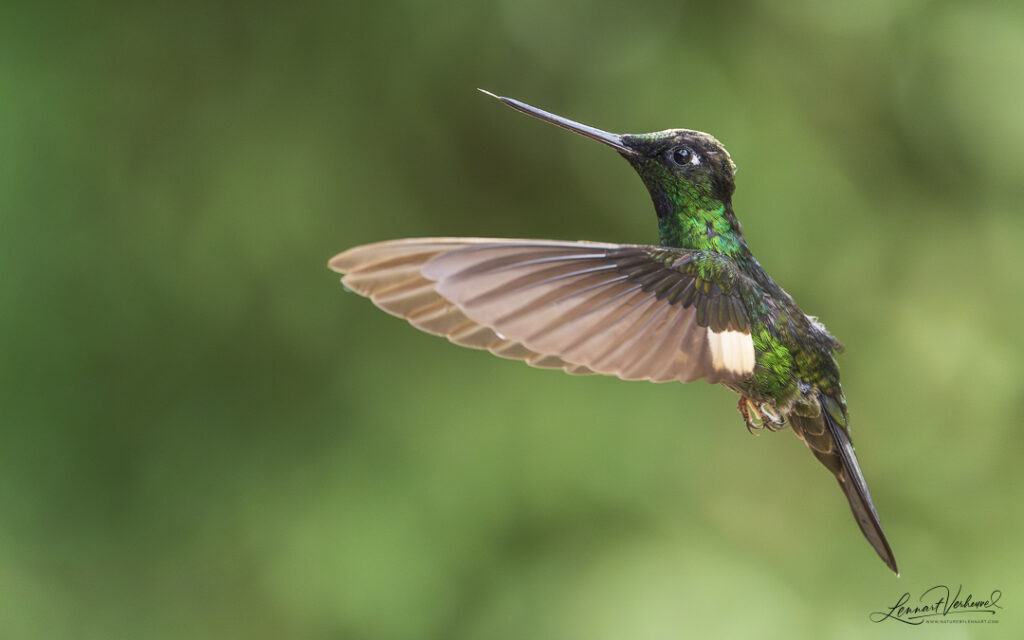
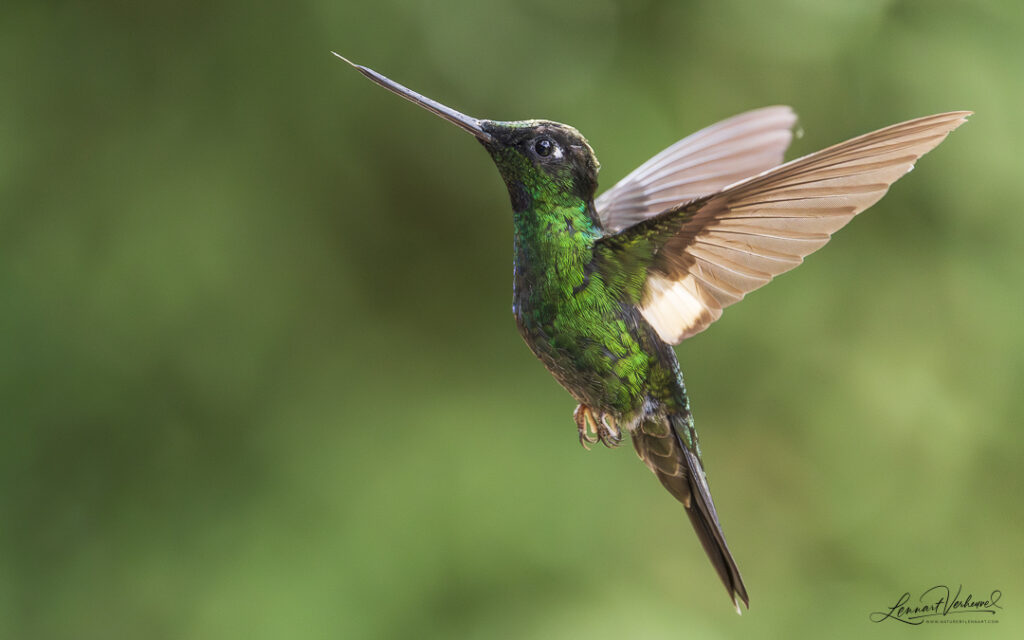
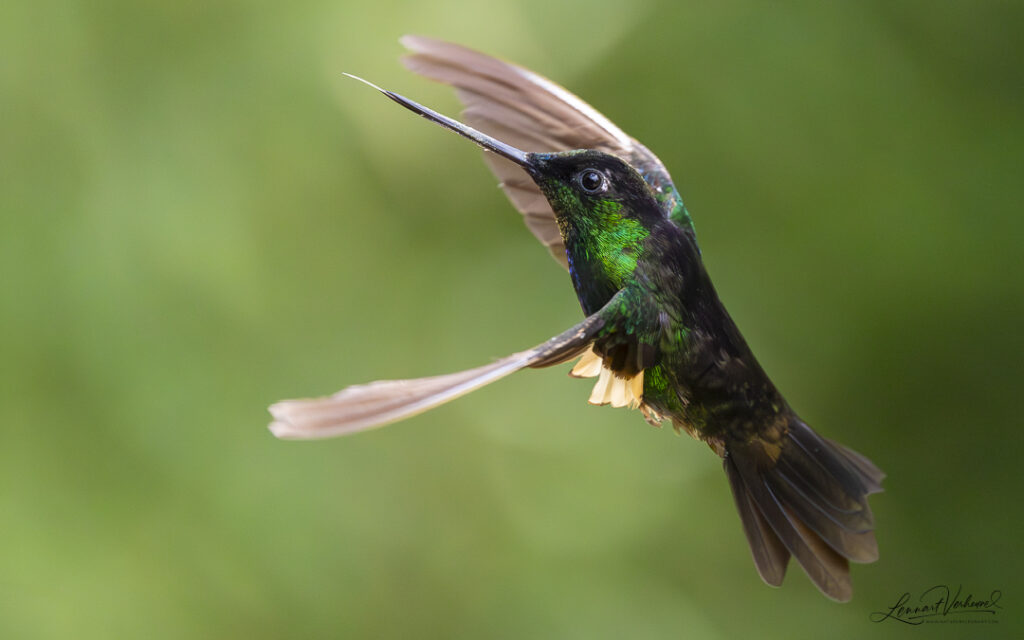
Buff-winged Starfrontlet
I had already photographed Buff-winged Starfrontlet well in Ecuador, but I was still pleased with this new series. The species’ distinctive pale wing patch is clearly visible.
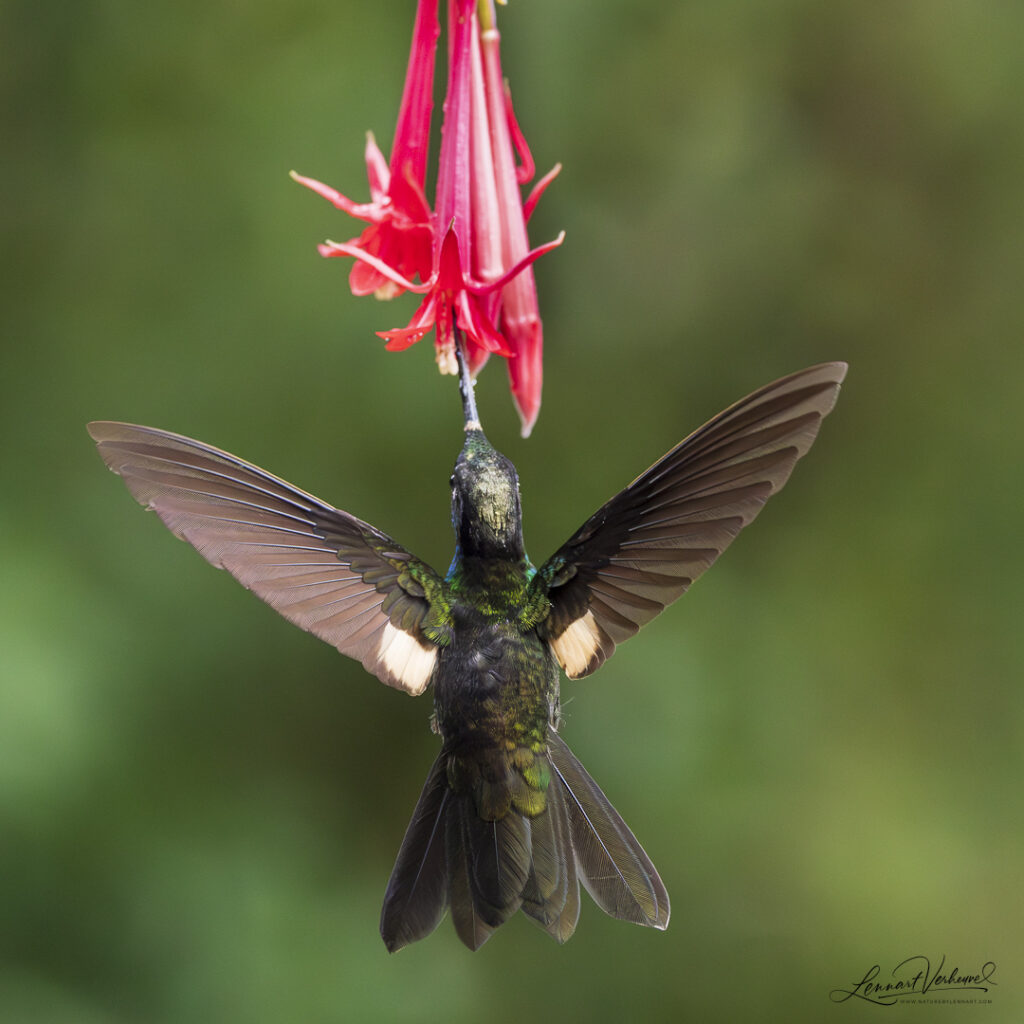
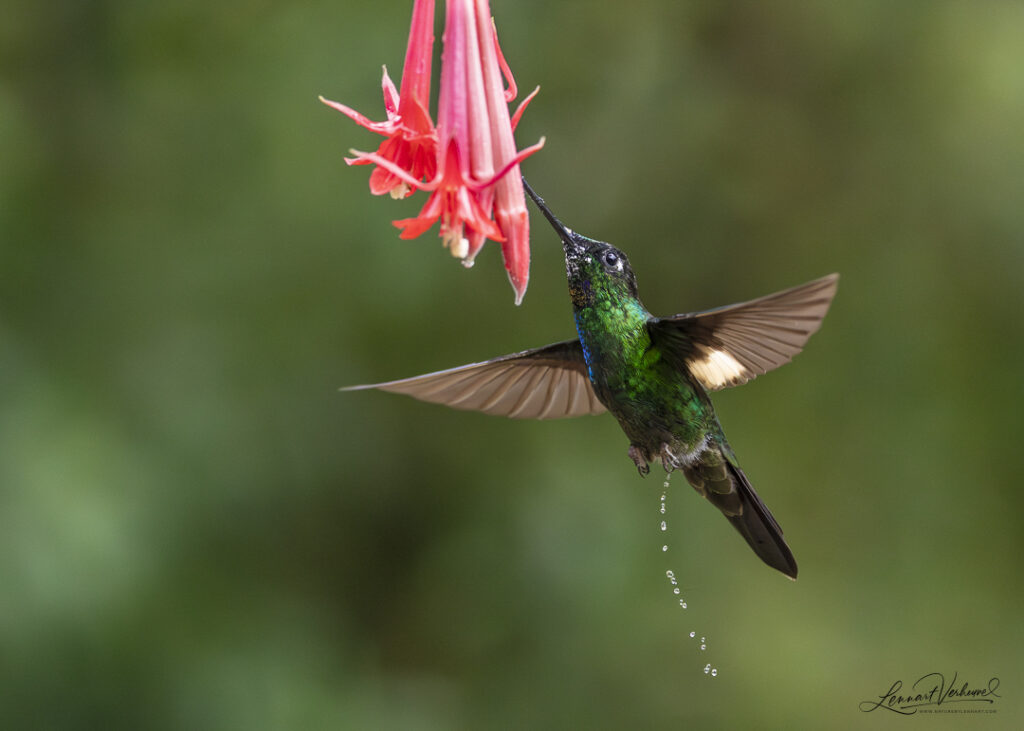
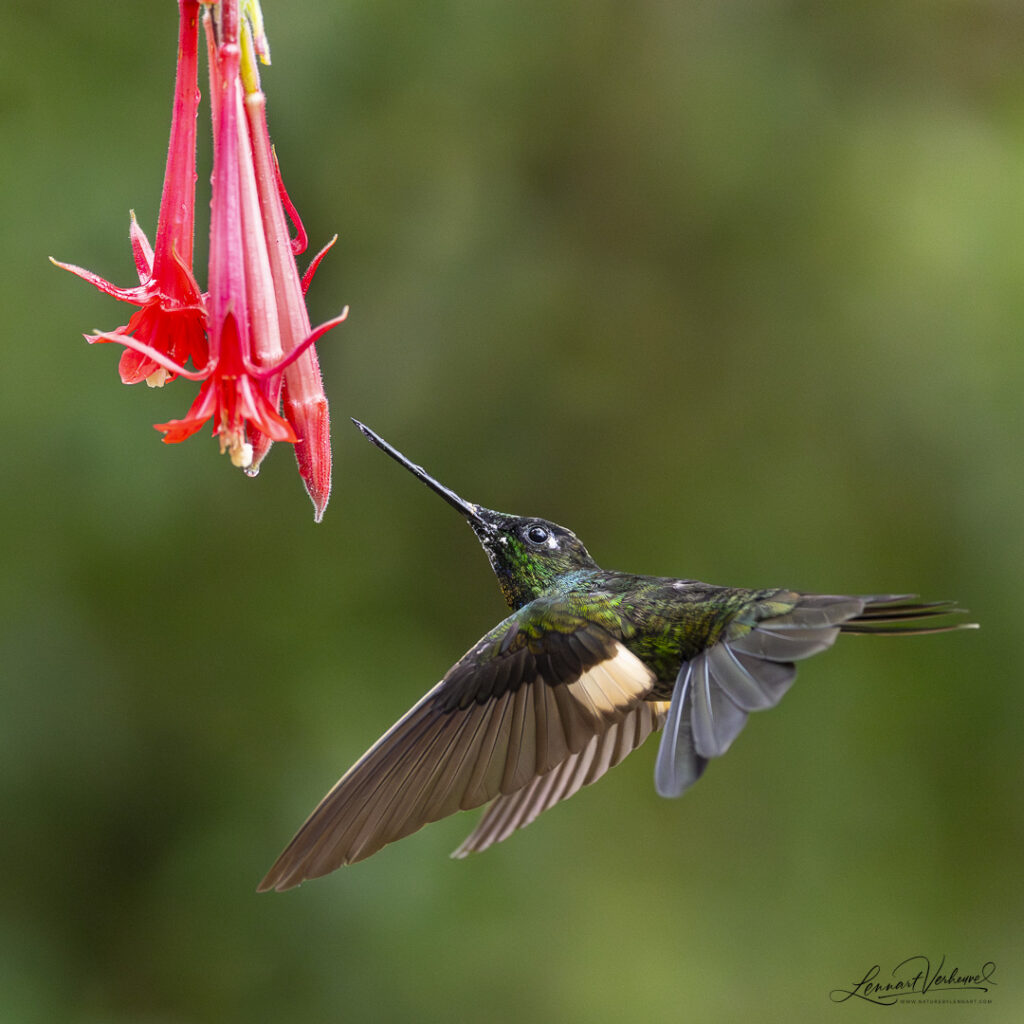
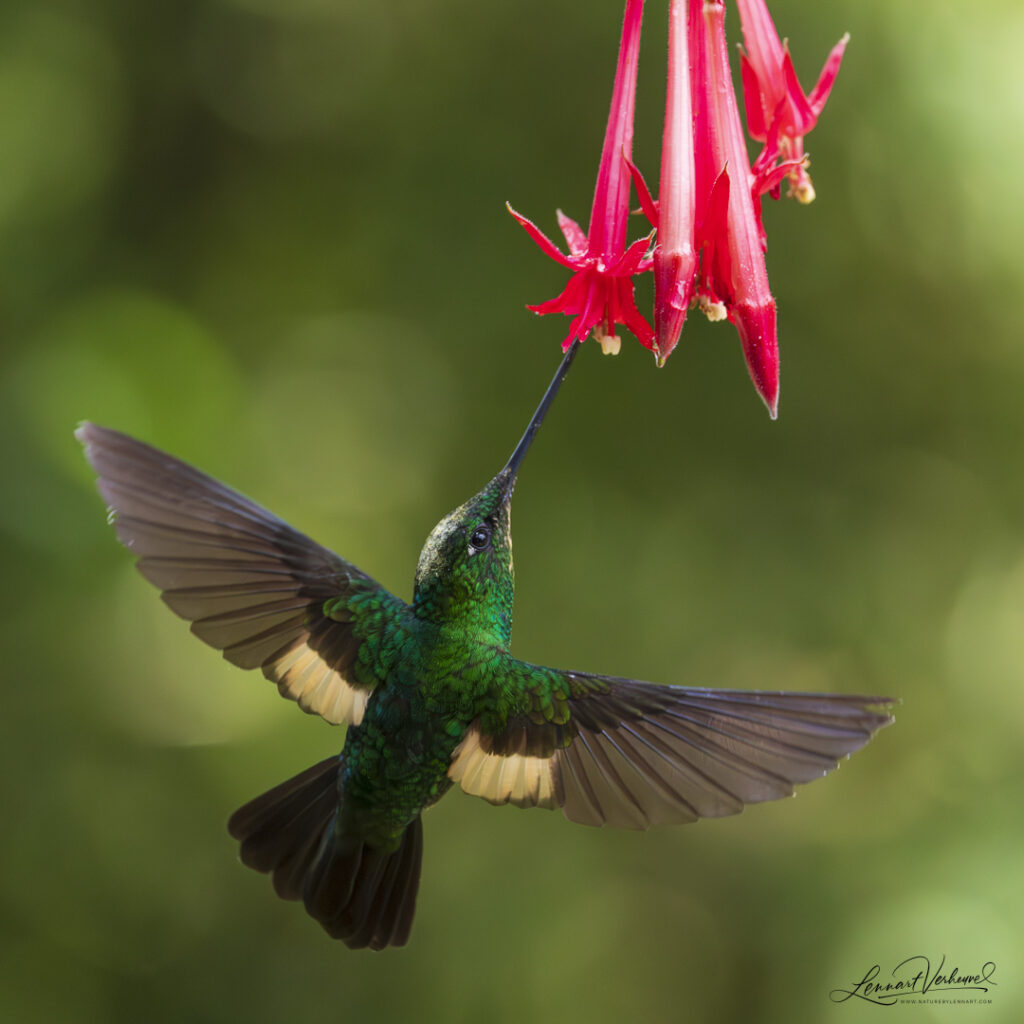
Buff-winged Starfrontlet
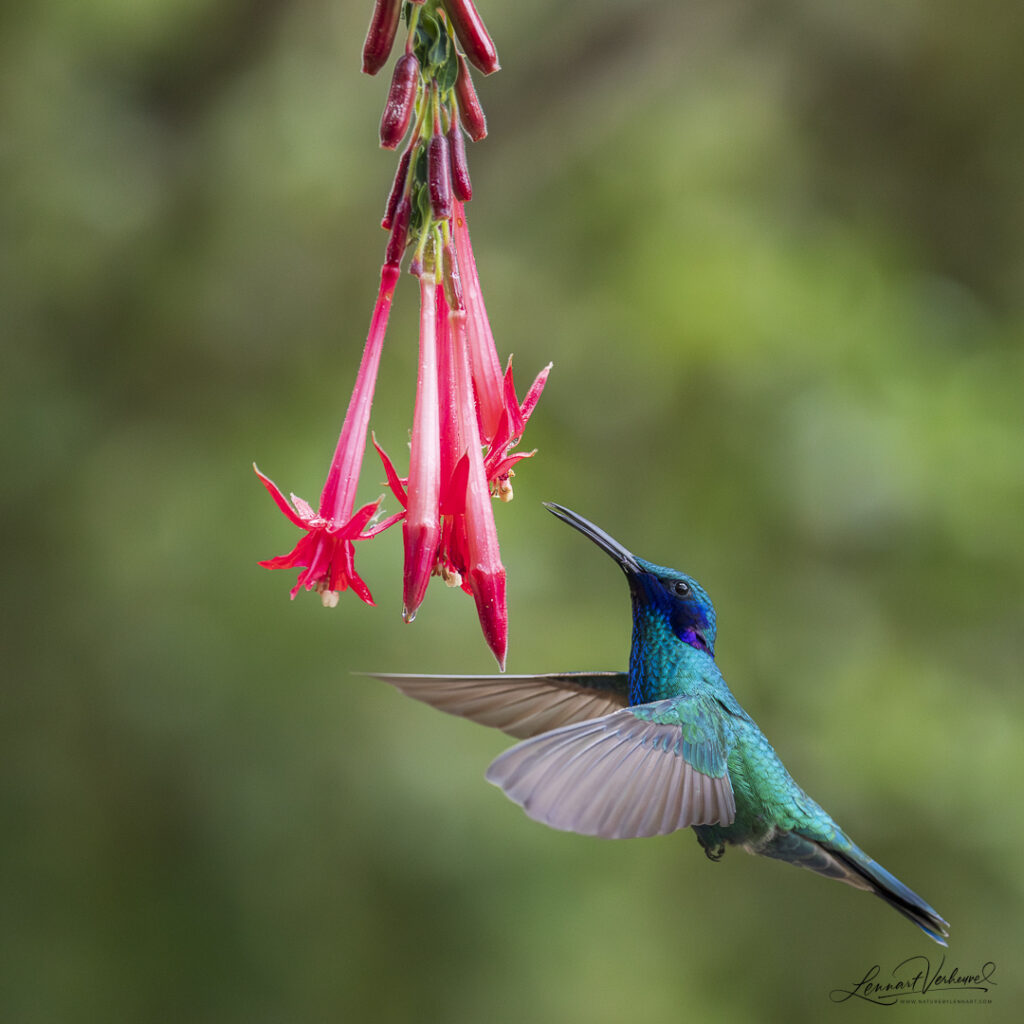
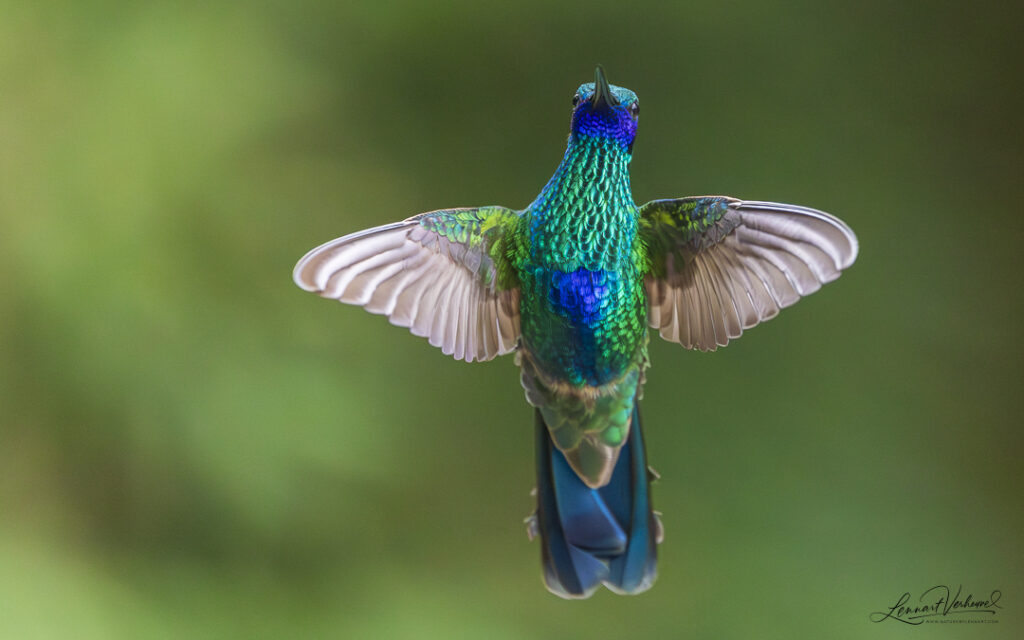
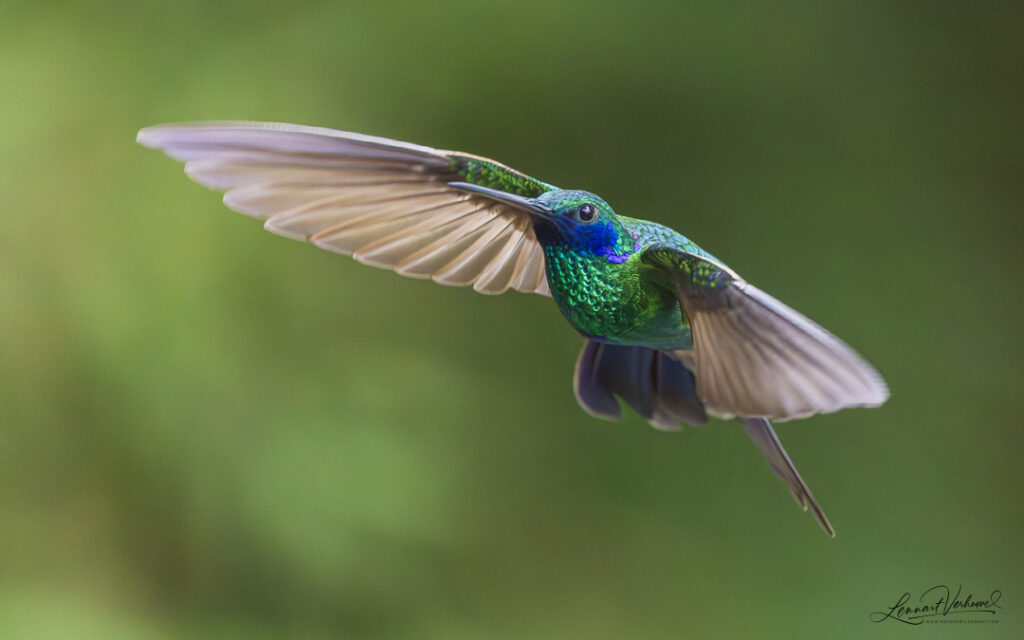
Sparkling Violetear
I had seen Sparkling Violetears frequently in Ecuador, and once again I thoroughly enjoyed watching them. They are relatively cooperative subjects in flight and can be quite aggressive. As a result, there are often opportunities to photograph interactions with other species as well.
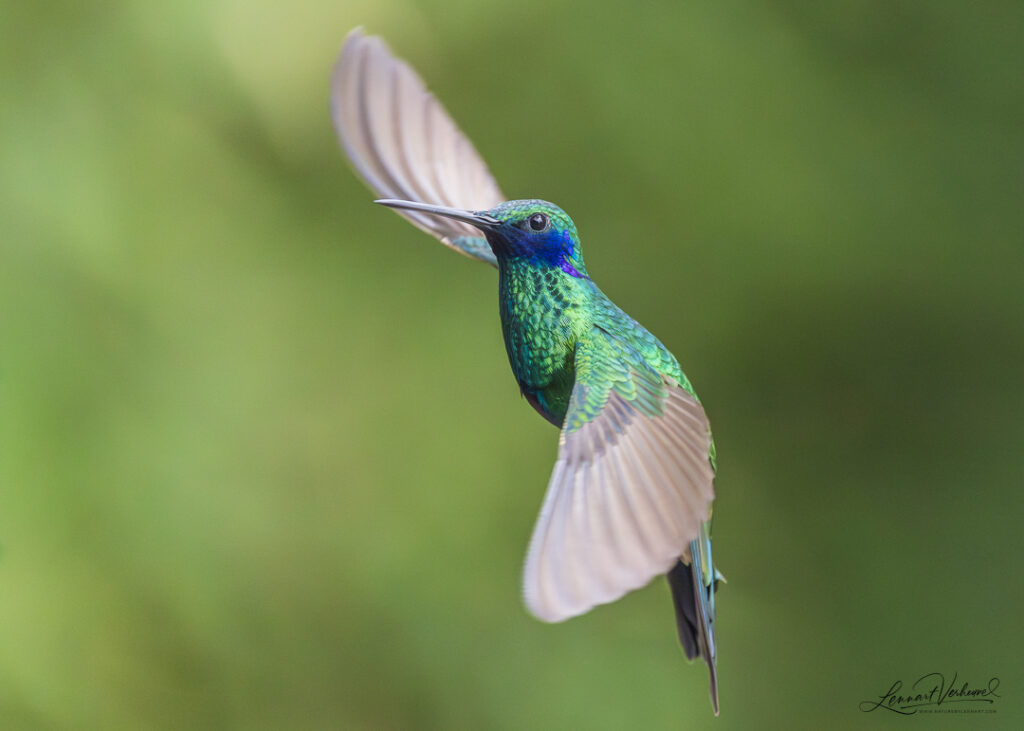
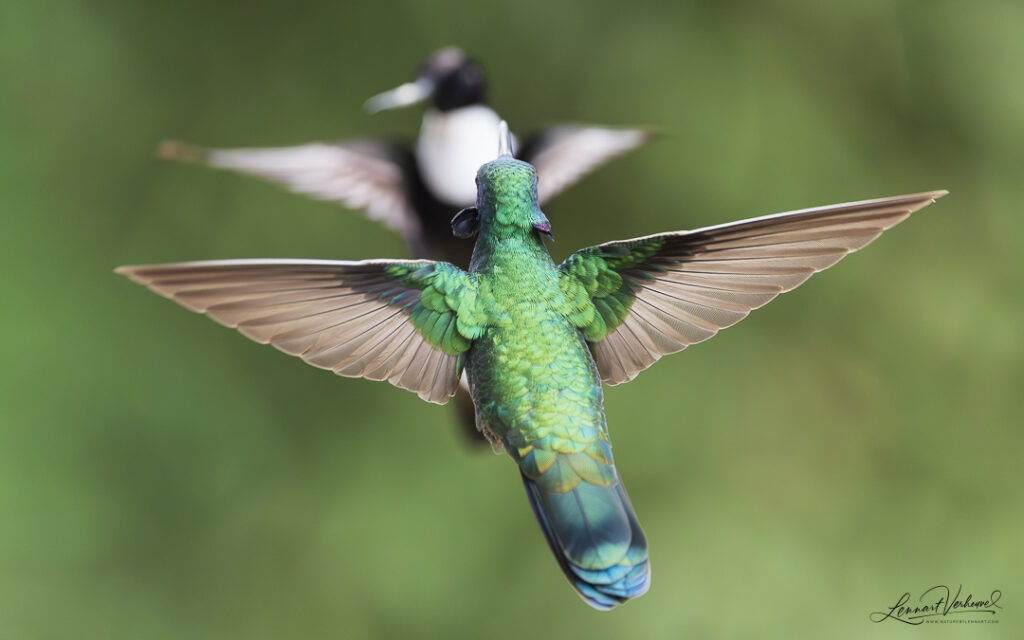
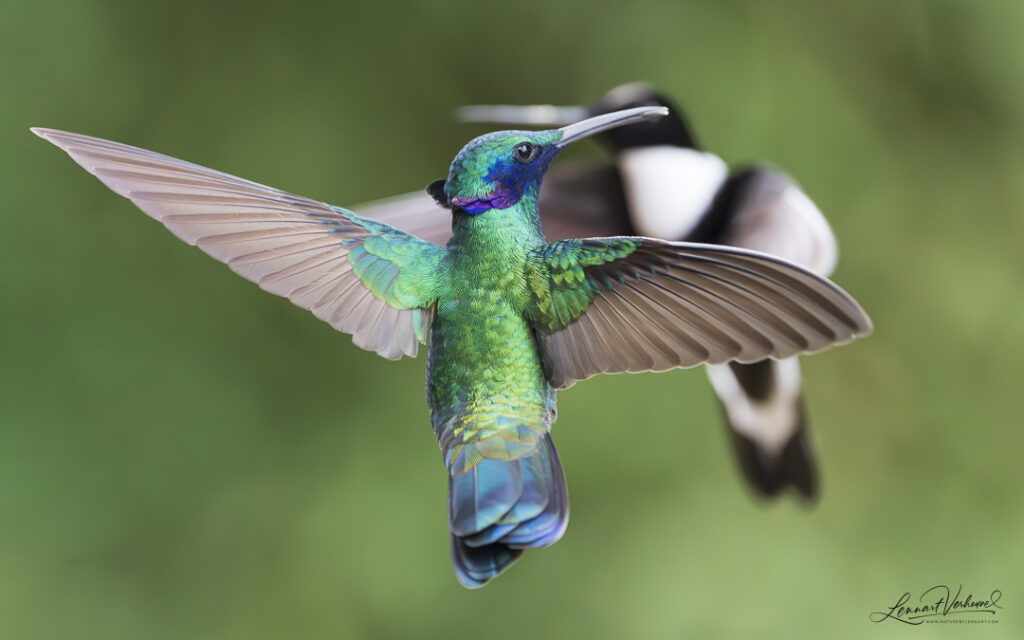
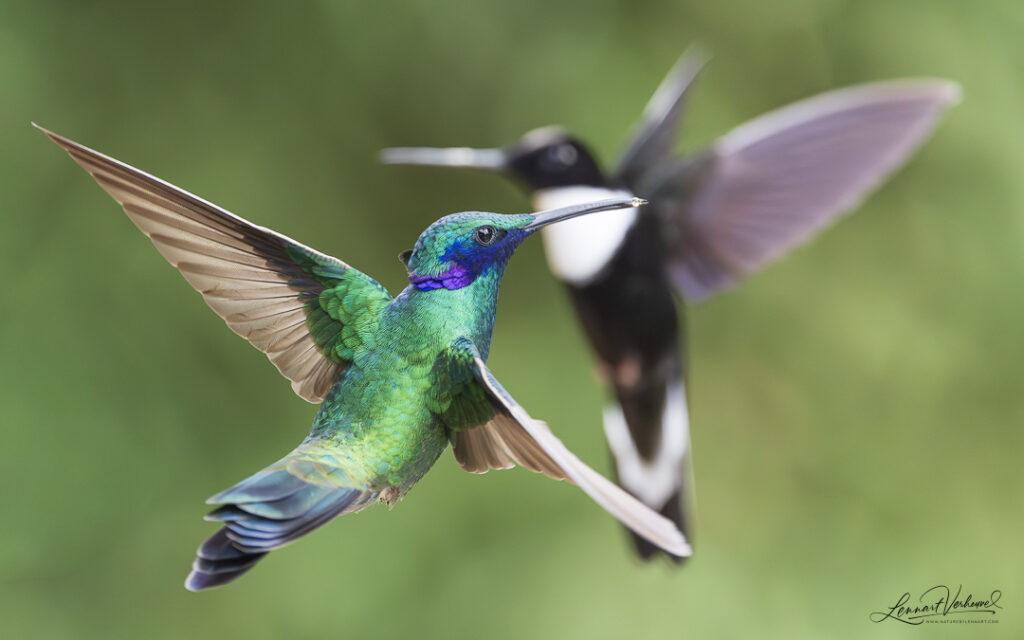
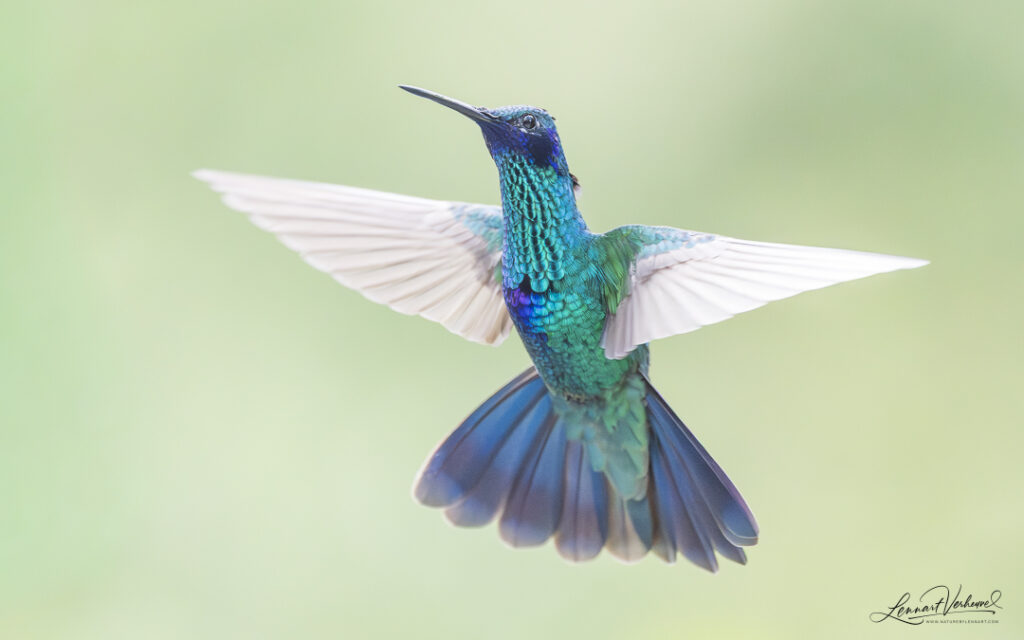
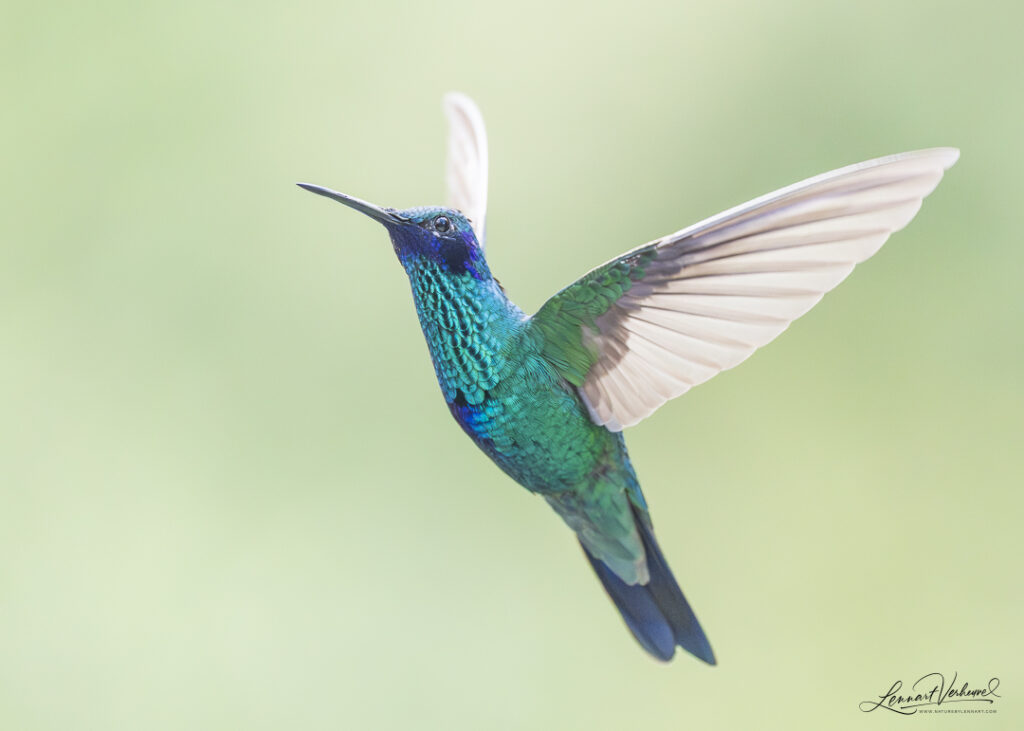
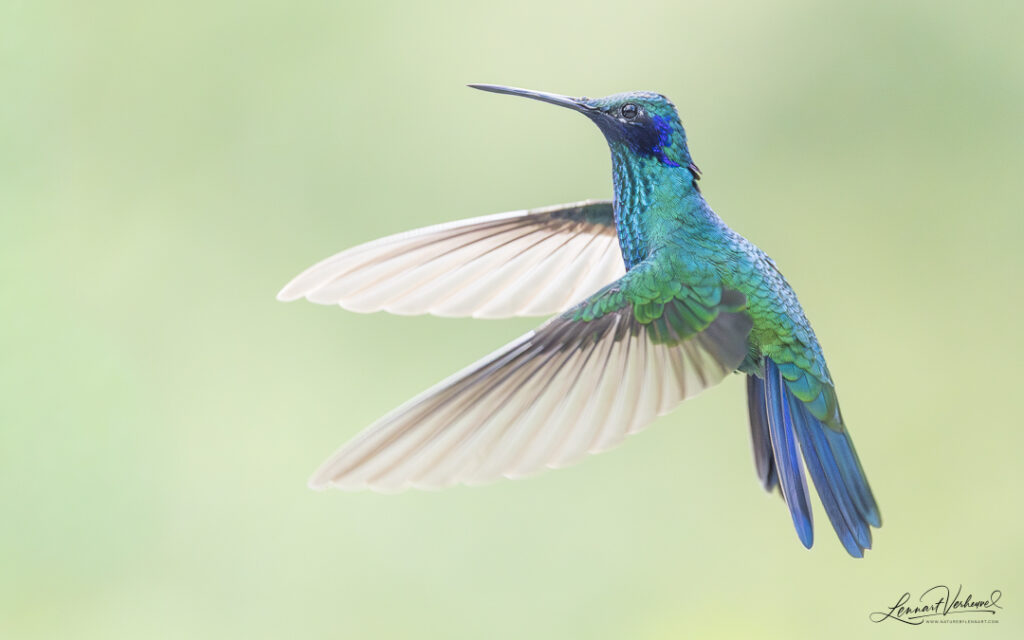
Sparkling Violetear
Buff-tailed Coronet
Buff-tailed Coronet was one of the most common hummingbirds I encountered in Ecuador, and it was equally abundant here. I already had many good photographs of the species, but the addition of the flower brought something extra to these images.
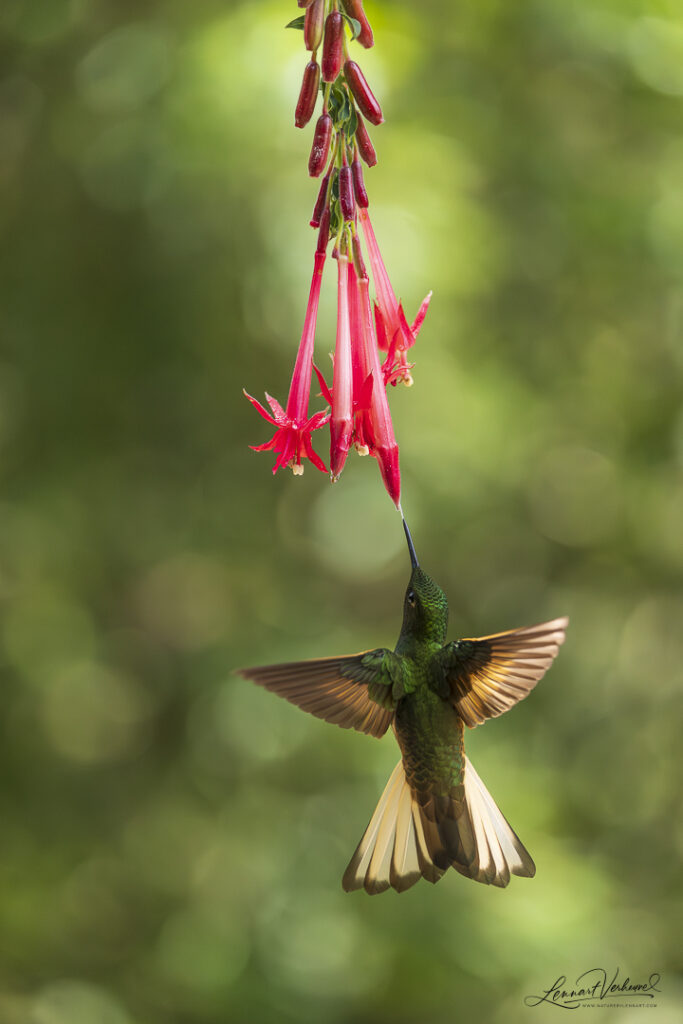
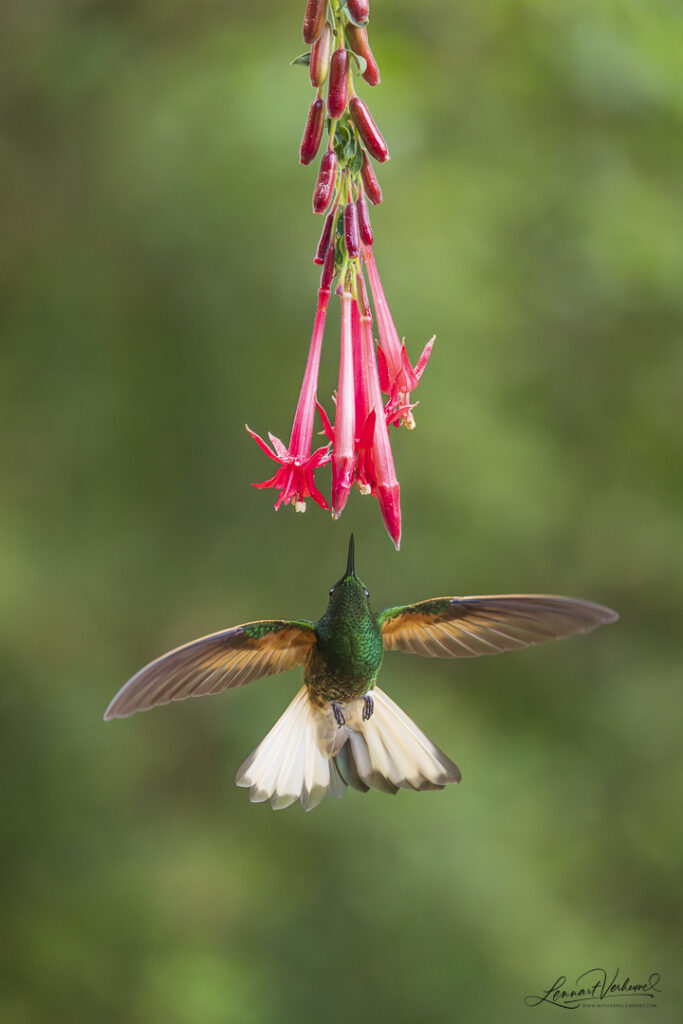
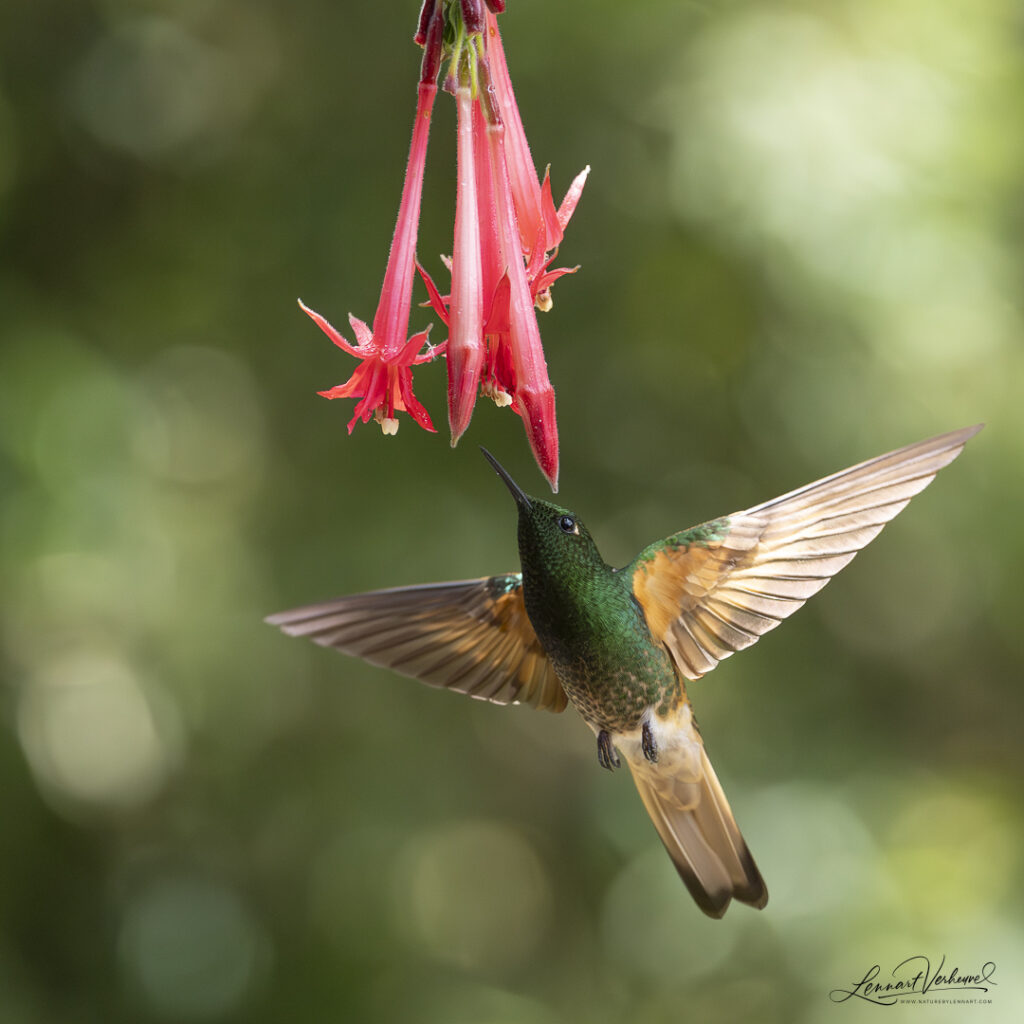
Buff-tailed Coronet
Collared Inca
The final hummingbird I photographed at Hacienda El Bosque was the Collared Inca. This is one of my favourite hummingbirds to photograph because, more than most species, it has a habit of hovering motionless for several seconds near a feeder. Even though it does not visit feeders particularly often, this behaviour creates plenty of opportunities to capture different poses. Its striking white uppertail immediately catches the eye.
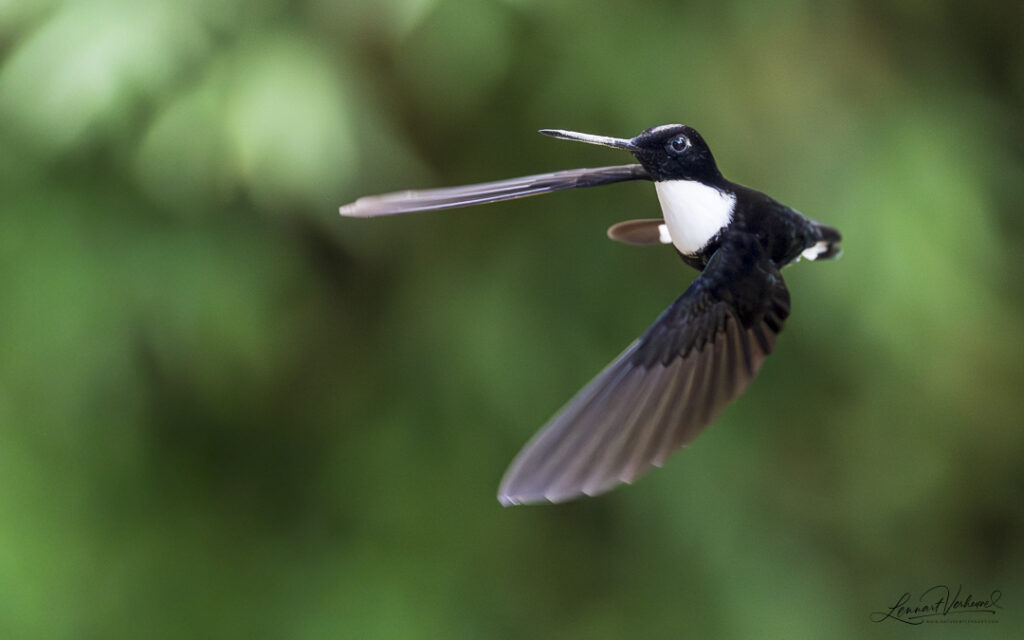
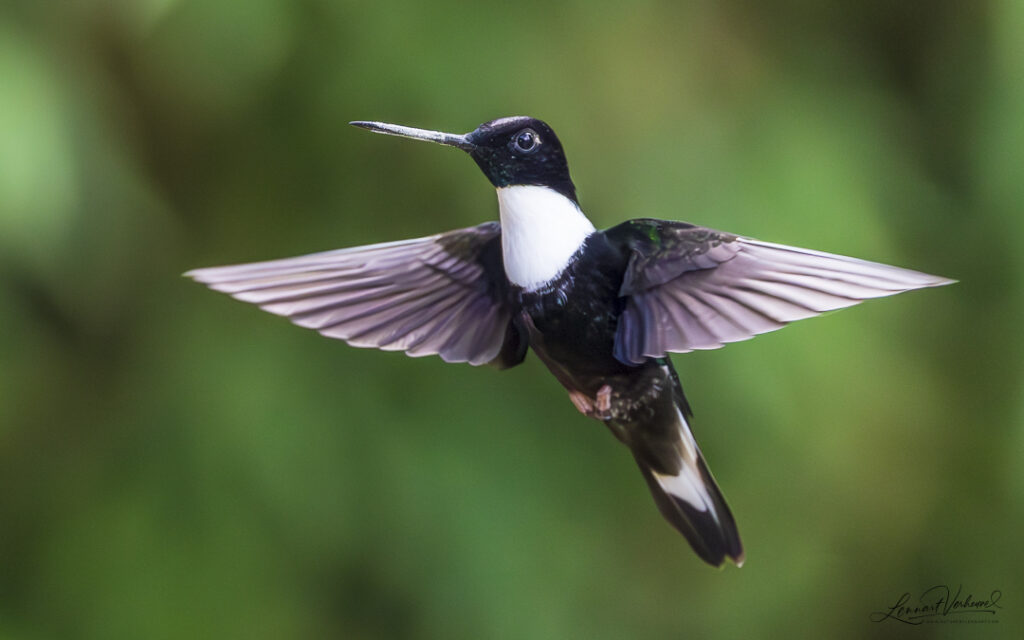
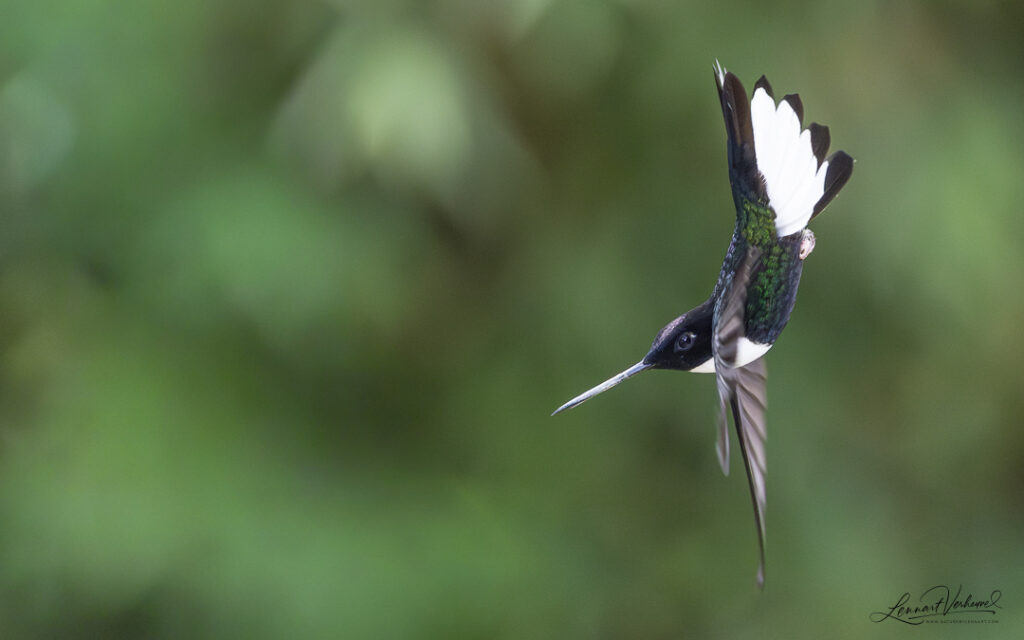
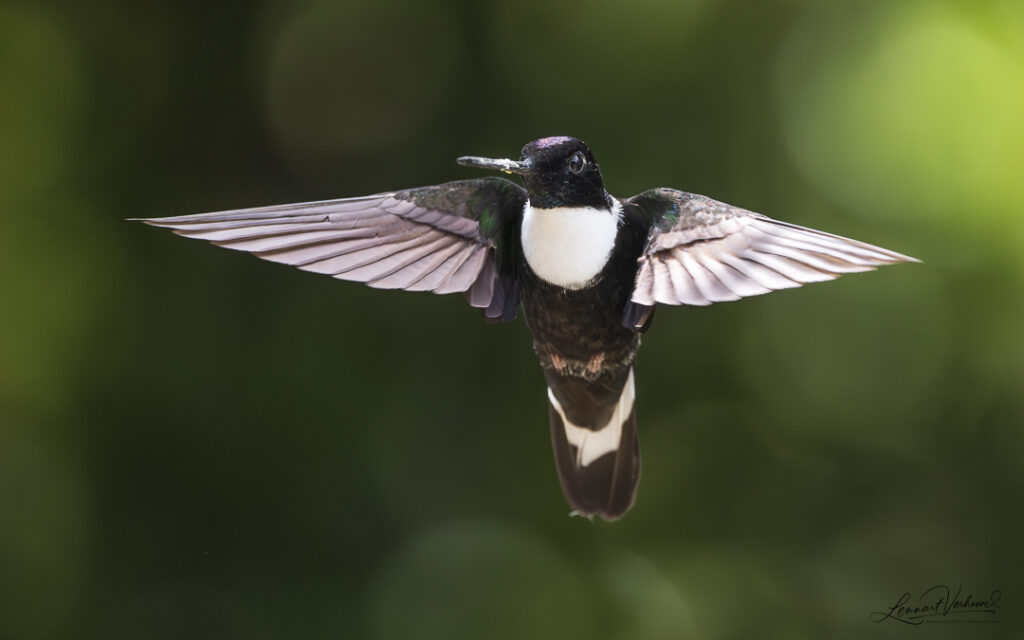
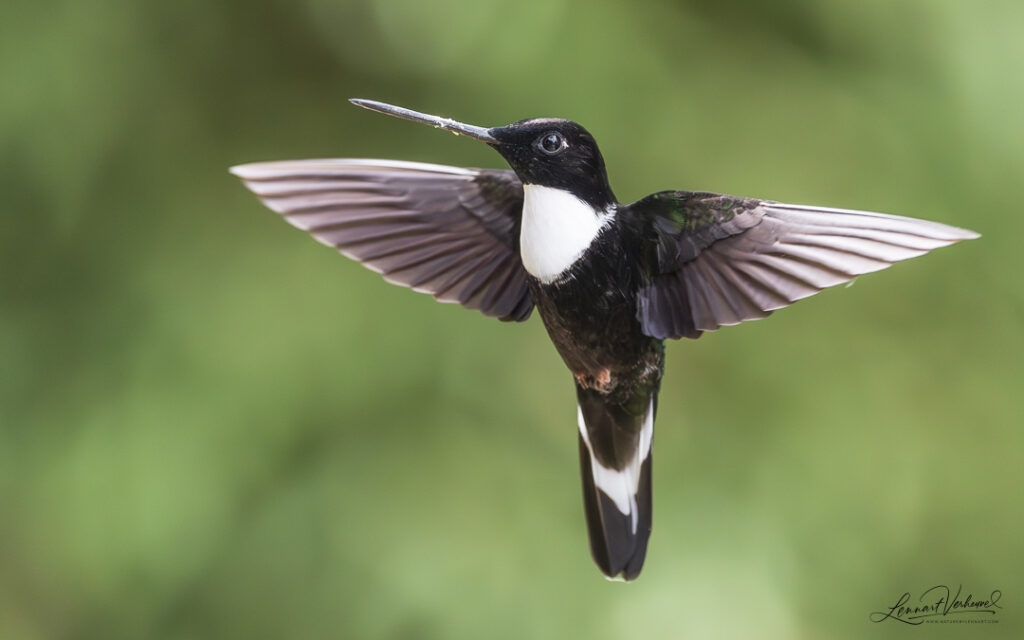
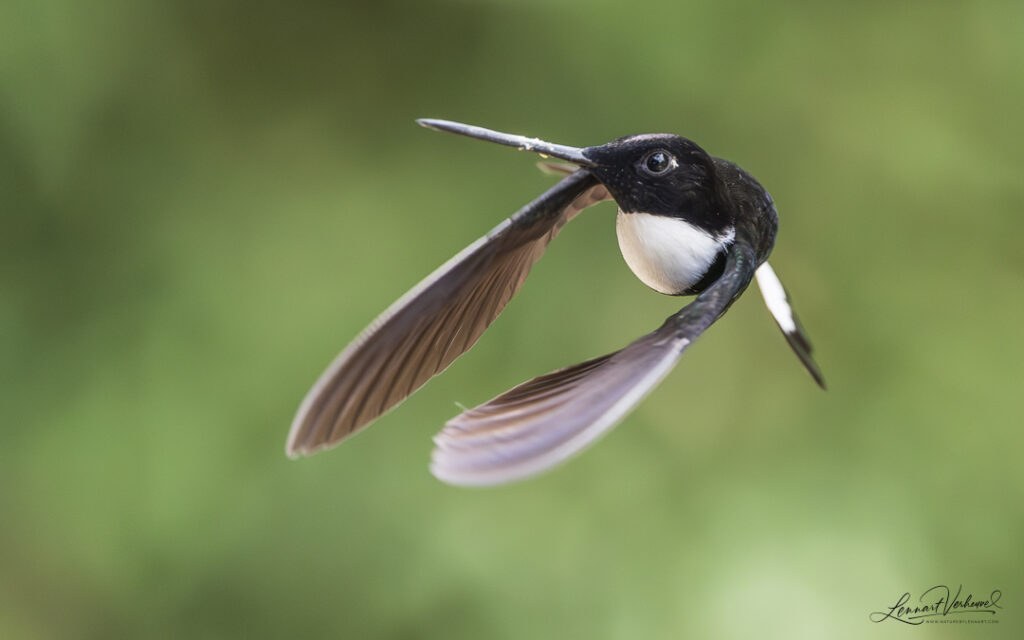
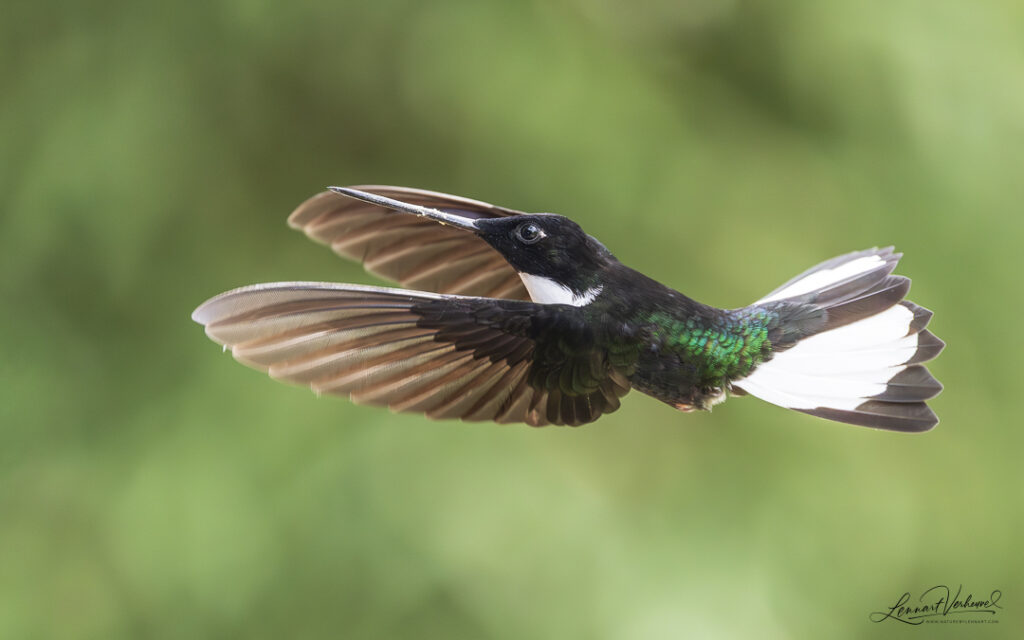
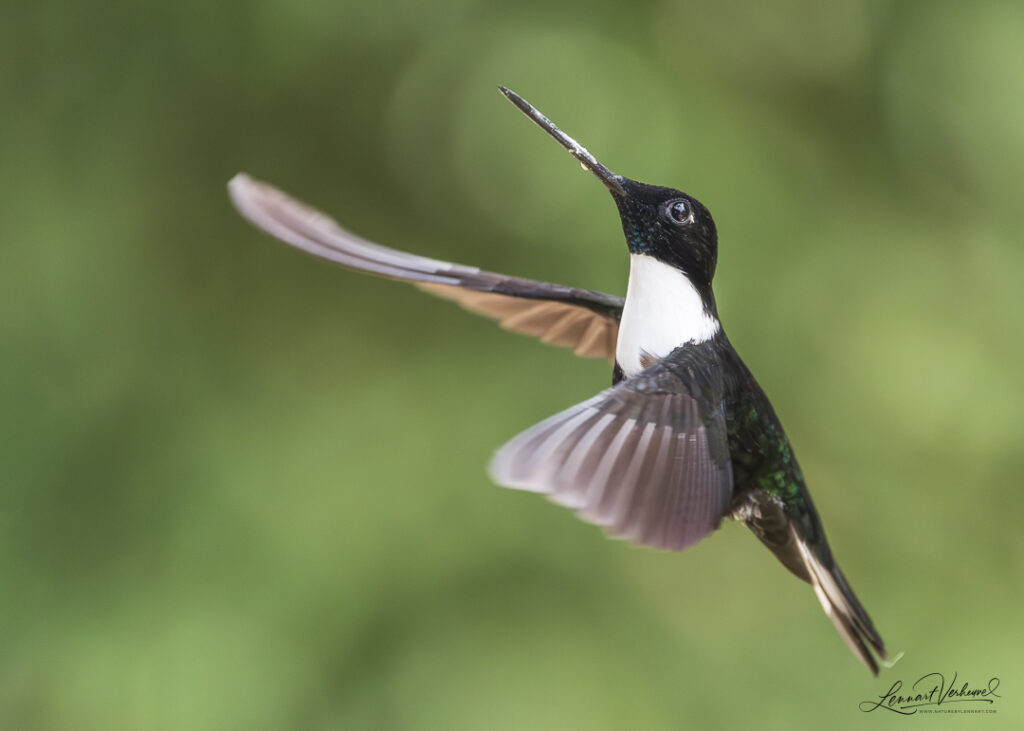
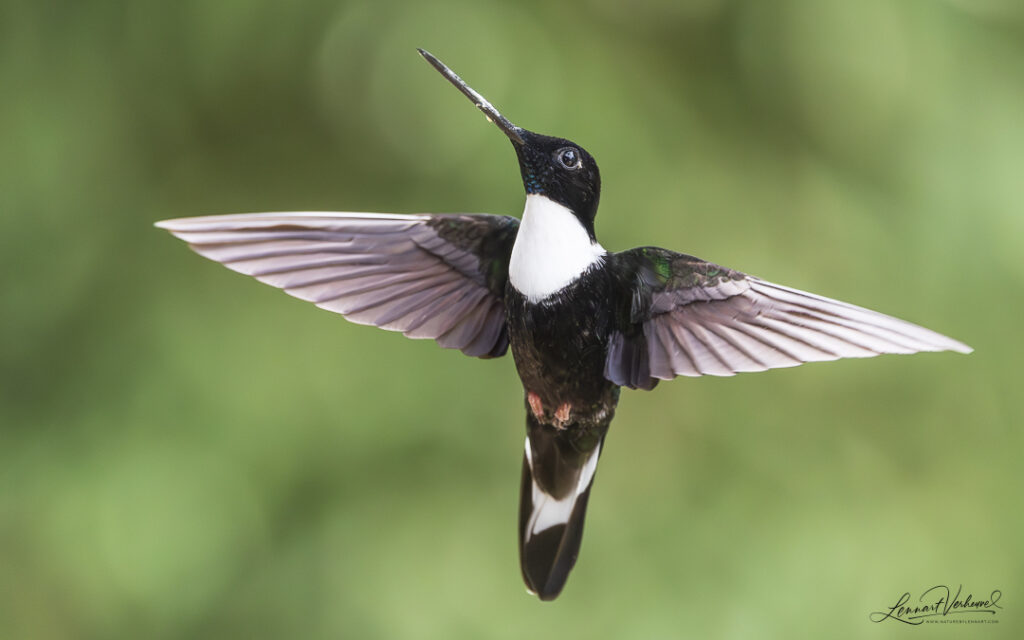
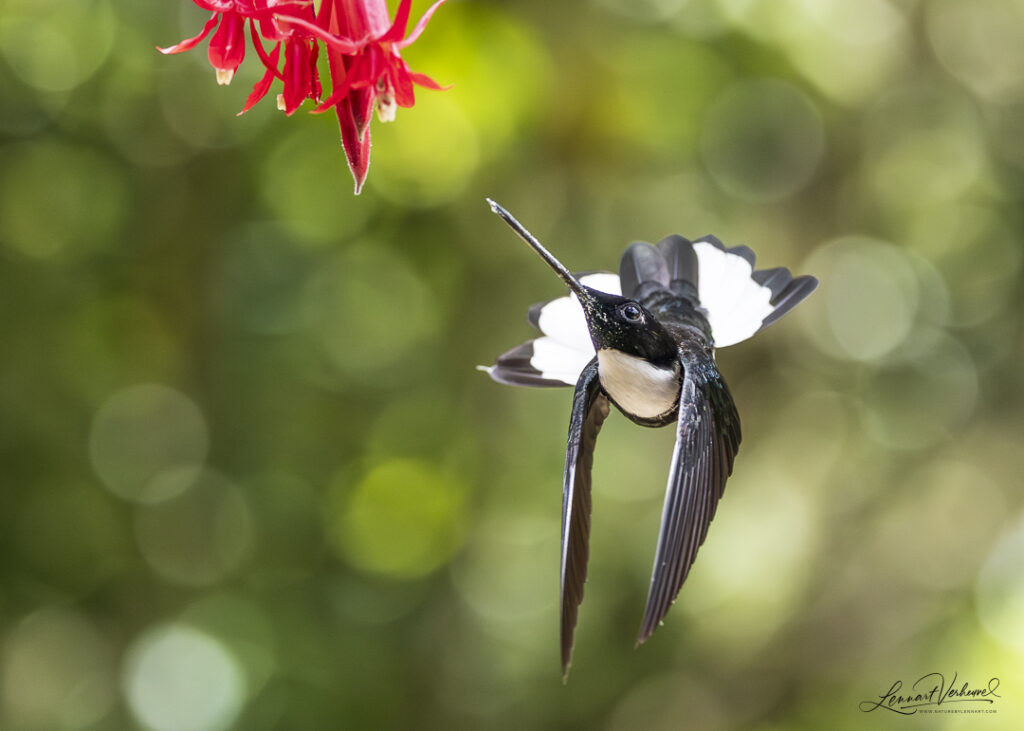
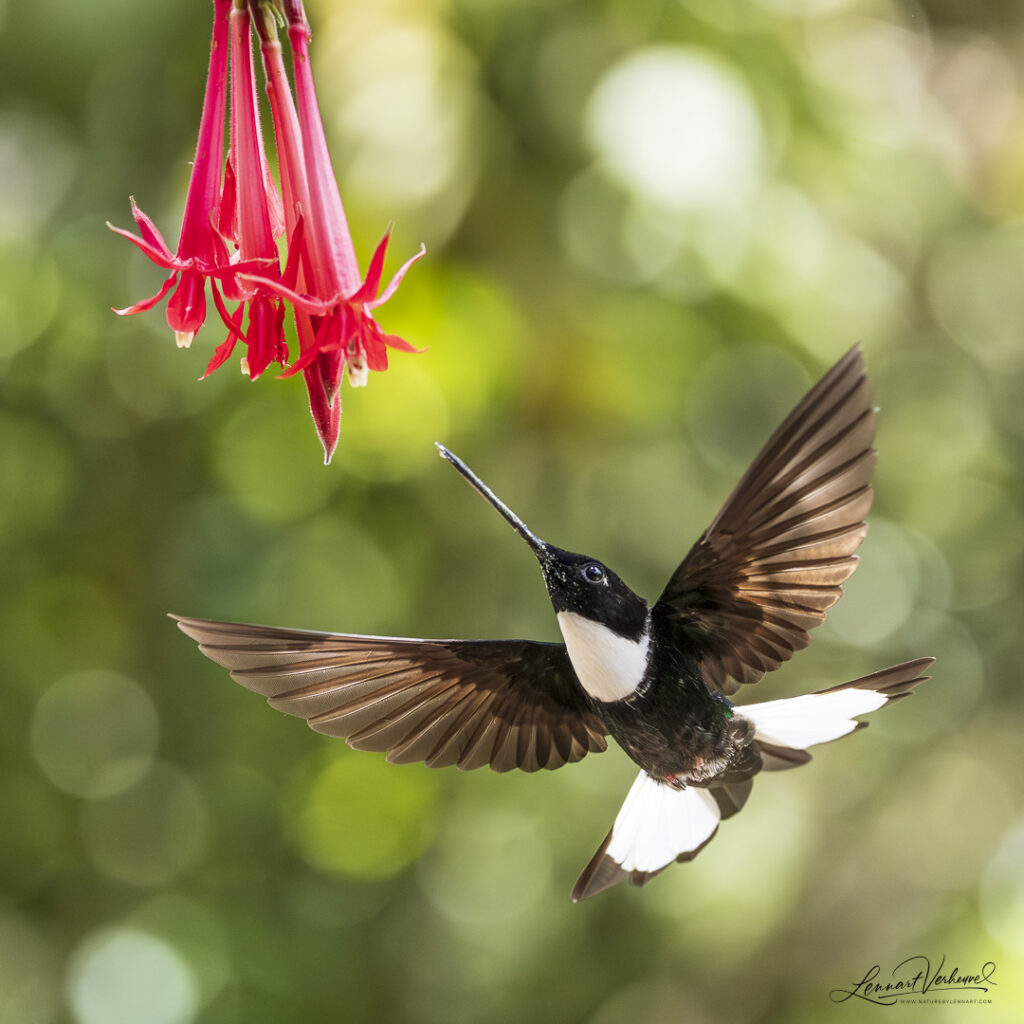
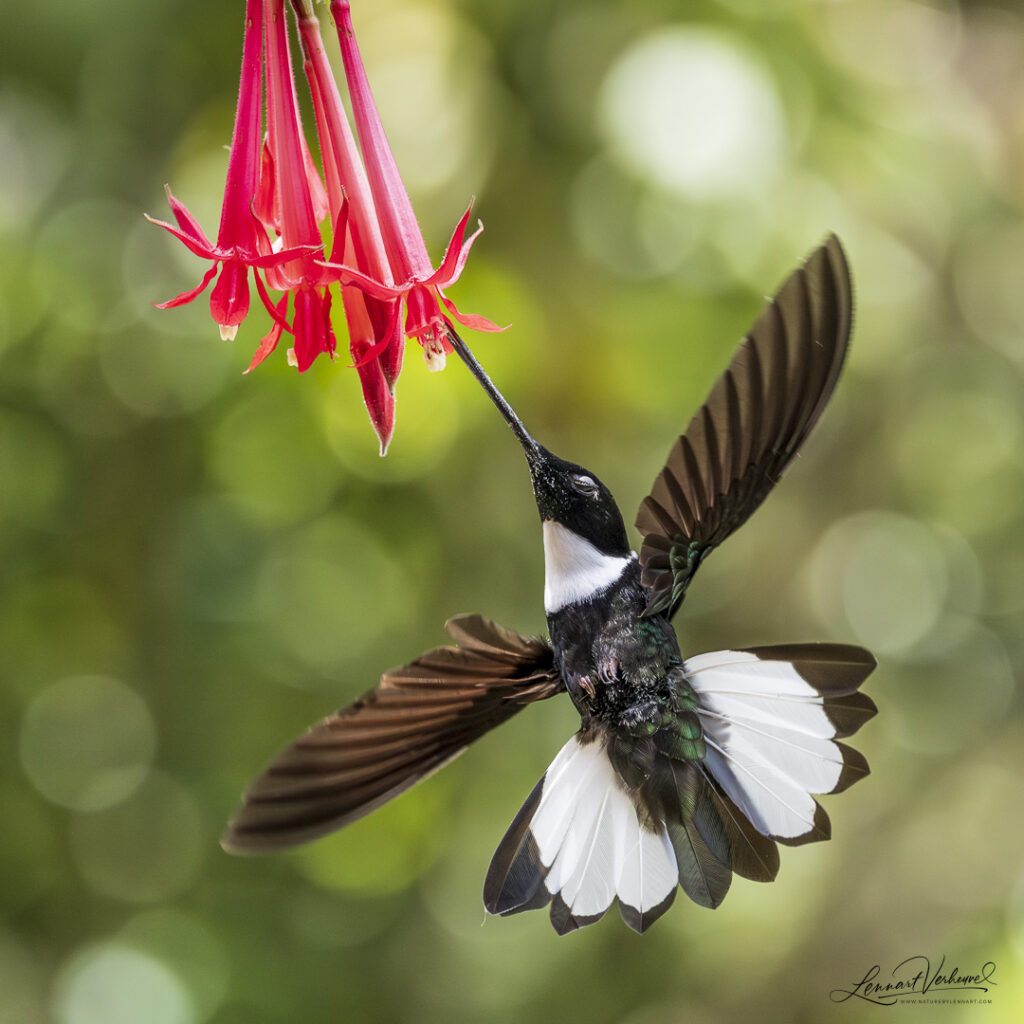
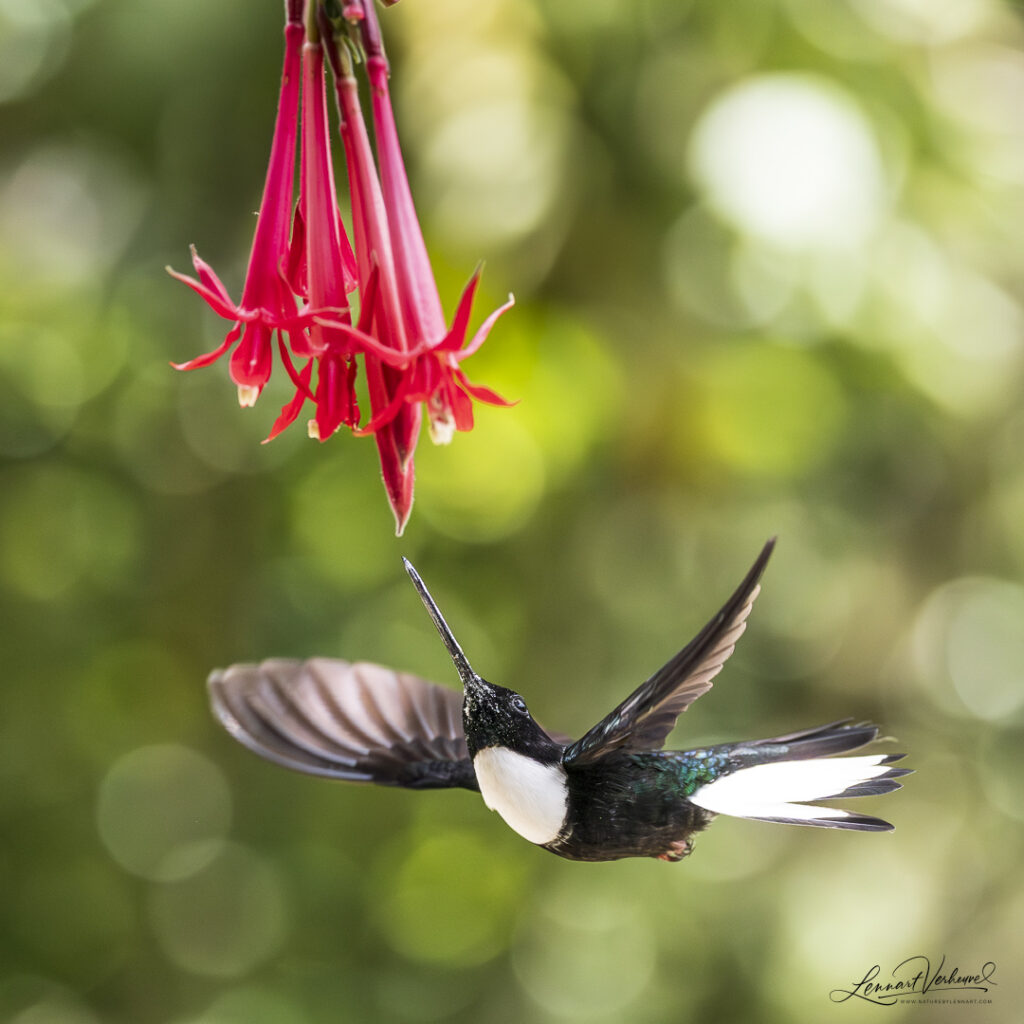
Collared Inca
With a bit of luck, I even managed to photograph two of my favourite hummingbirds in the same frame: a Collared Inca with a Sword-billed Hummingbird in the background.
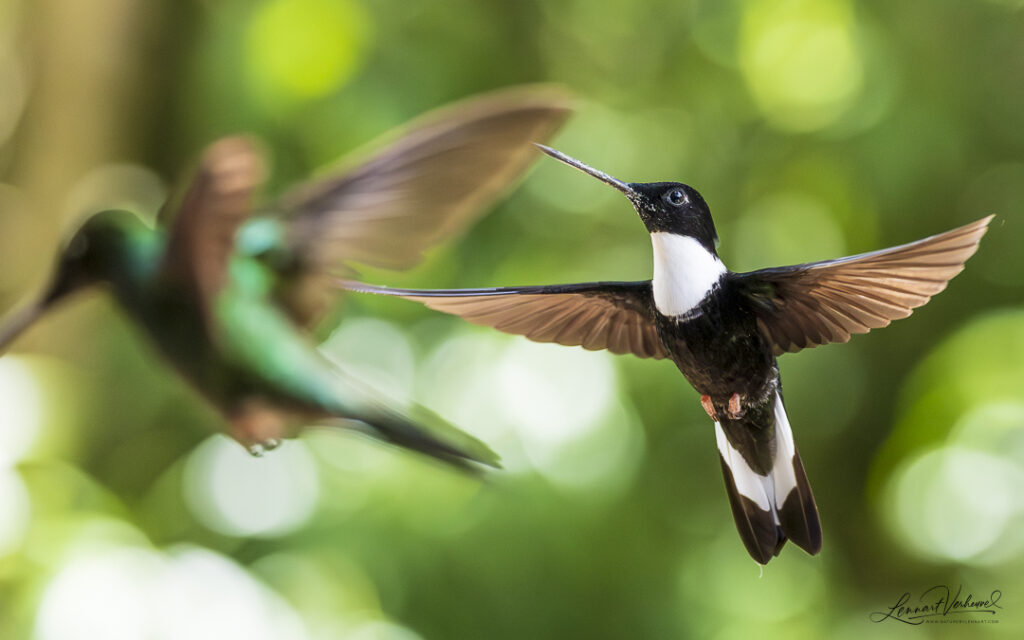
Collared Inca with Sword-billed Hummingbird
My visit to Hacienda El Bosque was not solely focused on hummingbird photography, however. In fact, hummingbirds were more of a bonus than a primary target. I was also able to see the stunning Crescent-faced Antpitta and the impressive Grey-breasted Mountain Toucan. Elsewhere during the trip, I encountered several other outstanding species as well. For more of the special birds I saw during my week in the Andes, click here!
I had no fewer than three full days at Mirador El Roble, plus an additional afternoon and morning. After all, I did not want to miss that cat! Fortunately, the Northern Oncilla did not keep me in suspense. Mission accomplished!
Yet even though the Northern Oncilla showed itself multiple times during my stay, I still had plenty of free time. Some of that time was spent birding in the surrounding area. It was enjoyable, but I never liked straying too far from the lodge because I wanted every possible chance to see the Northern Oncilla under the best conditions.
Once I had photographed most of the reasonably common birds around the lodge, only the hummingbirds remained. Fortunately, I love hummingbirds! Even so, there is a limit to how many fresh and original images you can create with them. By this point, I already had plenty of conventional flight shots. I therefore began focusing on interactions between birds, but that proved extremely difficult because hummingbirds move so quickly.
One advantage of spending hours in the same location is that it gives you time to think about alternative approaches. It occurred to me that I could try photographing hummingbirds with my old Canon EF 24–70mm F4 lens. It had been gathering dust in my cupboard for years, and I had only brought it along in case I wanted wide-angle photographs of the Northern Oncilla. But what if I tried using it on hummingbirds instead?
There was no harm in experimenting, so I positioned myself close to one of the feeders and attempted to photograph every bird that flew near me. Naturally, this produced countless unusable images. But every now and then, a sequence appeared that I was genuinely excited about. I continued the project over the following days, and I was extremely pleased with the final results. It felt like a completely new way of presenting hummingbirds.
Collared Inca
Once again, I can present my results species by species. Naturally, Collared Inca is a good one to start with. It was the species I had the highest expectations for, since it is already noticeably easier to photograph in flight with a long lens than most other hummingbirds.
And indeed, the results were encouraging. Although photographing this species with a wide-angle lens was still far from easy, I had three occasions on which I managed to obtain sharp images. One advantage of this species is that you generally end up with more successful photographs from each session.
One memorable encounter involved a female Collared Inca, whose plumage is predominantly green, whereas the male is largely black.
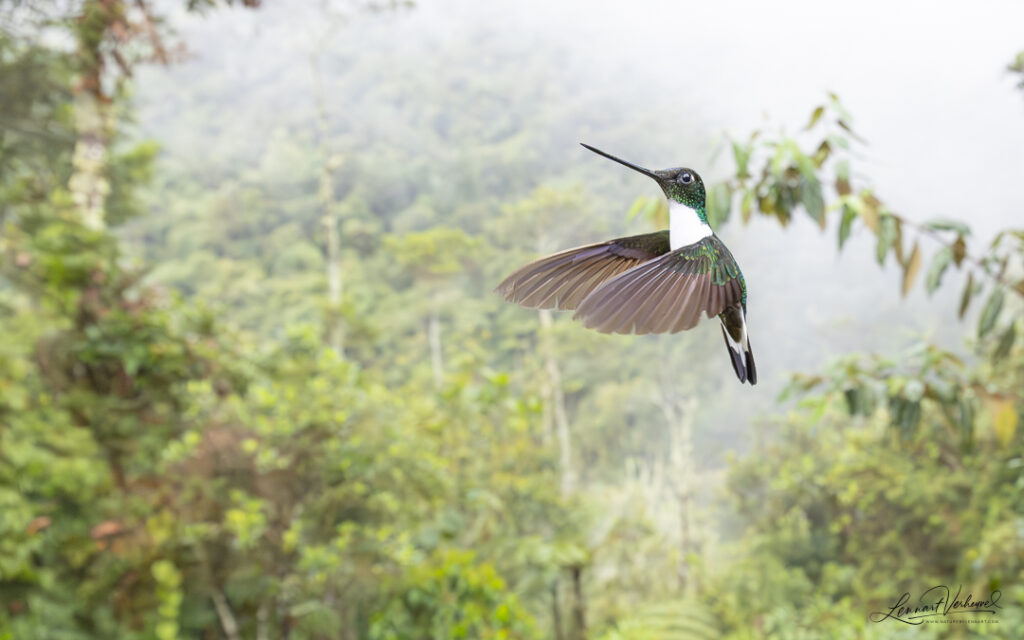
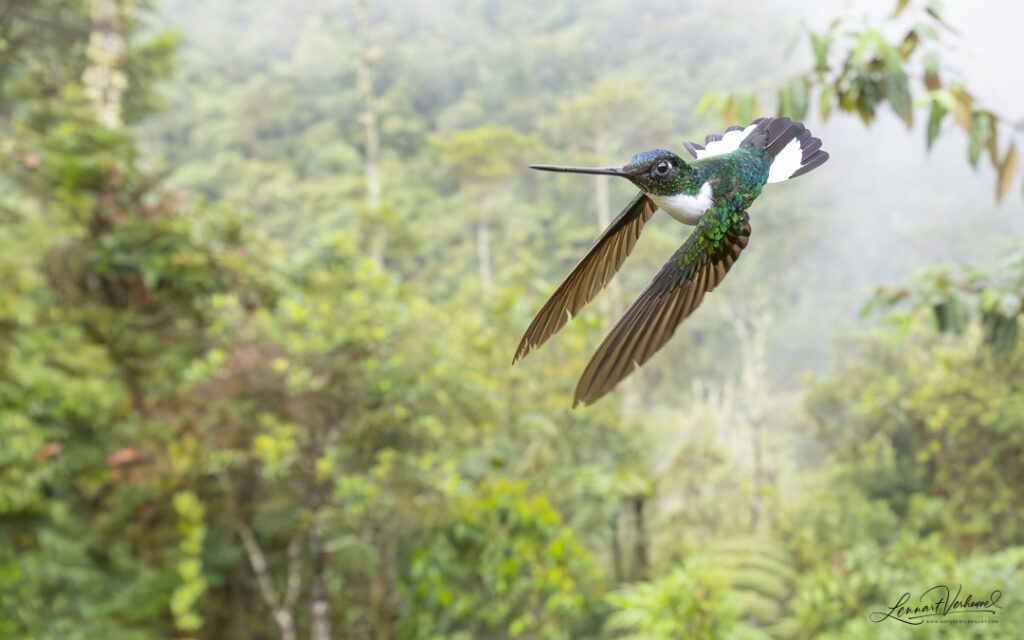
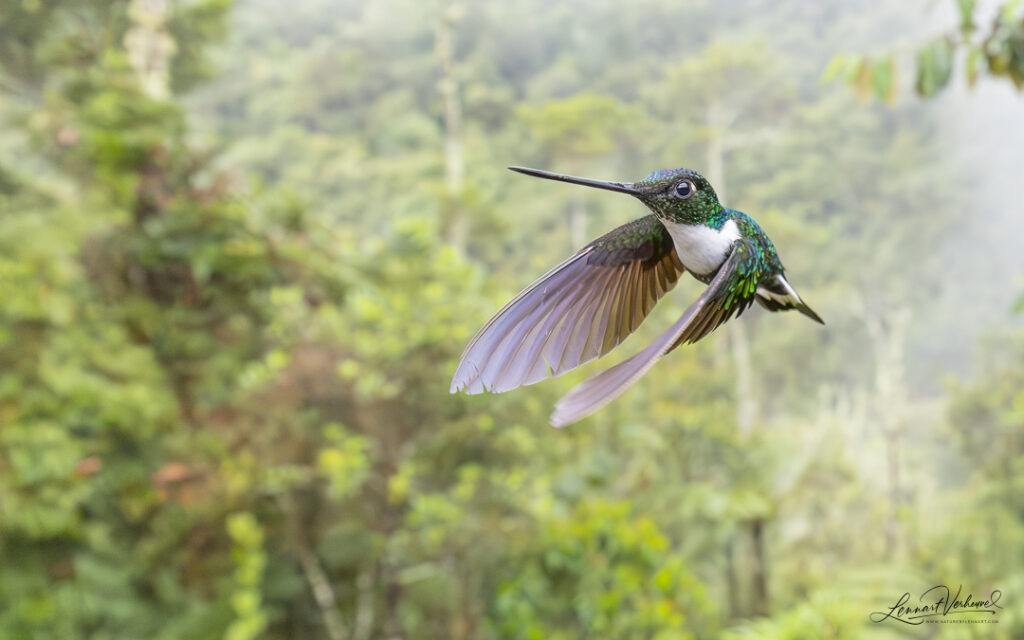
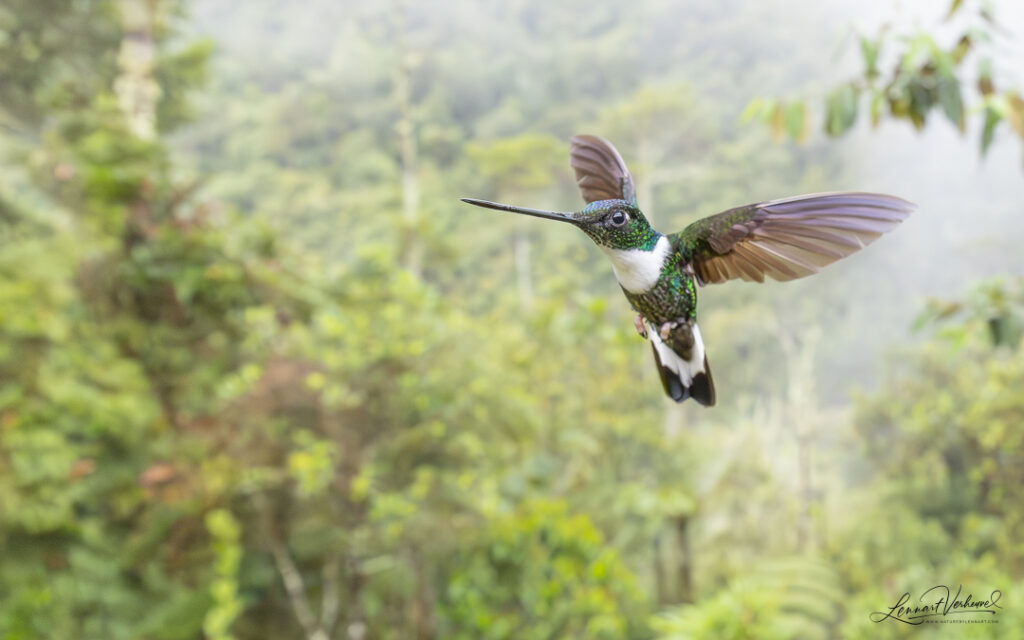
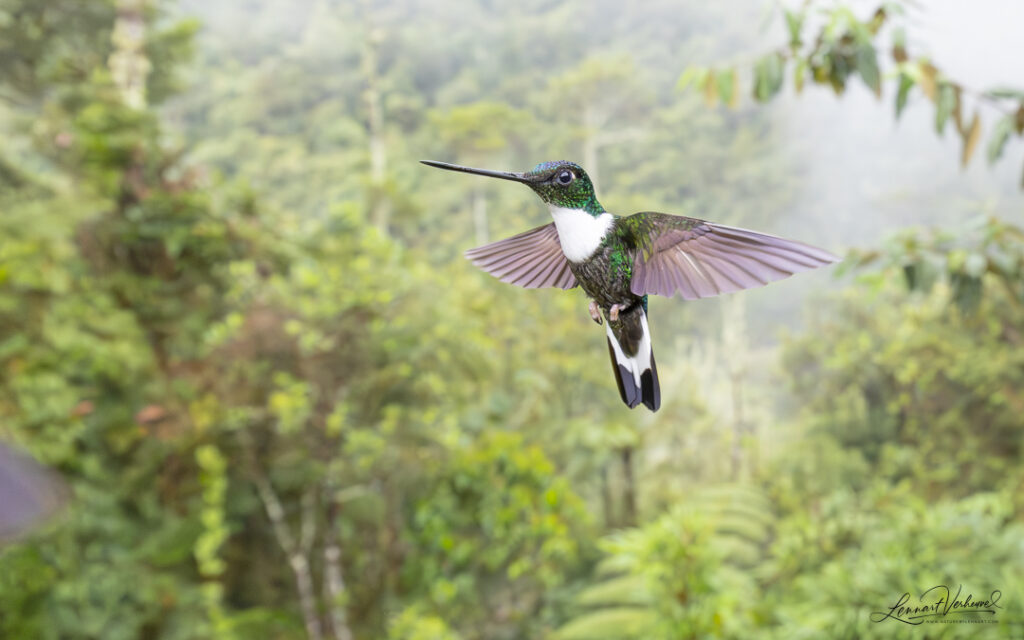
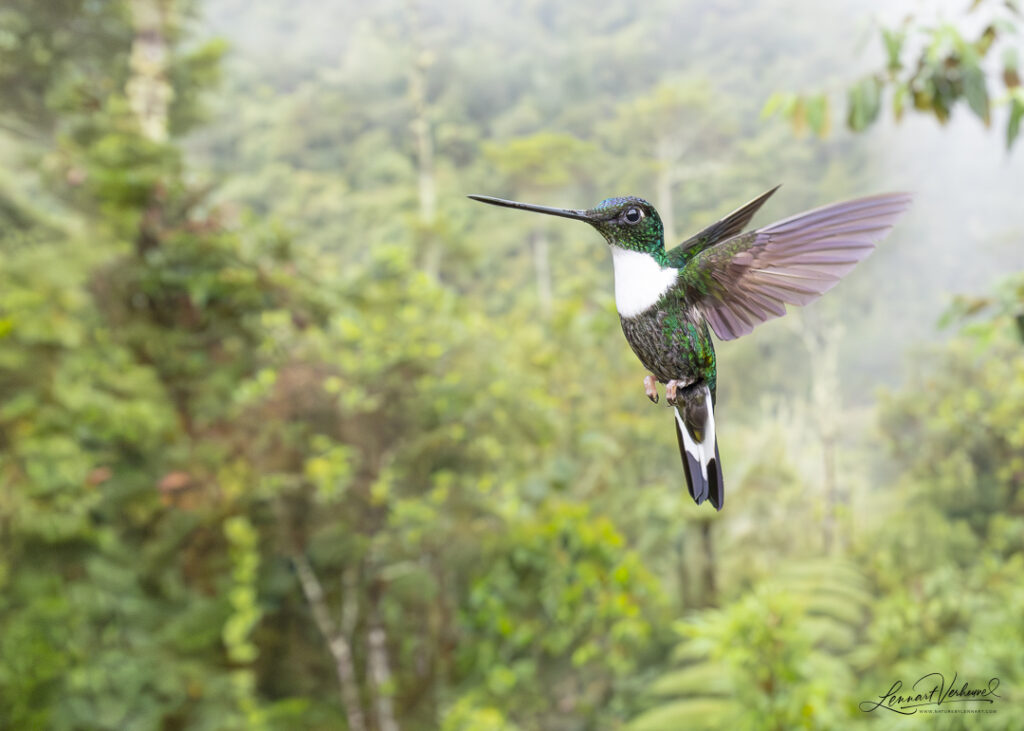
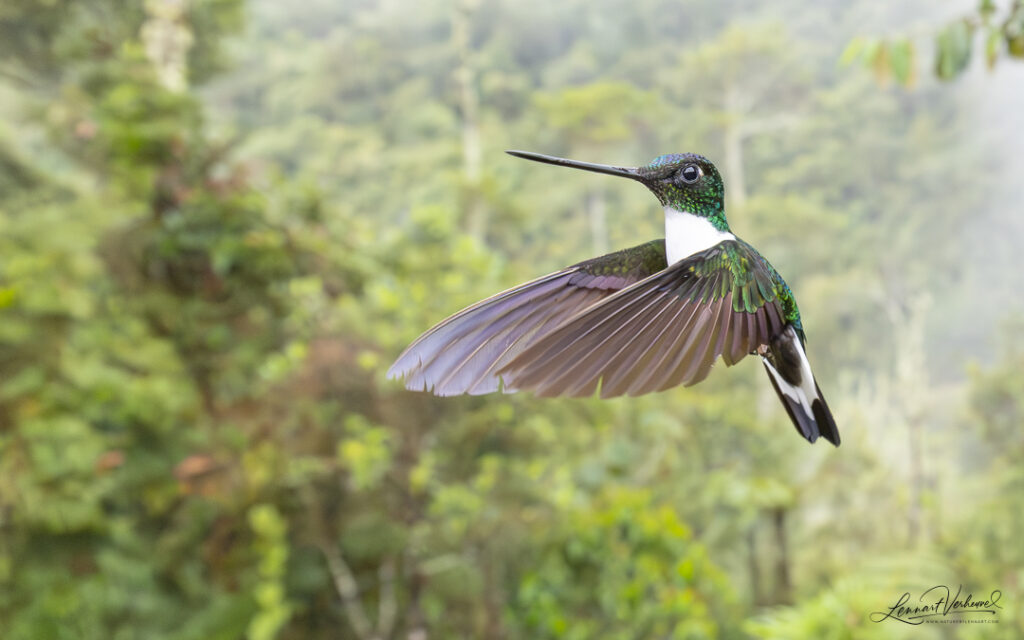
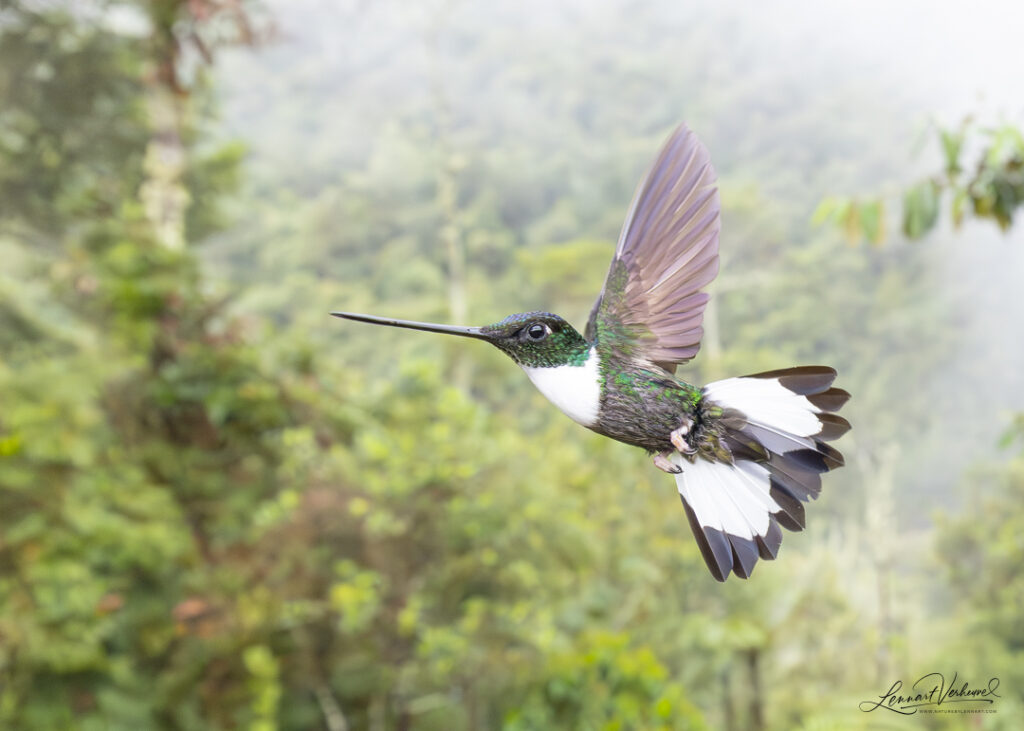
Collared Inca
I also had two excellent opportunities with a male Collared Inca. The final two photographs in this series come from the first encounter, while all the others come from the second. During the latter, the bird flew exceptionally close, allowing every detail to be seen clearly.
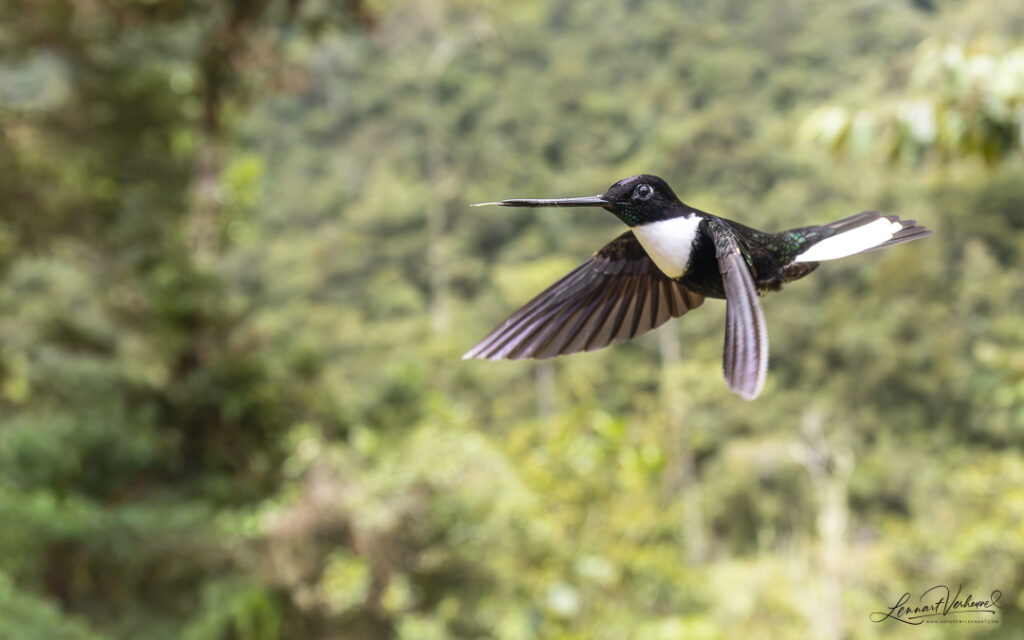
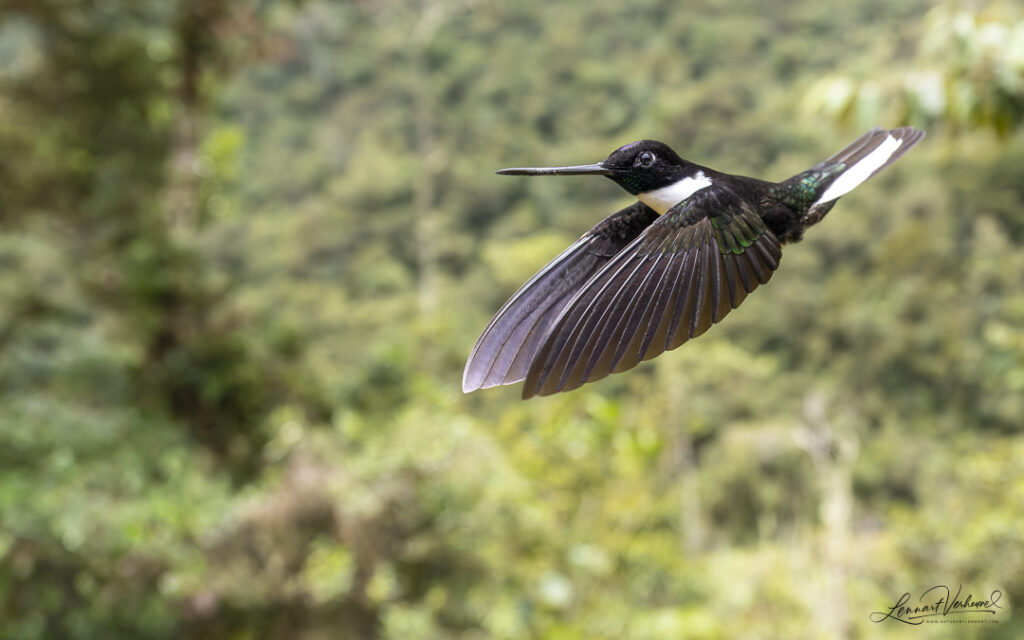
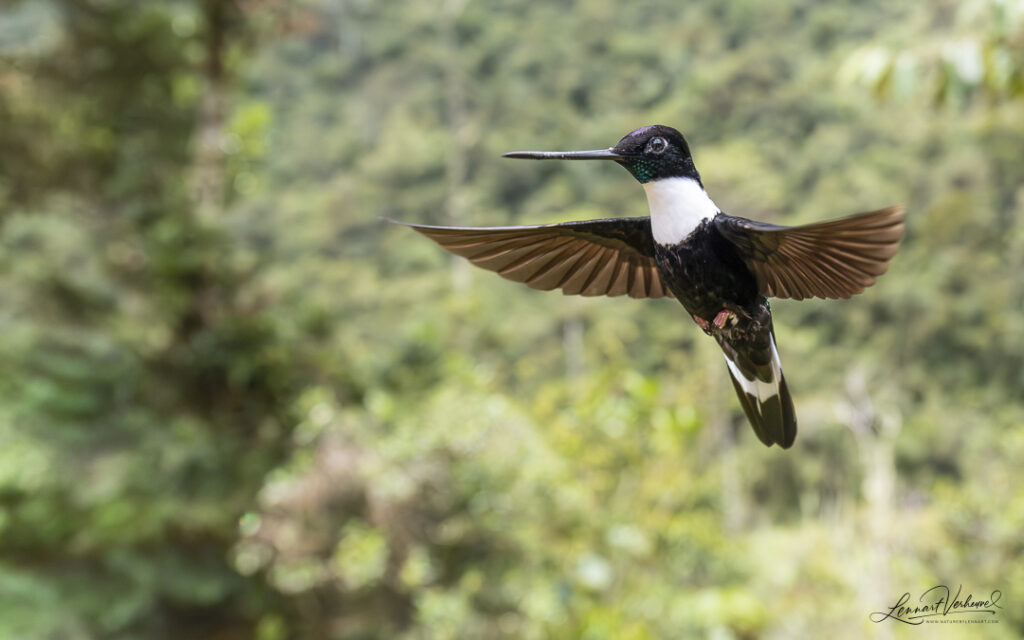
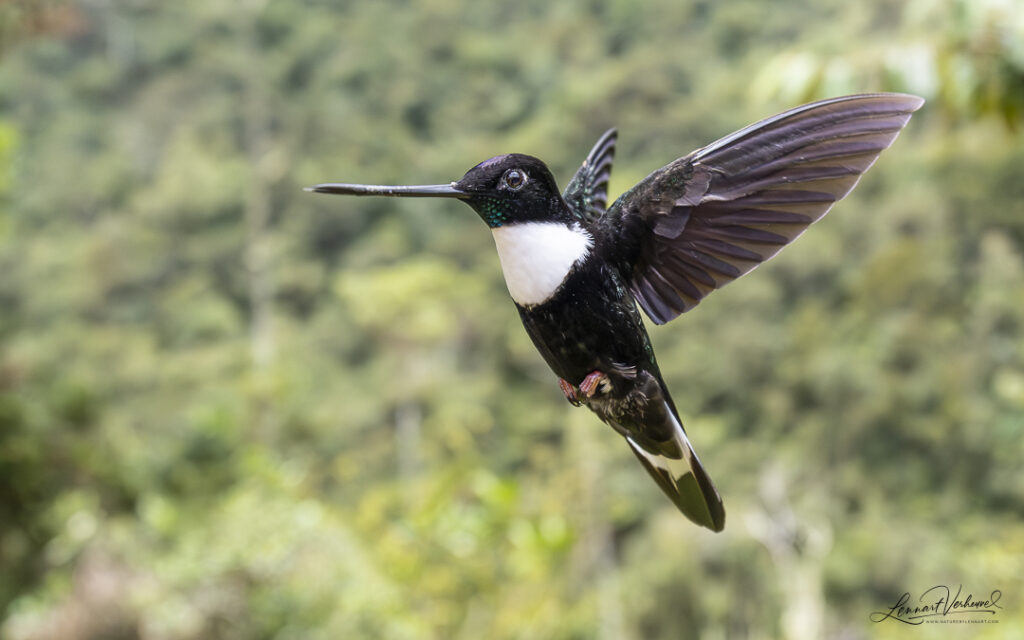
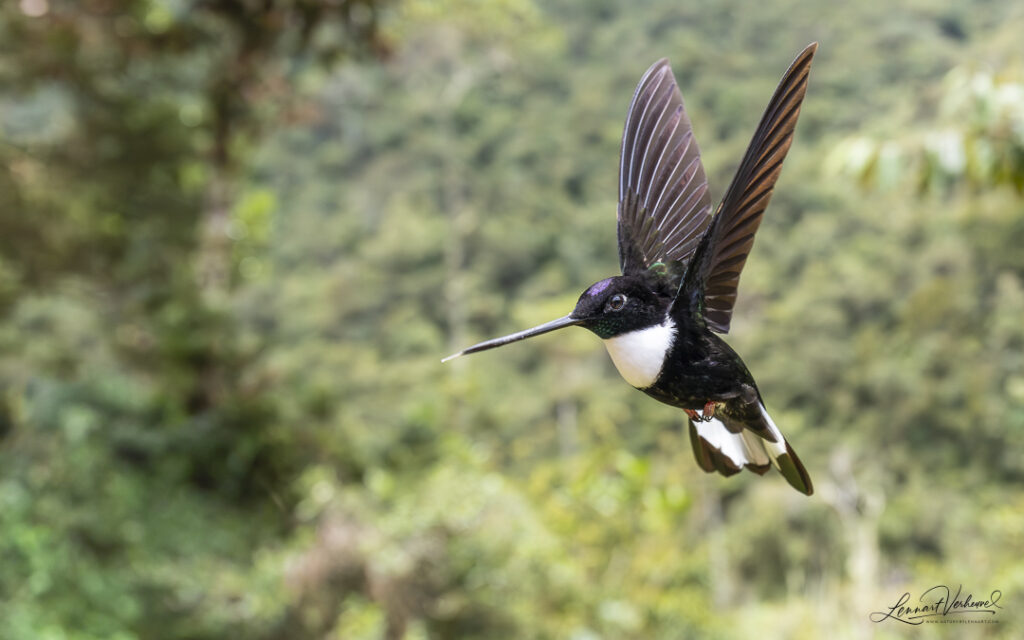
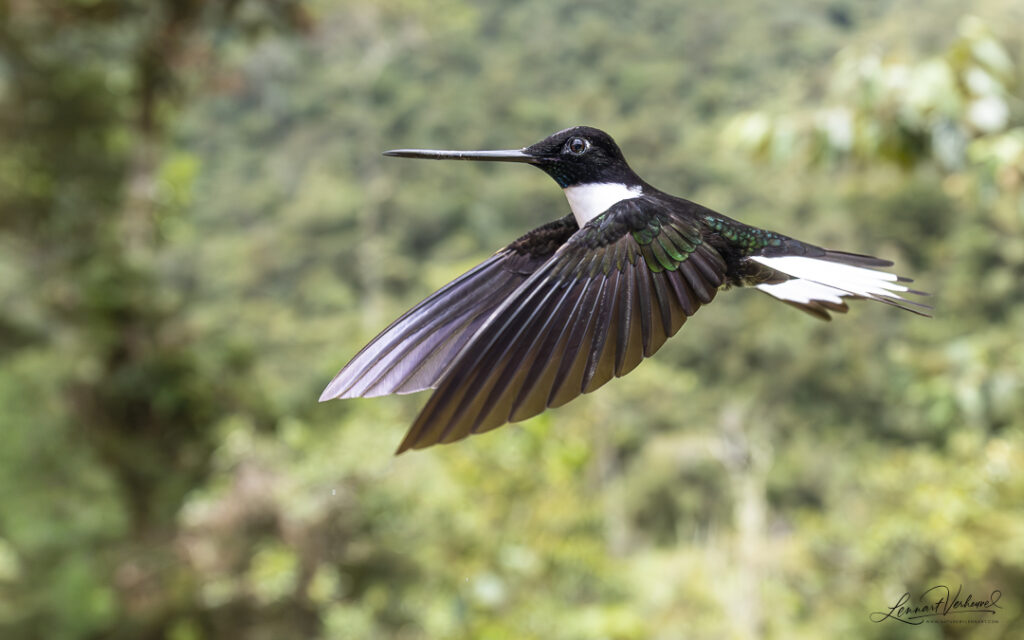
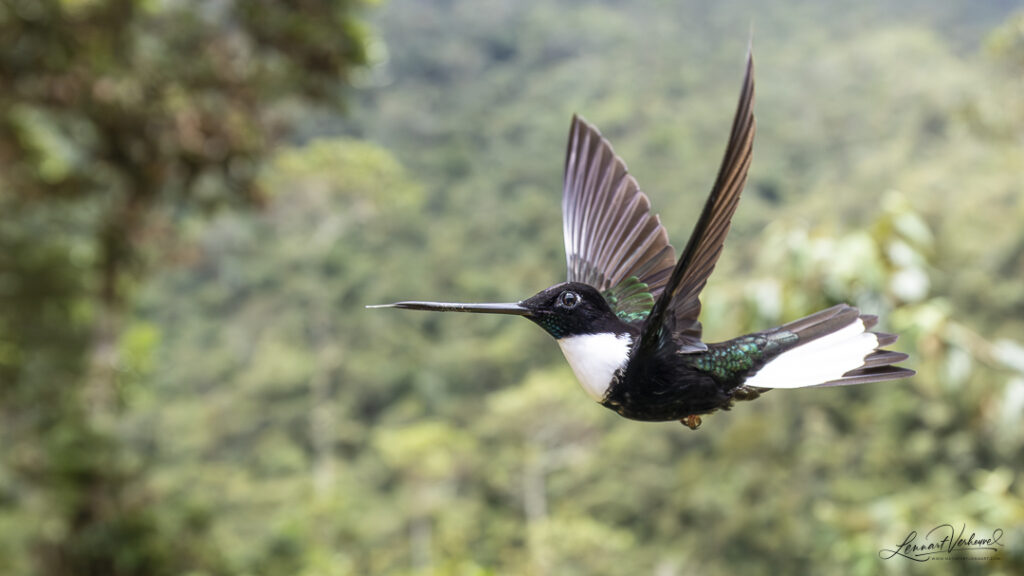
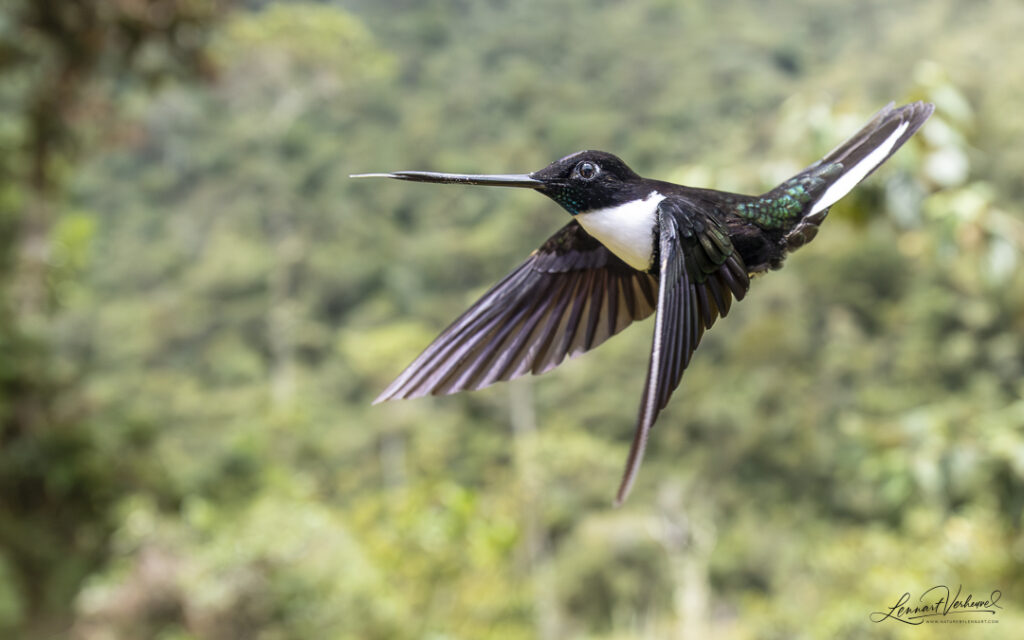
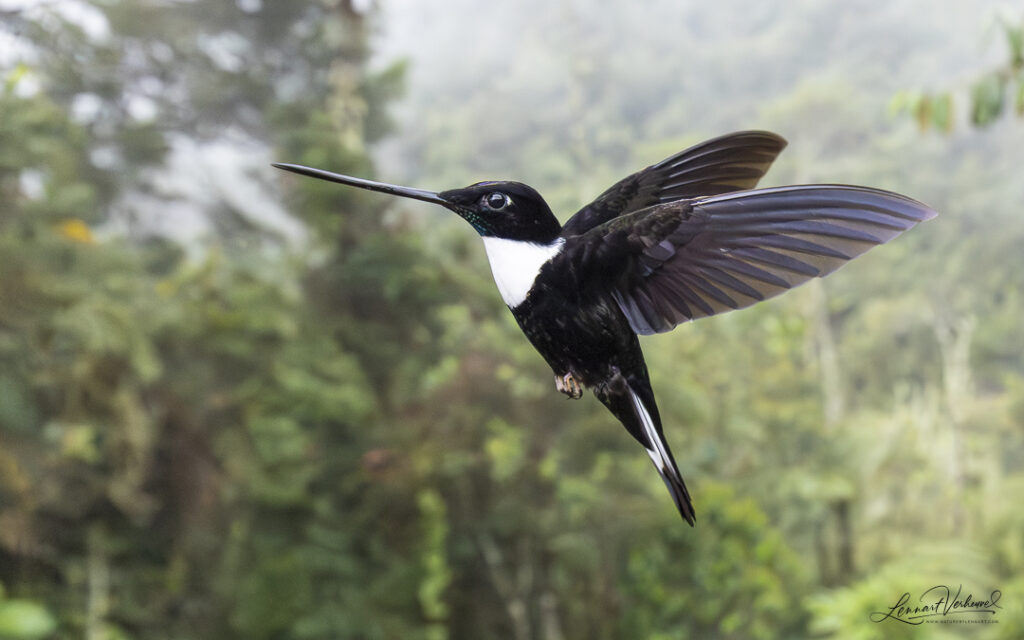
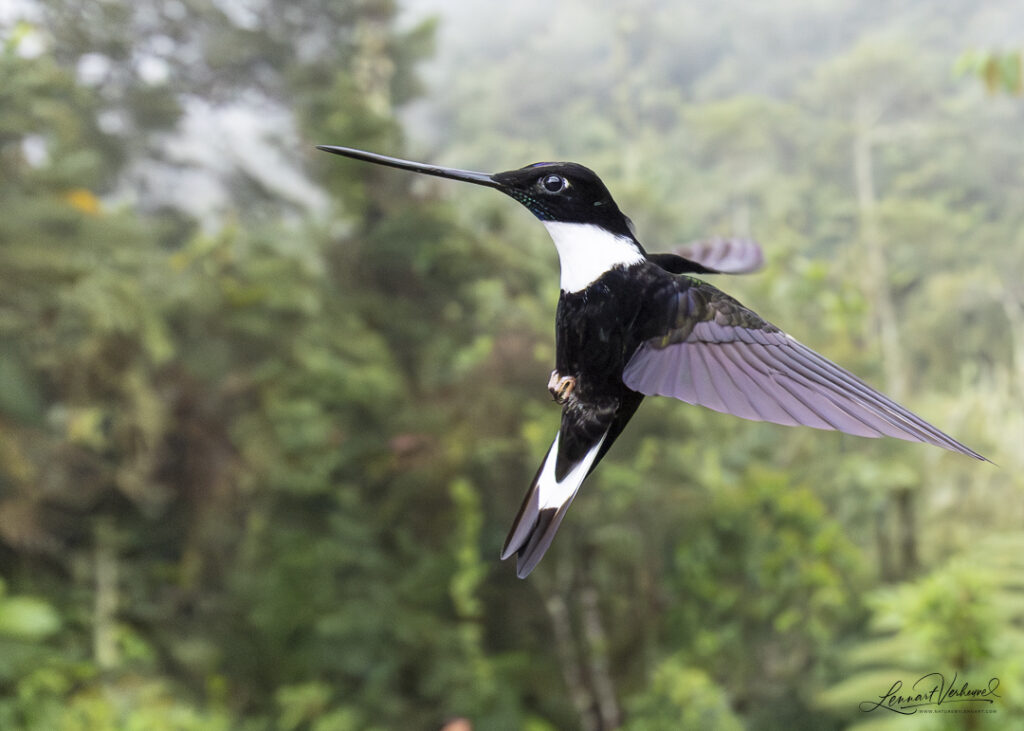
Collared Inca
Buff-tailed Coronet
Most of my photographs, however, were of Buff-tailed Coronet. At Mirador El Roble, it proved to be the most common hummingbird and seemed to be present almost constantly. I was able to take advantage of its habit of perching nearby, which allowed me to photograph interactions between flying and perched birds.
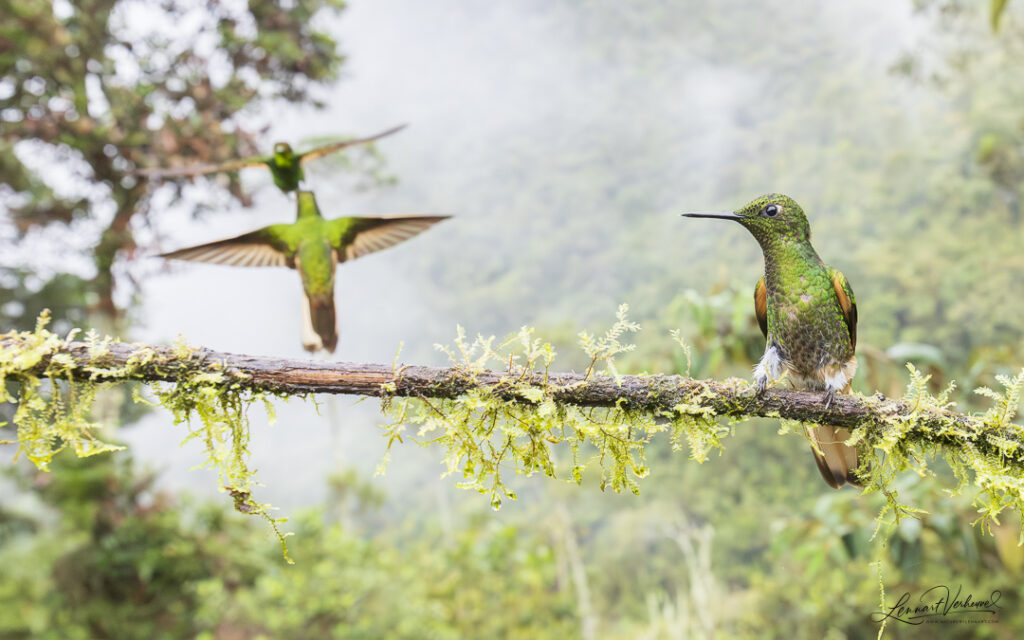
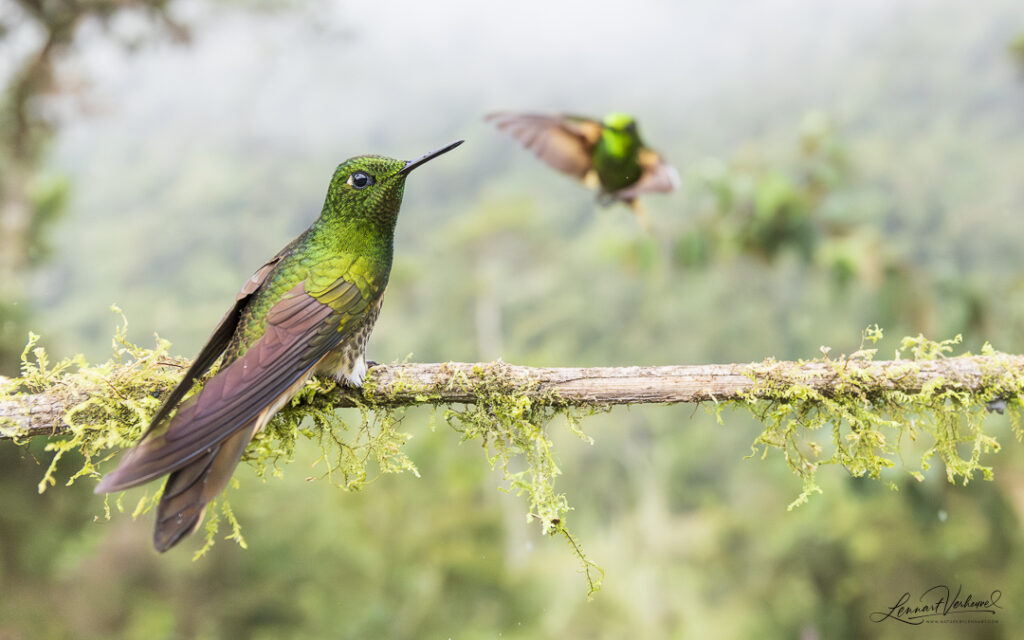
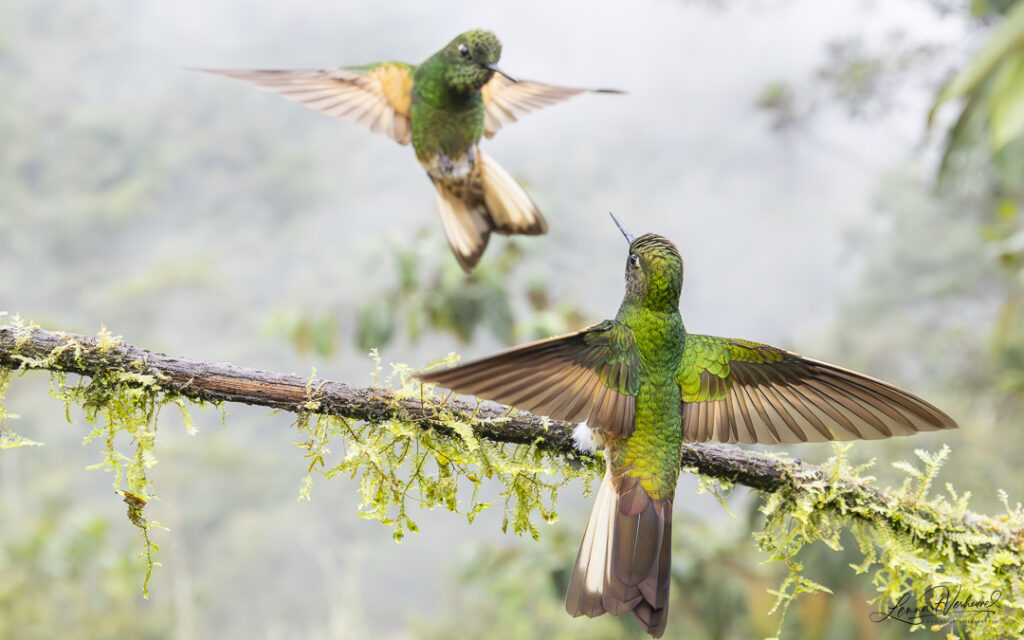
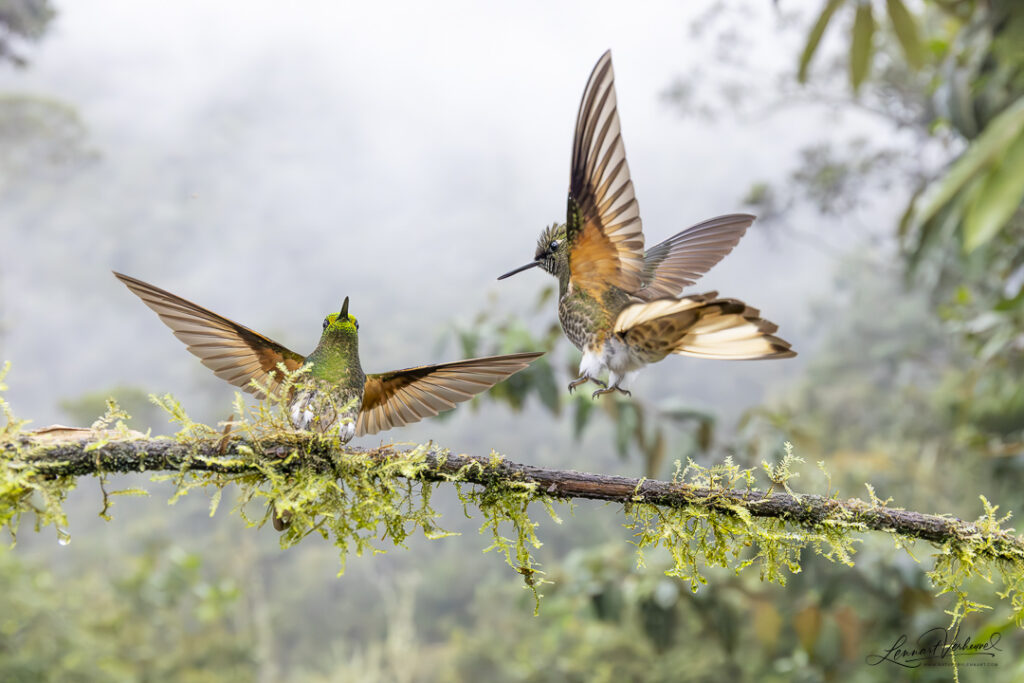
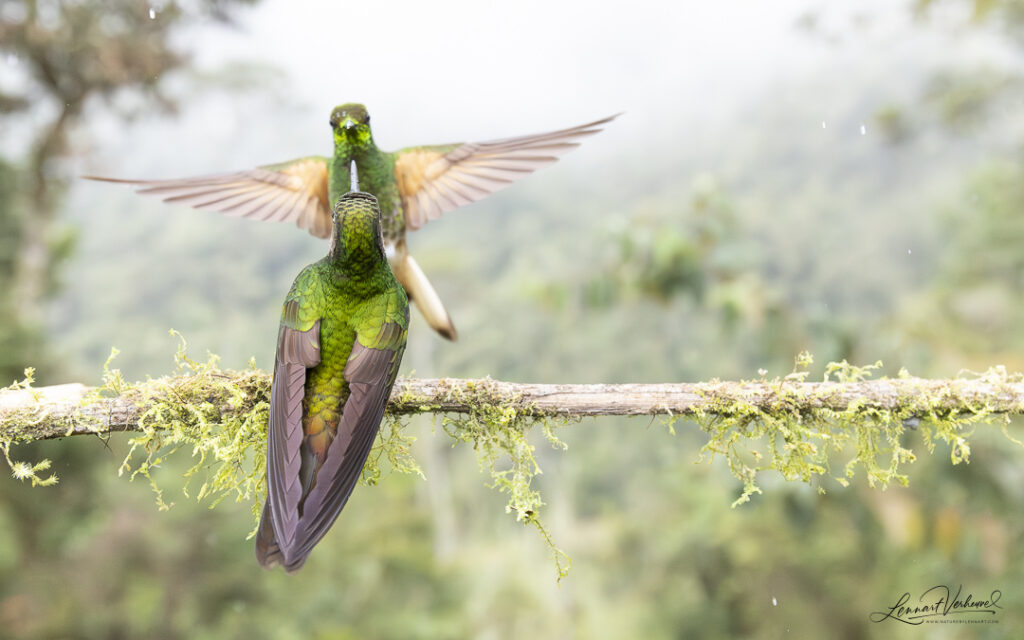
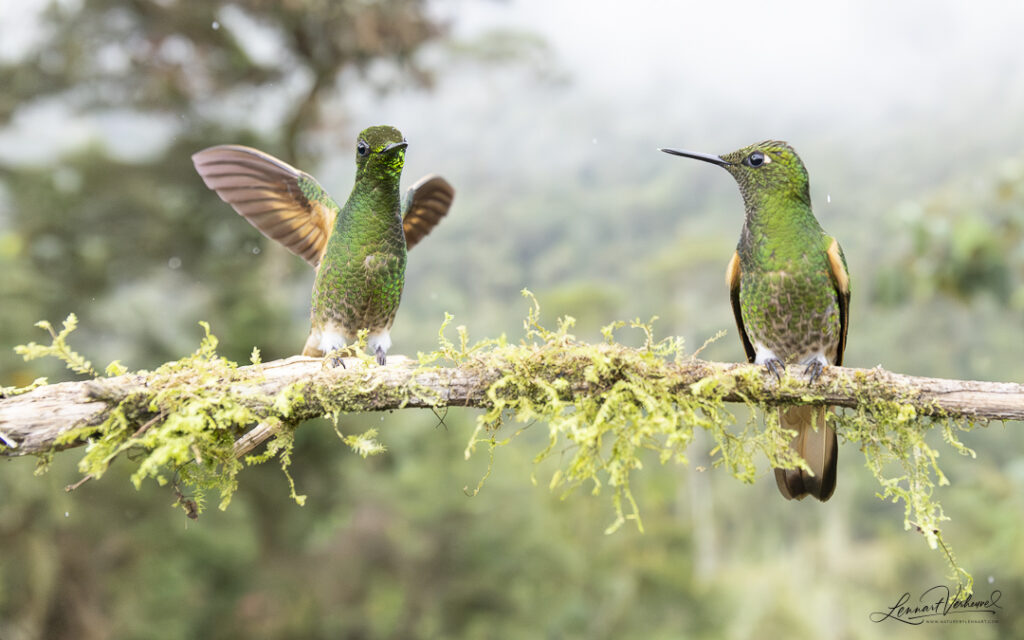
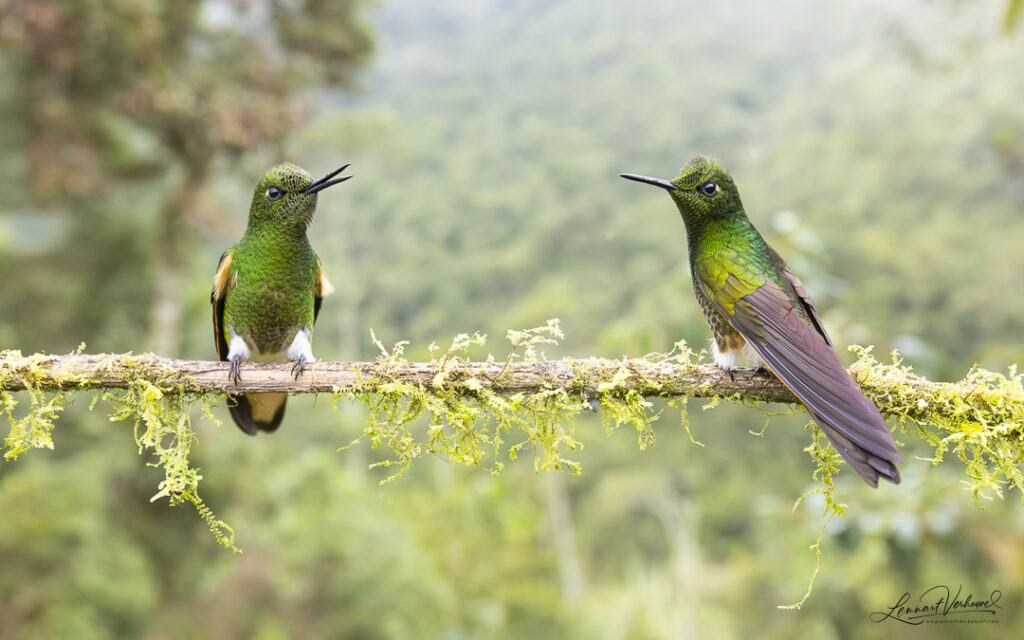
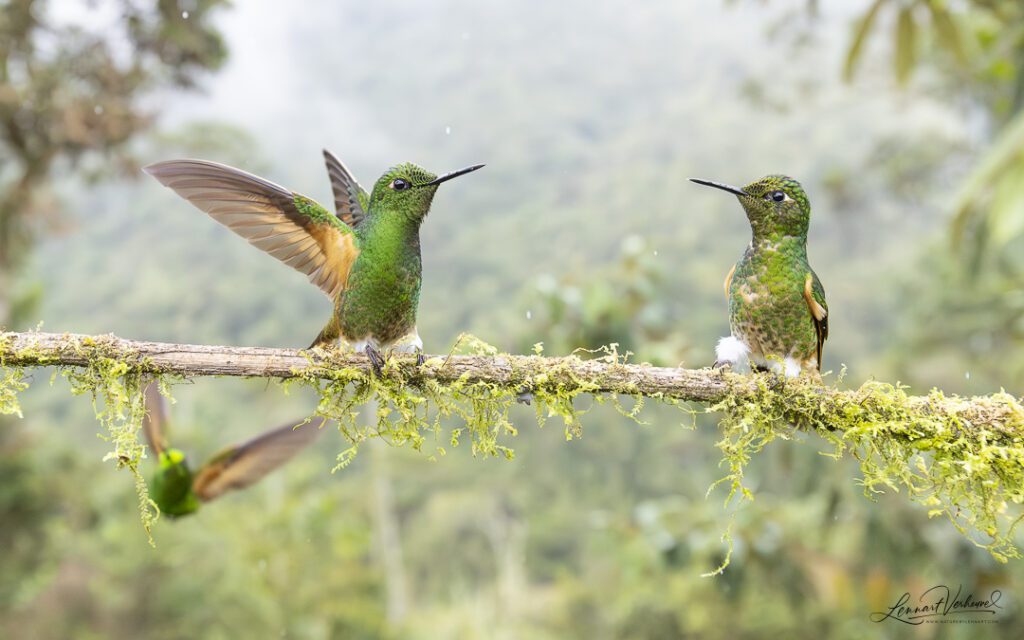
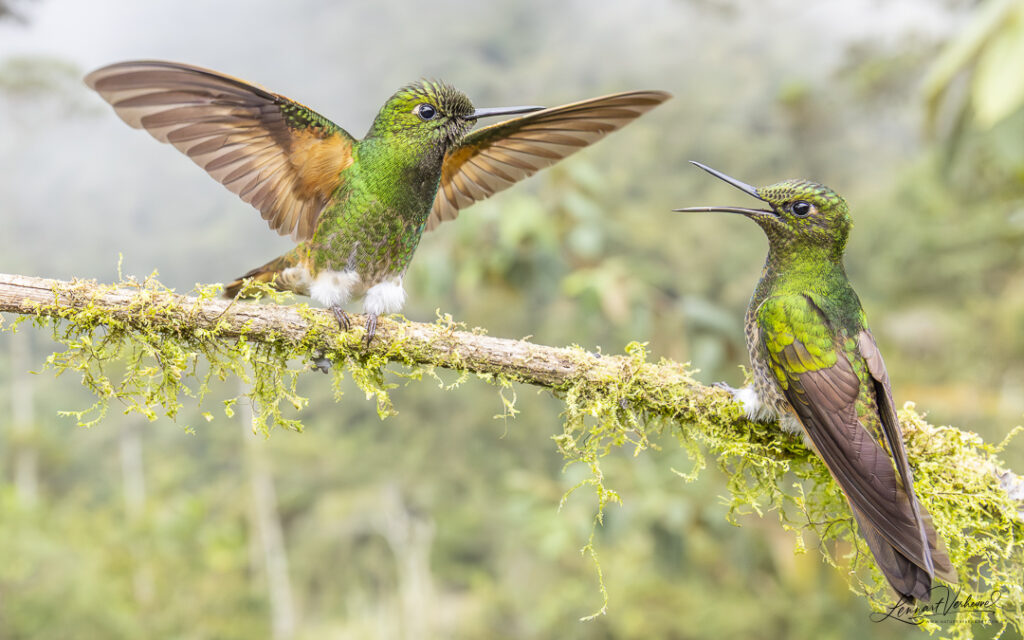
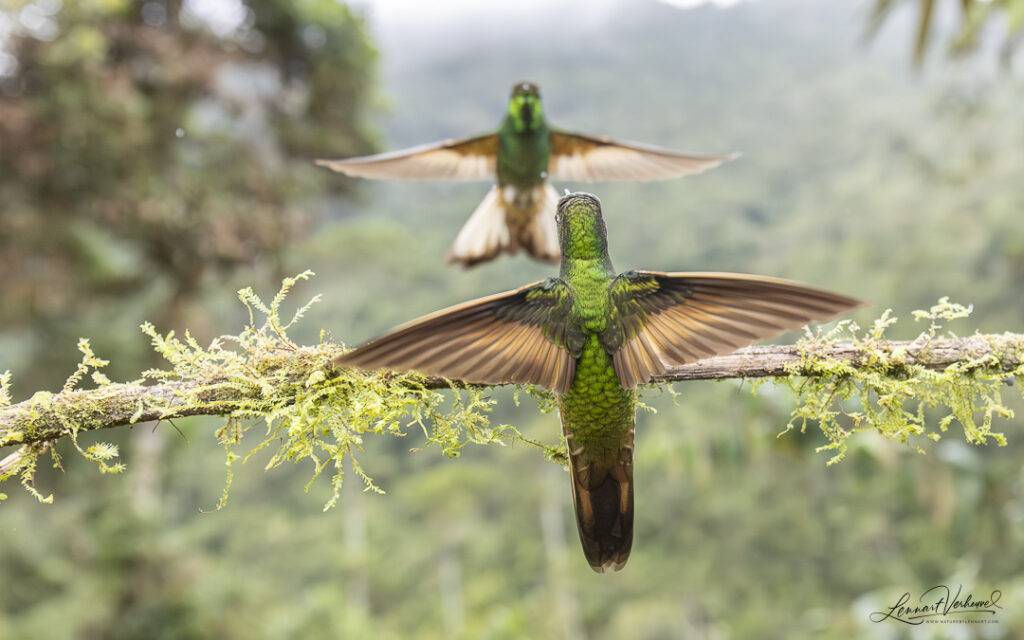
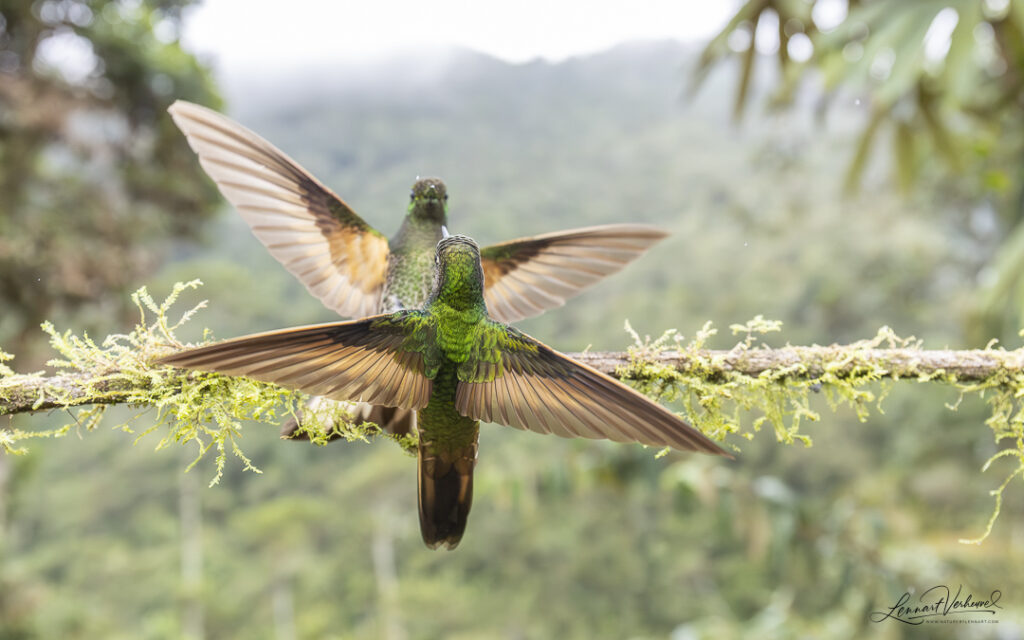
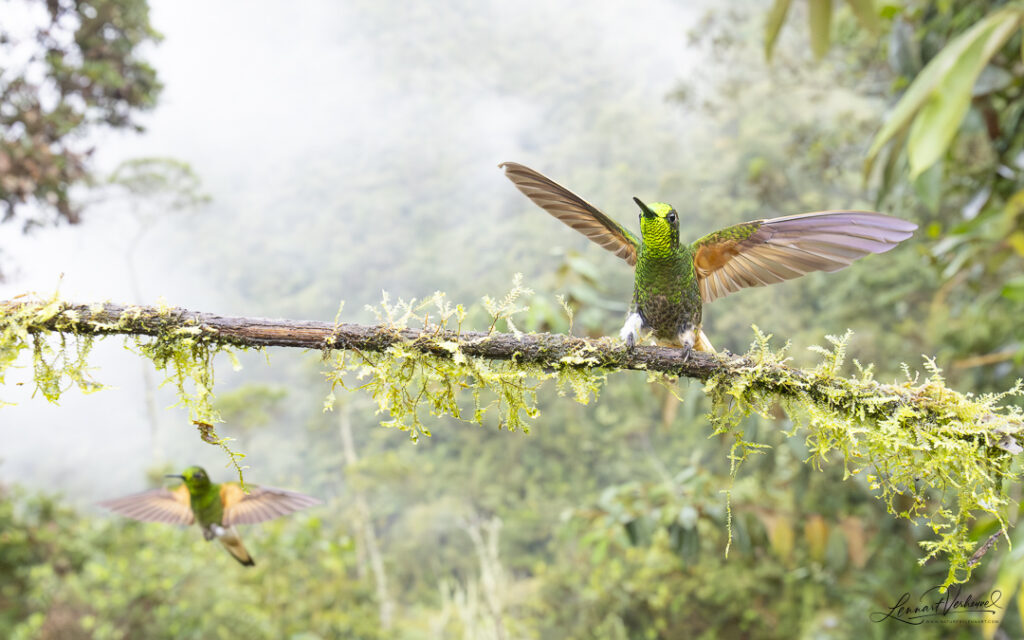
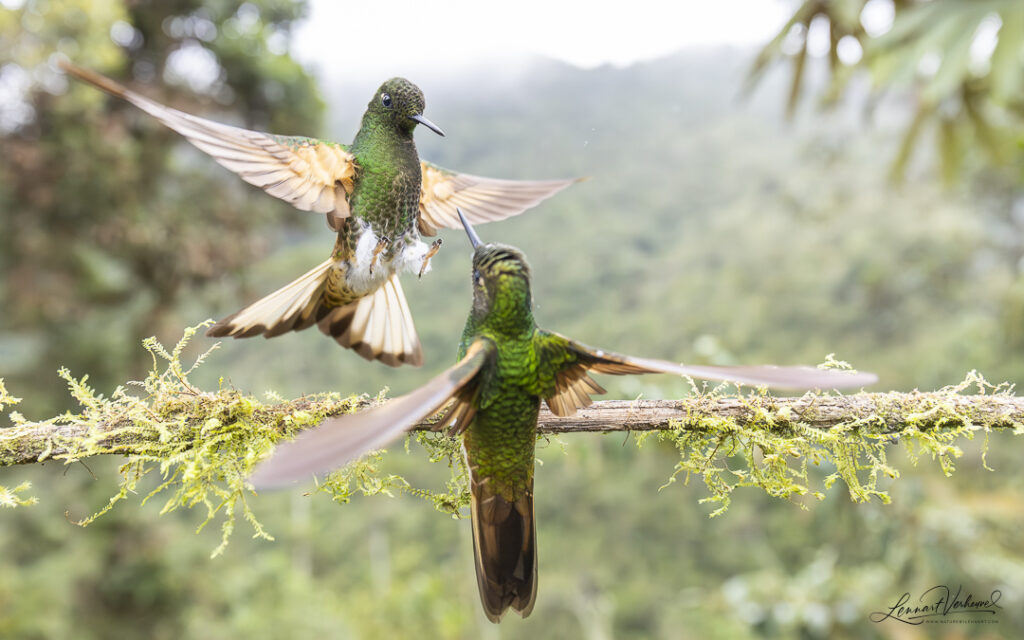
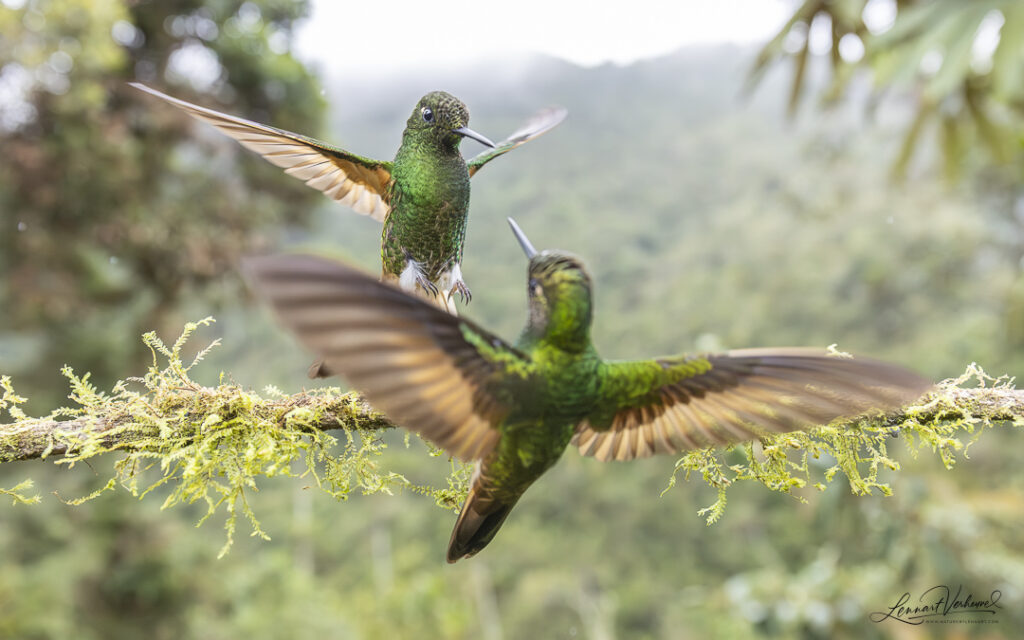
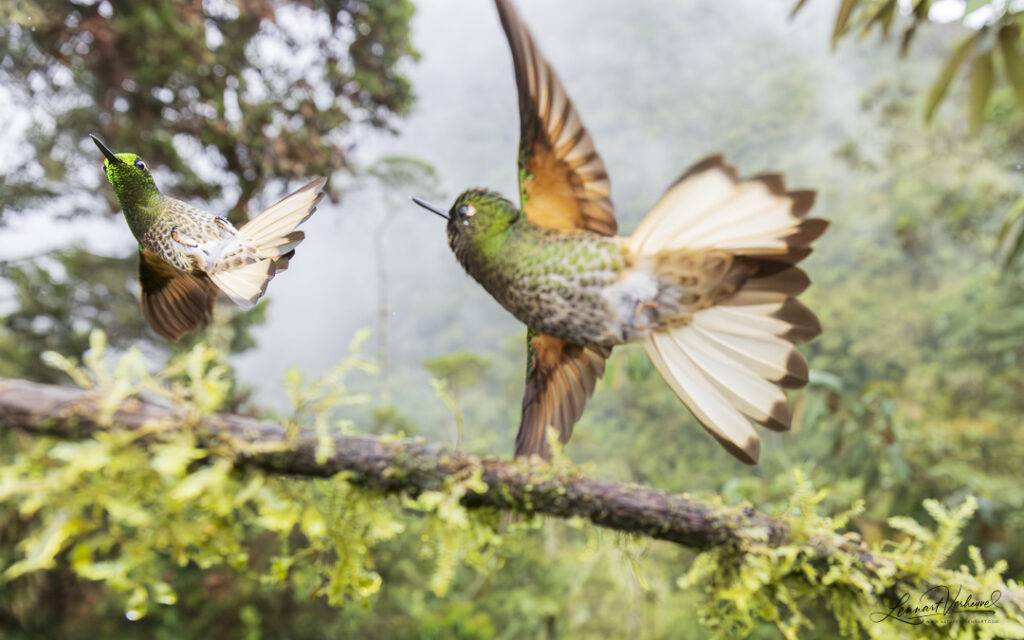
Buff-tailed Coronet
Naturally, there were also plenty of opportunities to photograph birds in flight.
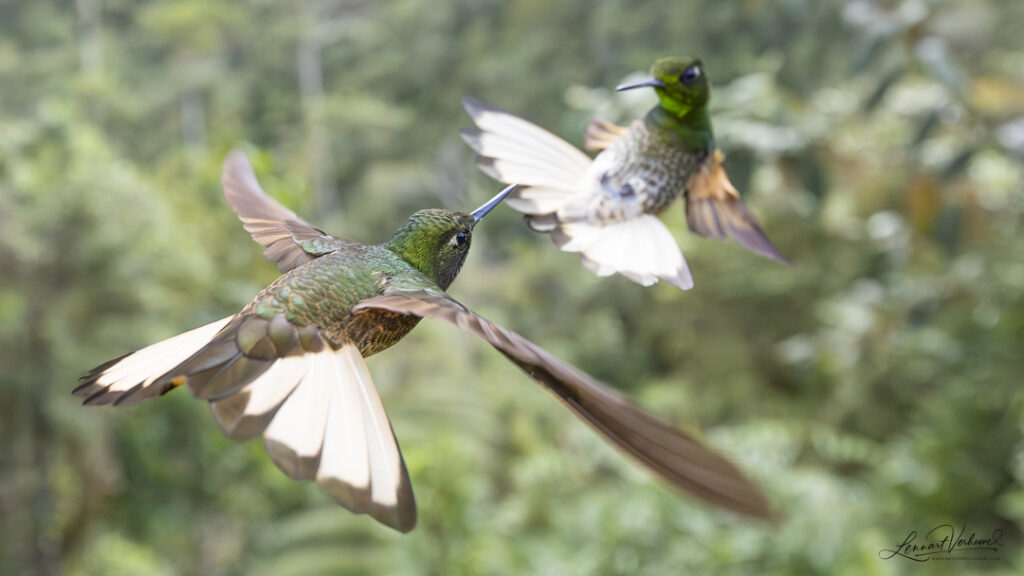
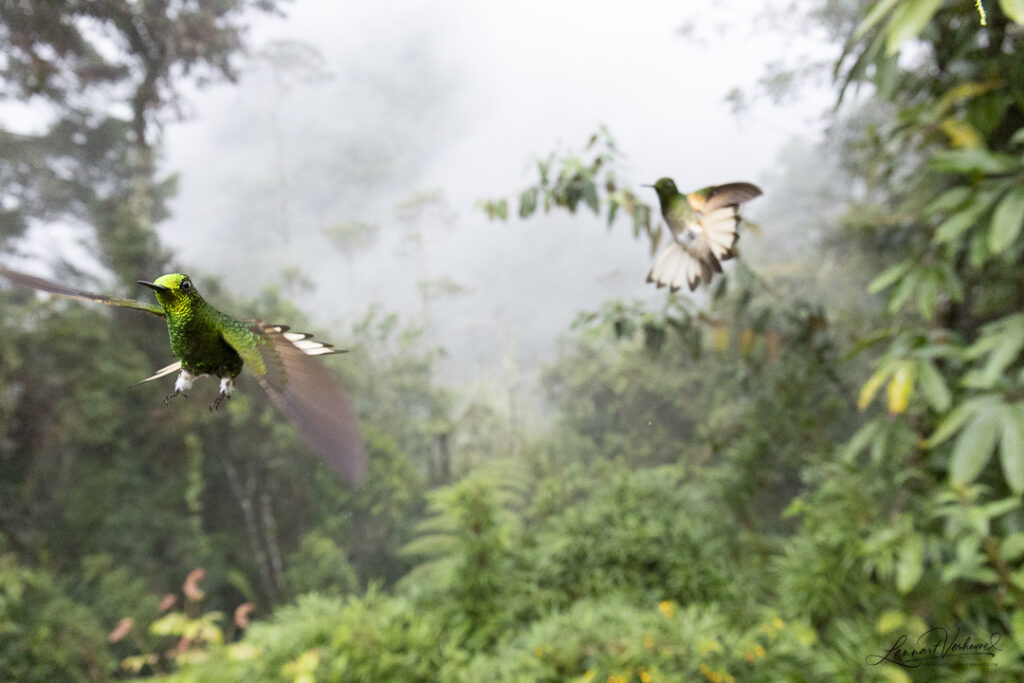
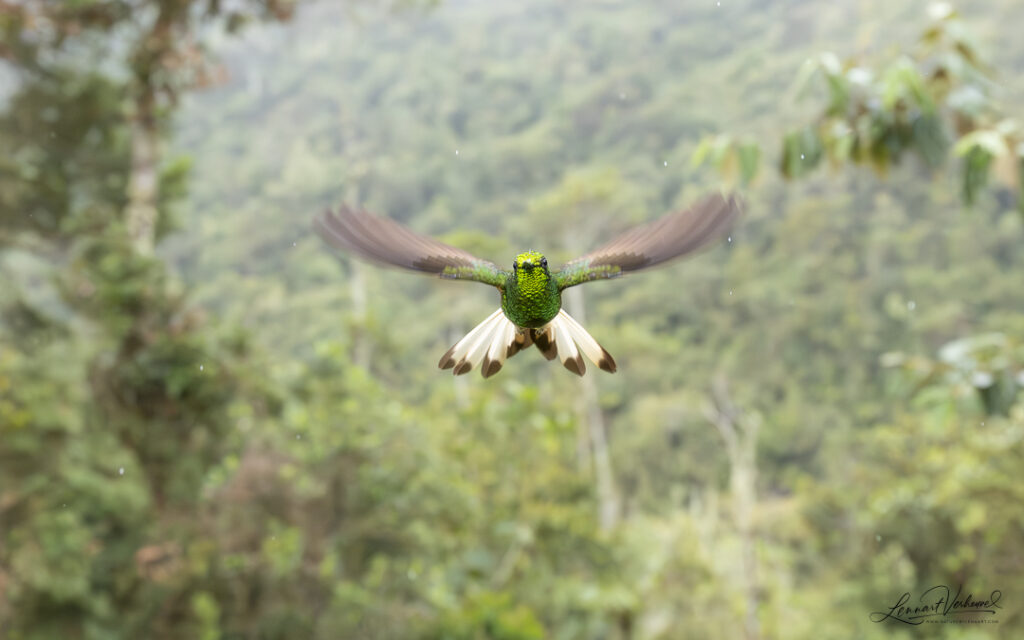
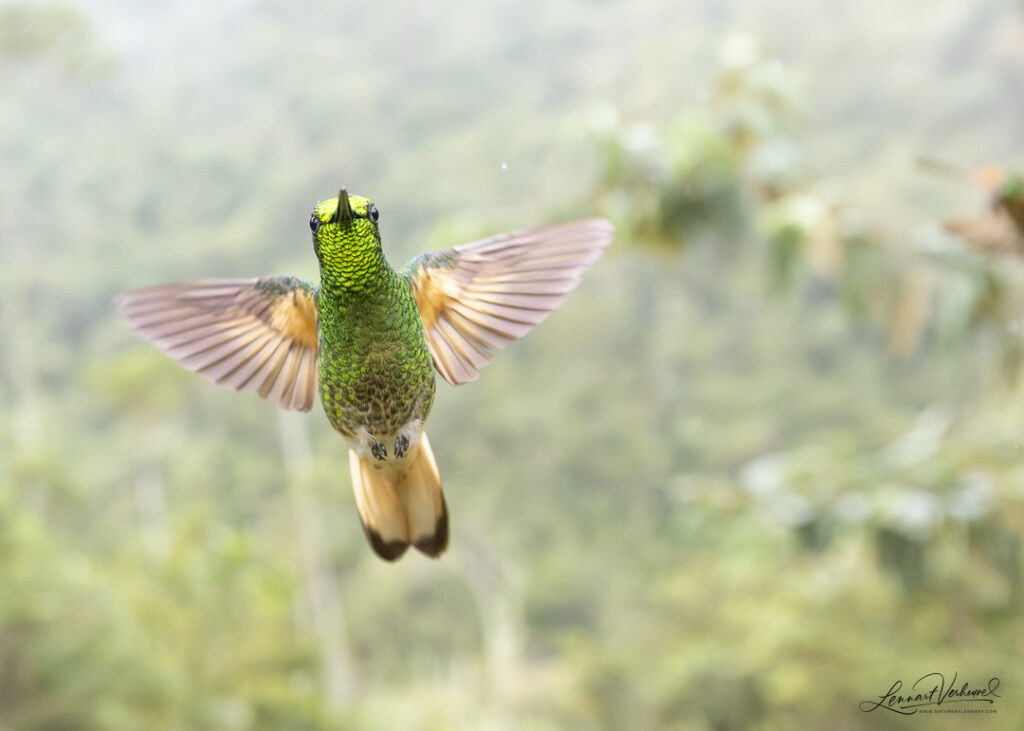
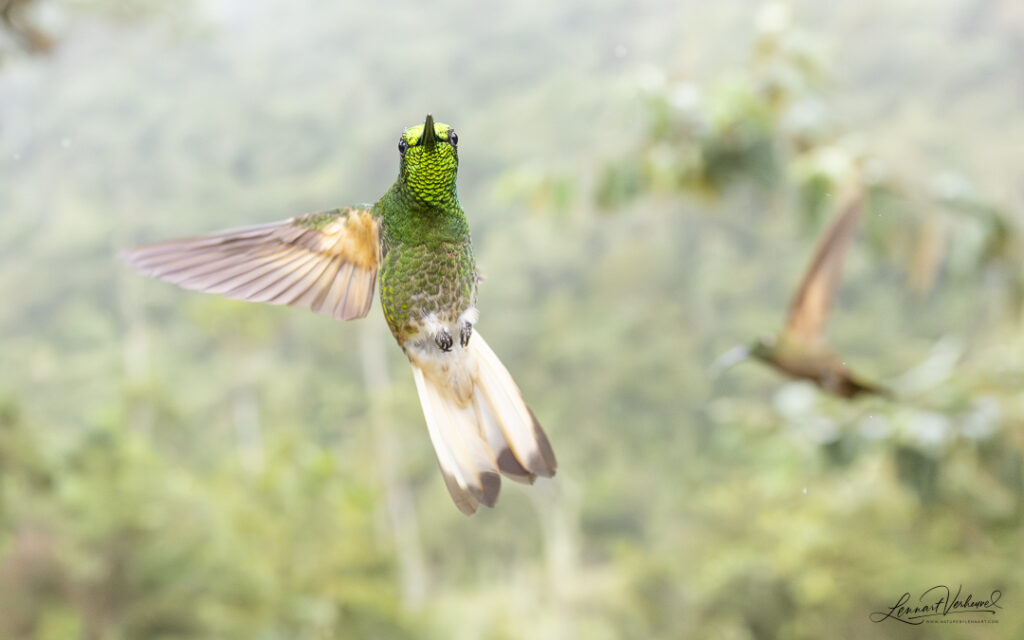
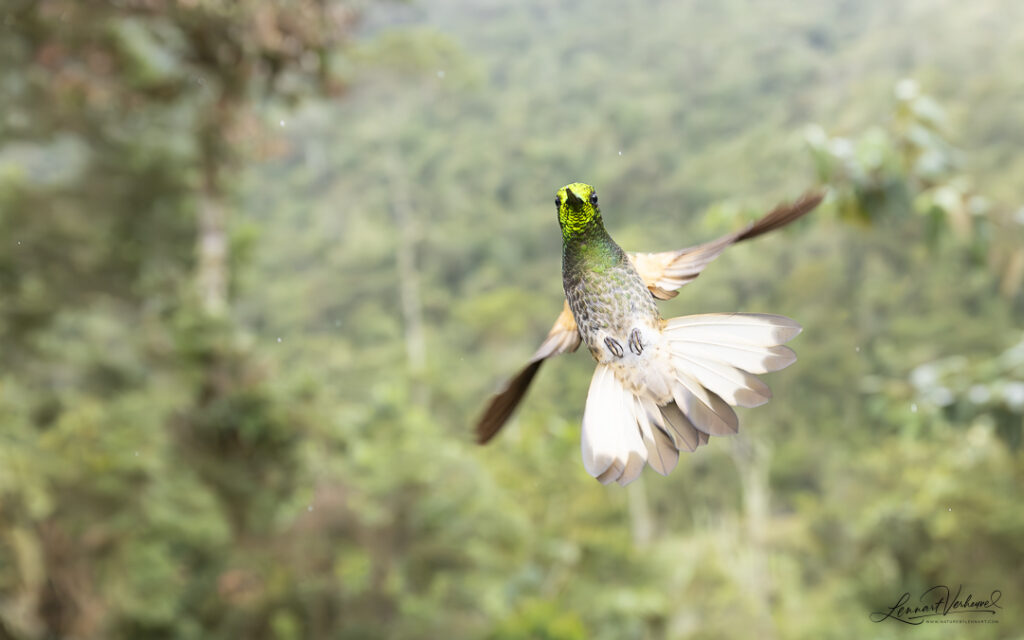
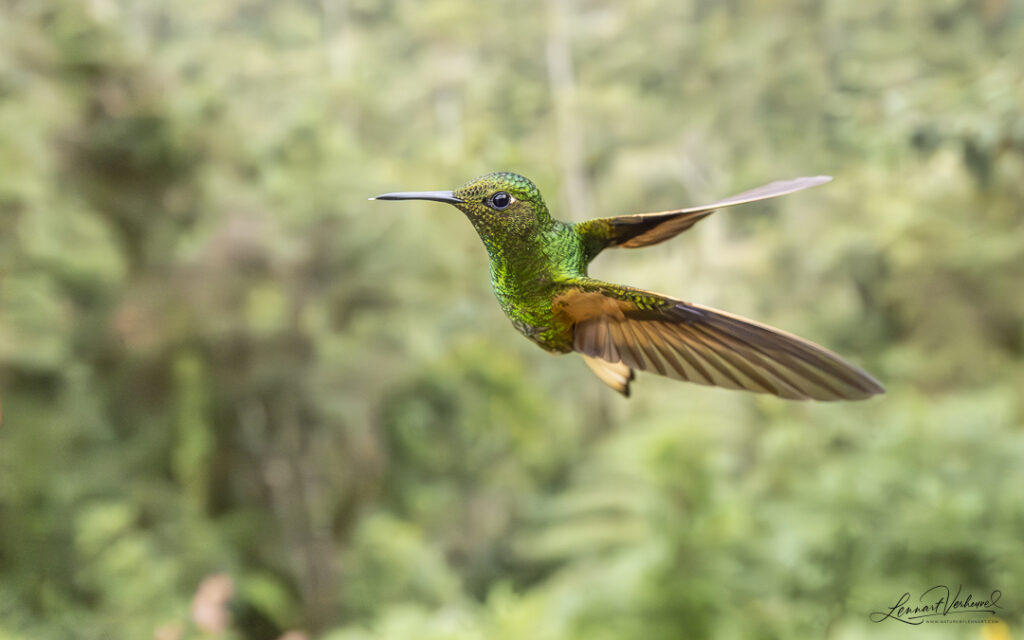
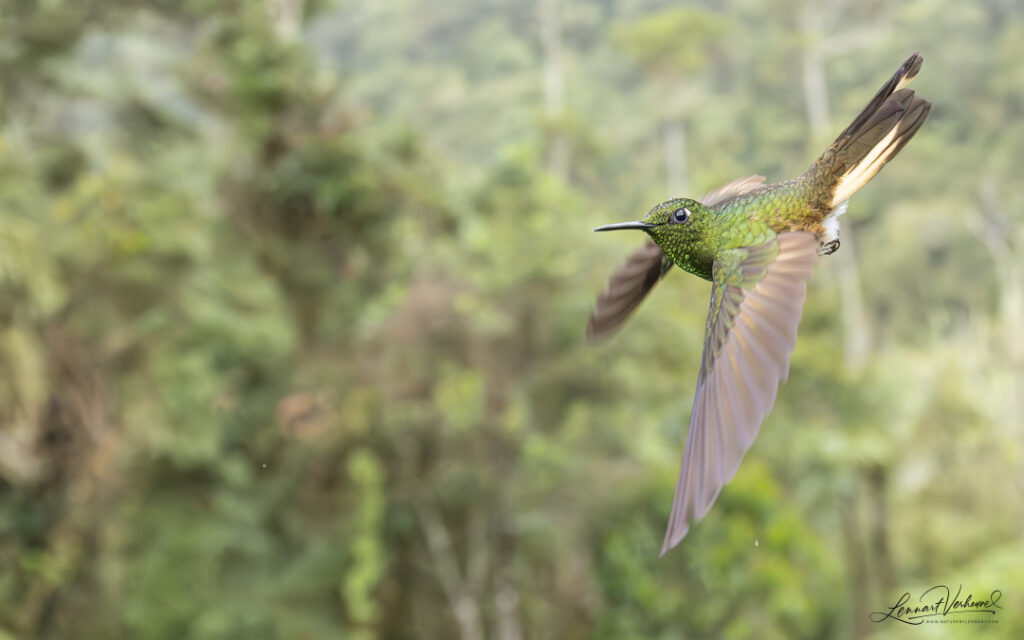
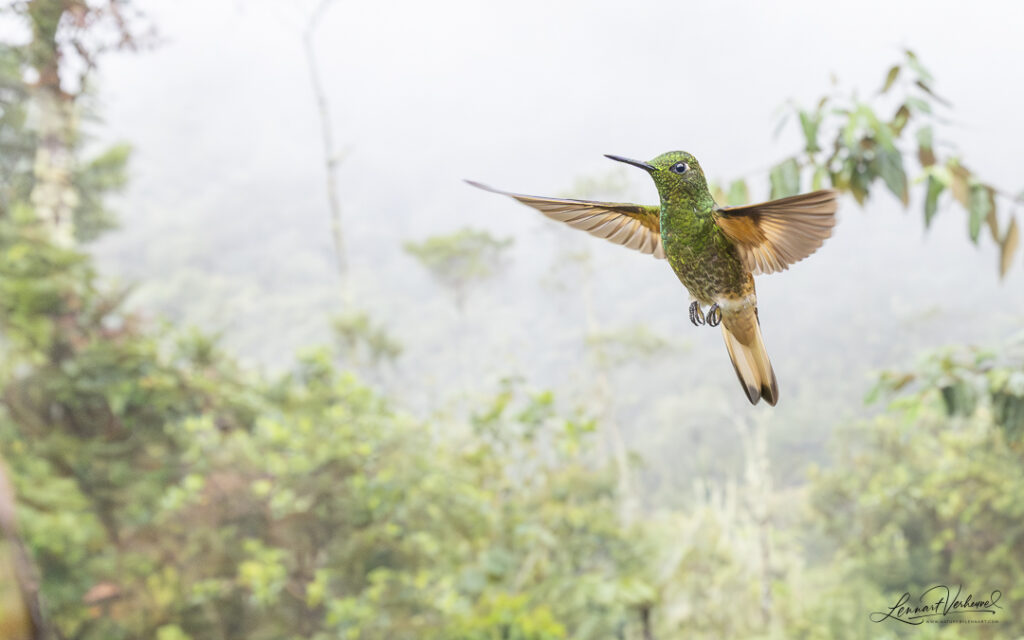
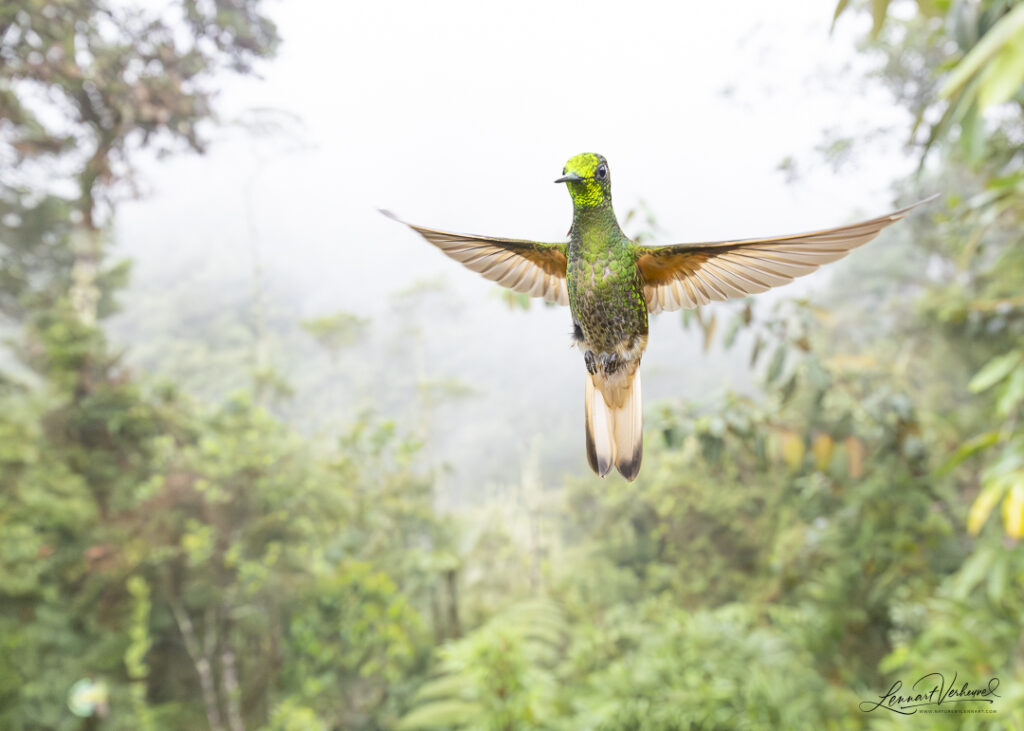
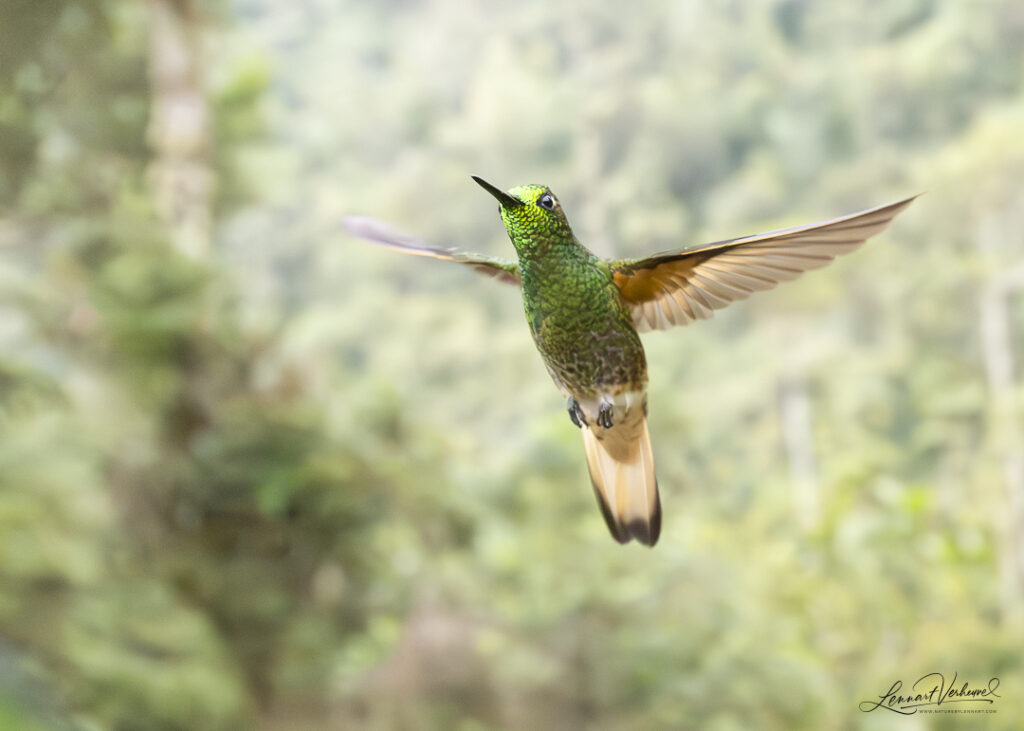
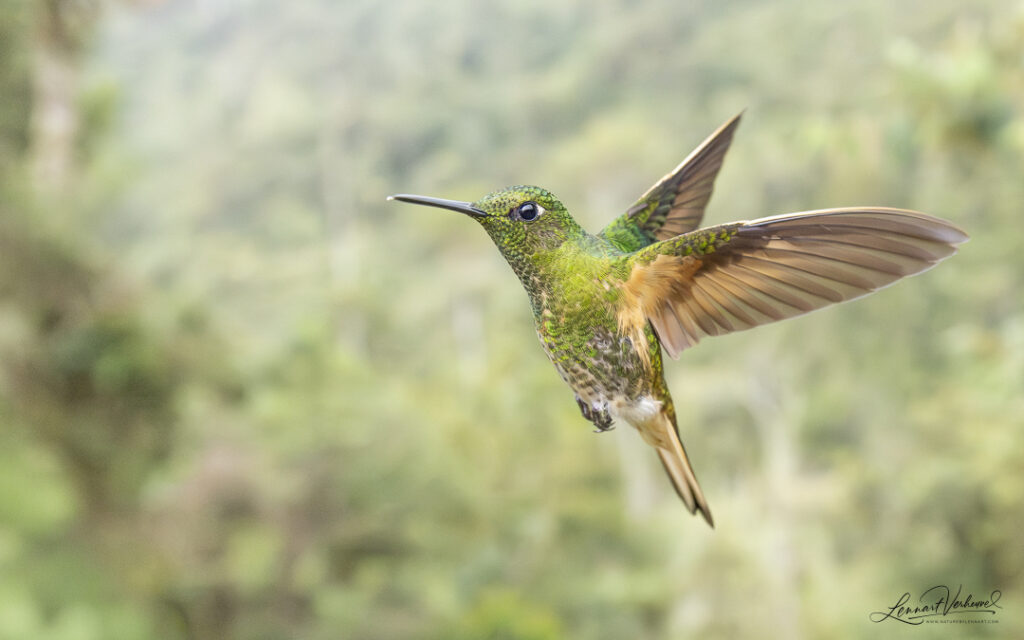
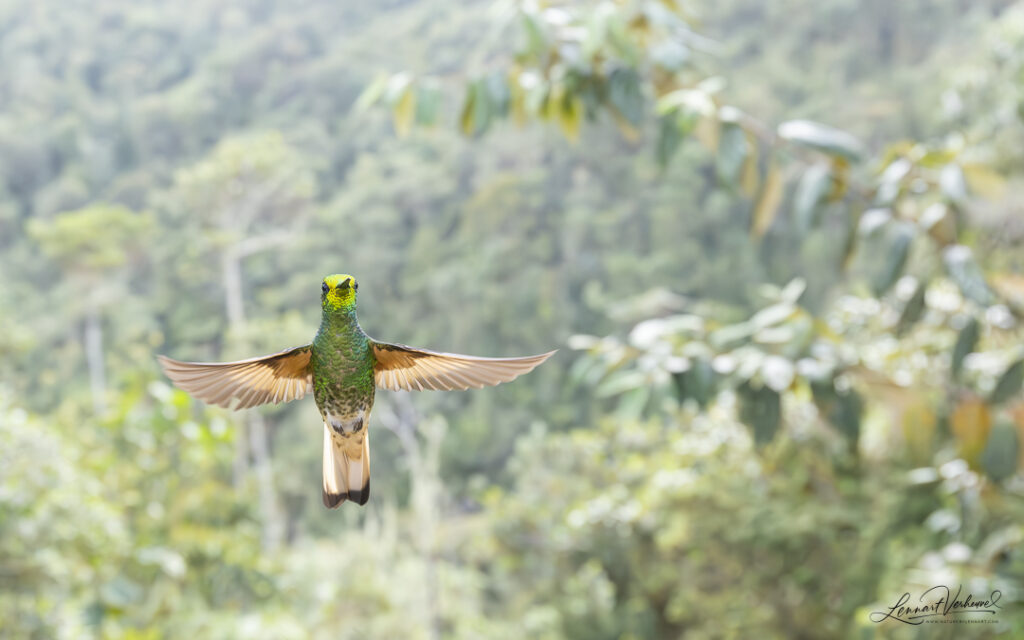
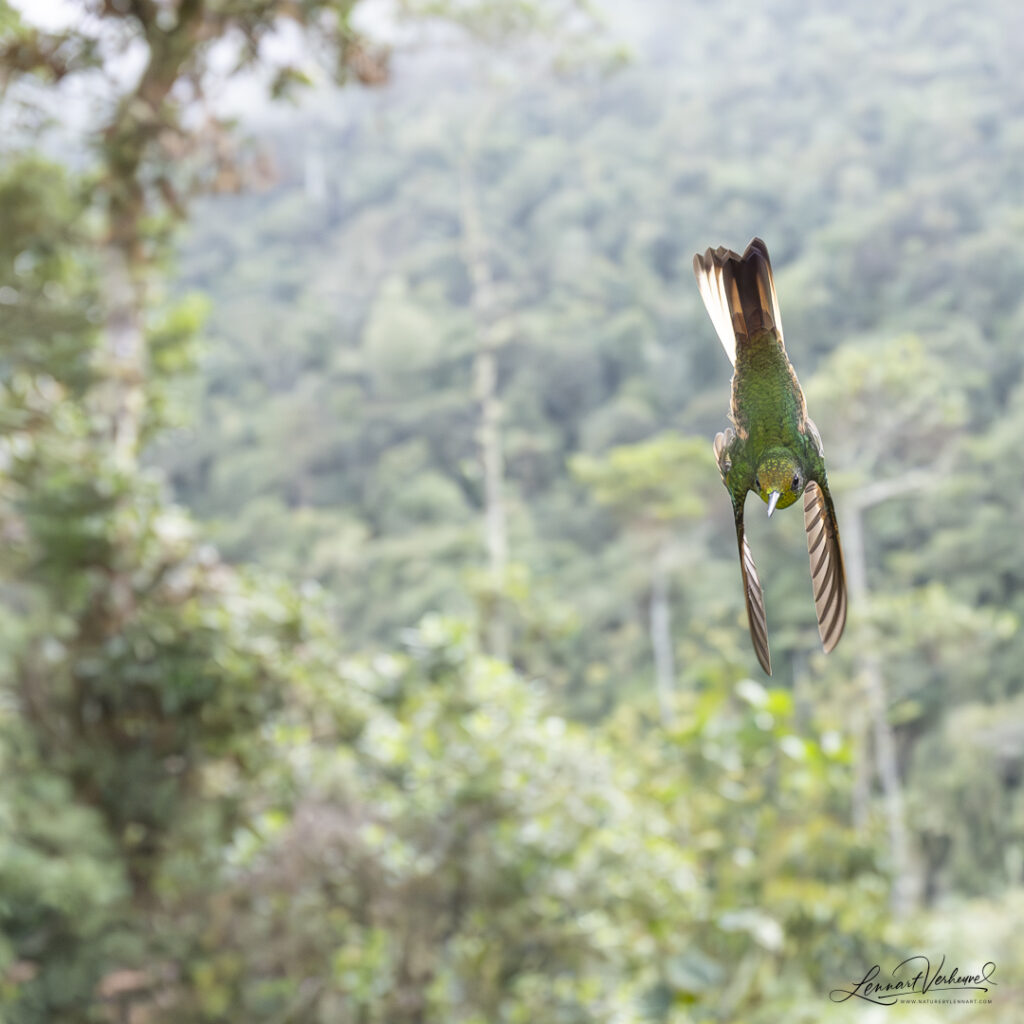
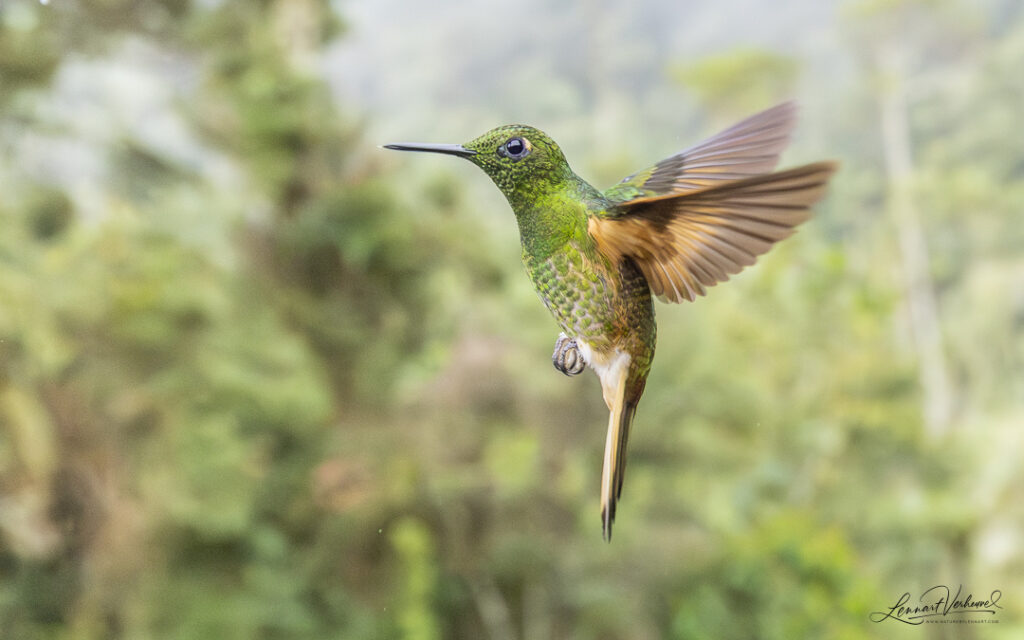
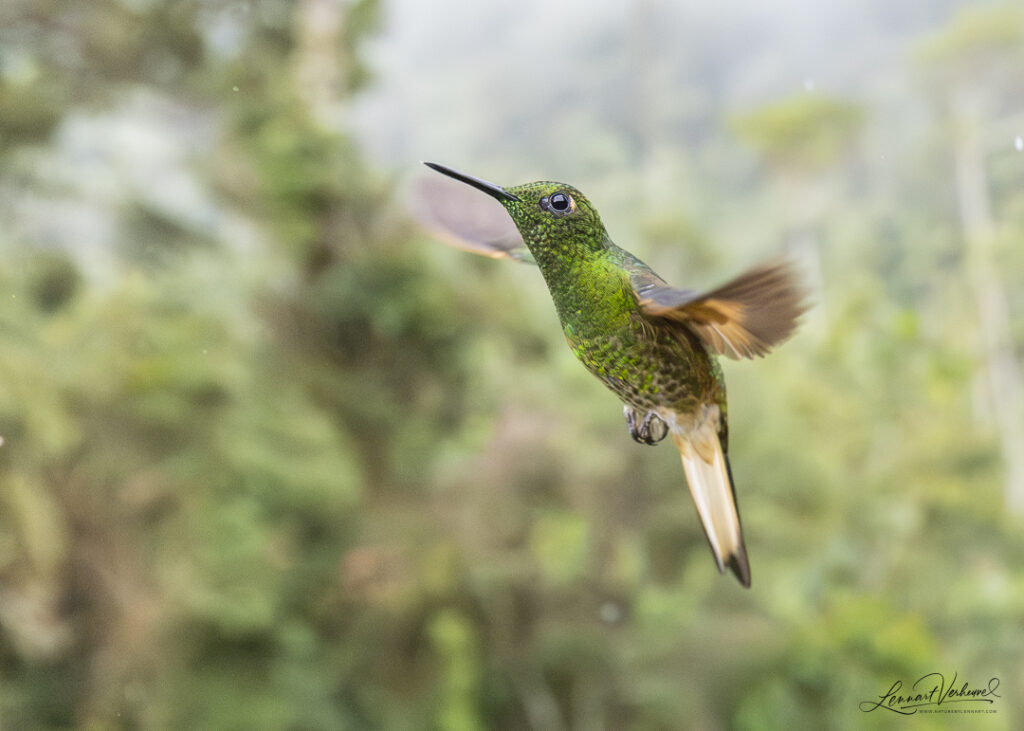
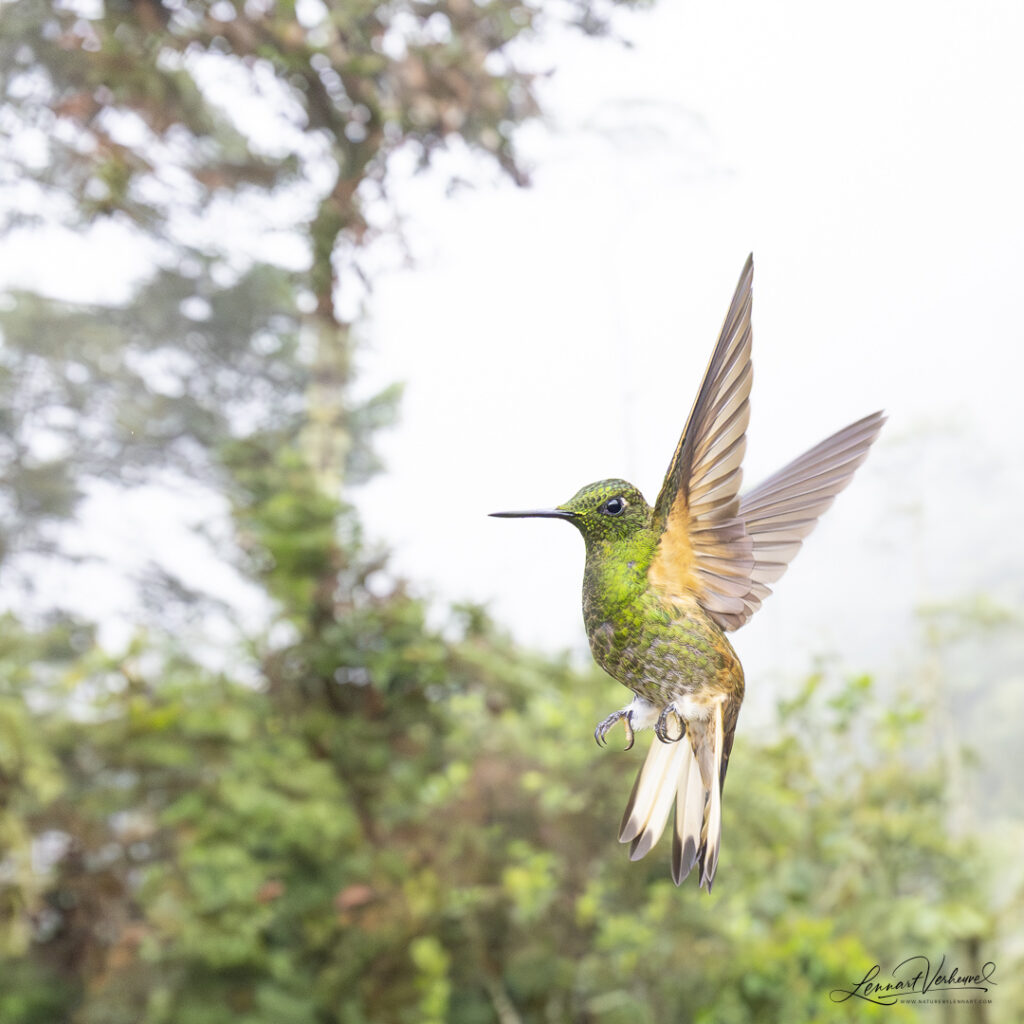
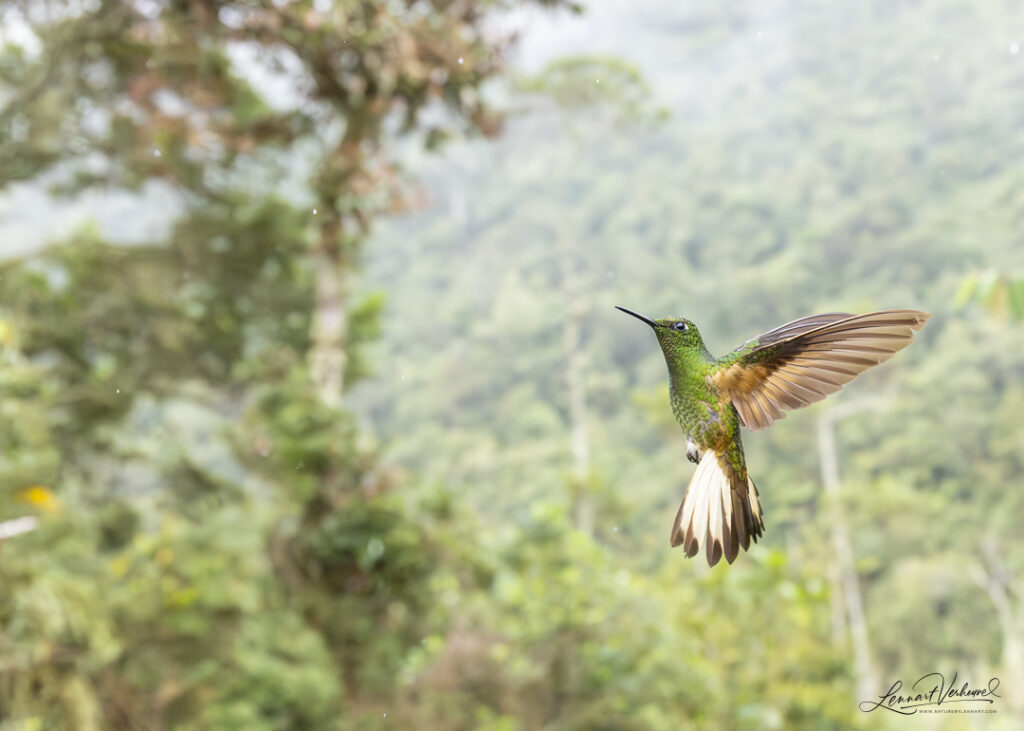
Buff-tailed Coronet
I even managed to capture a frame featuring both a Collared Inca and a Buff-tailed Coronet!
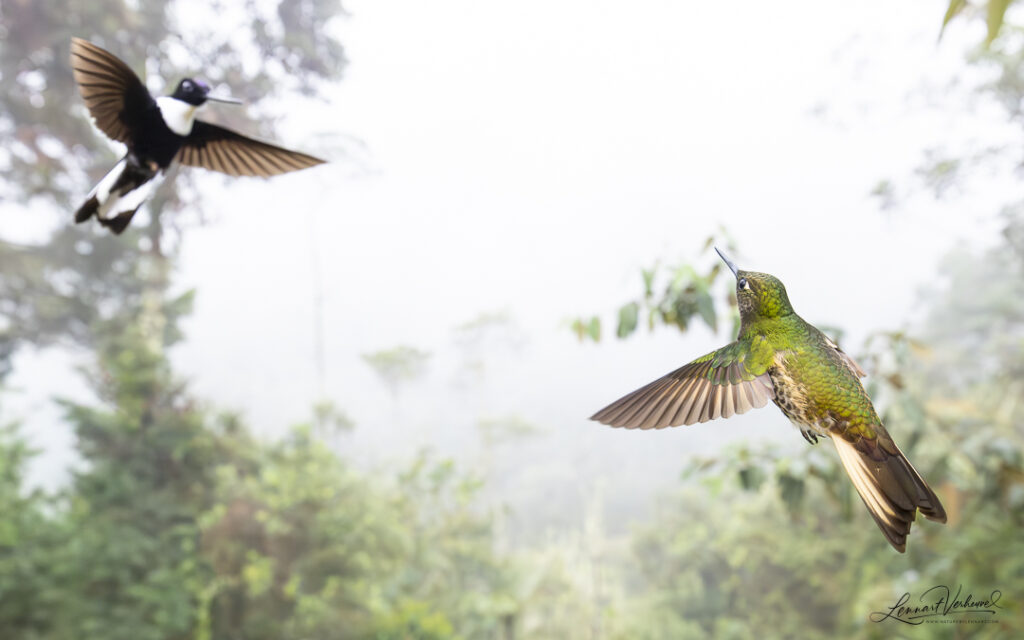
Buff-tailed Coronet with Collared Inca
In fact, Buff-tailed Coronet was often one of the two species involved whenever I managed to capture more than one species in the same image. They are highly aggressive birds, both towards each other and towards other hummingbirds. I also managed to photograph a confrontation between a Buff-tailed Coronet and a Fawn-breasted Brilliant.
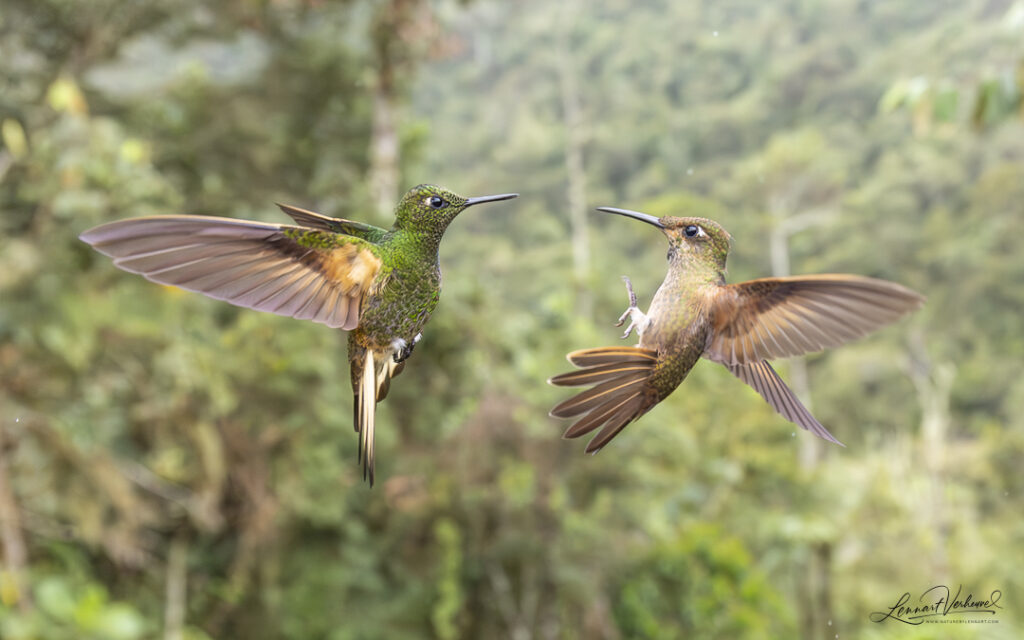
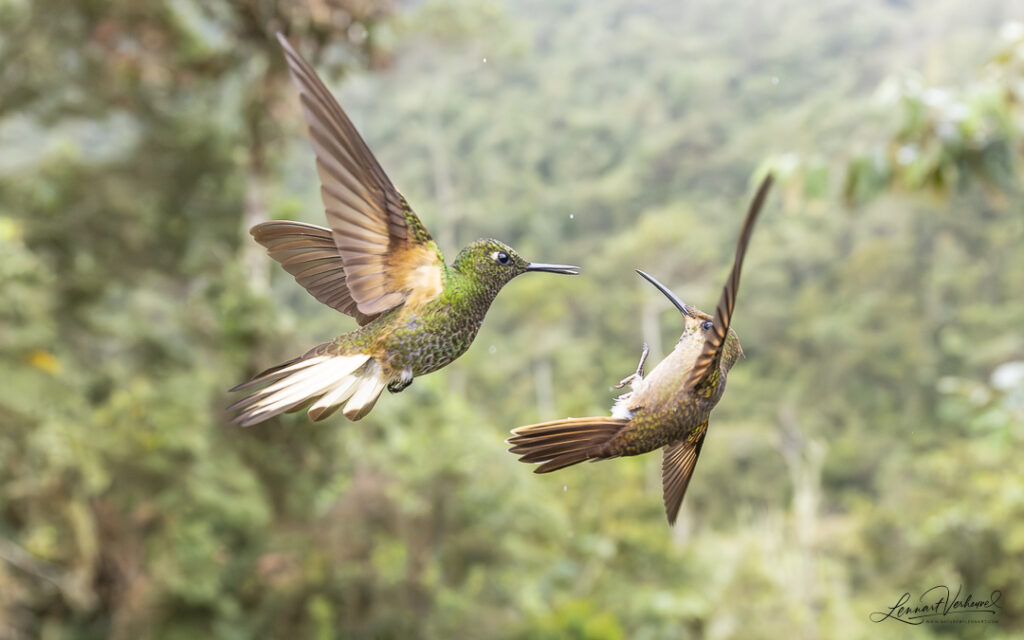
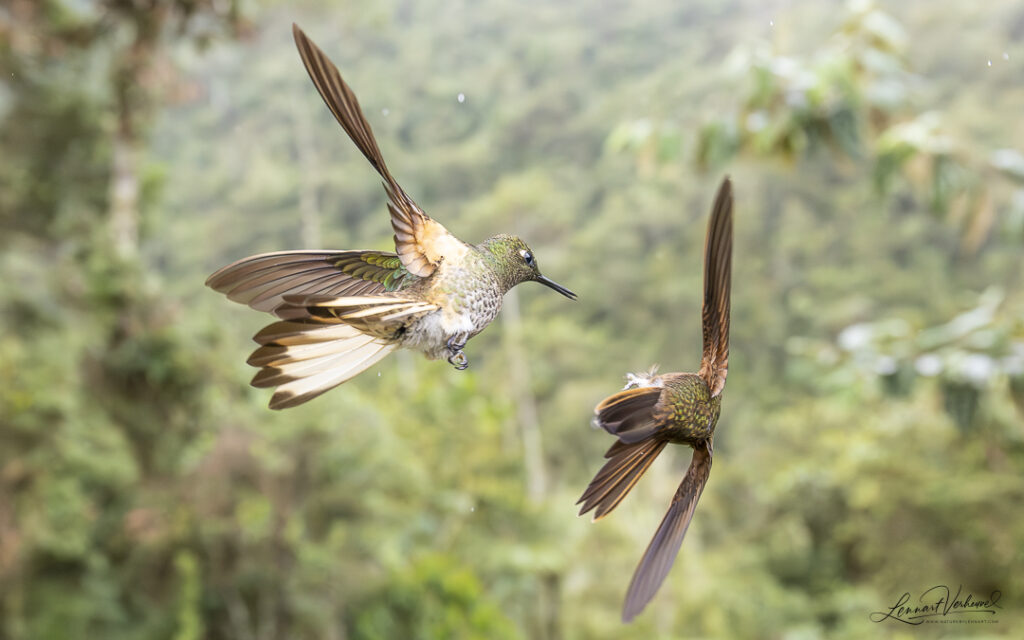
Buff-tailed Coronet and Fawn-breasted Brilliant
Fawn-breasted Brilliant
I was already familiar with Fawn-breasted Brilliant from Ecuador, but photographing the species with a wide-angle lens was of course new to me. In the end, I achieved some results I was quite happy with. Capturing the species’ striking pink throat patch proved particularly challenging, but occasionally I managed to!
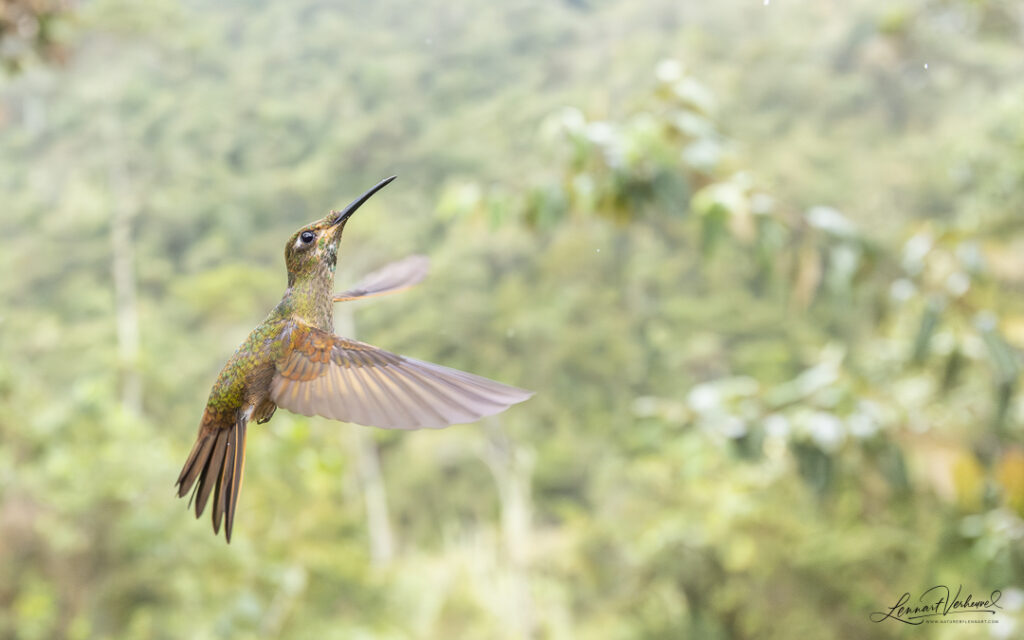
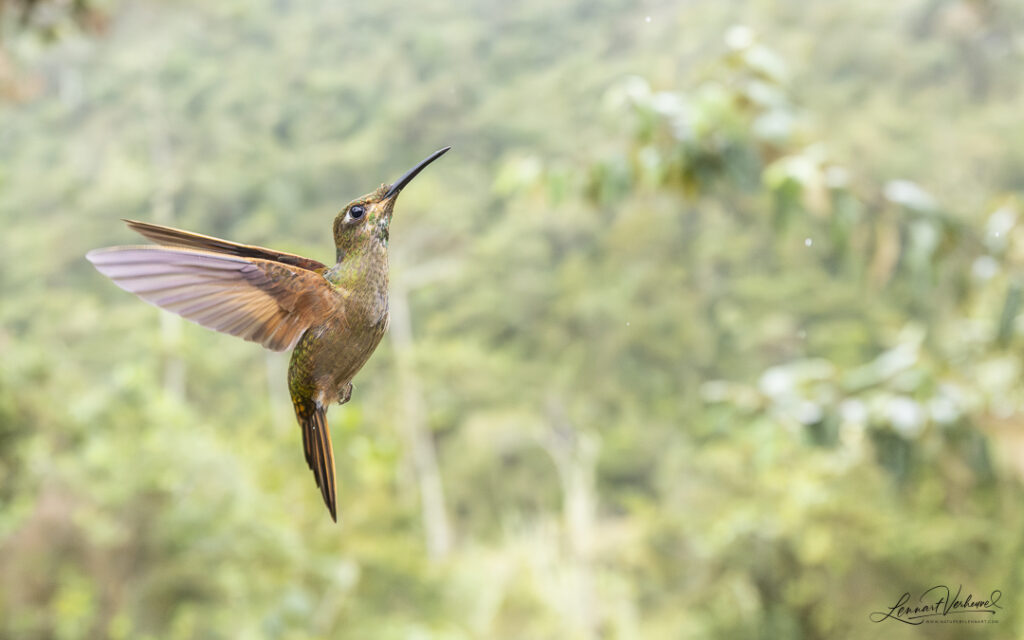
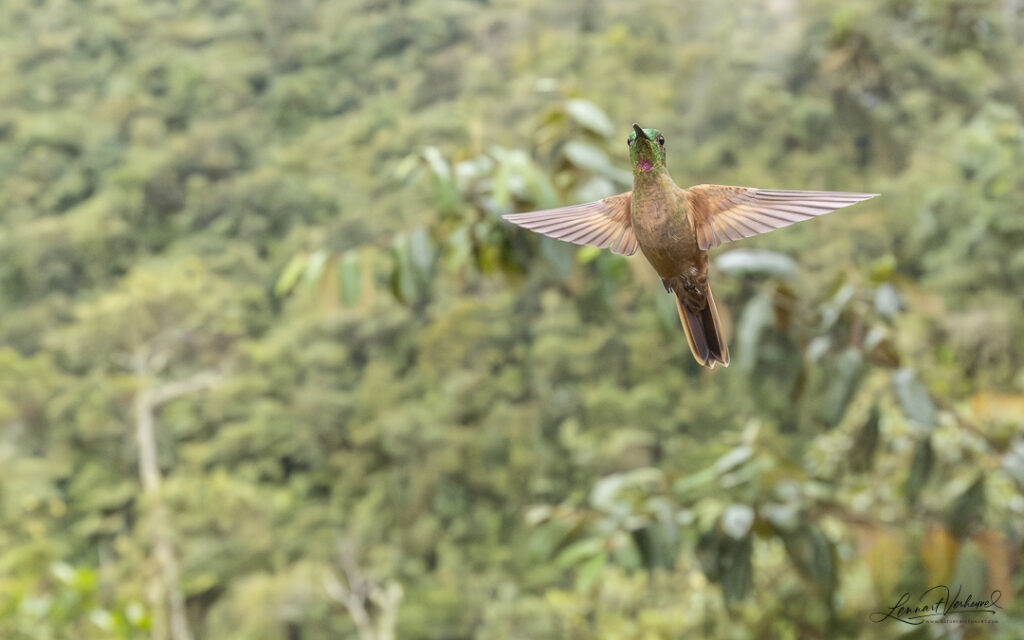
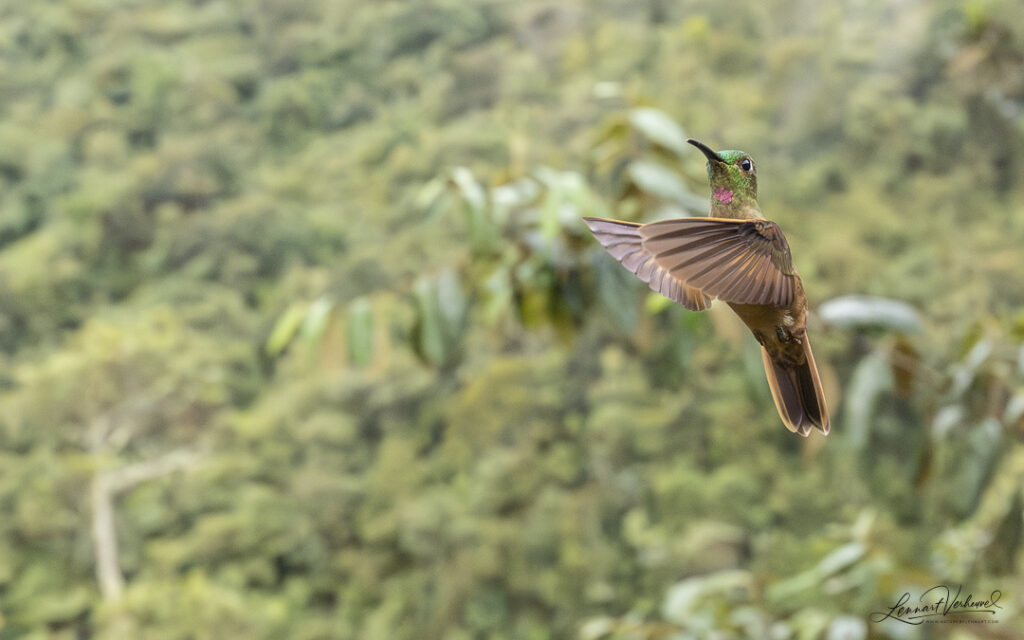
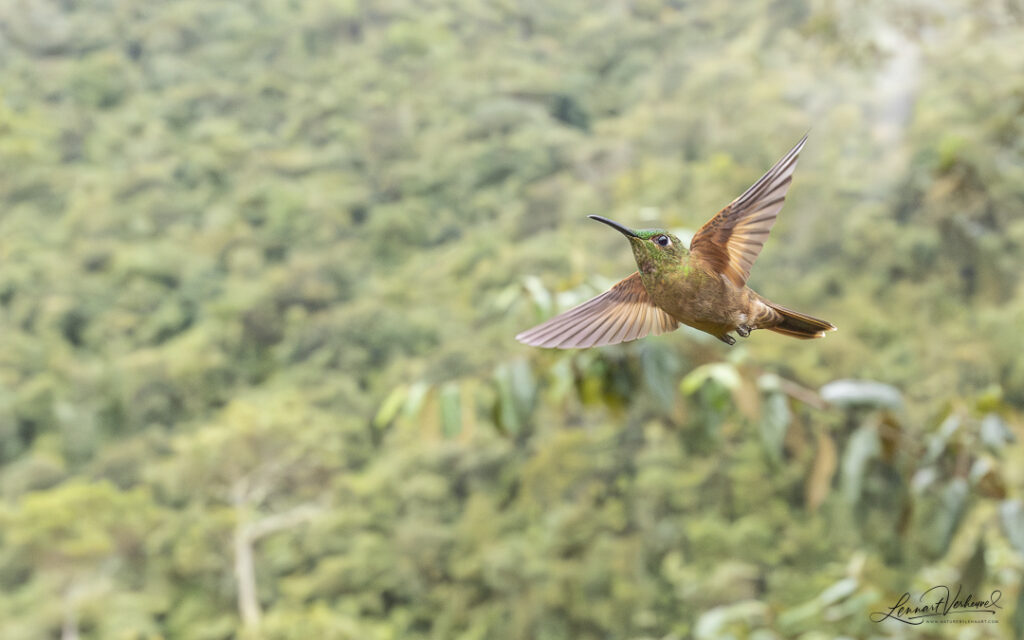
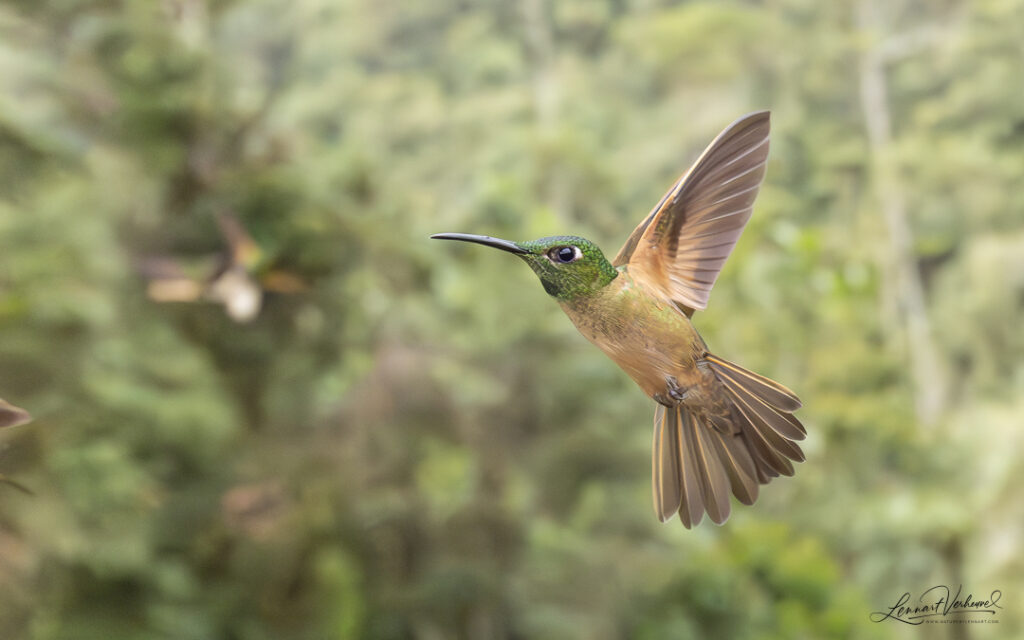
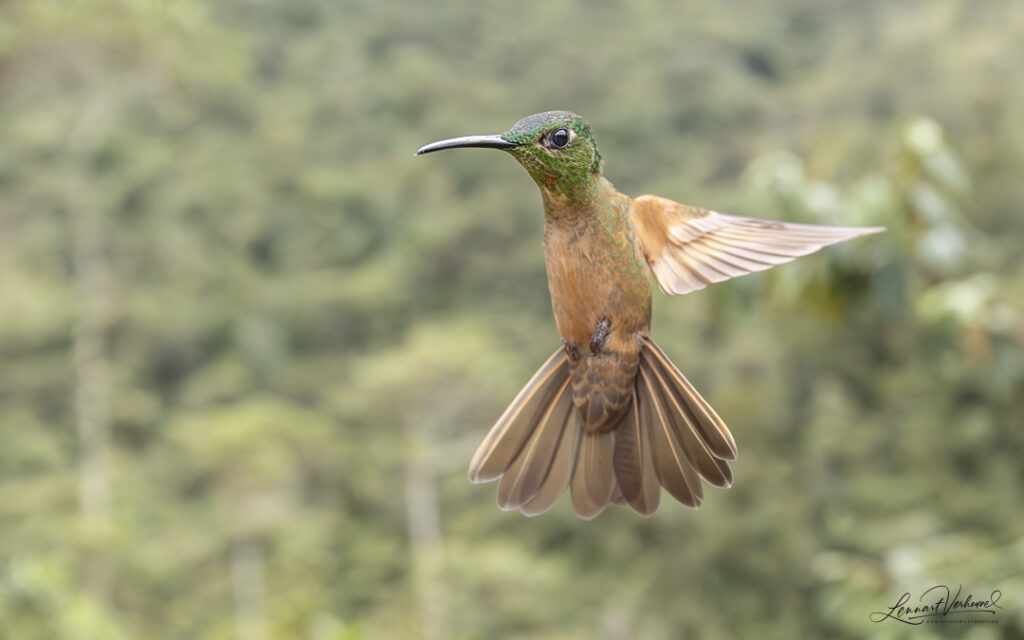
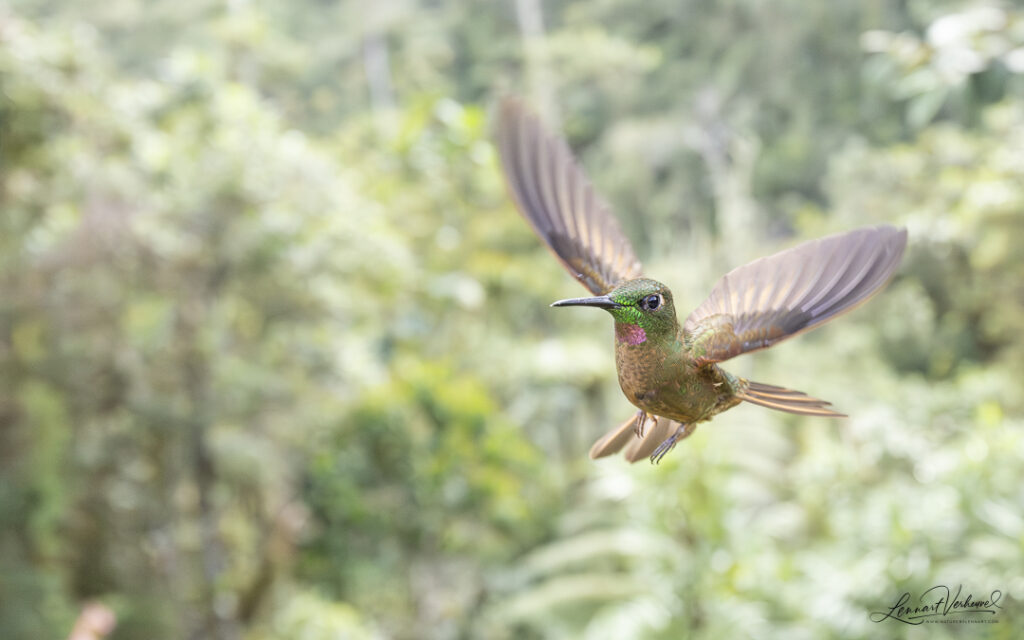
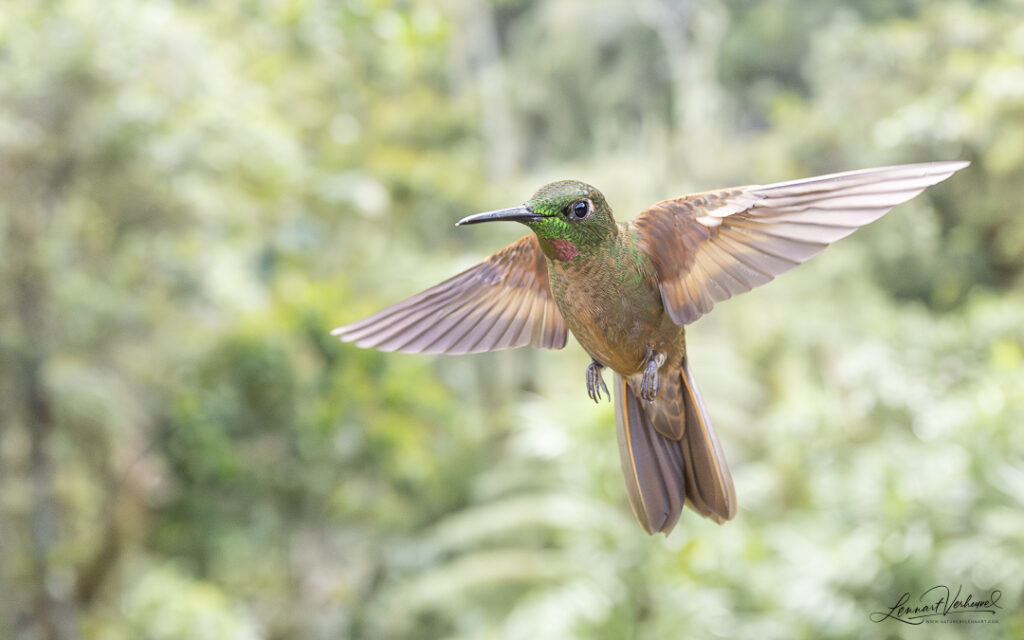
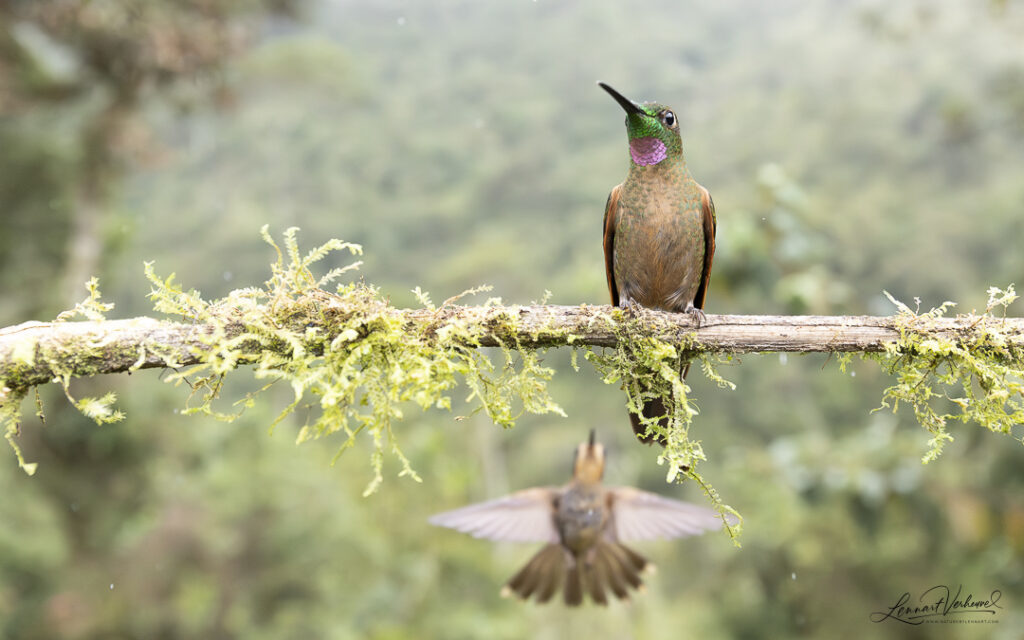
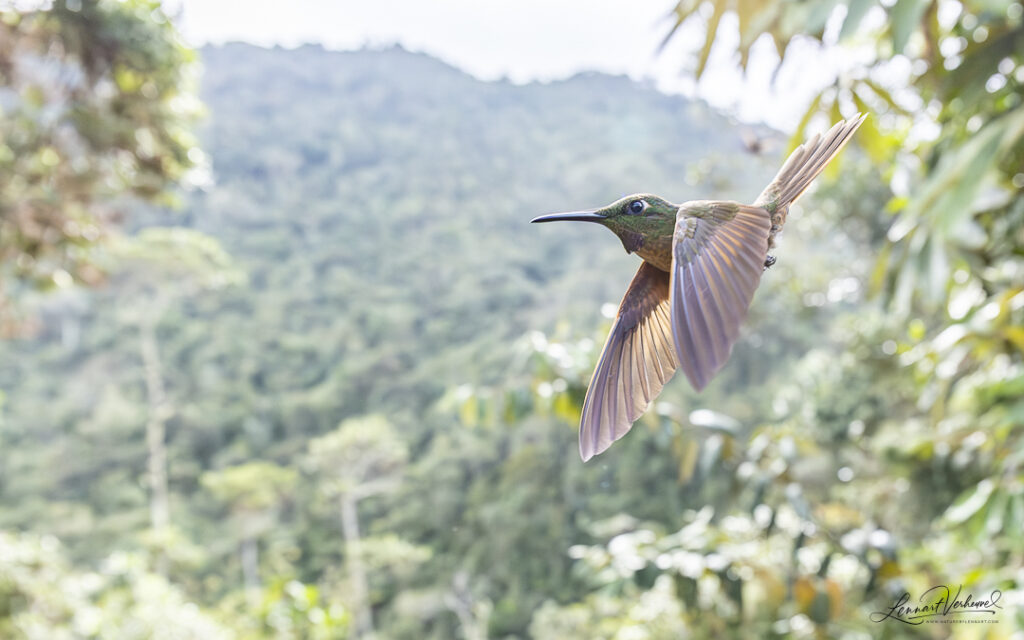
Fawn-breasted Brilliant
Lesser Violetear
One species I had not photographed very often before was the Lesser Violetear. It is essentially the smaller cousin of the Sparkling Violetear and differs in several ways, including its uniformly green belly, whereas the Sparkling Violetear has a purple belly patch.
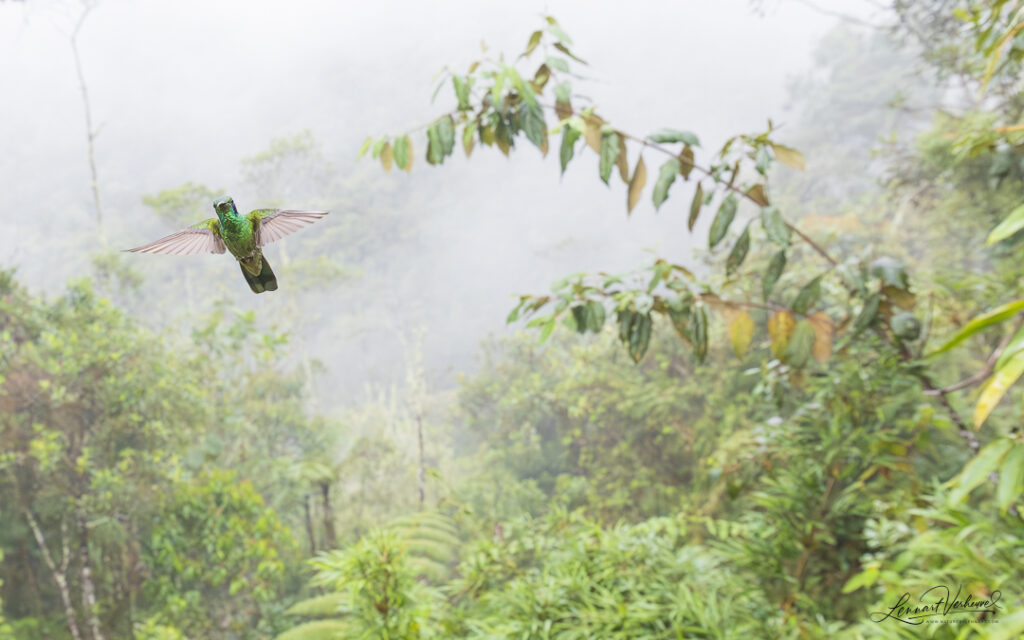
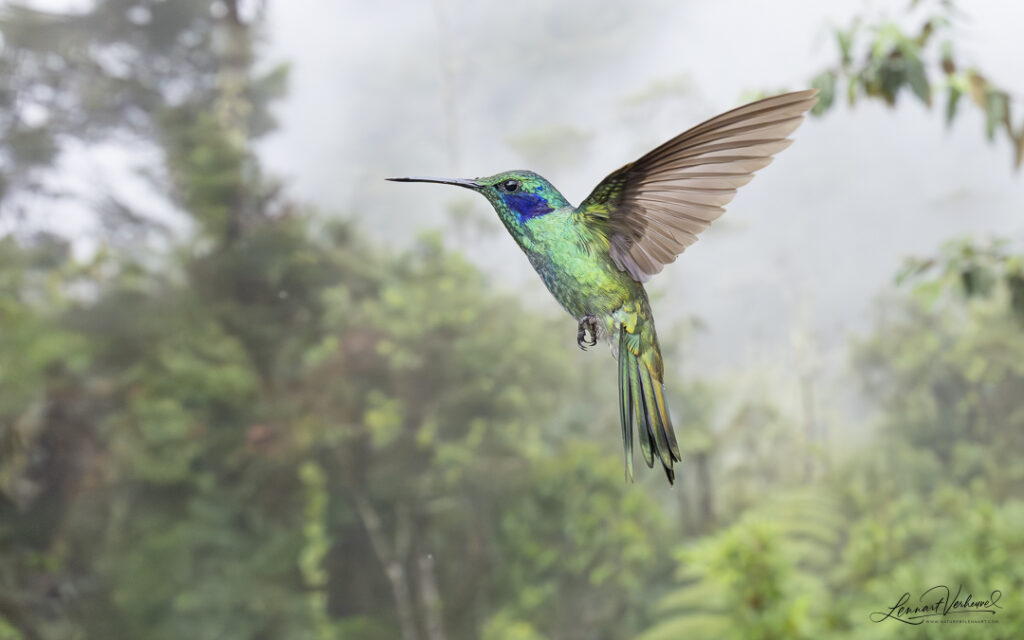
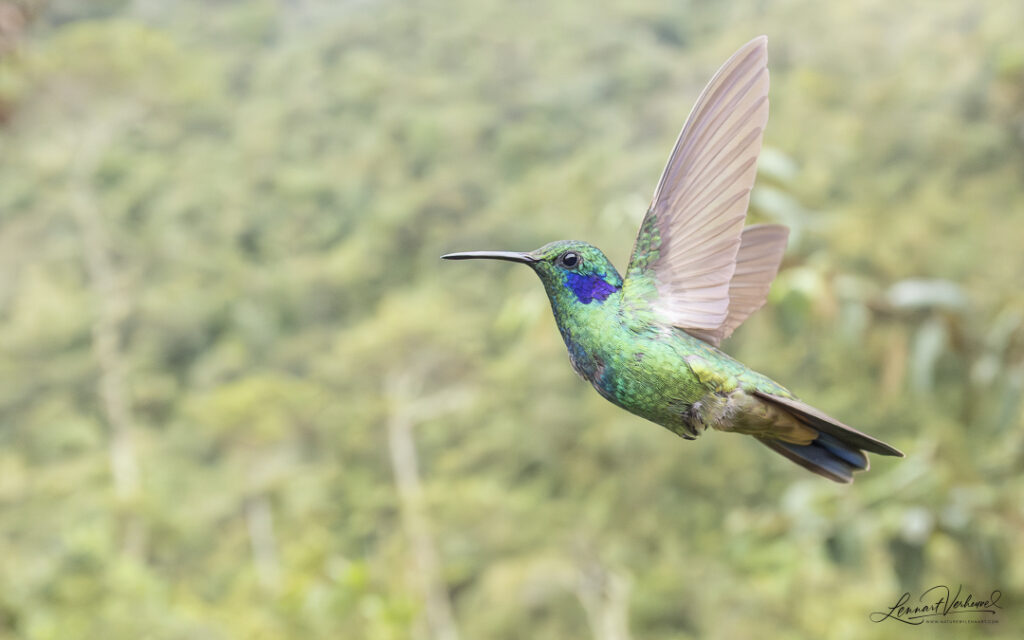
Lesser Violetear
It is a fairly aggressive species, which created some entertaining opportunities for interaction photography. Unsurprisingly, a Buff-tailed Coronet was often the bird it chose to challenge.
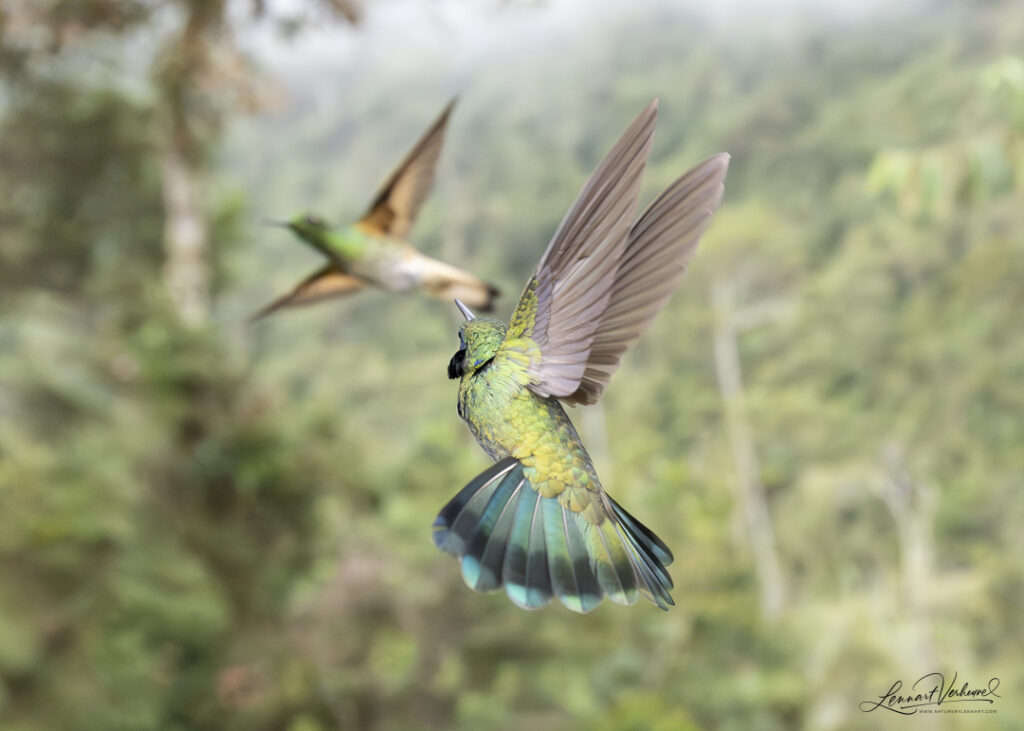
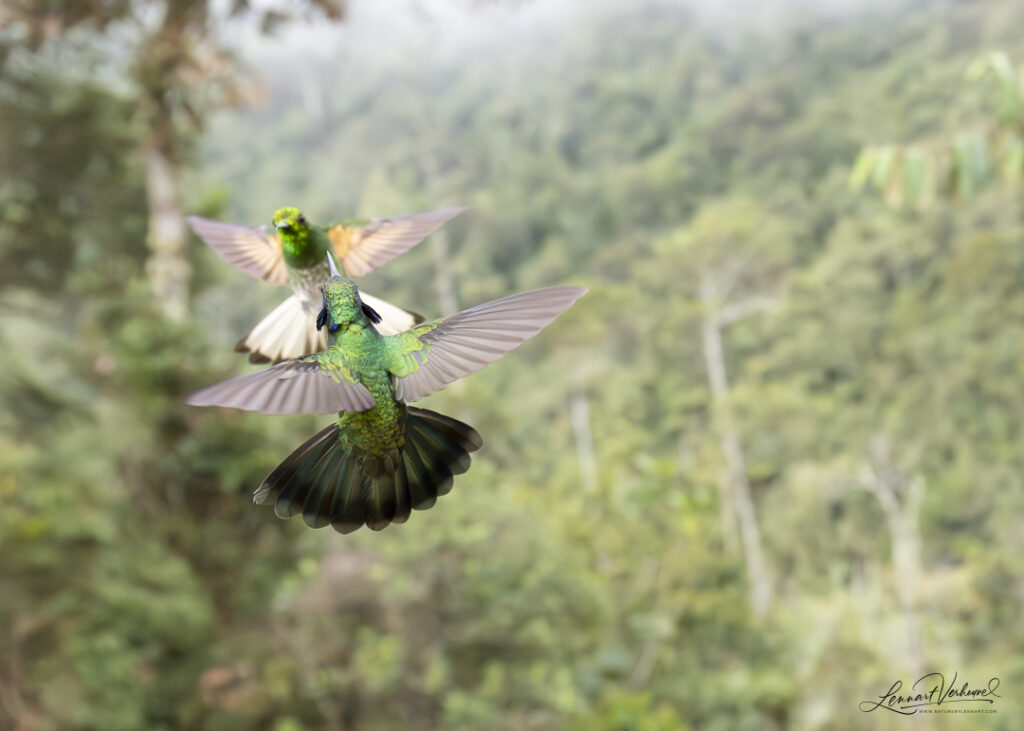
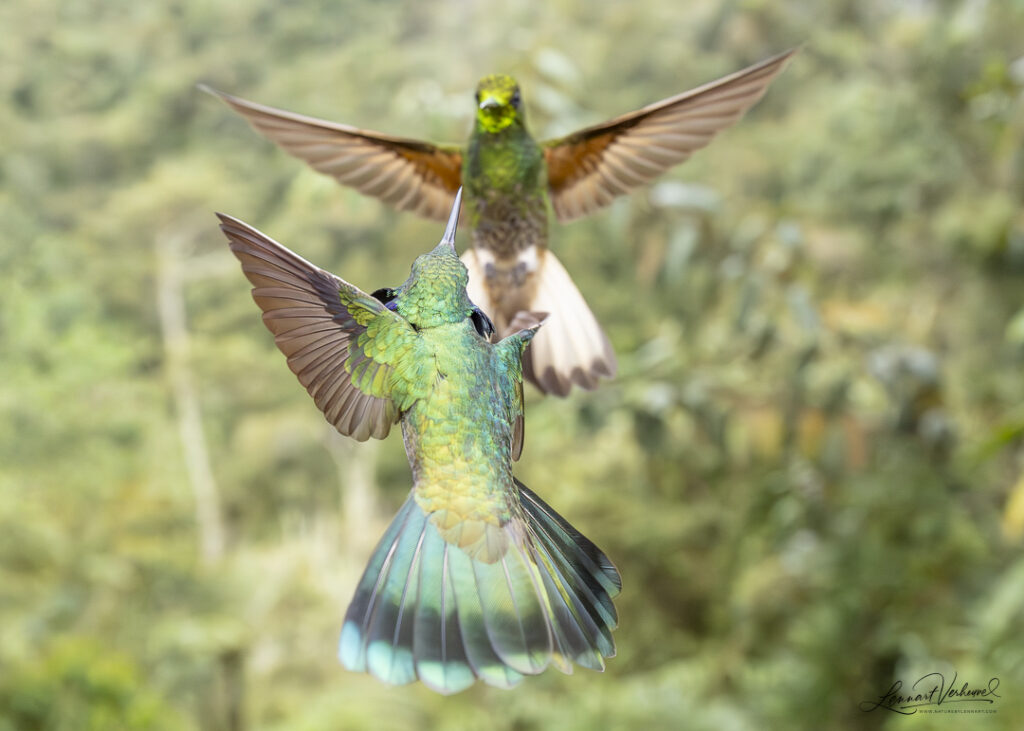
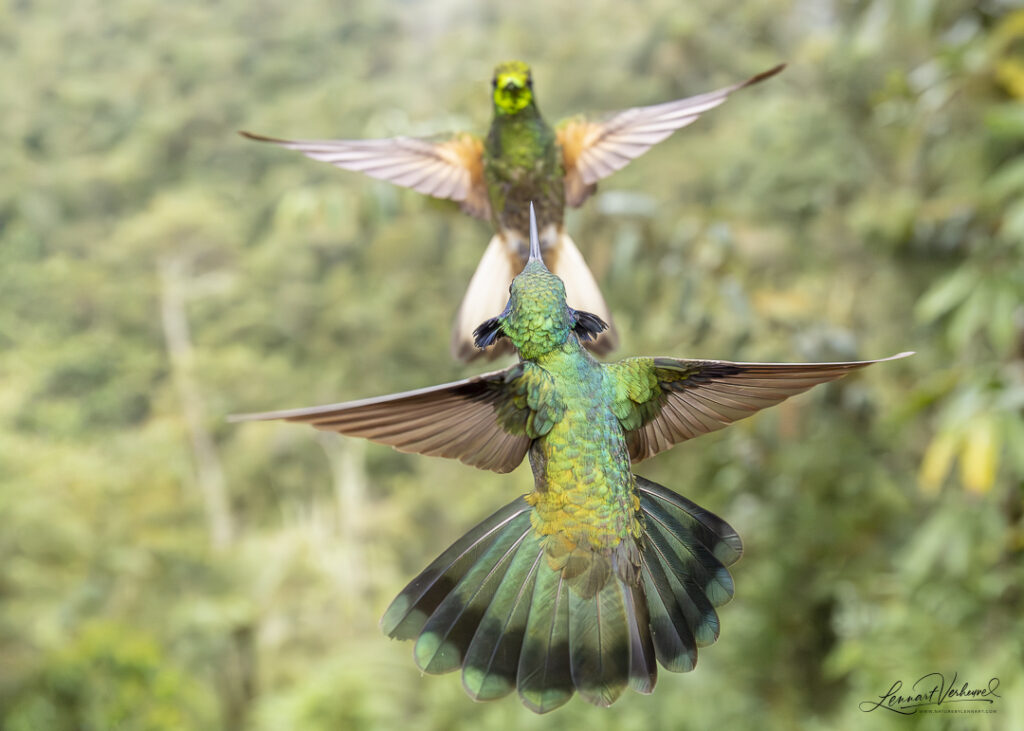
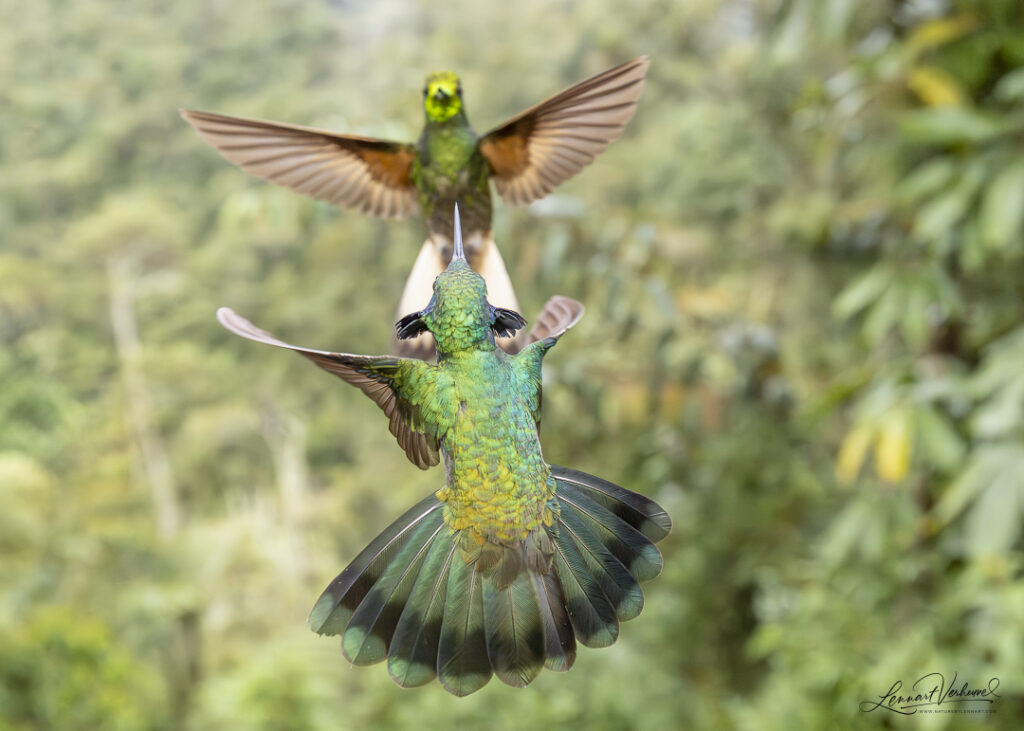
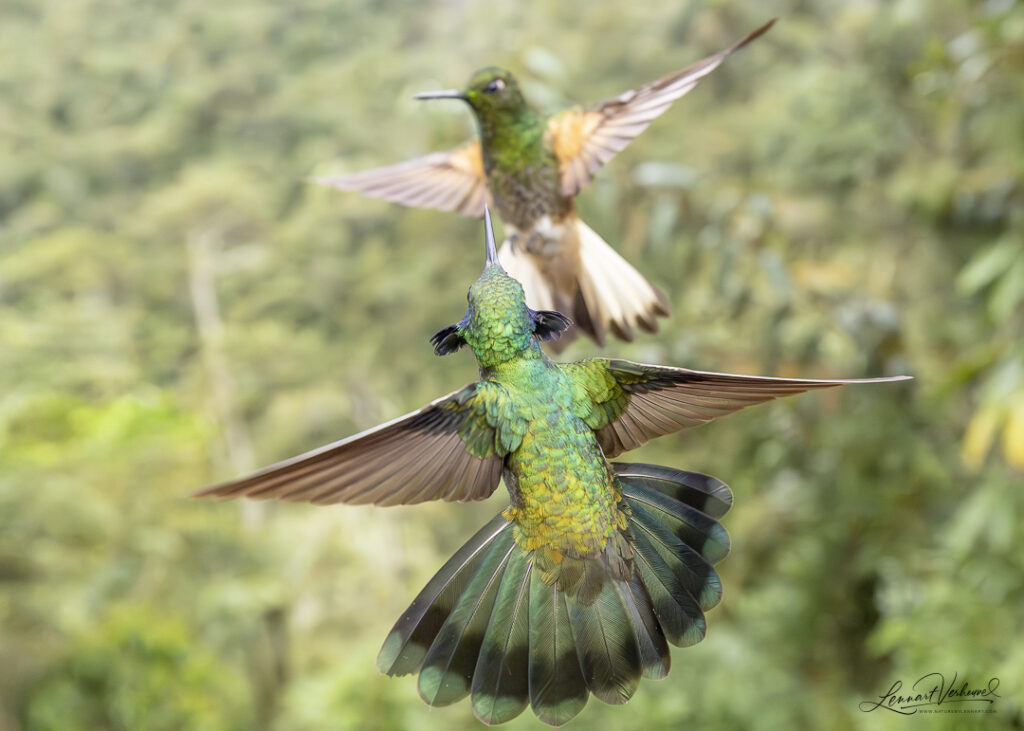
Lesser Violetear and Buff-tailed Coronet
A Tourmaline Sunangel also found itself on the receiving end of that aggression.
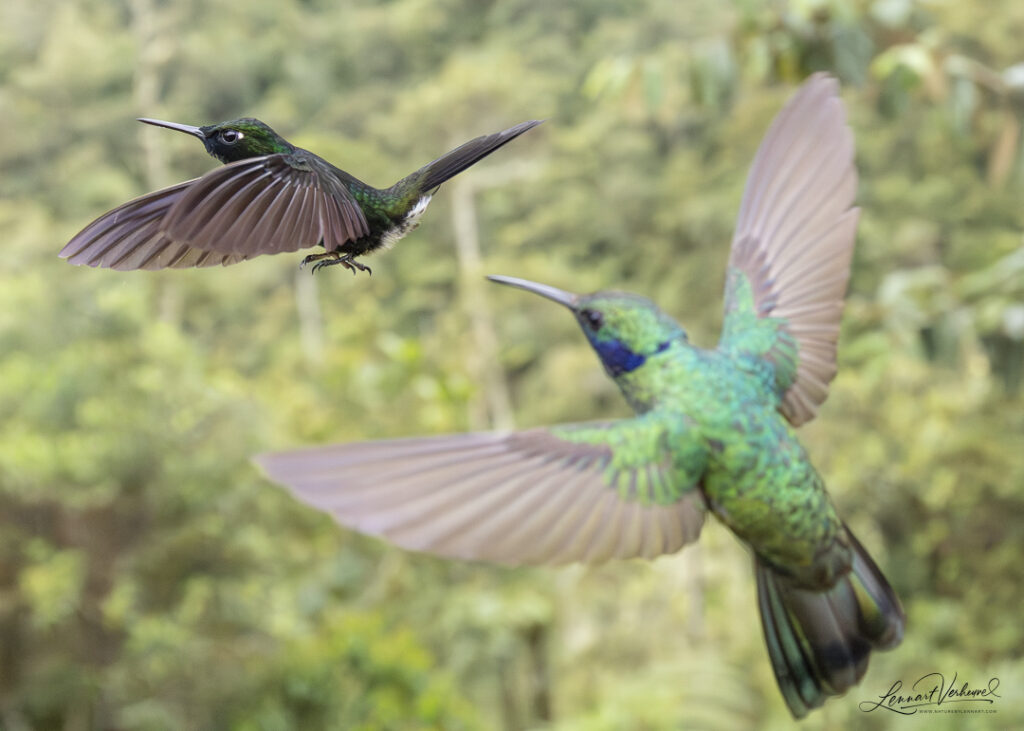
Lesser Violetear and Tourmaline Sunangel
Tourmaline Sunangel
Here too, the Tourmaline Sunangel proved extremely challenging to photograph. Because it is small and rarely hovers in front of the feeder for more than a moment, opportunities were limited. However, persistence eventually paid off, and I came away with several images I liked.
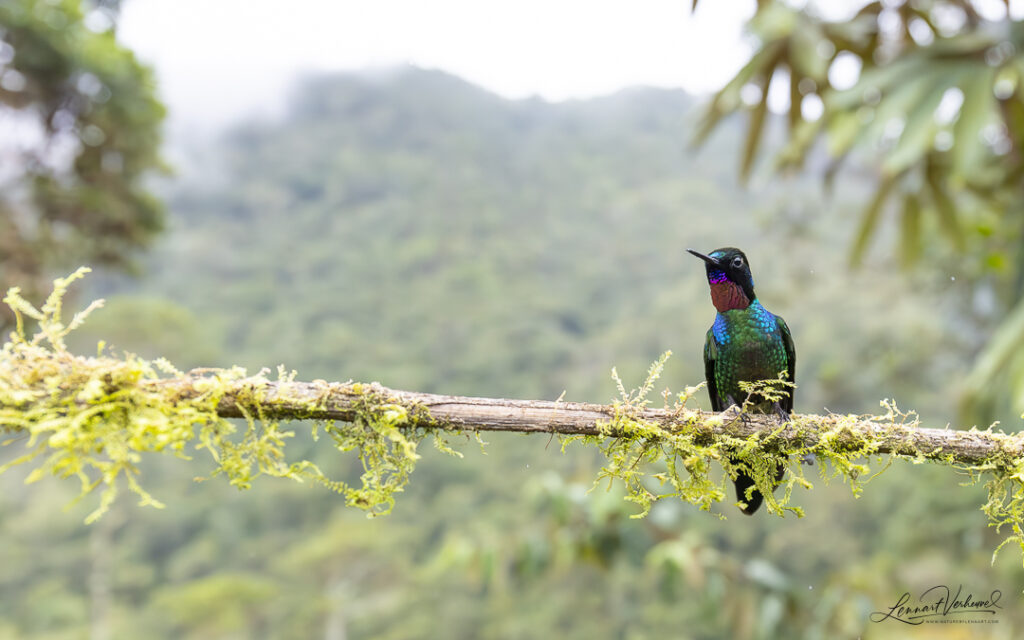
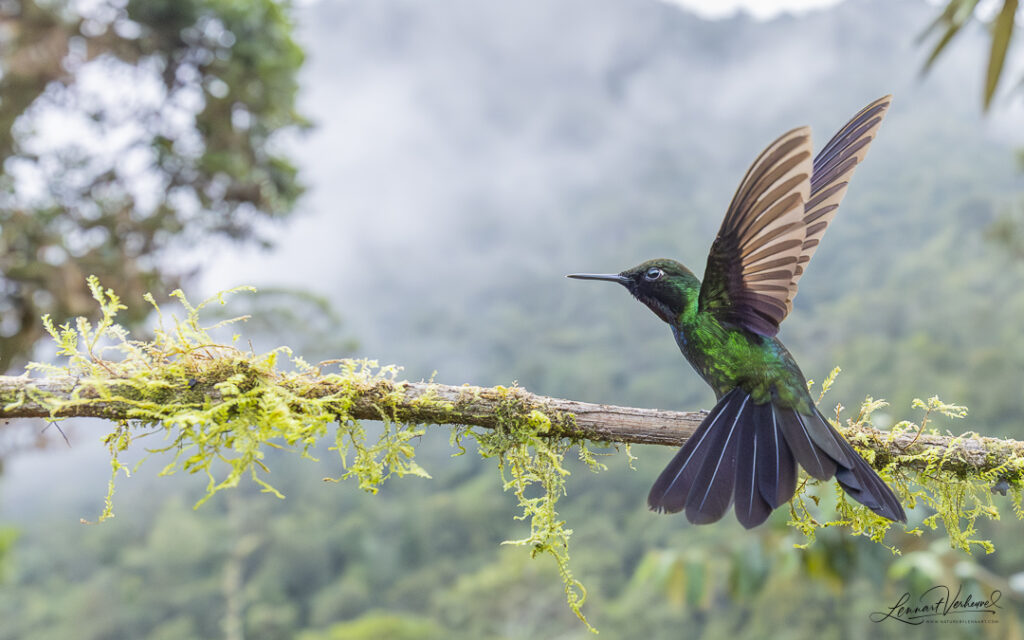
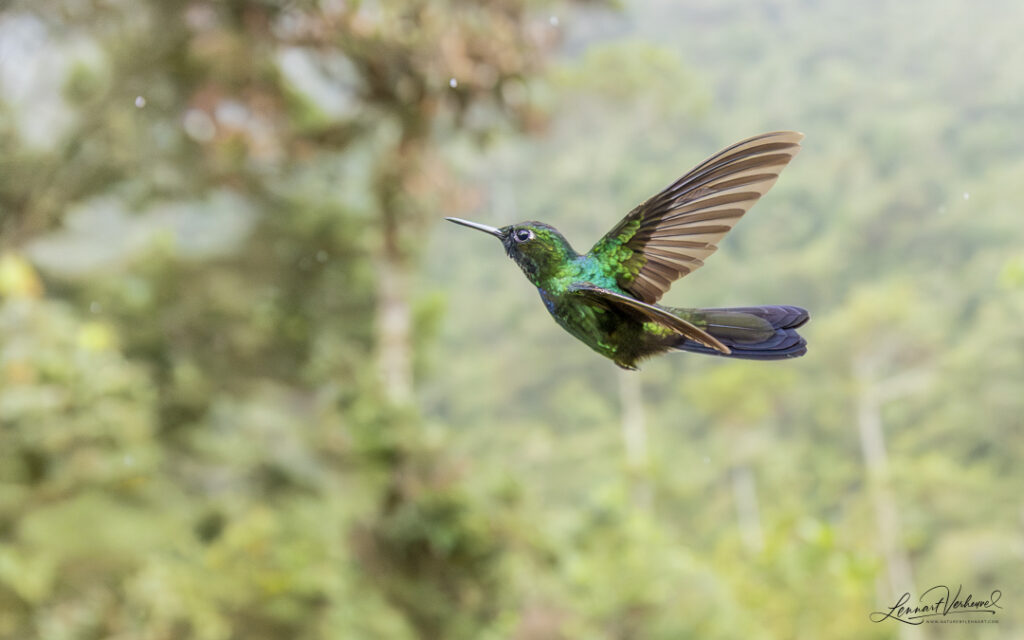
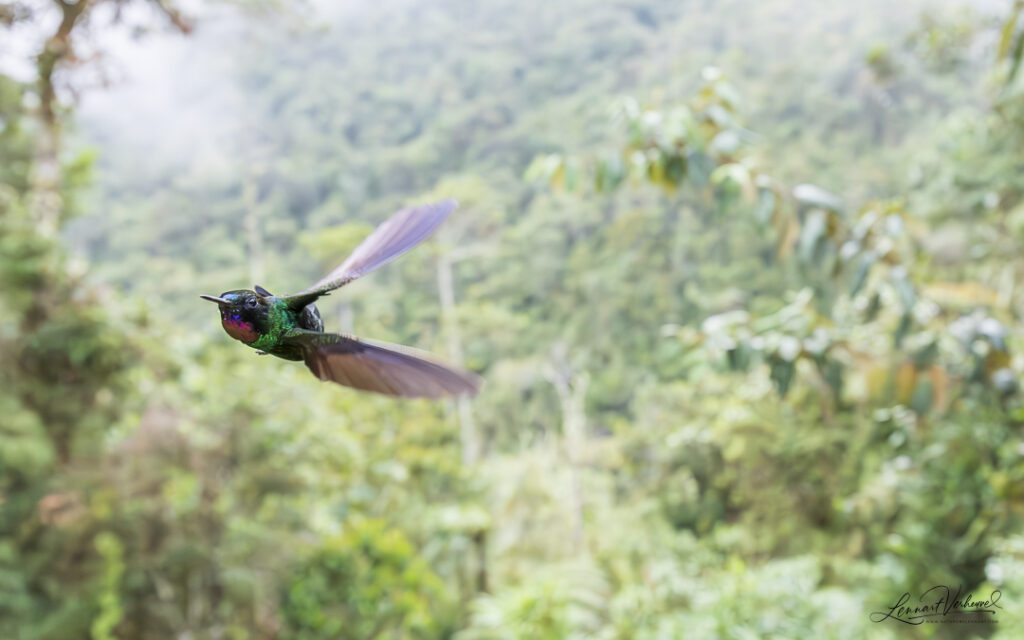
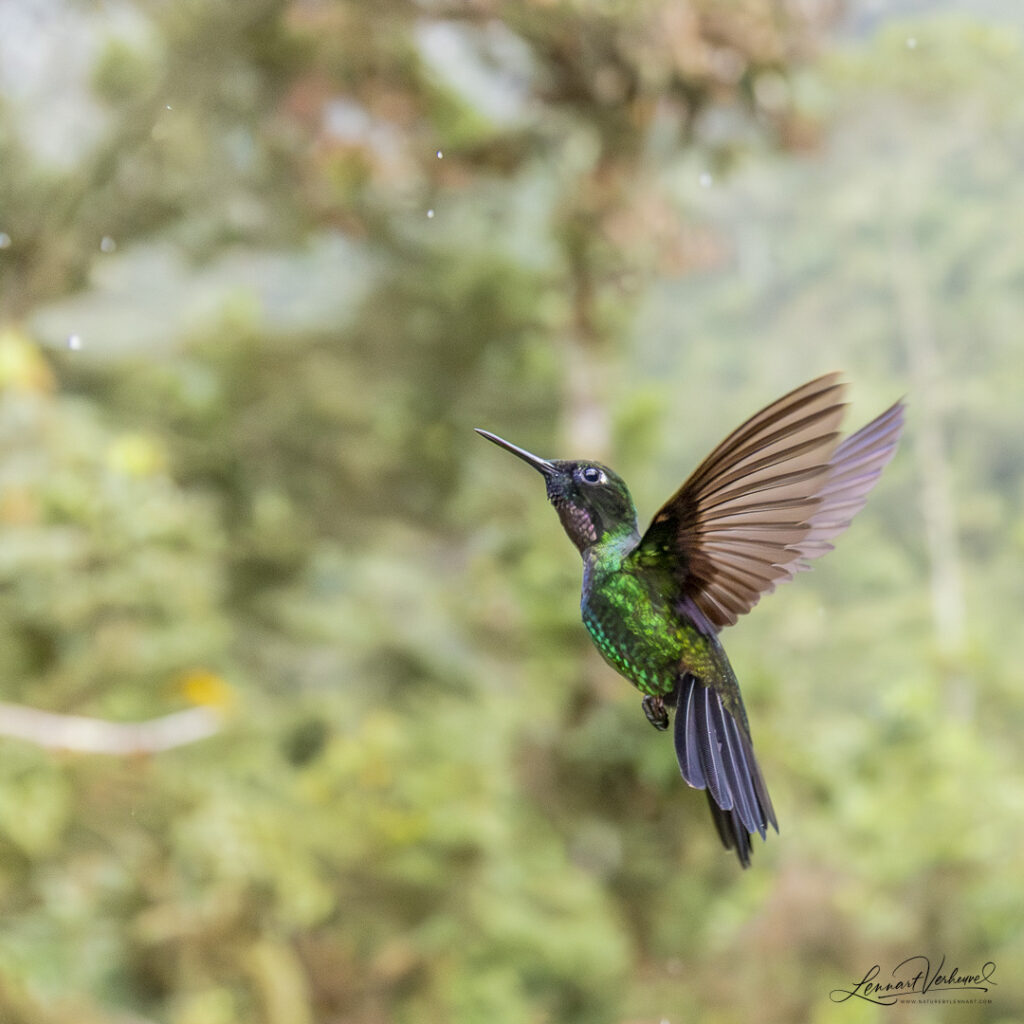
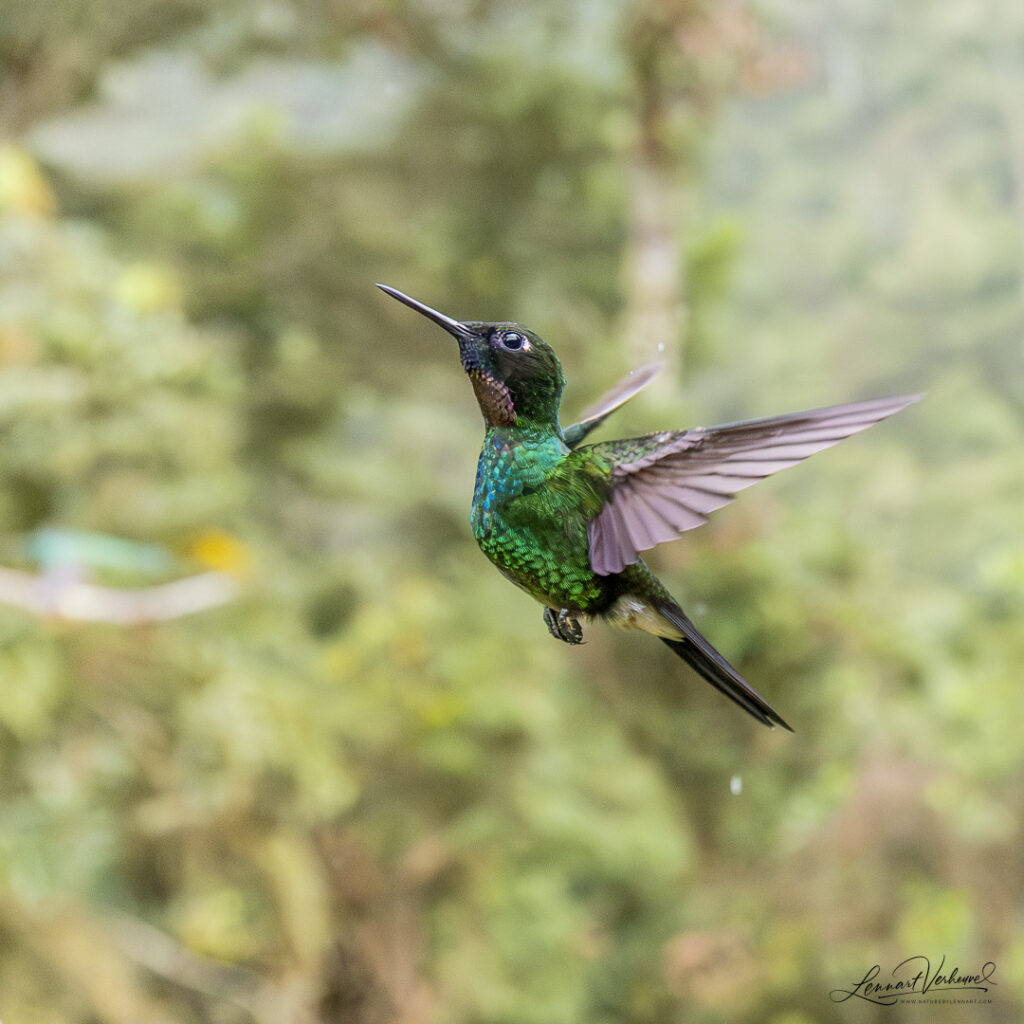
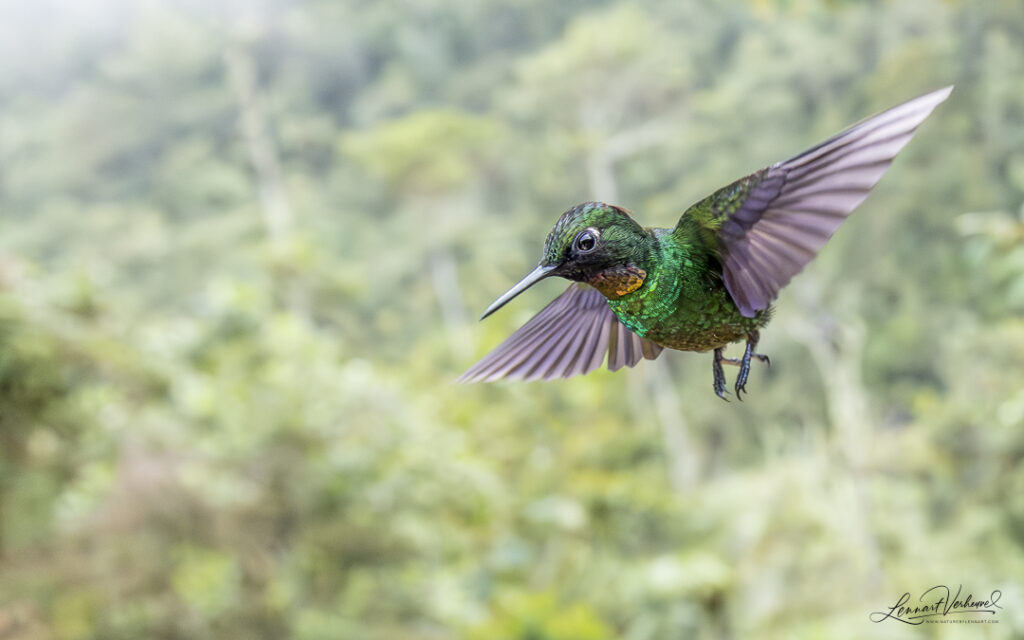
Tourmaline Sunangel
Speckled Hummingbird
Speckled Hummingbird is another small species. It is actually a very common hummingbird, but I found it surprisingly difficult to photograph in flight. They move quickly, fly unpredictably, and rarely hover for long. Their small size also means they need to come very close to produce a compelling image. After many attempts, I finally had a few moments that resulted in successful photographs.
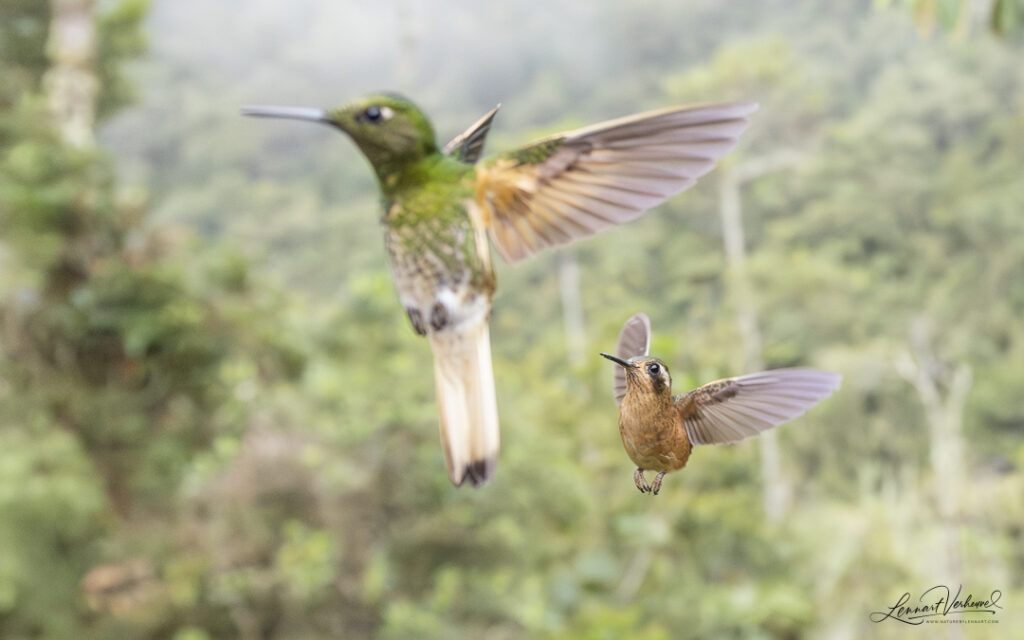
Speckled Hummingbird and Buff-tailed Coronet
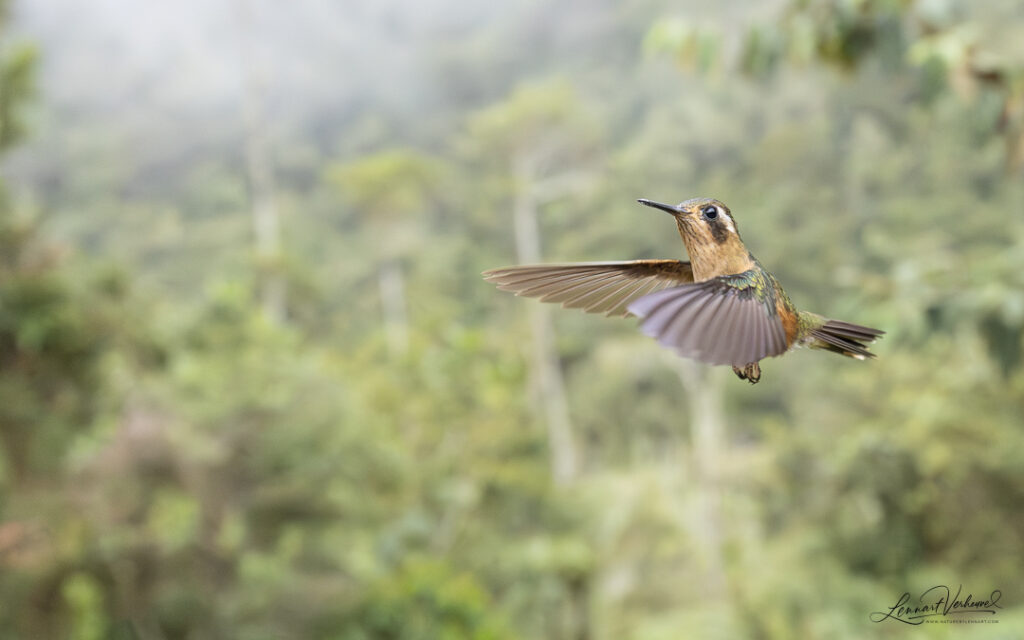
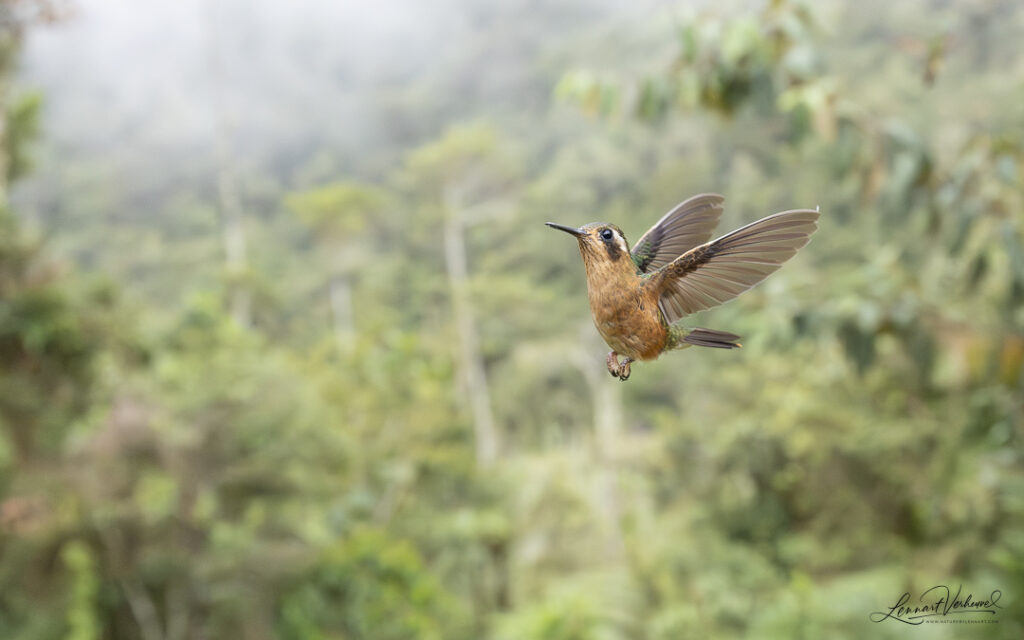
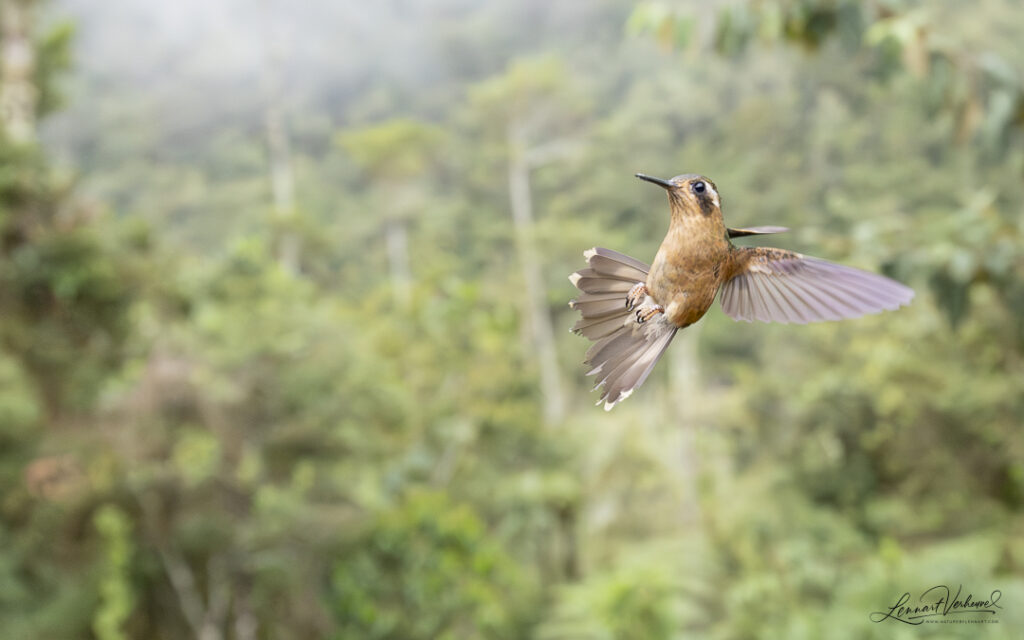
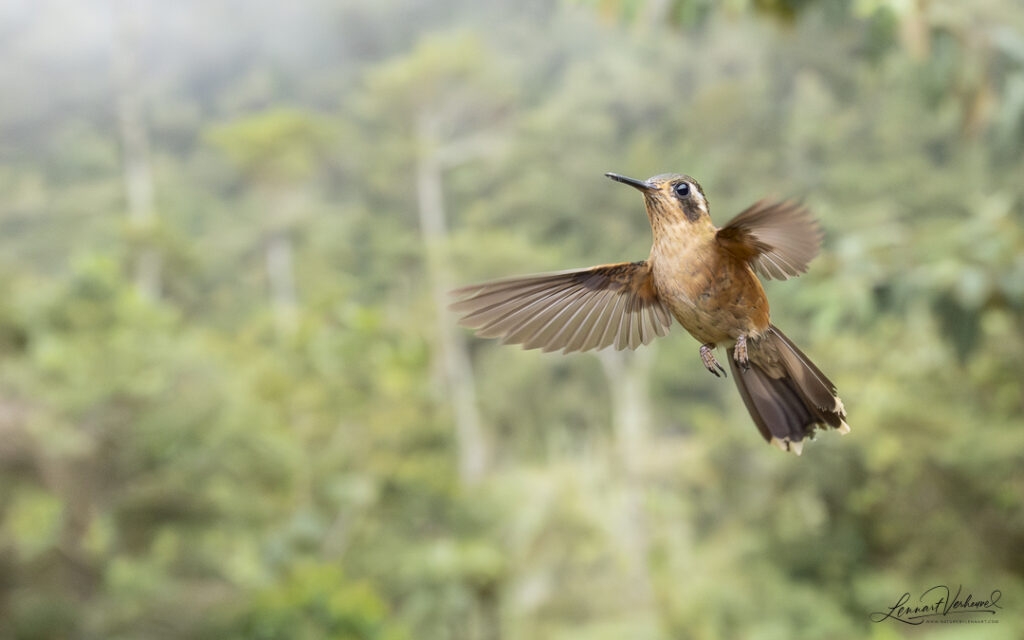
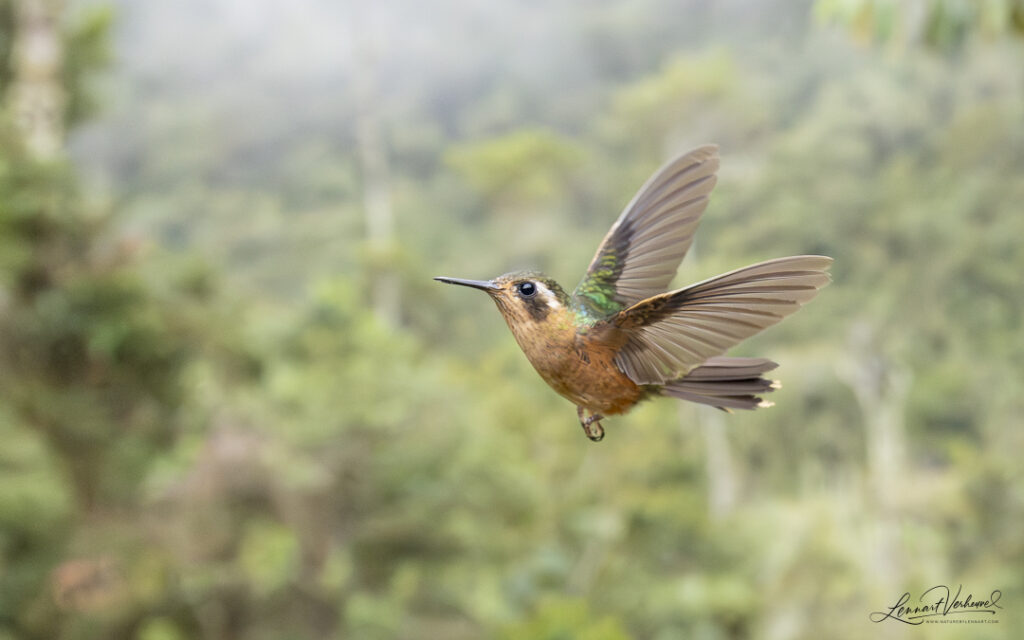
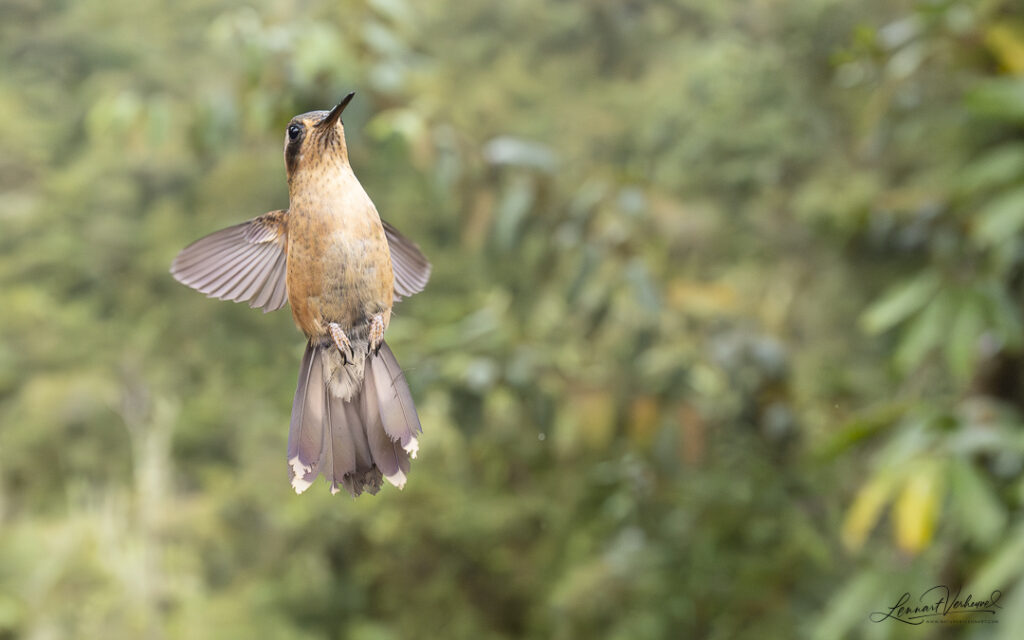
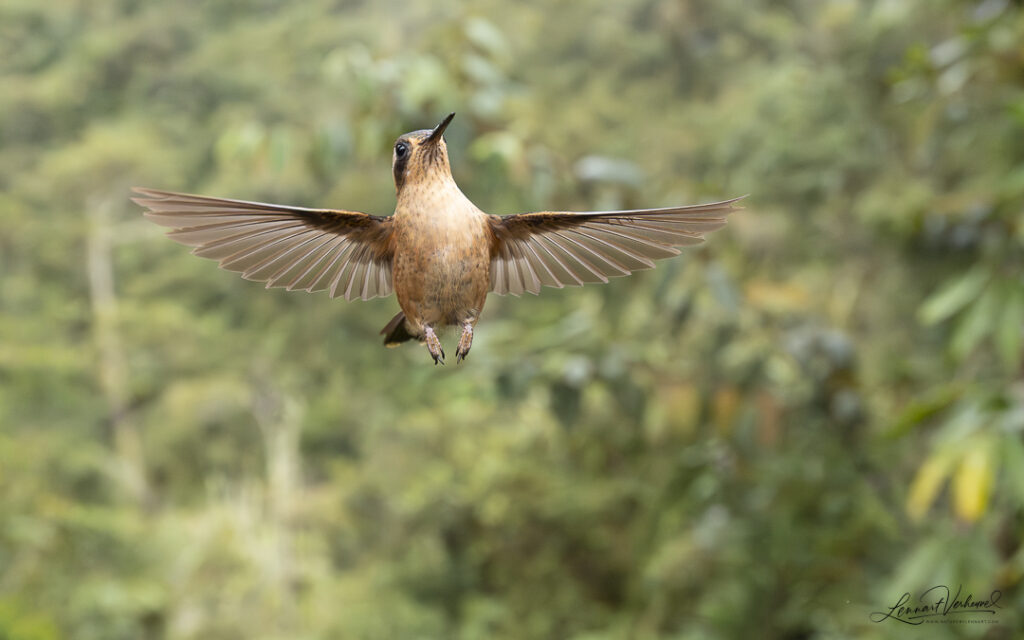
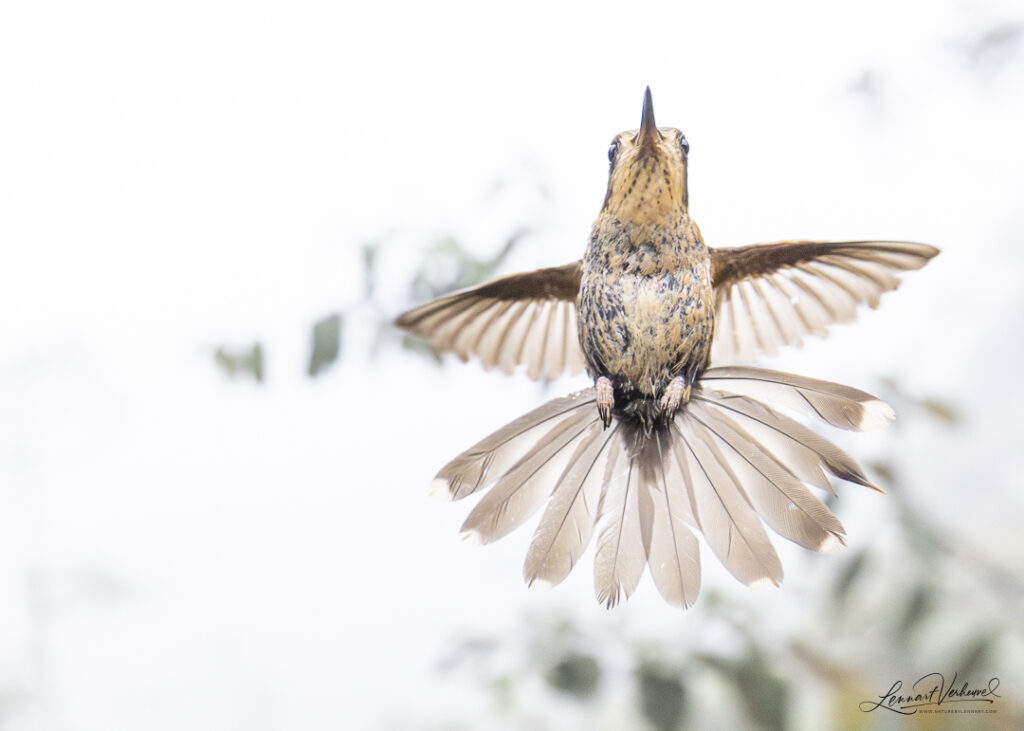
Speckled Hummingbird
Long-tailed Sylph
One species I worked especially hard for was the Long-tailed Sylph. As far as I could tell, only a single individual was present around Mirador El Roble, which created a challenge in itself. Opportunities were limited, and the species also did not spend much time hovering. Nevertheless, it is a spectacular bird, distinguished by its extraordinary long tail. Eventually, I managed to obtain a few flight photographs.
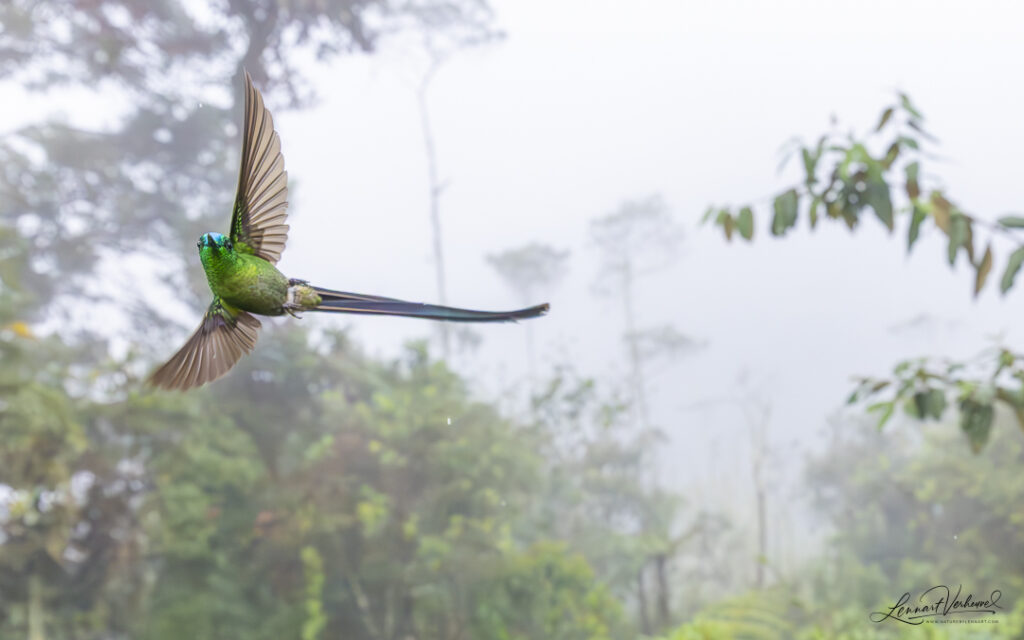
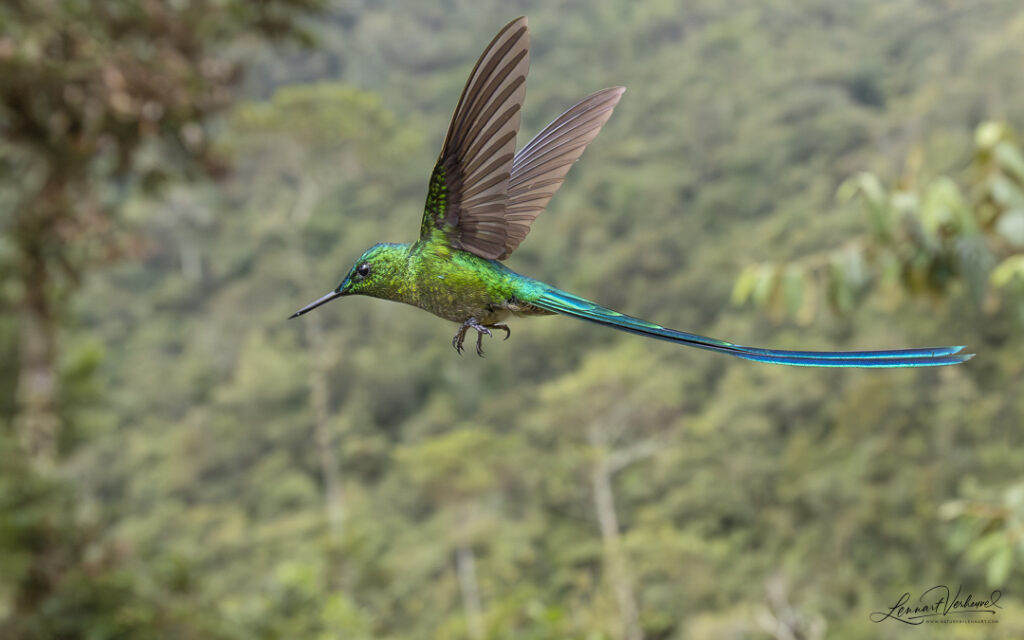
Long-tailed Sylph
Naturally, there were also plenty of images where the bird was just slightly out of focus!
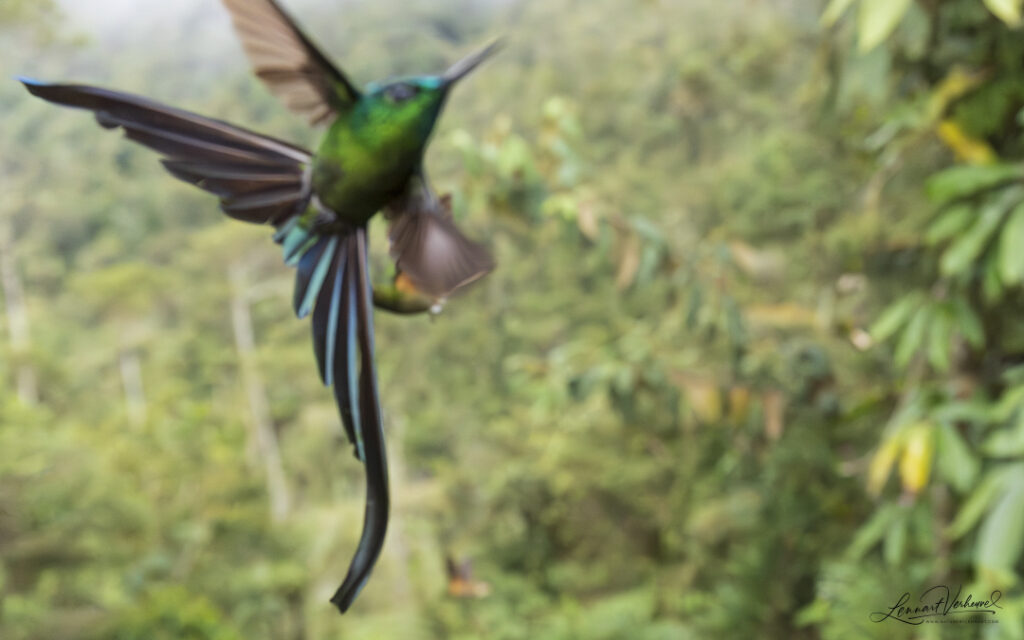
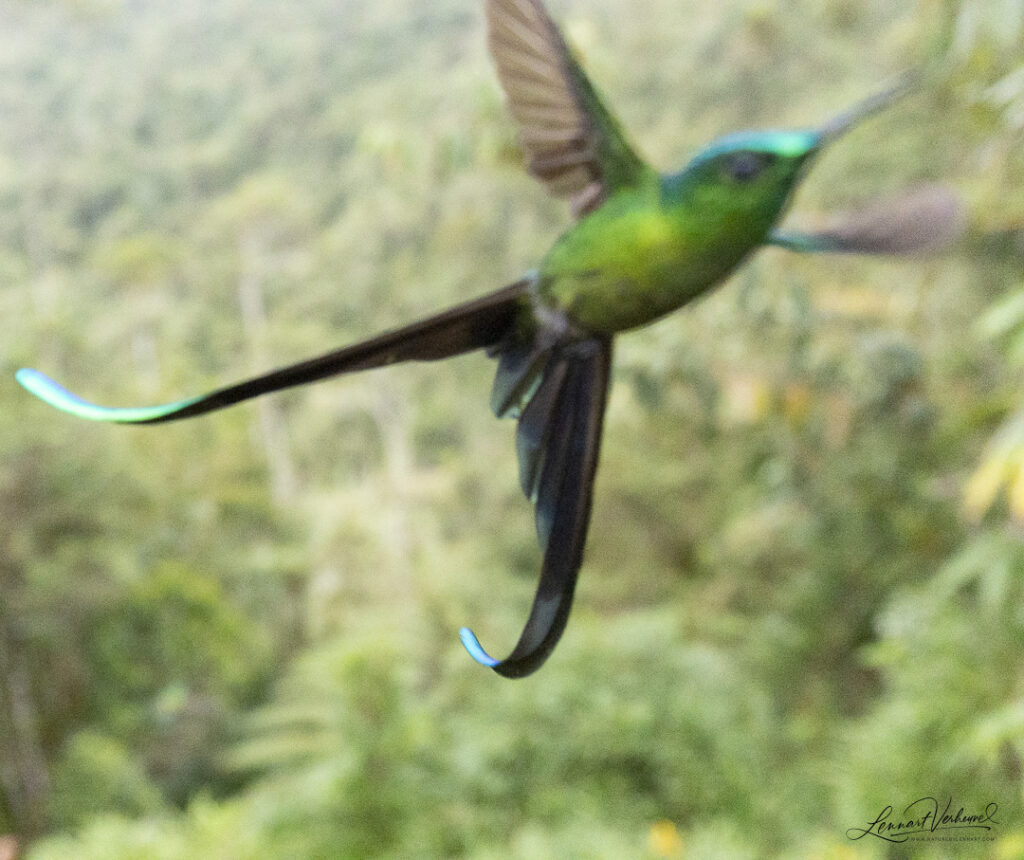
Long-tailed Sylph
Fortunately, the occasions when it perched briefly on a nearby branch also produced some interesting photographs.
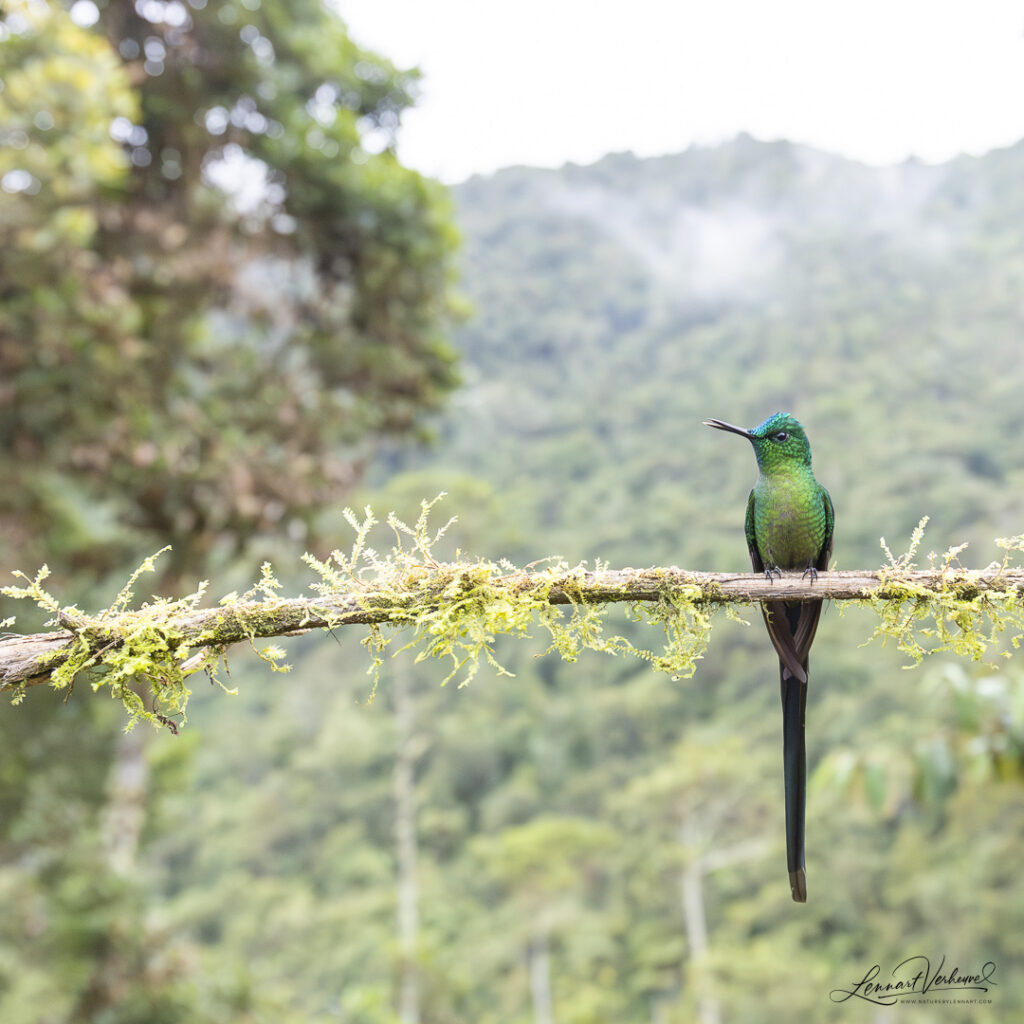
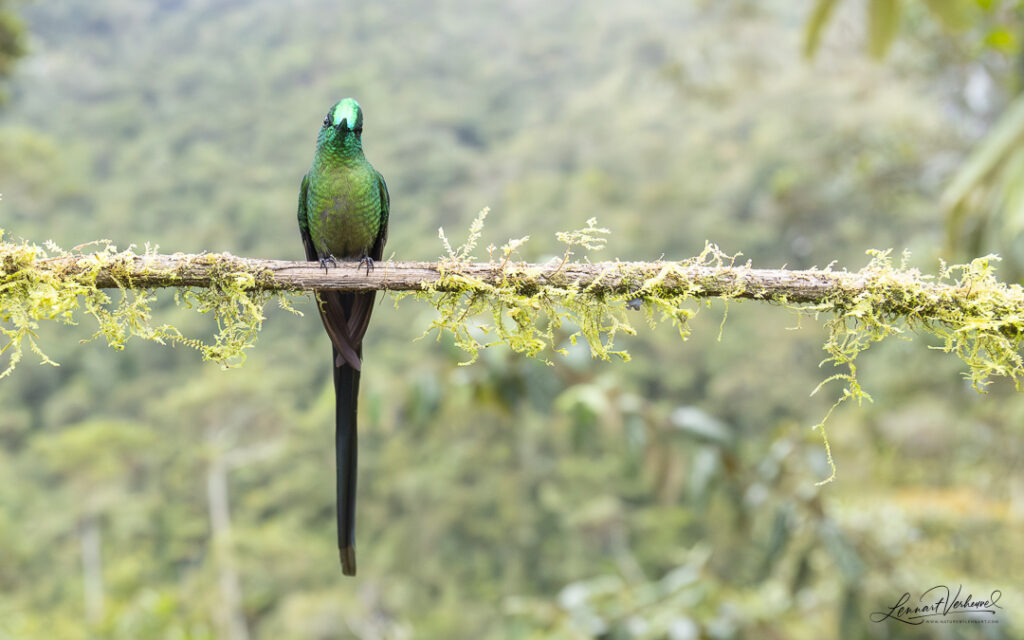
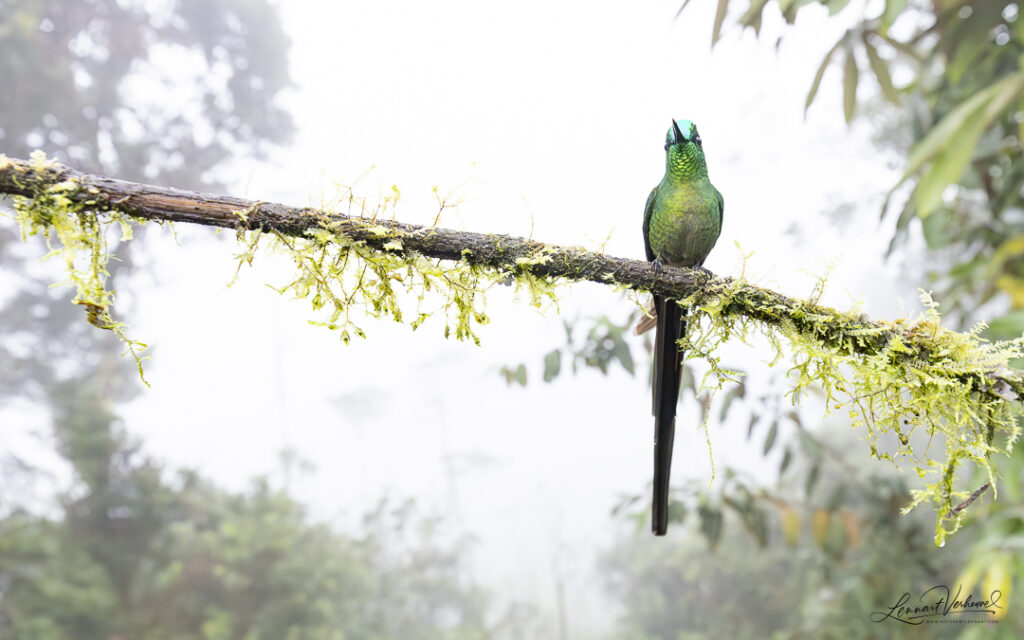
Long-tailed Sylph
Bronzy Inca
The final hummingbird I managed to photograph with a wide-angle lens was the Bronzy Inca. This close relative of the Collared Inca appeared far less frequently and proved considerably more difficult to photograph. In the end, however, I managed to come away with two good images.
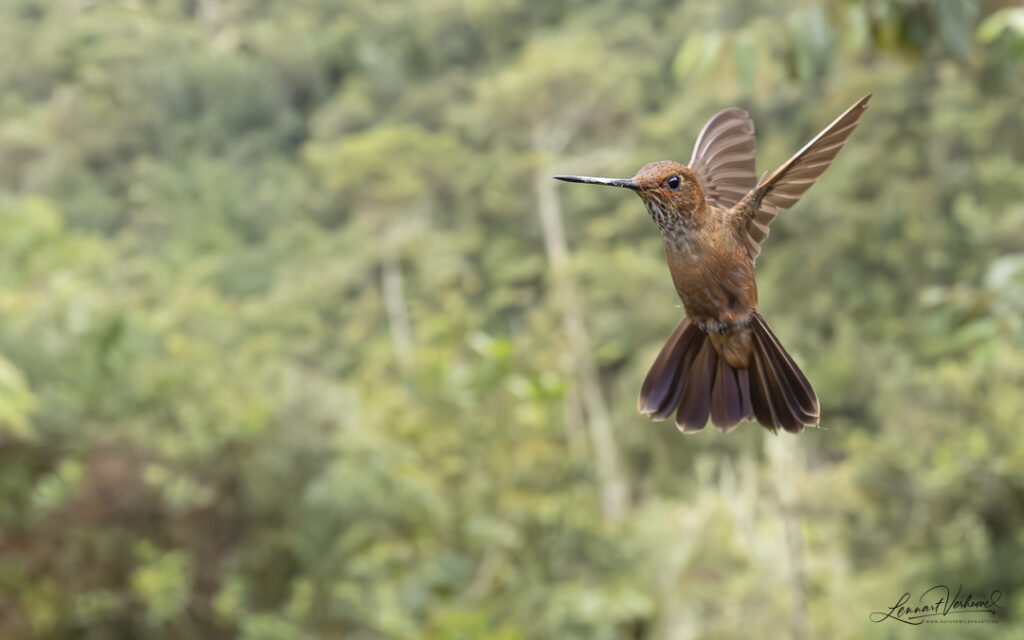
Bronzy Inca
Although photographing hummingbirds was not my primary goal when travelling to Colombia, I was extremely pleased with these results. Hummingbirds remain among my favourite birds, and I hope it will not be too long before I have the chance to see them again.
More Colombia?
Read how I found and photographed my target species: the Northern Oncilla!
And click here if you would like to discover which other spectacular birds can be found in the Colombian Andes!


