- info@naturebylennart.com
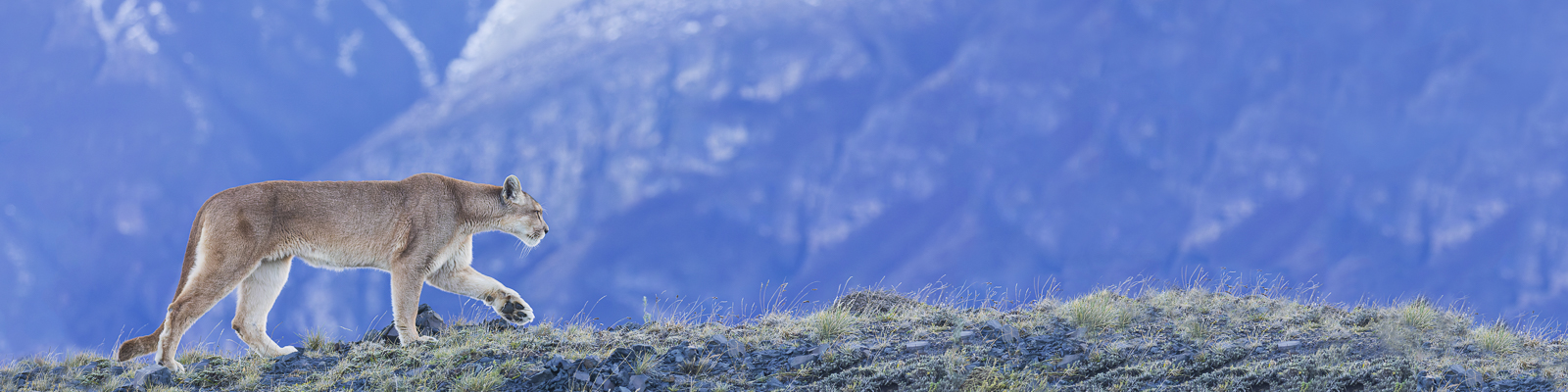
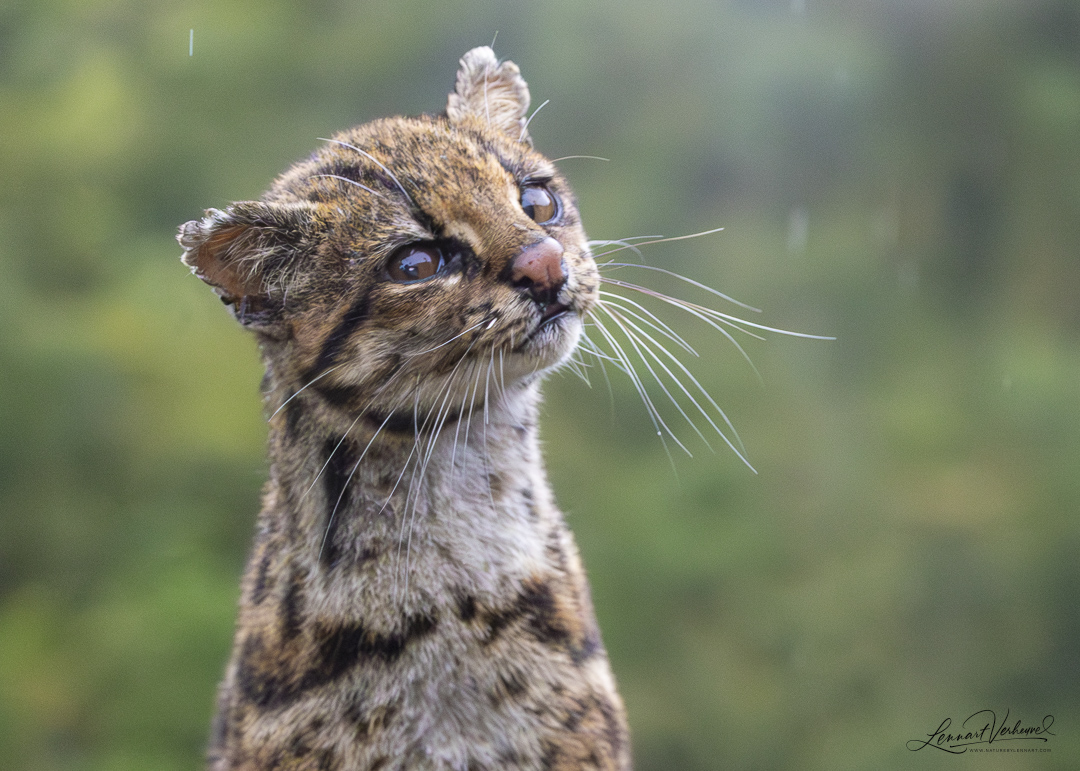
In 2021, I traveled to Ecuador for a few weeks. It was a fairly last-minute trip, and I hadn’t prepared very thoroughly. My main goal then was to see a Spectacled Bear, but I also wanted to try for the Northern Oncilla. At the time, this small wild cat was being seen relatively regularly at a few locations. In the end, I succeeded with the bear, but unfortunately the cat remained elusive.
A little over a year later, I received a message from Rob Jansen, who was traveling through South America with his wife Romy at the time. He told me that a Northern Oncilla had started showing reliably at a place in Colombia called Mirador El Roble. Once I saw the photos, the temptation to immediately book a flight to Colombia became very real. But practically and financially, it simply wasn’t the right moment, so I let the opportunity pass. You can’t do everything.
Still, the cat kept returning to my thoughts. Especially once it became clear that this wasn’t just a brief appearance lasting a few days. Weeks turned into months. Every now and then, another photo of the cat would appear in a trip report or on social media. At the same time, I knew the Northern Oncilla was far from guaranteed. Sometimes it disappeared for days or even weeks. Apparently, it had also once been seriously injured in a fight and stayed away from El Roble for quite a long time afterward.
Because sightings were so unpredictable, it was difficult to build an entire trip around this one species. Colombia obviously has much more to offer than just this cat, but there were still many other destinations I wanted to visit as well. Most of the animals from this region of Colombia I had already seen in Ecuador. Around Christmas 2023, I briefly considered traveling to the United States for Bobcat and then continuing to Colombia if the Northern Oncilla was still showing up.
For some reason, this cat also seems to have many names by the way. Scientifically, it is known as Leopardus tigrinus. I’ve always known the species by the common name Northern Oncilla, which is also the name used in All the Mammals of the World. However, Northern Tigrina and Clouded Tiger Cat are also commonly used. In Colombia, people simply referred to it as “tigrillo.” Since I first learned about the species as Northern Oncilla, that’s the name I stick with.
The Oncilla has now also been split into three species: Northern, Southern, and Eastern Oncilla. Seeing the other two certainly isn’t easy either. Once you start chasing oncillas, you’re committing yourself to quite a challenge.
For the moment, though, I had more than enough to focus on with the Northern Oncilla alone. My Christmas 2023 plan never happened because I unexpectedly ended up joining a trip to China instead. After seeing a Giant Panda there, I certainly had no regrets. I figured the Northern Oncilla would happen eventually — I just had no idea when. Honestly, I didn’t expect the sightings at El Roble to continue for much longer.
But apparently, the Northern Oncilla had other ideas.
As 2023 turned into 2024, and later into 2025, I still occasionally saw photos of the Northern Oncilla visiting Mirador El Roble. Even so, I still lacked both the time and the budget to make the trip happen. At one point, I briefly explored the possibility of seeing a Northern Oncilla in Panama, but that turned out to be more complicated than it initially seemed, so that didn’t happen.
Then, in early spring 2026, I read the trip report of Tomer Ben Yehuda, who had traveled to Colombia and successfully seen the Northern Oncilla there. I couldn’t resist asking about the current situation, and the news was encouraging: the cat was still visiting Mirador El Roble regularly. I opened my calendar again. Since I had recently changed jobs, my schedule was still relatively empty. I noticed I had about a week available at the end of March. But would I really fly all the way from the Netherlands to Colombia for just a week?
Normally, if I’m traveling such a long distance, I try to stay as long as possible. At the same time, I realized that if sightings at El Roble suddenly stopped, I could easily end up spending several weeks trying for the cat. I had already experienced something similar in Ecuador, where putting in a lot of time had certainly not guaranteed success. It wasn’t so hard to convince myself, and at the end of February I booked the tickets. On March 20th, 2026, I would fly to Colombia. I had to wait in suspense for just a few more weeks!
Together with Wild About Colombia, I worked out an itinerary. Since I was going to be there anyway, I also wanted to target a few bird species. At first, my plans were extremely ambitious — trying to maximize every single day — but that quickly became rather expensive, so I scaled things back a bit.
The final plan was to spend one and a half days at Hacienda El Bosque to see the Crescent-faced Antpitta, then continue to the town of Jardín, where I would spend a day, and finally stay at Mirador El Roble for the remainder of the week. That would give me almost four full days for the cat. Surely that had to be enough.
In practice, however, it was only possible to schedule El Roble at the very end of the trip. So the suspense lasted until the final days.
The birding part of the trip went exceptionally well. Absolutely everything worked out. Even a species I desperately wanted to see — but for which there was no reliable site — eventually showed itself. Shortly before arriving at Mirador El Roble, I managed to see the spectacular and bizarre-looking White-capped Tanager.
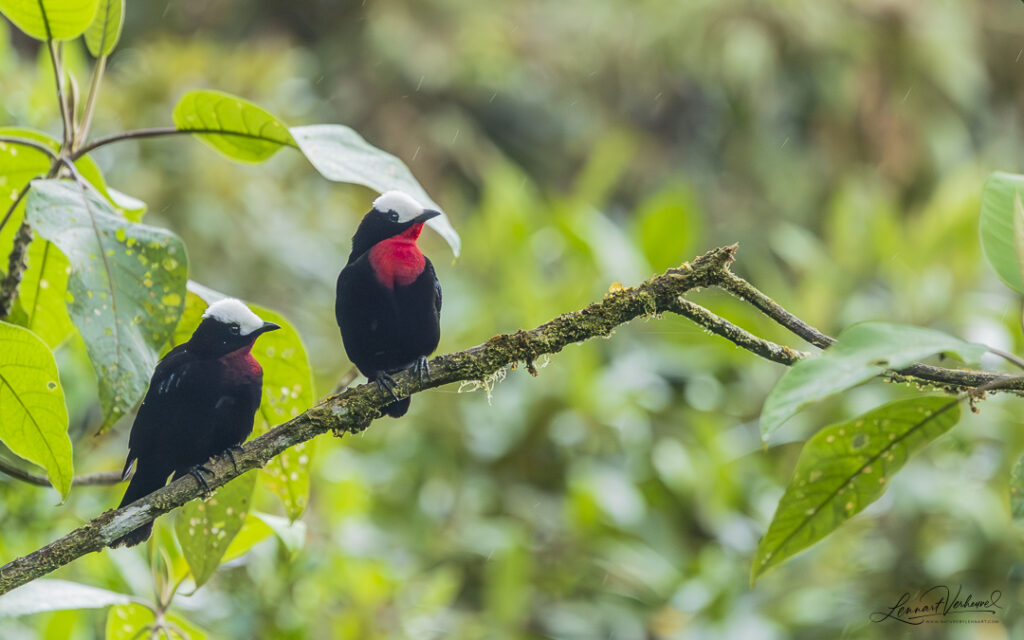
White-capped Tanager pair
On March 24th, 2026, I arrived at Mirador El Roble in the rain. Immediately, I got a surprise. The owner, Lucía, told me that the cat — now nicknamed “Manchas” (“spots”) — had already briefly appeared that afternoon. The rain had scared him off and sent him back into the forest, but there was a good chance he would return.
At that point, it was already fairly late in the afternoon, and I honestly hadn’t expected to have any chance of seeing him that day. From what I had understood, the cat seemed to appear more often early in the morning.
I quickly unpacked my gear and positioned myself where the cat usually emerged. The rain stopped. I grabbed my Canon R5 with the small lens I had brought for wide-angle shots and tested it near the setup area.
Then suddenly, I saw a small head appear.
I held my breath.
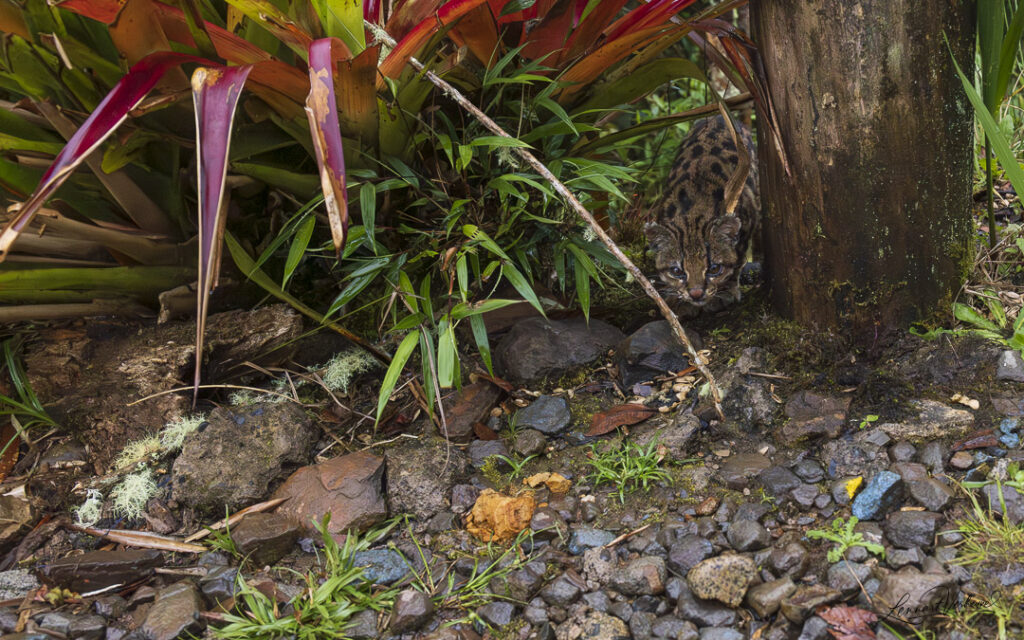
Northern Oncilla
The Northern Oncilla had arrived.
The cat I had wanted to see for so many years was finally there. At that point, I knew it couldn’t really go wrong anymore. My next goal immediately became getting the best possible photographs.
It was obvious that this Northern Oncilla had become very accustomed to the situation here. He calmly sat on the tip of a tree trunk, waiting. As long as I stayed a few meters away, he paid absolutely no attention to me. If I moved closer, he became a bit more cautious.
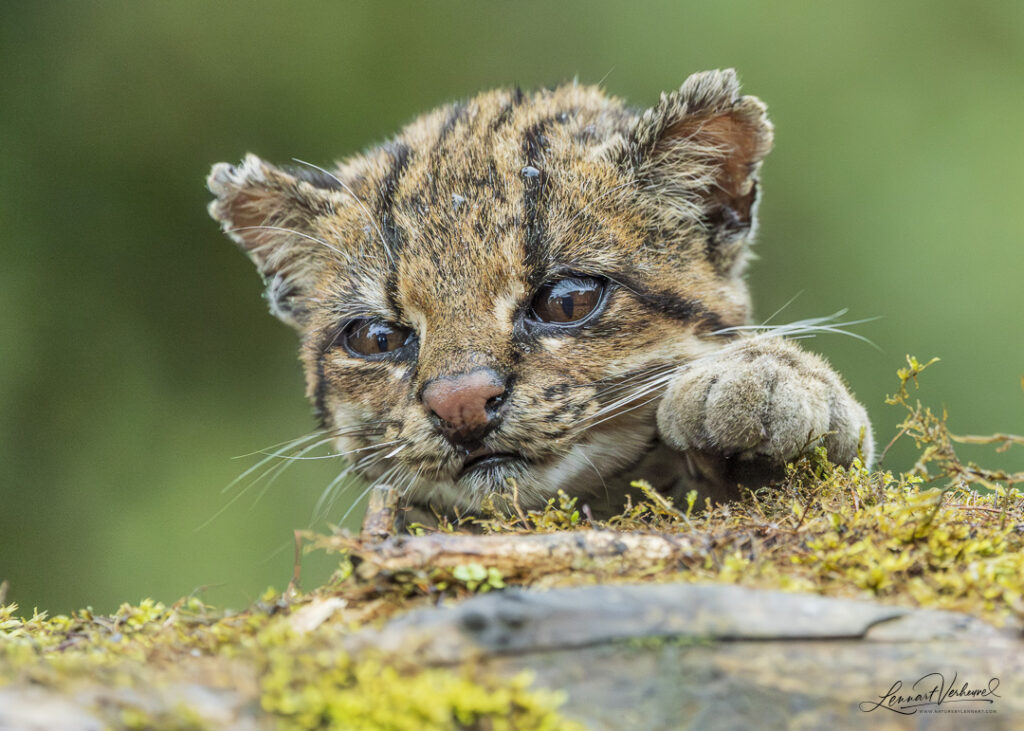
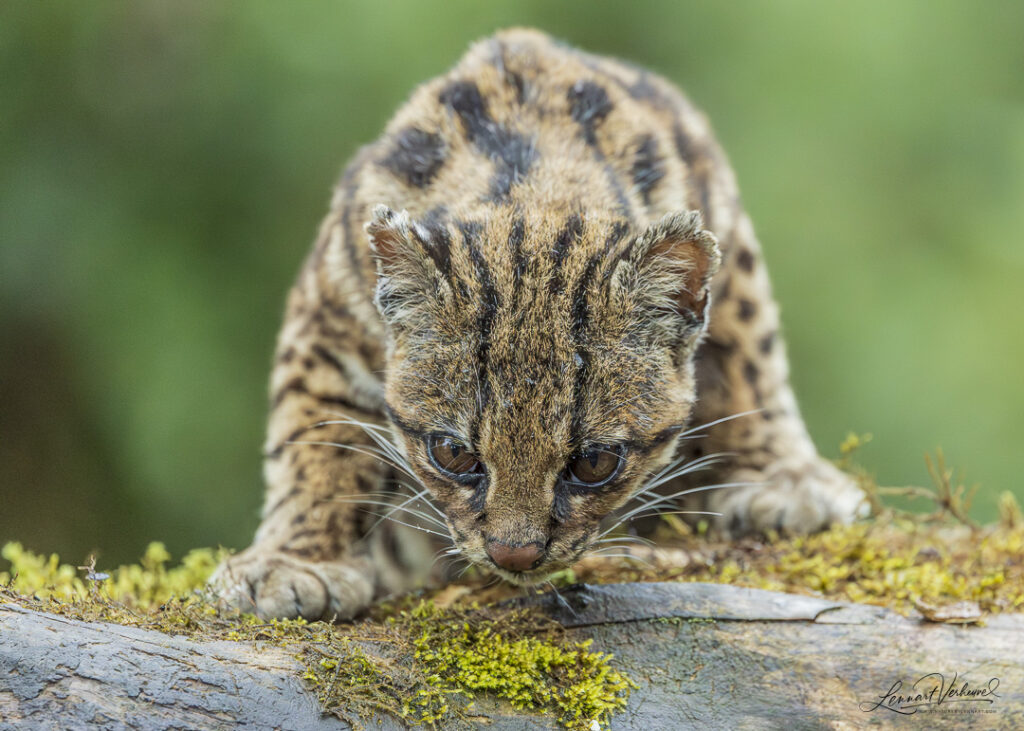
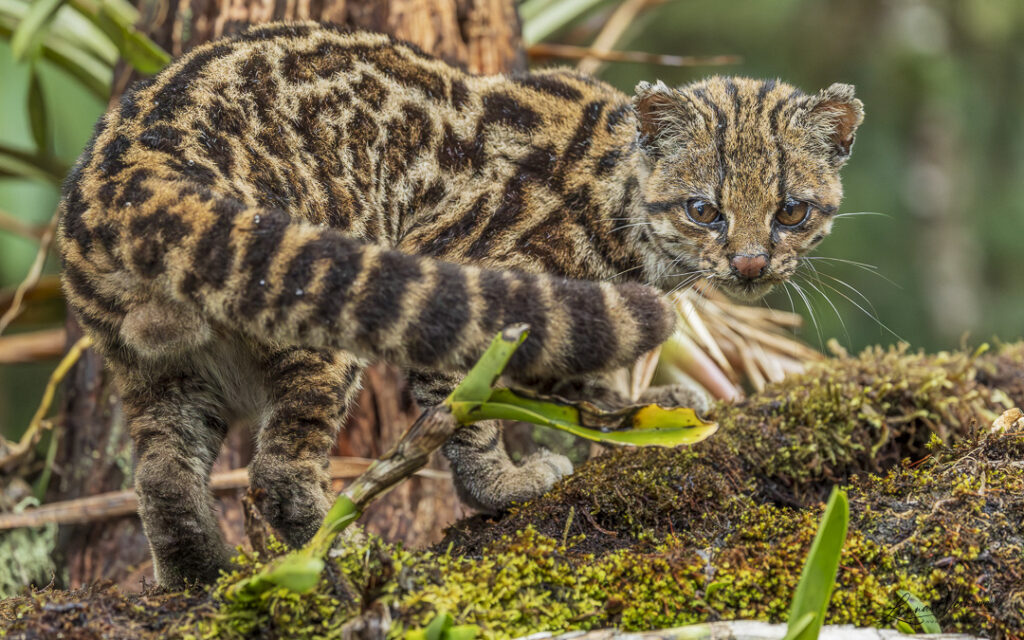
Northern Oncilla
That caution completely disappeared around Lucía. He clearly knew exactly who provided the food. The moment she stepped outside carrying some chicken, the Northern Oncilla immediately approached to collect it.
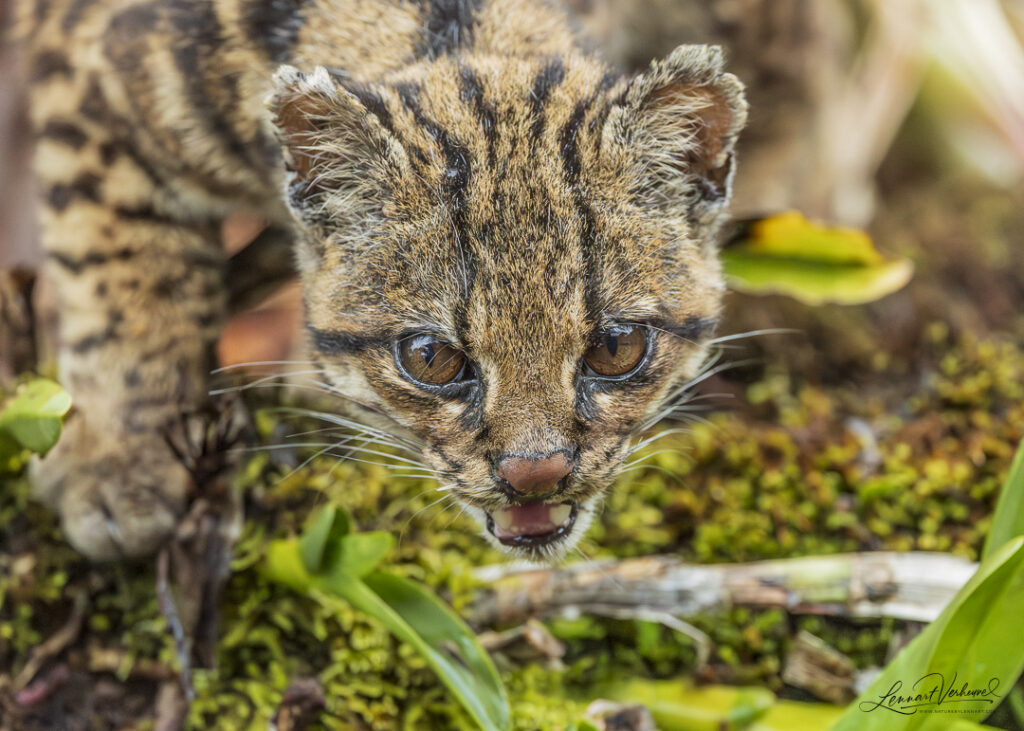
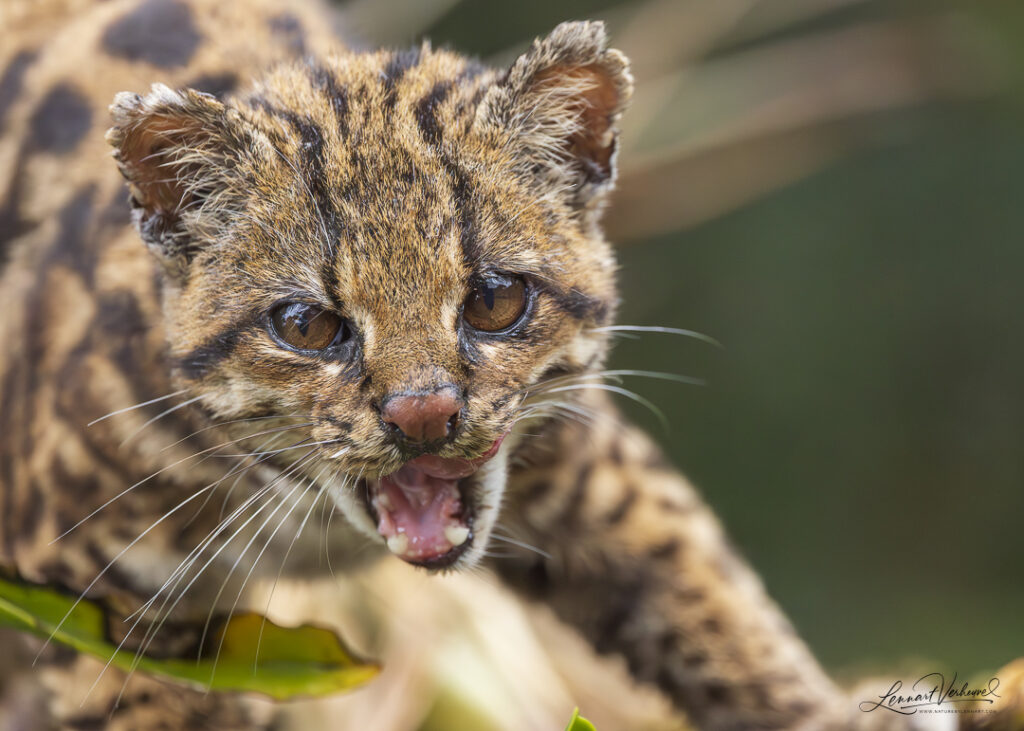
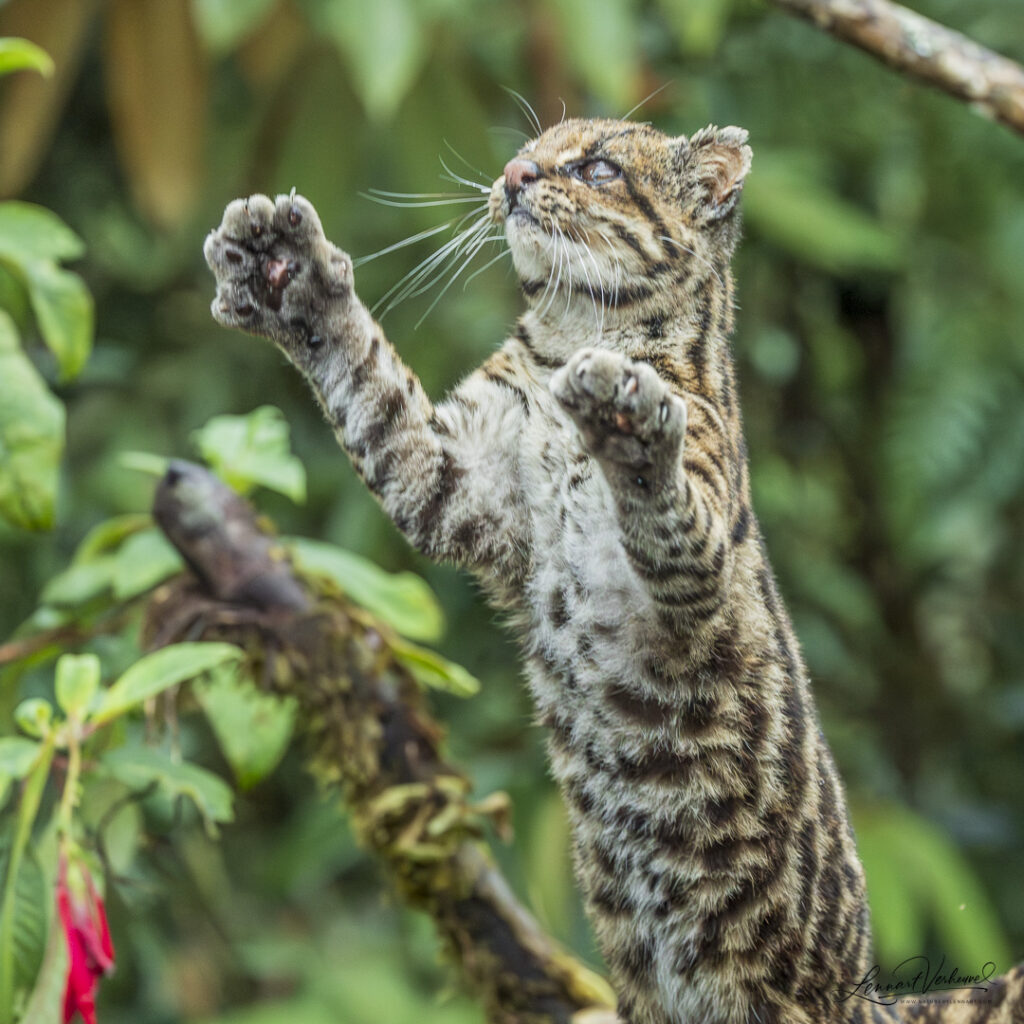
Northern Oncilla
After finishing the food, he lingered briefly before disappearing back into the forest.
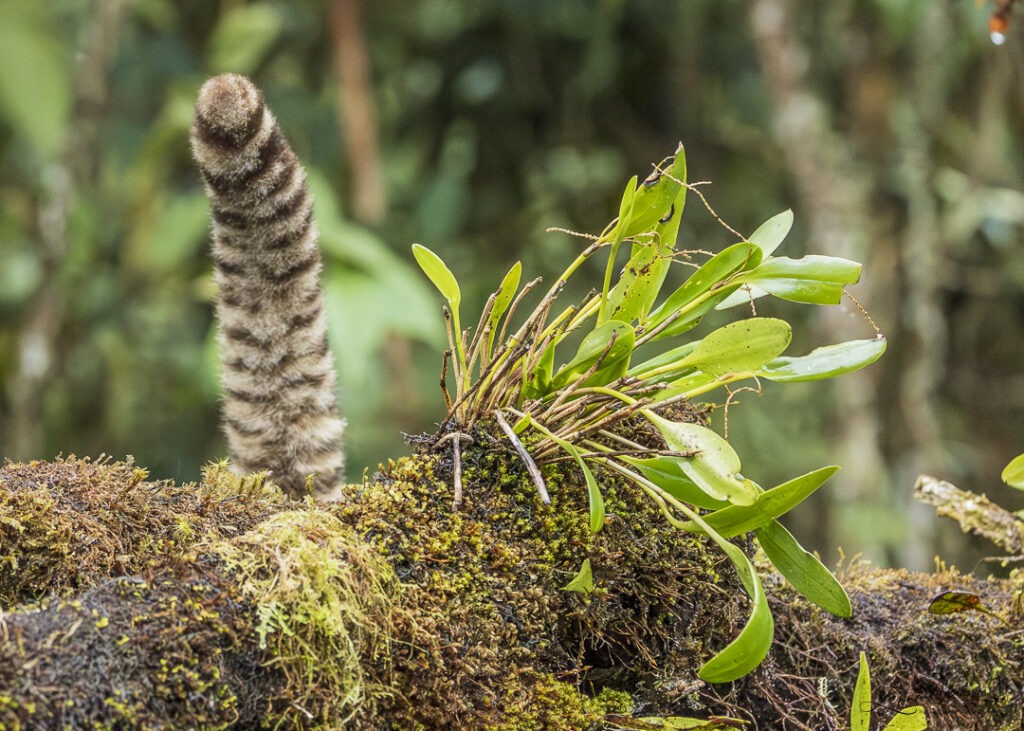
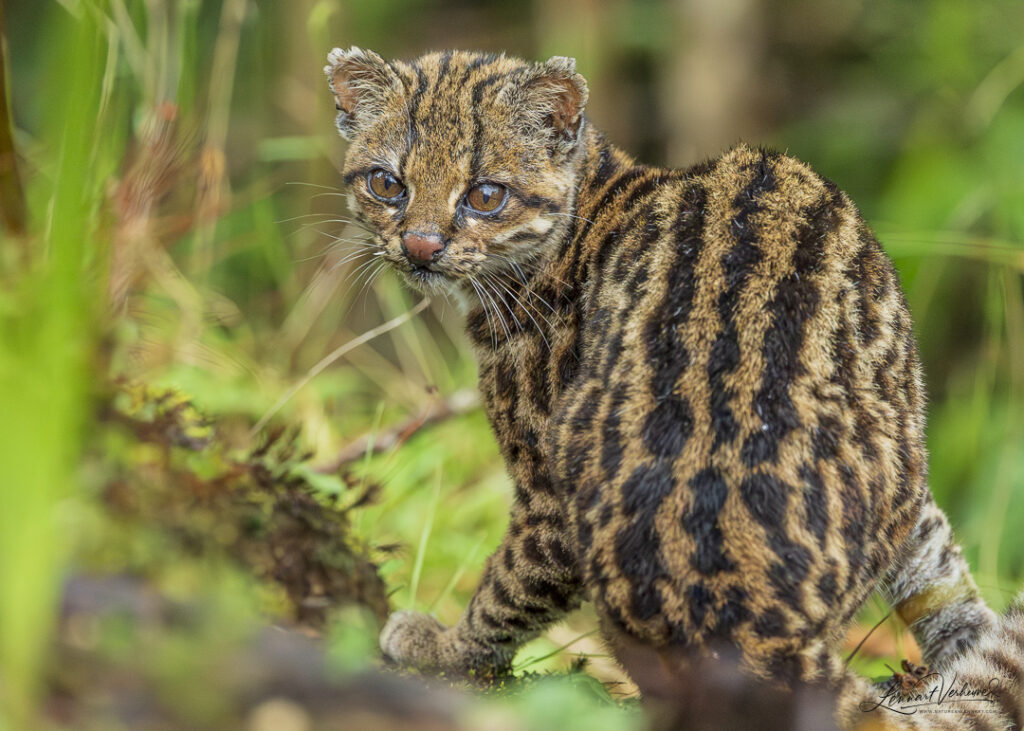
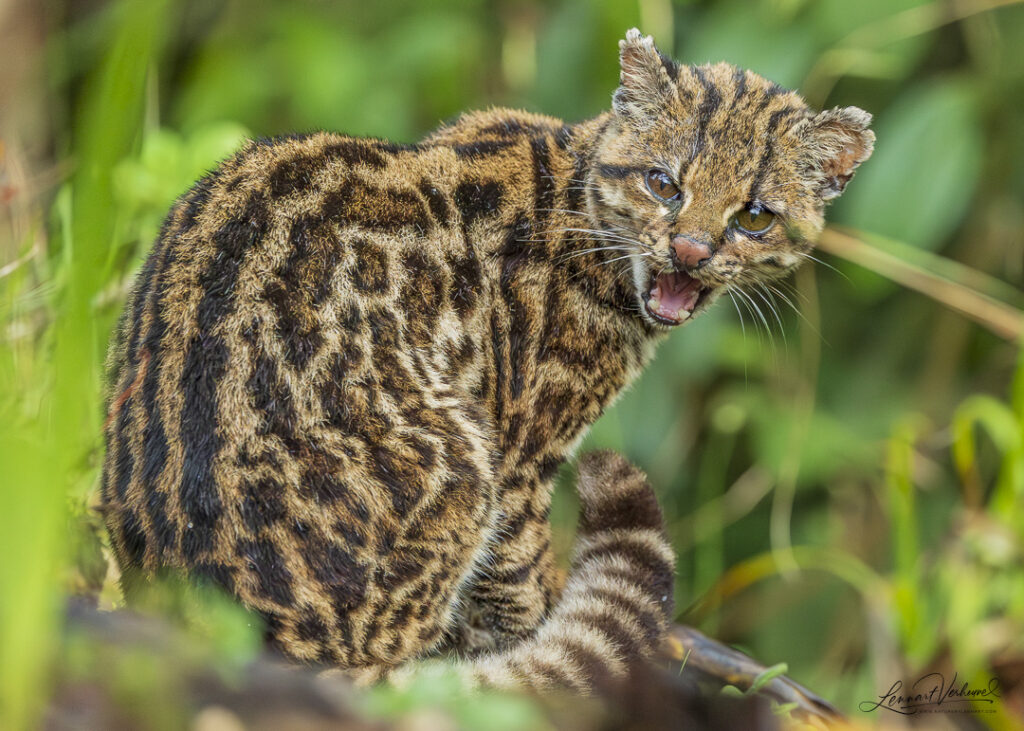
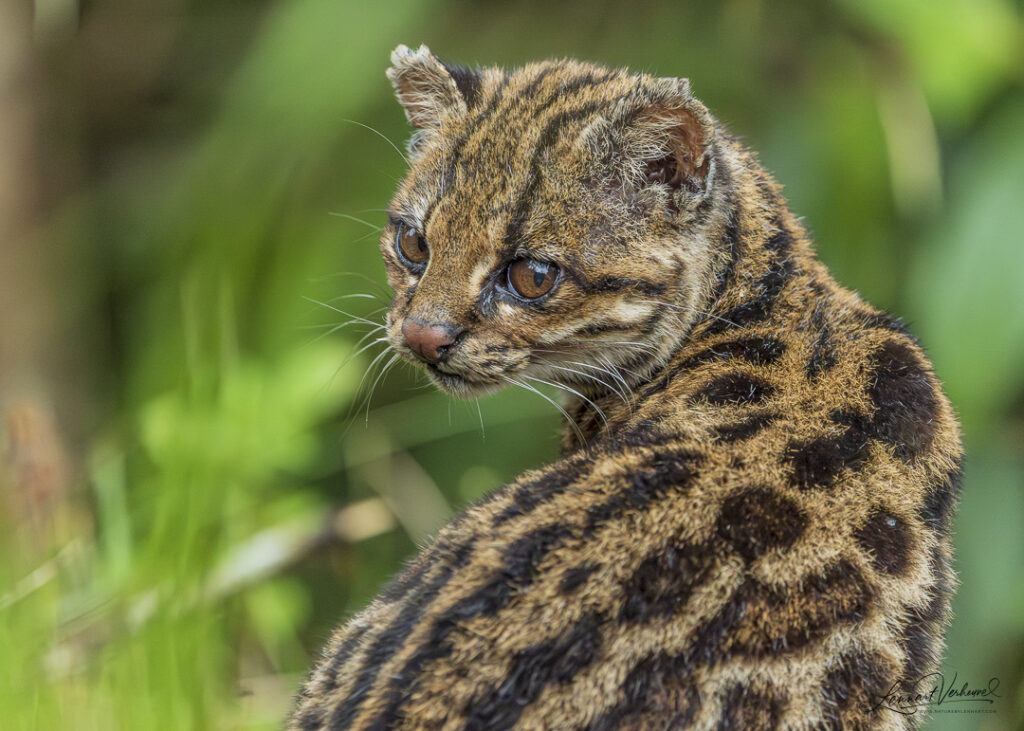
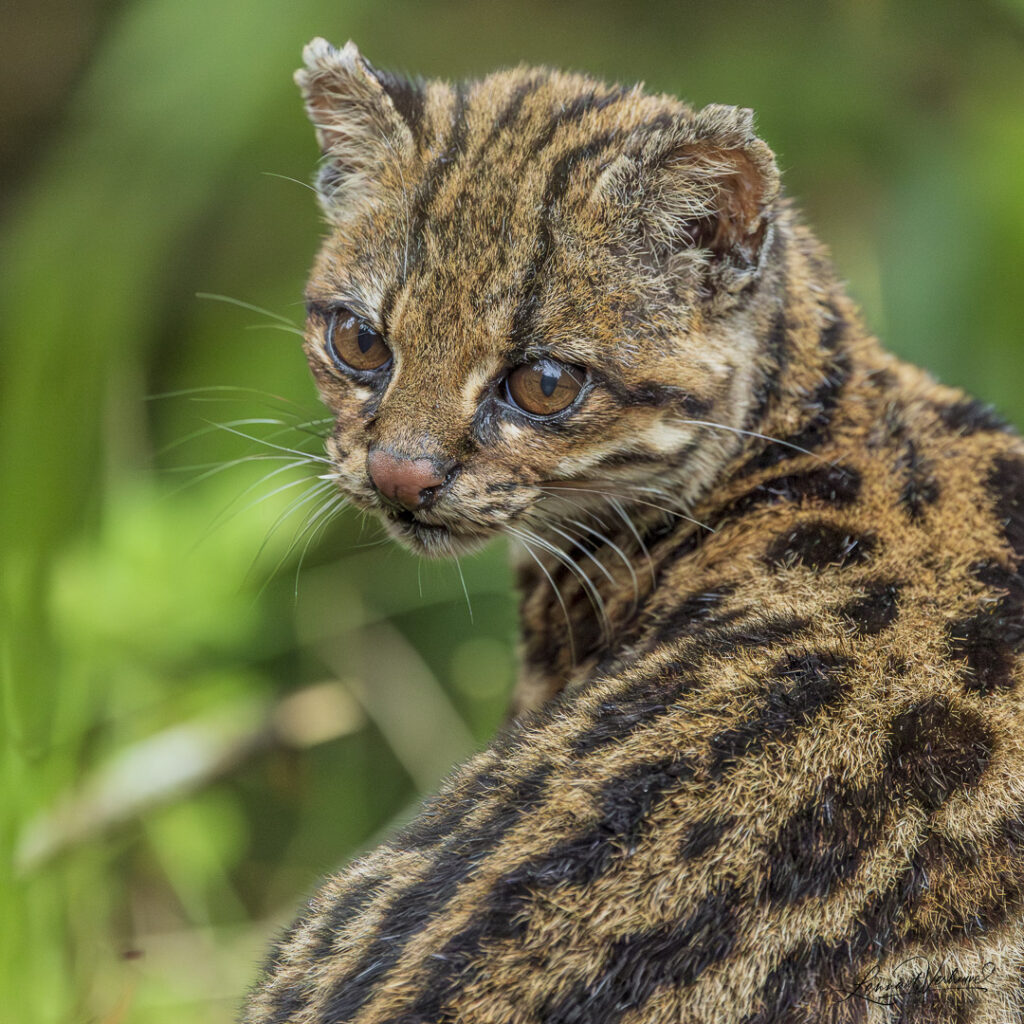
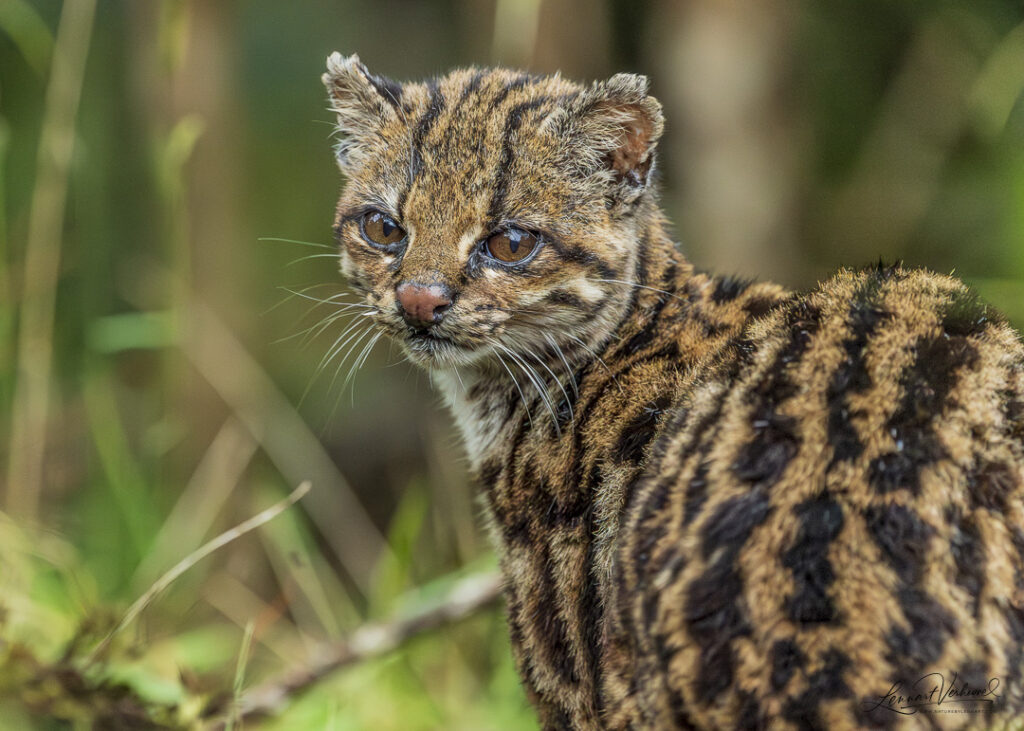
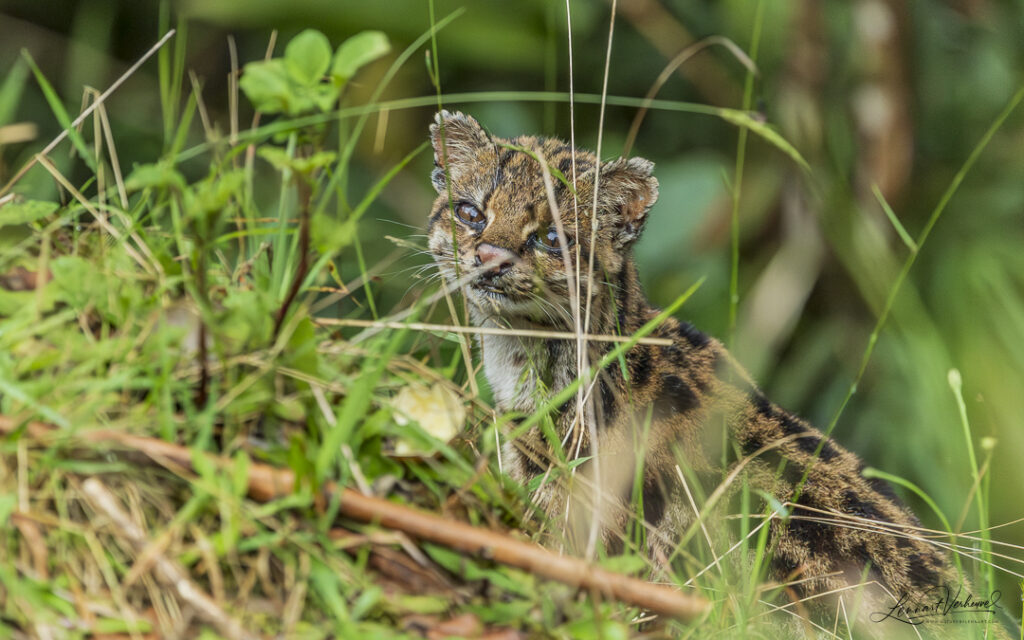
Northern Oncilla
Of course, the feeding with chicken did take away a little bit of the feeling of encountering a fully wild animal. Even so, I was incredibly happy with this sighting because it had also become very clear to me that seeing Manchas was far from guaranteed. Many people before me had come here unsuccessfully. Manchas clearly followed his own schedule. If he didn’t feel like showing up for several days, then he simply didn’t.
It was equally obvious that he was still perfectly capable of surviving in the wild. The chicken and fish from Mirador El Roble seemed to me more like opportunistic bonus meals than something he depended on. He also showed no begging behavior. Interestingly, it did seem like he appeared more often on rainy days — perhaps because hunting conditions were more difficult then.
And whenever he did appear, it was clear that he had grown accustomed to people. While I personally would have preferred a more natural setting, it was still obvious to me that this remained a truly wild animal that had not lost its ability to survive independently. To me, it didn’t feel fundamentally different from bears and wolverines in Finland, Maned Wolves in Brazil, gorillas in Uganda, and other examples such as these. I was certainly happy with this cat!
Over the following days, it also became clear that the Northern Oncilla followed no one’s schedule but his own. The next morning, he appeared exactly according to the pattern I had heard from other observers: immediately after sunrise. That morning, I took several of my favorite photographs of the trip.
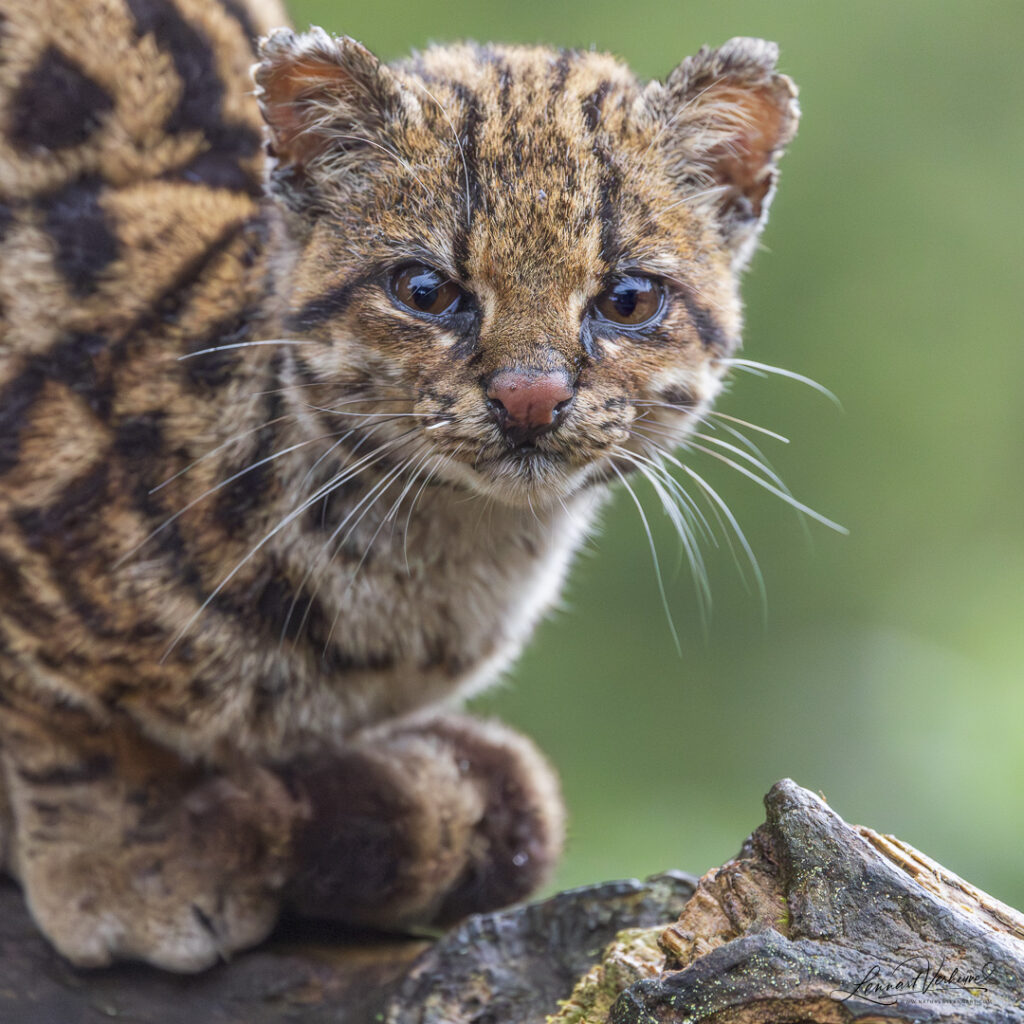
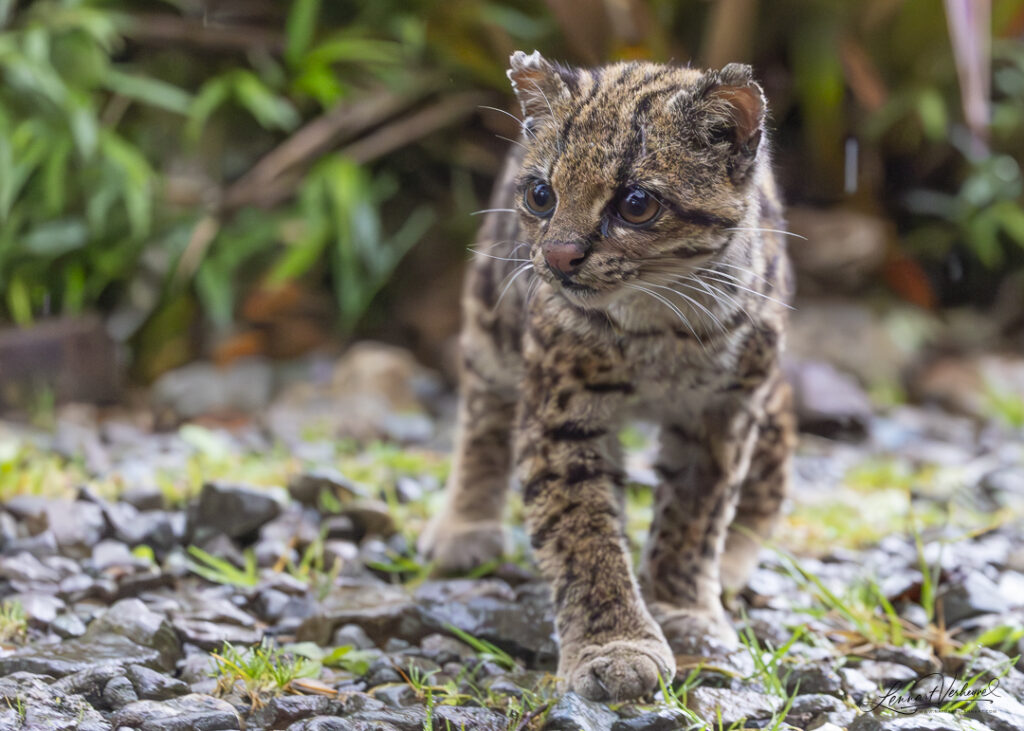
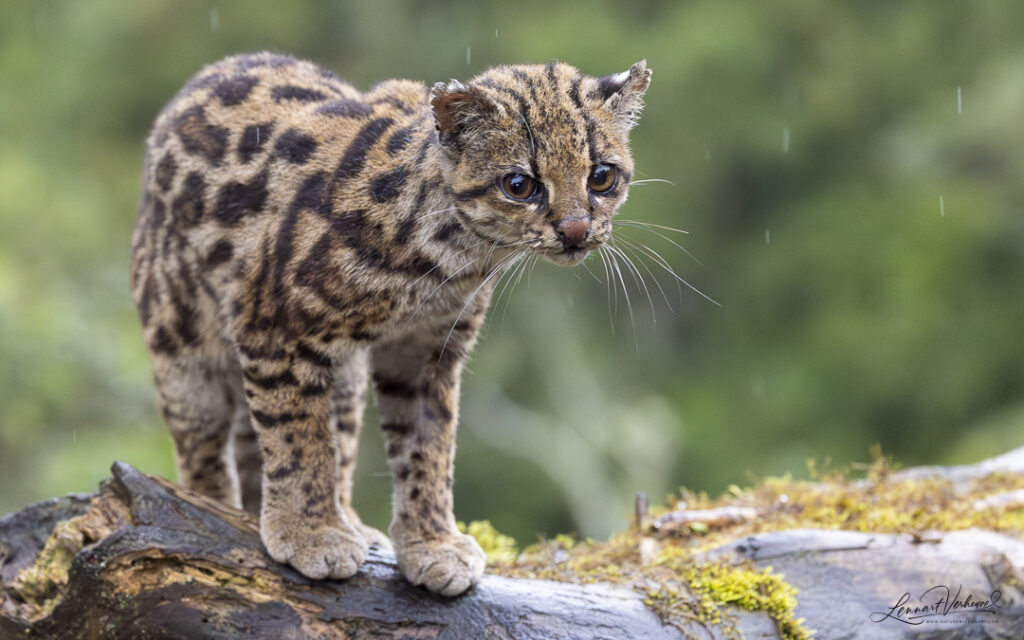
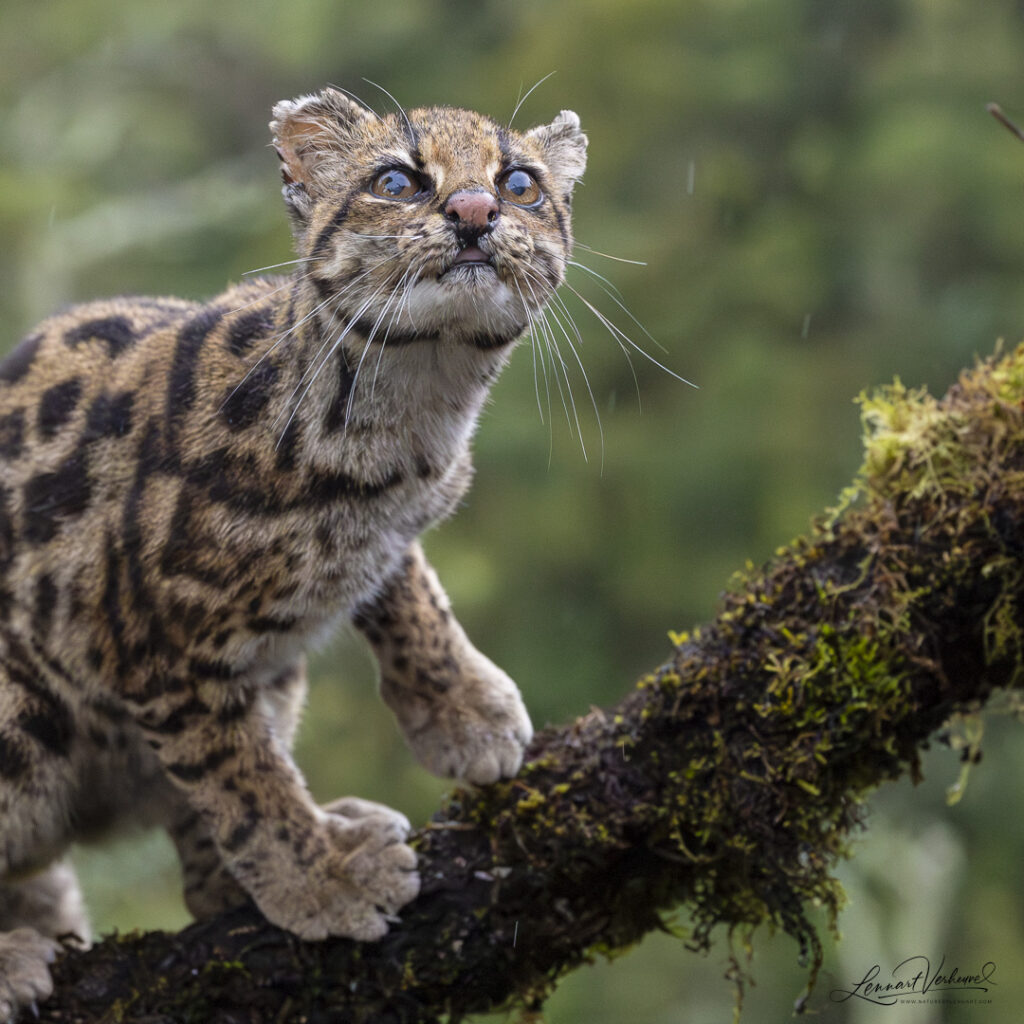
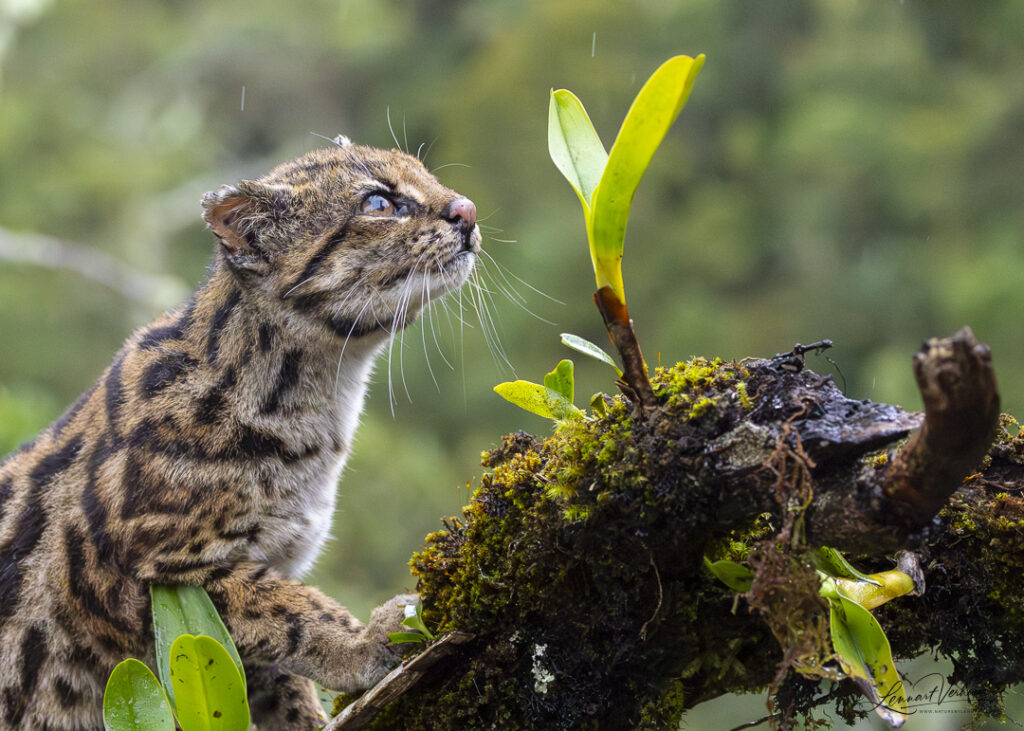
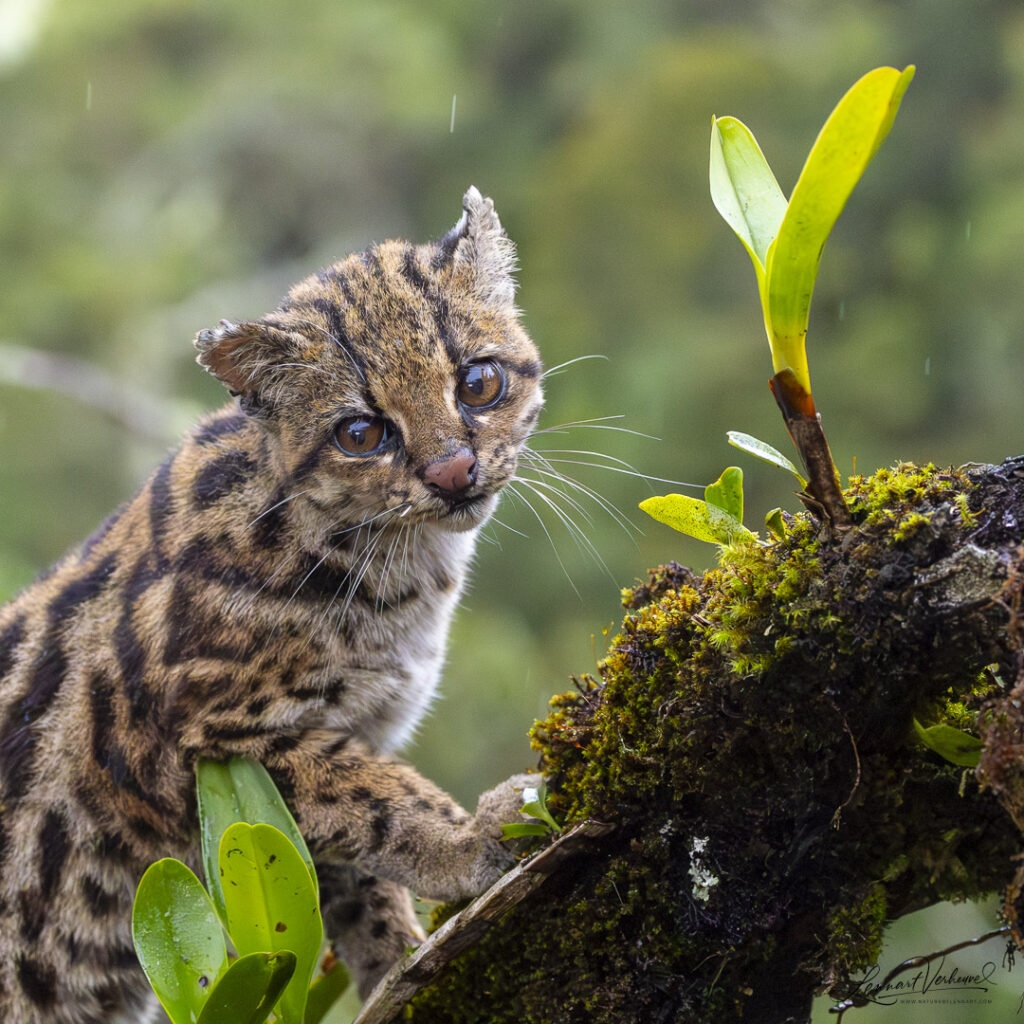
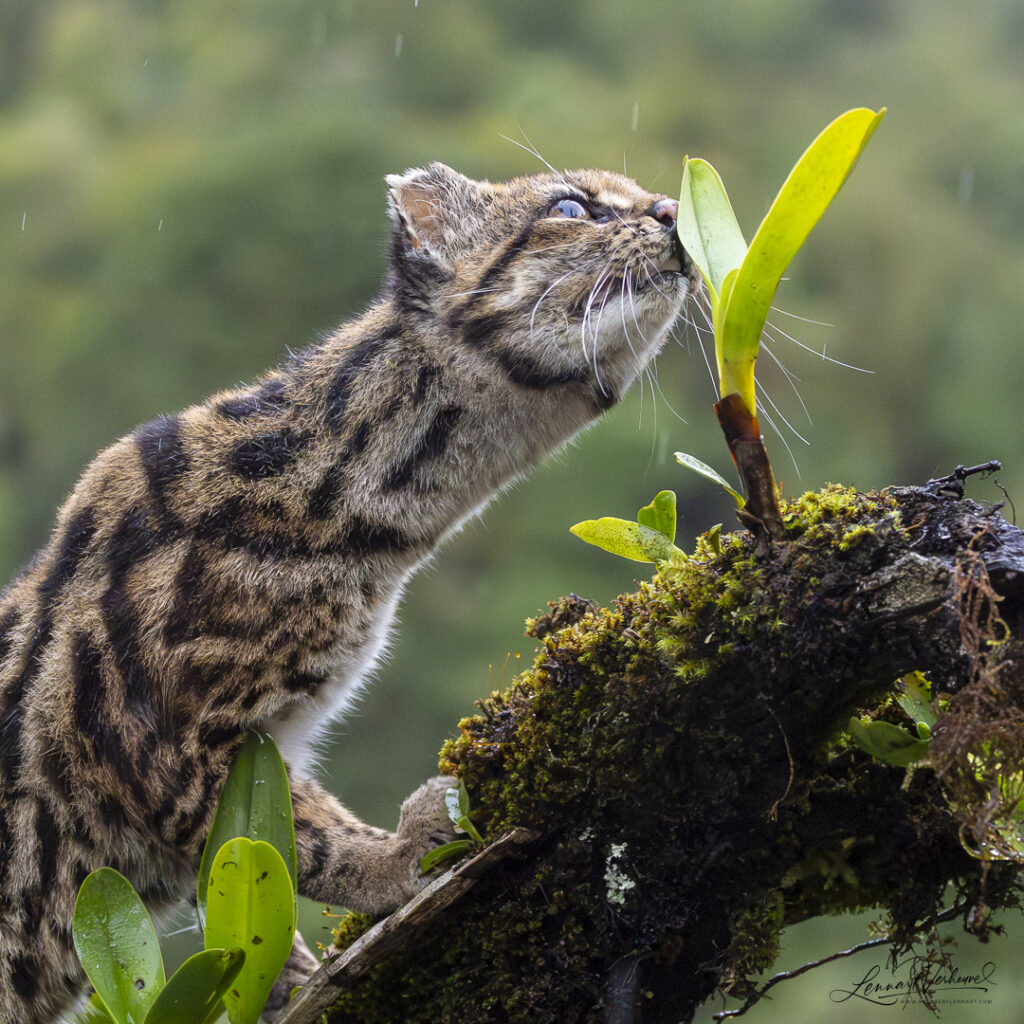
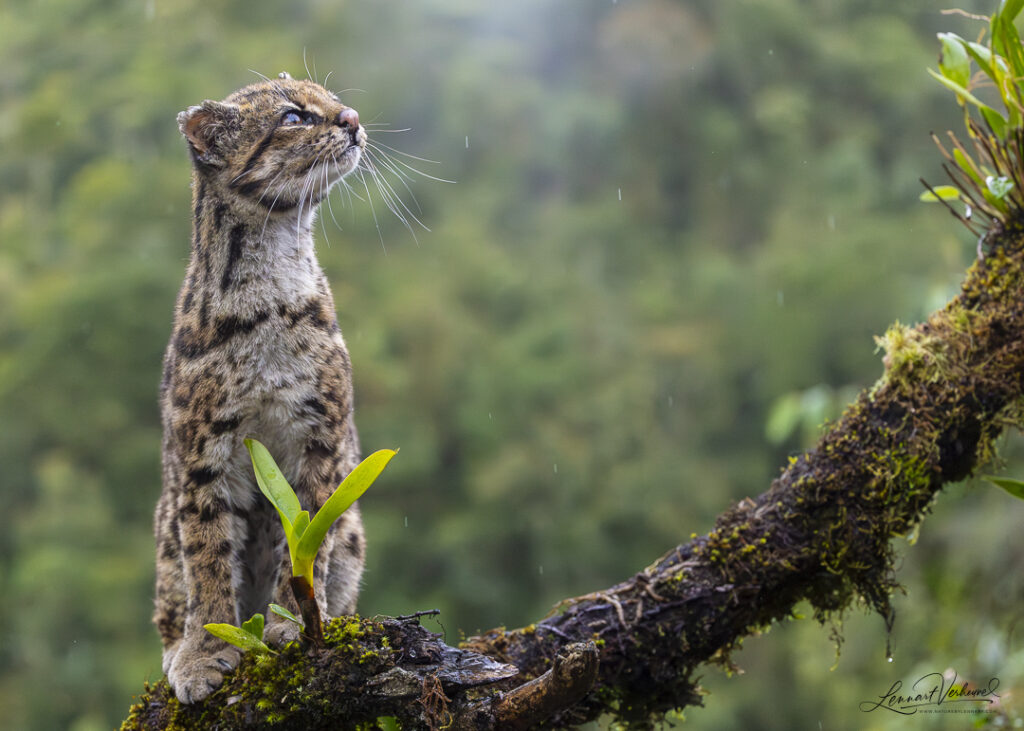
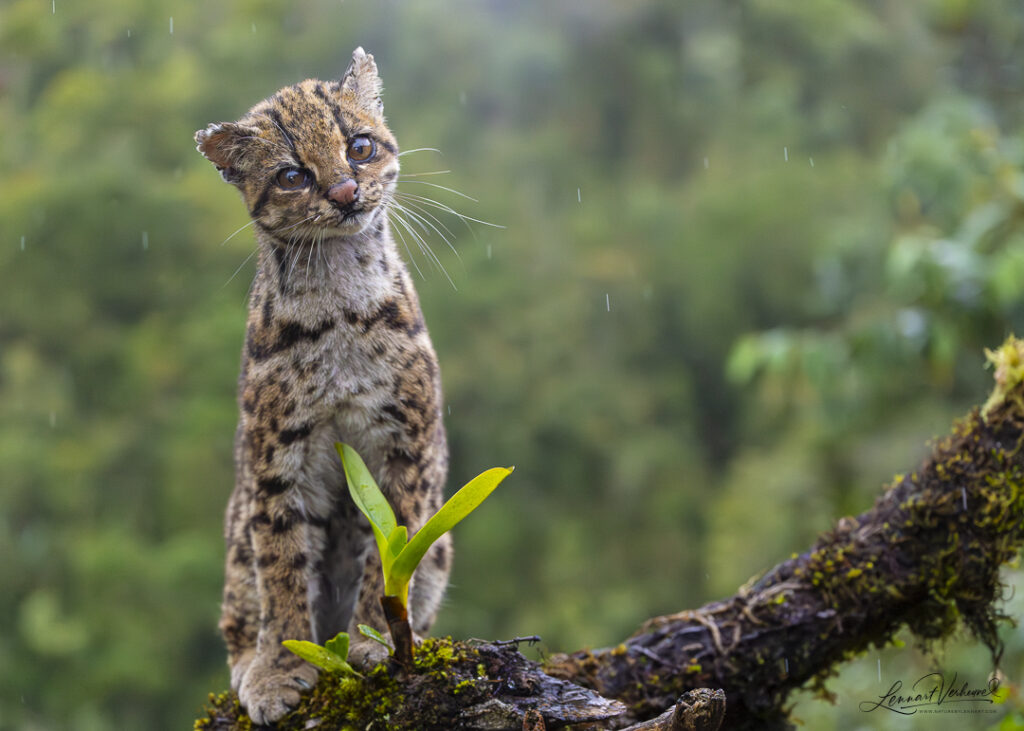
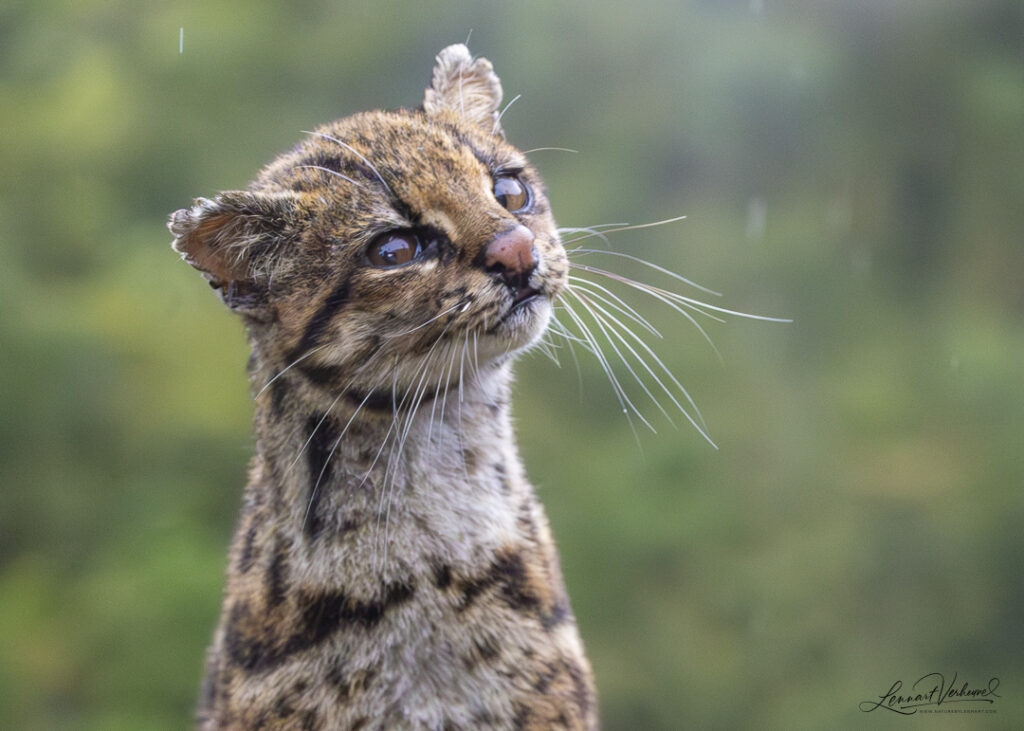
Northern Oncilla
The following day, he showed up around eleven in the morning and then disappeared for the rest of the day. That was also when I managed to take some wide-angle photographs.
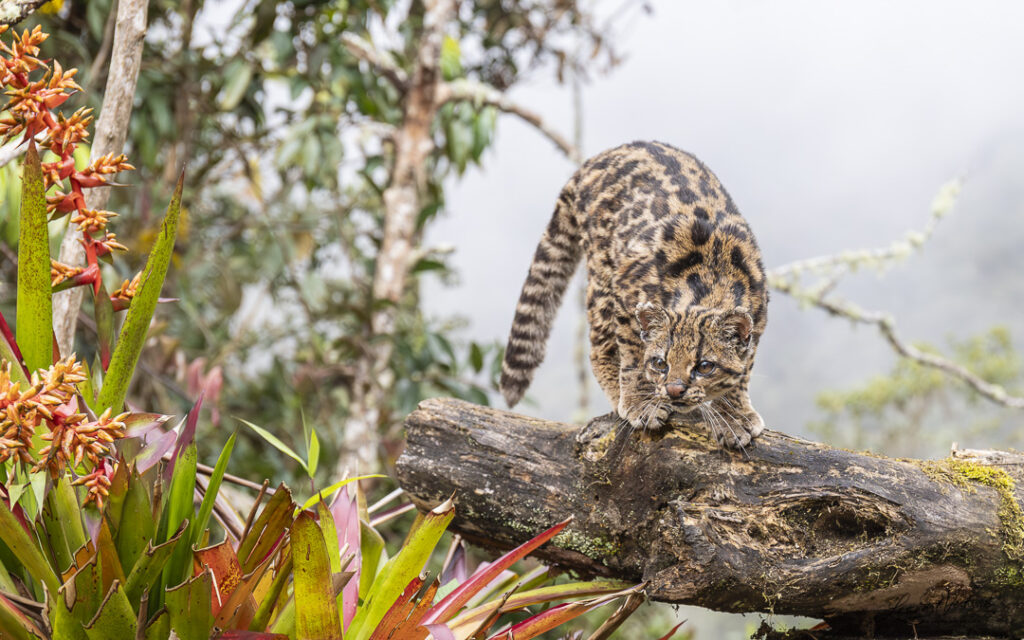
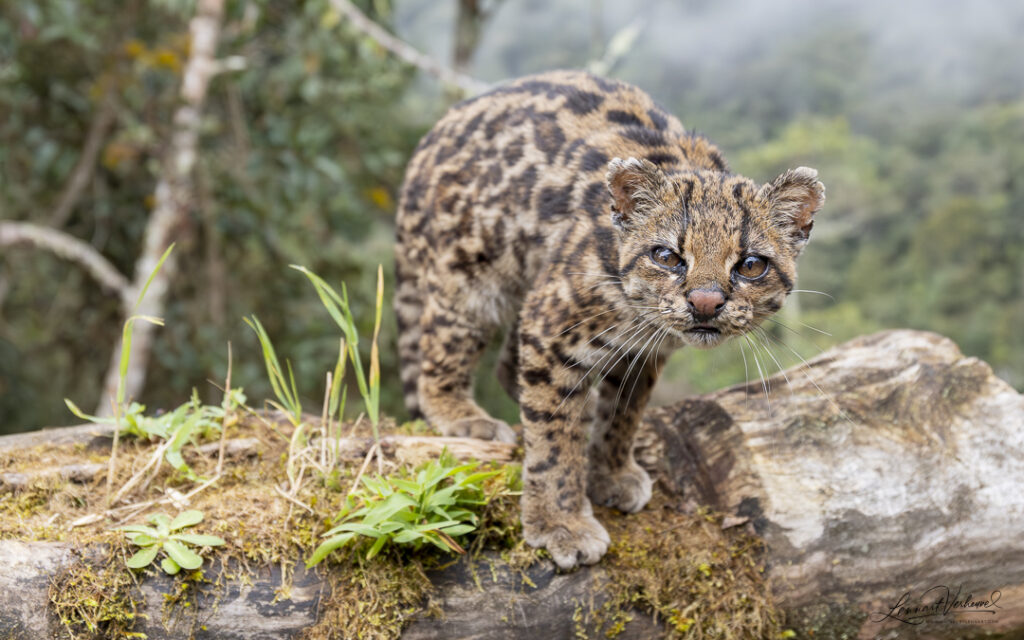
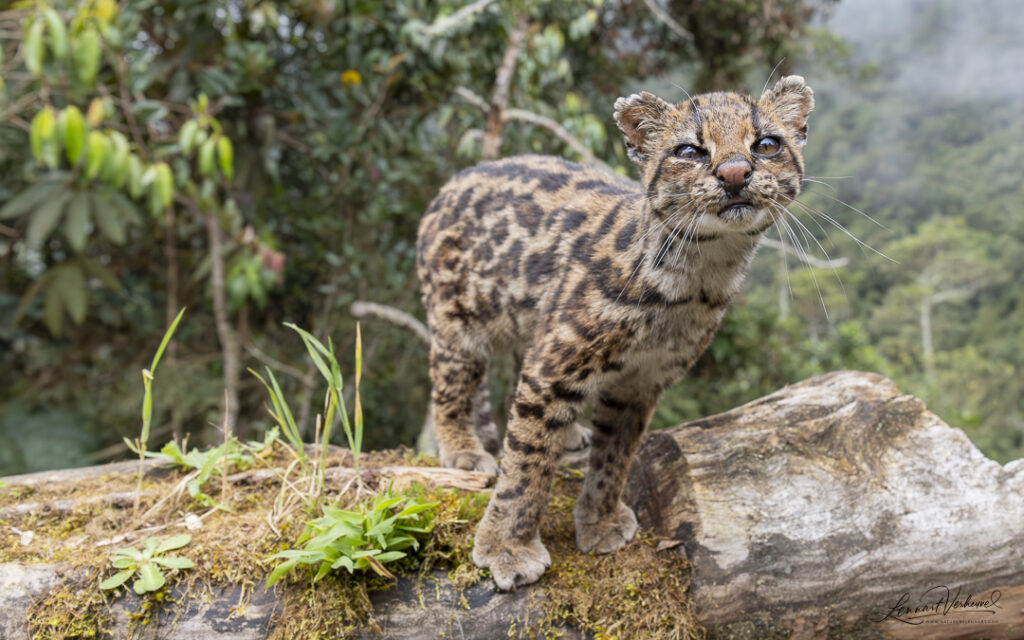
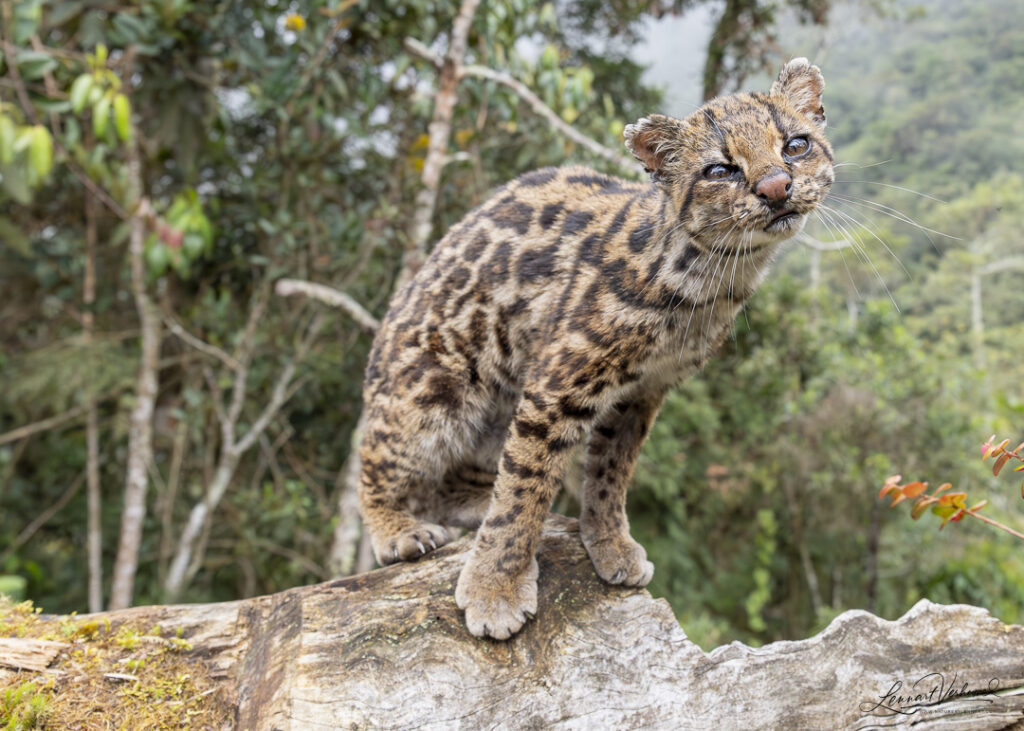
Northern Oncilla
The day after that, he didn’t appear at all — nor on the morning of my departure. I certainly wasn’t complaining. By then I had already enjoyed several beautiful encounters.
On Friday, March 27th, 2026, I left Colombia again. After an incredibly successful week, I returned to everyday life. I came home with more than 140,000 photographs — an exceptionally high number even for me — but luckily I had plenty of time afterward to sort through everything.
Click here if you would like to discover which spectacular birds can be found in the Colombian Andes!
I also made a special post about the hummingbirds of the Colombian Andes and tried a different kind of photography with them: look here for the results!


